

Featured

Davy Snowdon
MBE, Founder and CEO, Pristine Condition

Stephen Cooke
Head of Impact and Influencing, British Safety Council
What can Olympic weightlifting teach us about safer manual handling at work?
In this episode, Stephen Cooke is joined by Davy Snowdon MBE, Founder and CEO of Pristine Condition International. Drawing on his experience as a former Weightlifting Guinness World Record holder and Olympic conditioning expert, Davy explores a ‘body first’ approach to manual handling and why small changes to the way we move can make a significant difference.
They discuss why the weight of an object is only part of the risk, how training can create lasting behaviour change, the role of leaders in reinforcing safer habits, and why Davy wants everyone to remember one simple principle: break the straight line down.
And, of course, he explains what it means to “keep your jam in your doughnut”.
Key takeaways
- Manual handling risk is about more than the weight of an object; posture, position and movement matter too.
- Practical, memorable training can help safer movements become everyday habits.
- Leaders play an important role in reinforcing training and sustaining safer behaviours.
Prefer audio? Listen on Spotify →
In this episode
01:54 From Olympic weightlifting to workplace safety
04:05 Why the body comes first
07:03 Why weight isn't the only factor
12:40 Making manual handling training memorable
15:20 Bespoke training and behaviour change
22:39 Breaking the straight line
26:05 Leadership and sustaining safer habits
30:44 Davy's key takeaway: break the straight line down
Transcript
Meet Davy Snowdon MBE
Stephen: Welcome to Health and Safety Uncut, a British Safety Council podcast, with me, Stephen Cooke, standing in for Dr Shaun Davis.
Today I’m delighted to welcome Davy Snowdon MBE, Founder and CEO of Pristine Condition International, a global health and safety training company specialising in manual handling.
Davy, welcome to today’s podcast.
Davy: Cracking to be here. Thank you, Steve.
Stephen: Pleasure.
And today we’re doing this slightly differently. We’re doing this on video as well because some of what we’ll talk about will also be things we can show visually. It’s important to be able to do that as well.
Just to say a few words about you, Davy. You were a conditioning expert for the Olympic Federation, covering all sports for two Olympic Games. You’re a former Weightlifting Guinness Book World Record holder, a National and staff coach for the British Weightlifting Team, and a lecturer for many governing bodies.
You’ve spent most of your life training and studying the human body and the art of weightlifting. After returning from the Atlanta Olympics in 1996, you set up Pristine Condition.
Davy: Absolutely.
Stephen: In 2014, you were awarded an MBE for your contribution to significantly reducing accidents throughout industry and improving the health and wellbeing of the nation. What more can you want? Really brilliant.
From Olympic weightlifting to workplace safety
Stephen: Before we start, can you tell us a little about your journey into health and safety and what it means to you?
Davy: It was really interesting. I’d love to say I planned it. I didn’t. It happened a bit by accident.
I’d just got back from the Atlanta Olympics. Our centre of excellence was at Bisham Abbey in Marlow, Buckinghamshire, and across the river was a paper mill.
They’d done all the hierarchy of controls for health and safety, but one of their biggest causes of accidents was still lifting and handling. Someone said, “Why don’t we get that world-record weightlifter to come and have a look?”
So they contacted me and I said I’d love to.
I went in there and there were these big metal rollers going round, steam coming out and the smell of it all. I remember thinking, “I haven’t got a clue what they’re doing here”.
Then I walked around the corner and saw this guy picking up a chunky bit of kit. I said, “No wonder you’re getting injuries. He’s picking it up wrong”.
They said, “What do you mean? He’s bending his legs and keeping his back set.”
I asked if I could have a word with him. I said, “Mate, can you humour me? Show me how you pick that up again”.
I let him get about four inches off the ground and said, “Stop. Do you feel any discomfort here?”
He said, “Every day, mate”.
So I told him to put it down. I moved one hand and one foot position, then asked him to pick it back up those four inches.
I said, “I bet you don’t feel that discomfort now, do you?”
He put it down and said, “Mate, I’ve worked here 16 [bleep] years and that’s the first thing that’s made sense”.
And I said, “Shall we go and have a look?”
I think what I’d done, without realising it at the time, was bring Olympic weightlifting techniques into industry. I was looking at the body and how the body was working, rather than simply the job being done and the pressures being placed on it.
Why the body comes first
Stephen: Looking at the body first then, and the body as the subject, how does that differ from looking at the job?
You might think: you need to know what to do with this object. What’s the main difference in looking at the body?
Davy: When you look at a task and one individual doing it, another individual might do it slightly differently.
You’ve got the hierarchy of controls and I absolutely believe in it: avoid, assess, reduce. Let’s automate where we can.
But you can’t replace the fact that manual handling will always have a role to play.
When you look at the body, you’re looking at the pressure being placed on it. One of the first things I realised was that one of the biggest issues with lifting and handling is that the body doesn’t tell you when you lift wrong. It only tells you when you’ve lifted wrong too many times.
Most people lift very heavy objects correctly because they can’t lift them incorrectly. It’s the little things that cumulatively build up.
When you look at the body and the pressures being placed on it, you can take that pressure off the body.
We absolutely want to automate and mechanise. Most modern companies have gone through that hierarchy of controls, but people are still getting injured.
When you look at a risk assessment, we start with an anatomical risk assessment. A conventional risk assessment is looking at the task, the individual, the load and the environment.
I’ve seen so many safe systems of work where it then says, “When you’re doing this task, apply the correct technique.”
But what is it?
By looking at the body first and showing people how to take the pressure off it, you can introduce the four key Olympic principles for lifting.
The best thing is that people can physically feel a difference. That’s what makes the difference.
Here’s a good example: that hurts me, that doesn’t. Which way are you going to do it?
Stephen: So they can feel it, but they’ve still got to know the right way to do it.
And it does relate to something a lot of people working in health and safety will understand: risk assessment. So you’re talking their language already.
Why weight isn't the only factor
Stephen: What are the main things people need to look out for before we get into those principles?
Davy: I think it’s a different way of looking at it.
Everybody is going down the same route: task, individual, load, environment, apply the correct techniques. This takes it many steps further by looking at the body.
I’ll give you a couple of examples. The amount of times we’ve gone into industries and all the handles are in the wrong place, so they promote incorrect movement.
Another one: we won a very historic court case with a major organisation where we proved that the weight of an object is never the primary concern. It’s a contributing factor.
The correct anatomical position or technique used can quadruple or quarter the effective weight of an object.
Think about how often you’ve seen, “Don’t lift anything over 25 kilos.” It shouldn’t be as sacrosanct as that.
I understand putting a limit on something to trigger the next action, which might be a more comprehensive risk assessment. But then the question is: how is that task putting pressure on the body?
And what can you do tomorrow? You can take some of that pressure off by showing people the right technique.
Stephen: Clearly, a lot of people either aren’t doing this, aren’t doing it right or aren’t aware of it.
Manual handling remains a major cause of non-fatal workplace injuries, with huge costs to business and millions of working days lost. So this is no small problem.
Davy: It’s still a massive issue.
I didn’t realise how big the issue was when I started. I wasn’t even aware of the manual handling regulations when I started, but I was a fast learner. I then worked very closely with the HSE and did lots of sessions and presentations with them.
When you go into industry and look at the way people handle things, it’s all about taking pressure off the body.
I remember working with the railways. They lay these cable troughs, almost like a concrete coffin, about 1.2 metres long and a foot wide. All the cables go into them and then they put the lid on.
There was this guy with arms like this and eyebrows like this saying, “What are you going to teach me, mate? I’ve done this job for 16 years”.
I said, “I’m not going to teach you anything, mate. Can I have a go?”
So we ended up laying about 100 metres of them.
He said, “I know you’re doing that differently, mate”.
I said, “Yeah. I’m lifting it inside my base. You’re outside your base. The pressure on my body has gone. There’s going to be loads on yours”.
He asked what I meant, so I said, “Let’s not lay the next one. Let’s just keep hold of it”.
I made him hold the position he was using for about 20 seconds. He started shaking. You could feel the pressure on his body.
Then I said, “Now try it my way”.
“Oh my goodness”.
Humans don’t like change. But if someone can feel discomfort doing it one way and not the other, that’s the best behaviour change you’ll ever get.
The other thing is that humans love to be associated with something successful.
We went away and did some work with some signallers, then came back about five hours later. That same guy was talking to his gang.
He said, “I’ve done this job for 16 years and I’m telling you, this is the way you lay troughs”.
It was brilliant. That’s how you get good techniques perpetuating through the business.
Stephen: That trough was pretty heavy, but what you said earlier really struck me: the weight isn’t always the issue.
It can be light things, it can be heavy things, it can be the way you do it.
So a lot of the injuries we’re talking about can come from things people do every day. It may be something they’ve done every day for years and then it builds up and builds up.
Davy: That’s exactly what it is.
The body doesn’t tell you when you lift wrong, only when you’ve lifted wrong too many times.
And it’s not wrong to lift. It’s wrong to lift wrong.
The one thing we lift all day, every day and forget about is our own body weight. Posture is a huge contributing factor.
People don’t realise that you don’t stop lifting just because you’ve stopped working. That’s one of the things we promote. This is a life-changing skill.
What we look to do is change people’s habits.
Making manual handling training memorable
Stephen: This resonates with me because I’ve been going to the gym and working with a personal trainer for several years.
You learn that the way you do something really matters. You make one small adjustment and it can make a huge difference.
People in the workplace probably need to know that too: how do they protect their body?
How do you show them when you’re not there with them in the room? What are the ways you do the training?
Davy: Good question.
I mentioned earlier that there are four key basic Olympic principles. It’s an absolute science, but we don’t teach people all the science.
We don’t start talking about reducing the weight arm, increasing the power arm, the active fulcrum and so on. Weightlifting is an absolute science, but what we’ve done is bring it down and make it really simple.
Keep your jam in your doughnut, mate.
Stephen: Now you’re going to have to explain that.
Davy: I got a phone call from a director at one of our companies. He said, “You’re not going to believe this, Davy”.
They were on a flight and one member of the crew said to another, “You didn’t dip and drive. You’ll lose the jam out of your doughnut”.
A passenger said, “Did I just hear that right?”
They said yes.
He replied, “I’ve been Pristined as well. I know exactly what you’re talking about”.
And that’s the art of training. Keep it simple.
We take these four principles and show people: here are your four key principles, and this is how you can put them into practice in the tasks you do every day.
This is also how you can take them home.
And people say, “I just get it”.
Stephen: Just run the doughnut past us then. Where is this jam and what’s the doughnut?
Davy: In your spine, you’ve got the bones and between them you’ve got your discs. We refer to that as your jam doughnut.
When it works correctly, it acts as a shock absorber. When you put pressure on it, you squeeze your “jam” out.
So we say: keep your jam in your doughnut.
We use phrases like “dip and drive” and “use your big engines”. People latch on to those phrases.
Stephen: It’s very visual and you remember it.
Davy: Exactly.
Then they’ve latched on to the phrase and they’ve physically felt the difference.
But the biggest thing for me, and one of the best parts of behaviour change, is when you show people how to take it home.
Bespoke training and behaviour change
Stephen: Let’s take this outside the workplace, or even into someone’s home.
People are working from home now as well. They may be sitting for longer or doing things at home that cause an injury which then means they can’t work.
What can people think about practically in everyday life, whether that’s in an office, at home or elsewhere?
Davy: We look at these four principles, but the key is bespoke training.
In the work environment, if somebody is in a three-foot ditch with six inches of water in it, we show them how to use those principles in that ditch with six inches of water.
If you’re in an aircraft hold, down a mine or up an electricity pole, we apply them there.
But we also look at how you make a bed, clean the bath, change your mattress, take things out of the boot of your car or carry your shopping.
People suddenly go, “Oh my goodness. I just get it”.
It’s about bespoke training and feeling the difference.
I’ll tell you one cracking story.
We were working in America with a company and went back on a maintenance visit. A guy came out and said, “Davy, I’ve got to tell you this story”.
He’d gone to Home Depot at the weekend to get some things. That’s like the American version of B&Q.
He saw a contractor loading slabs from a pallet into a van. He went over and introduced himself.
He said, “Excuse me, I work for such and such. We’ve just had this new training. Do you mind if I share it with you?”
And he showed him our techniques for taking the slabs off the pallet and putting them in the van.
Long story short, five weeks later he bumped into those contractors again.
They came over and said, “You’ve changed our lives, mate”.
That’s a great example of somebody buying into it and sharing it outside work.
You should have seen his face when I said, “That’s a great story, mate. You do know it’s copyright, don’t you?”
Stephen: So you can show people and then they can also show others.
There are things they can share once they understand the principles and the way they’ve been trained.
Davy: You can’t beat good training, Steve.
The way we train people is so they go, “Do you know what? I get it”.
Then they can actually apply those principles to other things themselves. You don’t have to keep training and training them. It becomes a lifestyle change.
Stephen: Are you willing to talk us through a couple of those principles?
Davy: You did warn me that you wanted a takeaway. Can I leave it until then? Because I’d like to give everybody watching something they can take away at the end.
Stephen: Absolutely fine.
There are lots of long-term impacts from what people do. This really matters to people, their everyday lives and their ability to work, as well as the wider costs we were talking about earlier.
But people want to get the job done quickly. They’re under pressure. They’ve got targets to meet.
How do you get them to remember that it isn’t worth taking the shortcut?
Davy: It’s difficult to share it just sitting here talking. But if I could give you a practical demonstration in a working environment, you’d say, “I just get it, Davy”.
So many times we’ve gone into workplaces and someone has said, “Well, this is a quiet time. You can’t do that when we’re busy”.
We say, “OK, let’s make it busy”.
These are natural movements, Steve. We’re not asking people to do anything strange.
If you can sit in a chair and get out of a chair free from pain, we can show you how to lift and handle correctly.
There was one time we were in an aircraft hold where you couldn’t even kneel upright. One of the guys said, “Oh, this is going to be interesting”.
I said, “You’re interested? Get in here then. Come on. Be part of this”.
He came out afterwards and said, “Fair play. That was easier”.
When you can physically feel the difference, you think: why would I want to go back to the other way?
We’ll get people to do it their way, pause it and feel the pressure.
Then try it this way. Can you feel that pressure now? No.
Four key principles, shown through bespoke training, and people say, “Davy, I just get this now”.
Then we show them how they can take it home too.
We always have a sustainability programme as well. People can contact us and say, “Is this how I do that?”
We might say, “No way, mate”, and send a little video back showing them how.
Most companies have got a training department. We can go in and train their training department and give them the new tool.
Stephen: So it’s not really about keeping all the negative consequences at the front of someone’s mind every time they lift. Eventually it becomes a habit?
Davy: It becomes a habit.
It’s like anything. If you want to change, you’ve got to change your lifestyle.
These are natural movements. Because the body doesn’t tell people when they lift wrong, they don’t realise they’re doing it wrong.
They say, “Well, I haven’t been hurt yet. We’re not getting any injuries yet”.
But when you show them the difference and they can feel it, they say, “I never knew”.
Then they start passing it on.
I got a beautiful handwritten letter from a lady who’d worked as cabin crew for over 40 years. She took the principles home to her family farm in Texas, shared them with her family and staff, and said it had changed their lives.
You can’t put a price on that, Steve.
Stephen: Clearly it made a huge impact on that individual but also others.
It’s understanding how you apply it, and feeling it through doing it. You can’t really know it until you’ve done it.
Breaking the straight line
Stephen: You talked before about straight lines.
The whole world is built around these lines in front of us: desks, workbenches, car boots, whatever it might be.
Give us a picture of the difference between standing in front of one of those lines and lifting something badly, and then doing it the right way.
What makes the difference?
Davy: That was going to be my takeaway for you!
It’s a great question and I’d love to save the full explanation for the takeaway, but I’ll explain it slightly now.
You’re presented with straight lines in so many places, so it naturally encourages you to approach something in a straight line.
Your feet are what we call your base.
If you pick something up in front of your base, that nearly always doubles the effective weight and the pressure going onto the back of the body.
If it’s in front of one foot, it can be almost three times the weight.
It’s simple levers and weight arms. You can put biomechanical reading pads on the body and measure it.
If you’re lifting in front of your feet, outside your base, it increases the effective weight and increases the pressure on the body. You’ll often then twist while leaning forward, increasing the risk even further.
What we do is show people how to break that straight line down.
You’ve either got to step over it or bring the item over it. But you never lift over it.
Now apply that to your car boot when you’re going on holiday.
You’ve got a suitcase filled up, or when you’re coming home you’ve got all your duty-free. People pick it up with one hand outside the base, swing and twist it, then put it into the boot outside the base.
The body isn’t telling you that this is wrong.
So we’ve got to coach people, but we’ve got to do it in a way they remember.
That’s when they start sharing it with colleagues, friends and family.
Stephen: I think all of us can picture that suitcase being lifted over the boot and swung around.
It’s so easily done.
Davy: And that’s where you get the trigger points.
There are four principles. Even the Geordie can remember four!
When somebody thinks, “Of course – get it inside my base”, it suddenly becomes simple.
Now, it isn’t simple scientifically. There’s a huge amount of science behind it. But that’s why you make the training bespoke and keep it simple.
Make the training memorable. Have some banter and some giggles. Use little anecdotes.
“Keep your jam in your doughnut”. “Dip and drive”.
People get it. Those become the trigger points they remember and take home, and that’s why they change their habits.
Leadership and sustaining safer habits
Stephen: This comes onto my next question.
At British Safety Council we talk a lot about culture and safety culture in organisations.
What you’re talking about speaks to that in terms of behaviours and encouraging the right behaviours. Are there specific lessons you think are really important?
Davy: Absolutely.
I think it also needs to come from the top. Management have a huge part to play in this.
They lift as well. They lift at home just the same as everybody else.
So we ask them to attend the training, or sometimes we do specific courses for them so they know exactly what we’re talking about.
Then it’s about sustaining it.
We do things like little bite-sized video clips showing the task.
We did this with one huge company. I said, “I like to remember things one at a time. Give us one task”.
Show that little video clip of that one task and let everybody concentrate on it for a month.
Month two: change the task.
Month three: change it again.
But everybody concentrates on one task at a time. Watch how people remember it.
If I said to you at home, “This month all I want you to concentrate on is taking items out of the boot of your car. This is what good looks like; this is what bad looks like. Which do you want to look like?”
Share it with your family and concentrate on it.
You’ll never take something out of the boot of the car incorrectly again.
Next month we might talk about general cleaning, making a bed, doing the shopping or something else.
You get another task the next month, but you don’t forget the first.
This is the way management can help. They can lead by example and introduce those monthly tasks.
Stephen: It makes a lot of sense.
Often organisations are trying to deal with so many different things at the same time and deliver a whole package of training, then think, “That’ll cover it”.
But unless you’re reinforcing it over time...
Davy: You’ve got to be careful you don’t just put a tick in the box.
Slips, trips and falls training. Manual handling training. COSHH training. Fire training. First aid training. Tick, tick, tick, all the way down.
Great. You’ve done all this training.
But what’s stuck?
That’s the art of good training.
That’s why we do the sustainability work and use that little drip-feed as we go.
“I remember how to take things out of the boot of the car now because I did that for a month”.
Then everybody moves onto the next thing.
Stephen: How long should an organisation spend on this kind of thing overall? Six months? A year?
Davy: Everybody has different levels of learning.
It’s like me with computers. It’s like oil and water. You can stir it as much as you like, it isn’t mixing!
So it depends on the level of learning.
But we get instant results because, going back to what I said earlier, people can feel the difference and they want to change.
Stephen: So you can get a result immediately. They can know what to do and do it right on the day.
But once you go away, the organisation has got to keep at it.
Davy: Generally you find the individuals keep it going themselves because they’ve felt the discomfort one way and then no discomfort the other way.
We even have individuals contacting our office saying, “Never mind the company, I’ve found this problem at home. Can you help me with this?”
We send them the answer and they say, “Cheers, mate. Thank you”.
They buy into it.
So it’s all about feeling the difference, bespoke training and good sustainability.
Davy's key takeaway: break the straight line down
Stephen: That brings us onto the takeaway.
Every episode we ask our guest for the one thing they’d like the listener to take away from the conversation.
You’ve got these principles, and what’s tantalising about them is that everybody can apply them in what they do, at home or at work.
But for people who are lifting as part of their job, whether that’s in a warehouse, factory or somewhere else, it’s particularly important.
So what’s the key takeaway?
Davy: It was interesting when you asked me to think of a takeaway.
A colleague asked me this a few years ago. He said, “Davy, I know we’ve got our four principles and all this stuff, but if you could say one thing to everybody in the world to improve their manual handling, what would it be?”
I sat there thinking, because there’s so much you could say.
Do you know what?
Break the straight line down.
There are so many times you’re faced with a straight line.
Working at home in the kitchen. Cooking. Washing up. The dishwasher. An ironing board. Shelving in the garage. The boot of the car. A suitcase open on a bed or a bench that you’re going to load or unload.
There are so many places where you’re presented with a straight line.
And what we do is stand with our feet in line and pivot from the waist.
Your upper body is around two-thirds of your body weight.
If I asked you to lean forward, fold your arms and stay in that position for a few minutes, you’d feel the pressure straight away.
But when you’re concentrating on the task you’re doing, you don’t necessarily feel that immediate pressure.
The body doesn’t tell you it’s wrong, so you keep doing it.
Then you have those little twists and hip-flexed positions as the pressure builds up, pushing your jam out of your doughnut, if you like.
You can’t necessarily feel any of that at the time.
So what I want to show people is how to break that straight line down.
[A demonstration video shows examples of breaking down the straight line when lifting and handling objects.]
Most of the time, it’s about bringing the item over the line.
If you’re at shelving or racking, for example, we use what we call a pull, a tilt and then a take.
That first pull is your personal assessment of the load. Then you give it a little tilt. When you pull it, you get it over your base and then you can take it.
Other times you break the straight line down by approaching from the corner. If you’re working with a pallet, for example, you can get to it from the corners. The same applies to a suitcase.
Or if you’re picking groceries up from the floor, you get your foot down the side of them.
So we put a little video together to get people thinking: if you could take one thing away from Pristine and the British Safety Council, break a straight line down.
This is how you do it.
It can make such a difference to your life.
Stephen: Davy, thank you for sharing that.
It sounds simple, and that’s the brilliant thing about it. But there’s so much behind it and so many situations it applies to.
It’s quite incredible when you start thinking about how many places that straight line appears.
Davy: Absolutely. It’s what you can apply, where you can do it and how you do it that’s key.
Stephen: Hopefully a few people will have taken that away and will apply it in their jobs, and perhaps want to find out more or do some training.
It is quite a revelation to think in that way because so many times we’re thinking about the object and, as you say, not the body.
Thinking about the body first, thinking about posture, breaking that straight line, keeping your jam in your doughnut – there’s a lot to think about, but it really sticks in the mind.
Davy: We mustn’t lose sight of the hierarchy of controls.
Yes, we should always look at avoiding, assessing and reducing risk.
But when we do have to lift, let’s just do it right.
Stephen: Let’s take that away today.
Davy, thank you so much for coming.
Davy: Absolutely my pleasure. I’ve thoroughly enjoyed it.
Stephen: Thank you so much.
Episode links
Manual handling training courses
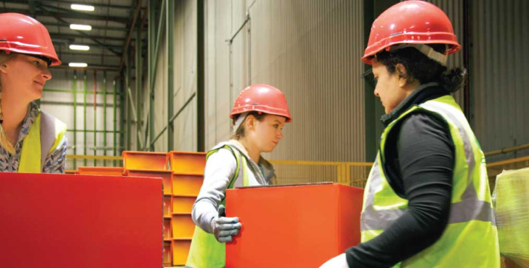
Manual Handling training
Learn to identify manual handling hazards, assess risk and apply safer lifting techniques — covering employer duties, the hierarchy of controls, and practical ways to reduce injury when lifting, carrying, pushing or pulling. Start the course →
 Start the course
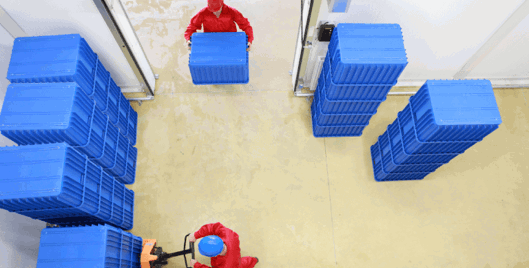
Certificate in Manual Handling Risk Assessment
Build the skills to conduct manual handling risk assessments in the workplace — covering the five steps of risk assessment, common types of harm, and how to apply appropriate controls.
Further reading about manual handling
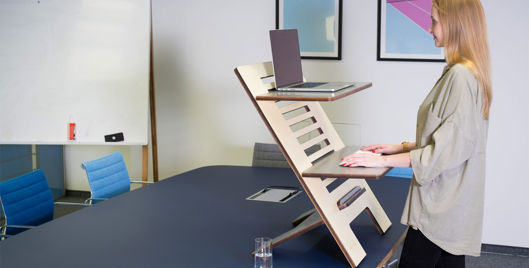
Musculoskeletal disorders at work: causes and prevention
Manual handling is one of the best-known causes of MSD risk, but far from the only one. This guide covers what causes MSDs, what the law requires, and how employers can reduce risk through better task and equipment design.

How to carry out a risk assessment
Manual handling risk assessments are one of the core assessment types every workplace should carry out. This guide walks through what a suitable and sufficient assessment looks like in practice.

The Health and Safety at Work Act Explained
Employers have a legal duty to avoid hazardous manual handling wherever reasonably practicable, assess what can't be avoided, and reduce the risk. This guide breaks down that duty alongside the wider legislation shaping workplace health and safety.