Featured

Dr Shaun Davis
Belron

Dr Julie Riggs
Education and Membership Director, British Safety Council
Published: 06 June 2026.
Joining Dr Shaun Davis on this episode is British Safety Council’s Education & Membership Director, Dr Julie Riggs.
Shaun and Julie discuss upstreaming health and what she describes as the "slow-burn crisis hiding in plain sight" - the blind spots we have to worsening health outcomes - which are costing society and our economy £150 billion a year.
Julie identifies the differences between feeling ‘normal’ and ‘healthy’, explains the importance of not normalising illness, the small behaviour changes we can make to influence our own everyday health, and where employers can help by providing employees better, healthier, environments.
If you want to understand more fully why prevention is better than the cure, this episode is for you.
Key takeaways
-
Feeling “normal” is not always the same as being healthy.
-
Many everyday health risks become harder to manage when tiredness, stress, poor sleep and pain are normalised.
-
Upstreaming health means focusing on prevention before illness develops.
-
Employers can support better health through job design, healthier environments, early conversations and visible leadership behaviours.
-
Small individual changes can help create healthier workplace cultures when they are shared and supported.
In this episode
-
19:24 Balancing personal choice with employer health support
-
21:22 Leading by example: creating a healthy workplace culture
Transcript
Meet Dr Julie Riggs
Shaun: Hello and welcome to this edition of the British Safety Council podcast, Health and Safety Uncut.
Today I’m joined by Dr Julie Riggs, the Director of Education and Membership at the British Safety Council.
Dr Julie Riggs joined the British Safety Council in 2020 and has worked for over 30 years as an occupational health and safety practitioner and trainer, operating as a leader in strategic, corporate and global roles, with broad cross-industry experience.
Julie has an MSc and Doctorate in her field and a Chartered Fellowship with IOSH. She’s an established writer, published author, speaker and active blogger. Her work is featured in the national press and on BBC Radio 4. She’s acted as a viva examiner for doctorate candidates and she mentors degree students.
Julie has also contributed to commercial and government research projects and advisory standards, including presenting research in the House of Commons. She’s volunteered for numerous global charities protecting vulnerable workers.
Julie is particularly passionate about indoor air quality, exploring the role of OSH in public health, modern slavery and diversity, really focusing on the profession and particularly supporting female practitioners.
Quite the pedigree there, Julie. Fantastic to have you here and thank you for joining us.
Julie: Thank you, Shaun.
Shaun: So, as always, can we start with a little bit of background on you please, about how you found your way into safety, what brought you to where you are now currently in your career, and why it’s so important to you?
Rana Plaza and why health and safety matters
Julie: So health and safety for me was a first-choice career. I started it a very long time ago at the age of 18 and it’s just carved wonderful opportunities for me to work in the UK and internationally across a real breadth of different sectors and industries.
And of course, I think anybody who does this type of role, it’s an intrinsic motivation for them to actually help people and make a difference.
But I would say probably the key driver for me that really cemented the reason why I’m in this industry was back in 2013, and that’s due to the Rana Plaza building collapse that happened in Bangladesh.
The building collapsed and 1,100 people lost their lives in an instant. It’s such a tragic event.
Now, there’s a photograph that appeared in National Geographic by a photographer called Taslima Akhter, and it’s called The Final Embrace. It shows two workers who were found in the rubble holding on to each other in those final moments of probably fear and terror at that time.
And it really profoundly affected me. And it really, I guess, made me understand a lot more about why we do what we do, how preventable that could have been, that tragic event that could have been, and all the loved ones that lost friends and family during that tragedy.
It really cemented that view that we need to be doing much more in the world to support people, particularly those who are vulnerable.
And so that’s a real driver for me around every day we try and make a difference. And it’s important to make a difference, not just in our own workplace, but we need to be contributing towards this industry and contributing towards workplaces much more broadly.
So yeah, it’s basically in my DNA, Shaun, around why we do health and safety.
Shaun: Very, very well said.
Now, I’ve heard you talk about today’s topic, the slow-burn crisis hiding in plain sight. And I must say I always enjoy the way that you introduce it by asking how people are feeling, normal or healthy, etc.
So for listeners, can you explain a little bit more about what you mean by this and why it matters?
Normal vs healthy: unpacking the slow-burn crisis
Julie: It’s very interesting what we consider being normal health or good health.
So there’s been a number of surveys in the last couple of years asking people about how they would rate their health from poor to fair, to good, to very good.
And in January last year, in 2025, around 65 to 68 per cent of adults in the UK would describe their health as good or very good. And actually, if we go back during Covid times of 2020/21, that number was much higher. It was 80 per cent of the population felt very good or good.
And this number is actually reflected globally as well. So even if we look at the OECD countries, a good 92 per cent, if we look at the Middle East, similar numbers, 80 per cent or more.
So generally, statistically, we’re all feeling actually pretty healthy, but biologically it’s a very different story.
And despite that, we’re getting lots of health advice, we’re getting better choice of food to be able to consume. We have a better awareness of the importance of exercise. We know to protect ourselves against UV rays. We know the risks of smoking and drinking.
So we’ve got all of this information at our fingertips, yet we’re actually becoming more sick. There’s more chronic disease. And again, this is right across the globe that we’re seeing this. And we’re seeing this trajectory where actually we’re reversing longevity as well.
Shaun: So are you saying, or is the research and the statistics saying then, that there’s a disconnect between perception and reality?
Julie: I do. We’re normalising feeling tired. We’re normalising aches and stiffness. We’re normalising running on low battery and calling it busy. We’re normalising even saying, “I’m fine”, when actually what we really mean is, “I’m functioning”.
So this is the problem. This is where the real risk exists, because we’re normalising it. The risk becomes invisible to us, and when it becomes invisible, we stop managing it.
When you consider that actually just in the UK alone, when we look at sickness absence and presenteeism combined across the UK, it’s costing the economy around about £200 billion.
There are 185 million working days that are lost due to sickness absence. There were 365 million GP appointments last year.
So clearly something is not adding up. We’re saying we’re fine, we’re thinking we’re fine, but actually that’s not what we’re seeing in the stats.
Shaun: And is there a cultural, geographic variance?
How culture shapes the way we talk about health
What sprang to mind then when you were talking was my guilt in normalising this, because I would be one of those people that would say I’m fine if I’m tired, it’s all good if I’ve not had a great night’s sleep. Yeah, yeah, it’s all hunky-dory.
And I wonder how much of that is stiff upper lip British cultural norm. How much of that is me being a lad from South Yorkshire, that you just get on with it. You know, my upbringing, thinking about my steelworker dad and my home help mum, that you kind of just got on with life.
What are you seeing? What have you experienced? What have you heard in that kind of cultural variance?
Julie: I think there are definitely differences geographically. And actually, in the past there was a consideration when you look globally that it’s just the Western world that is experiencing this, but actually we’re seeing it much more broadly than that now.
If we look at something like obesity as an example, one in eight people now in the world have obesity, and it’s growing. It’s doubled since 1990.
So it’s much broader than just being certain pockets of people. And of course, there’s a much broader conversation around access to healthy food, access to lifestyle with regards to exercise and those sort of things.
But absolutely, it’s affecting everyone globally. So I think this is a message that’s important for everyone to be able to listen to.
Shaun: So we’ve had long-standing messaging about healthy eating, about your five a day, about protein intake, about hydration, about sleep, about exercise, and, and, and.
But without being pessimistic, it sounds like it’s not moving that much. And if I’m hearing what you’re saying correctly, it’s static or going worse, or going backwards at worst.
Why we resist healthy lifestyle changes
Julie: It’s going a lot worse.
So adults, you’ve mentioned about eating correctly. Only 3.7 in five adults will actually eat fresh fruit and veg. And yet we’ve known the importance of eating correctly for the last 40 years, but that number hasn’t changed. It was exactly the same 40 years ago. So we haven’t changed our behaviour around it.
If we look at something like diabetes, diabetes is growing enormously at the moment. So when we start to look across the world, it’s one in nine adults affected by it. And again, that’s doubled since 1990.
What’s very interesting about that is 90 to 95 per cent of all diabetes cases are type 2, so it’s affected essentially by a lifestyle. It’s a choice that we make.
So we’re not eating the correct food, we’re not getting enough sleep, we’re not getting enough exercise. We’re still smoking or vaping, we’re still drinking. All of those habits are still happening.
Your brain is very interesting. Your brain wants you to consume lots of sugar and salt, and it wants to really ensure that you have high energy levels. And so it tricks you into thinking that consuming these foods is really good for you.
Now, as a runner myself, my brain plays tricks on me as well. It doesn’t want me to go and exercise.
So when I get up in the morning and I’m stretching for my run, my brain will tell me that that little tweak that I’ve got in my knee or that little tweak in my ankle is catastrophe and I’m about to injure myself and I shouldn’t necessarily go for a run.
But this is what’s known as a taper tantrum. In fact, most marathon runners get it, and it’s basically your brain trying to tell you to reserve energy and it doesn’t want you to go for a run.
So your brain sometimes is your worst enemy with regards to your habits.
It wants you to have the pizza. It wants you to have the sugary latte. It doesn’t want you to go for a run because it’s tricking you.
If your heart or your lungs could talk to you, they would tell you a very different thing than what your brain is telling you.
So for us around messaging, when we talk about messaging about healthy lifestyles, ensuring we’re taking exercise and things like that, it has to be more than just a message that comes from the government or the NHS.
And we have to help support each other in that messaging, because just telling people what they need to do - we already know it. You’ve just listed exactly some of the things that we need to do. All of us know it.
But it’s that step change to actually making those changes for ourselves that’s important.
Shaun: And do you think we do enough to help each other?
Julie: No.
Shaun: No, that’s my experience. I’ll tell you why. I’m a personal story.
So I had quite a bit of middle-aged spread, shall we say, kind of creep up on me. And I had a health assessment 12 months ago. It wasn’t bad, it wasn’t brilliant. A bit high on the cholesterol level, bit high on fatty liver.
I’m not a real drinker, I’m a vegetarian, I’ve never smoked. I think I exercise. I think I’ve got a pretty clean life and clean diet, but not brilliant.
I was 110 kilos. I knew I was carrying too much. It wasn’t working for me. So I decided that I was going to get on it and change things.
So I’ve gone from 110 kilos to 80, which I feel great with. I’m very, very happy with. I haven’t had universal support. I’ve got to say, I’ve had: “Don’t lose too much”, “Oh, you’re not looking that well”, “Oh, you don’t want to get any skinnier”, “Oh, have you been on the jab?”, all that.
And I’ve not felt enormously supported. Whereas if I’ve seen other people, and I’m not saying they’re right or wrong, just if I’ve seen other people address their health issues, I have acknowledged and kind of celebrated it, I think because I know how hard it is.
And the reason I was nodding so much when you were talking about taper tantrum was on Saturday afternoon, I hadn’t been to the gym, and my brain was telling me every reason why I shouldn’t.
Your knee’s a bit sore. You’ve trained already last week a few times. You should maybe have a rest day.
And I just ignored it and went, and it felt great on the back of it.
And so I do think there are a few things there, that there’s a personal efficacy piece, there’s an ownership element of it, but then there’s also kind of helping other people out.
So what’s your view on that?
Downstream, midstream and upstream health
Julie: So there’s a concept called upstreaming health.
And when we look at healthcare, there are three different levels to it. Essentially, I’m making it sound very basic, but there’s downstream health, there’s midstream health and there’s upstream health.
So downstream health is probably the most familiar that you’ll recognise. This is reactionary. This is clinical care and treatment. It’s about treating a health issue once it’s already developed.
So think about chronic pain medication, dialysis treatment for patients with kidney failure, et cetera. And the whole point of this is about intervention and trying to support the maximum quality of life.
Shaun: Kind of a clinical fix type of approach, right? Medication.
Julie: Very reactional, yeah.
Then you have midstream, and that’s about early diagnosis and managing chronic conditions to prevent them from escalating into something more serious.
So again, think about statins to reduce cholesterol, and hence you’re looking to reduce the risk of stroke or heart attacks.
And it’s aimed at people who appear healthy but potentially have some subclinical form of disease which could lead to them becoming unwell. Sometimes we call these the silent killers.
So you have high blood pressure, you have high cholesterol, and you may not necessarily recognise it. There are lots of diagnostic treatments out there that you can identify early and start to treat it and do something about it before it becomes worse.
And then you have upstream, which is all about prevention, lifestyle, promotion, education. It’s about preventing someone from getting unwell in the first place.
Now, this stat is really shocking to me. If you look at the reason why people go to the GP, 80 per cent of the conditions that they’re going to the GP about are entirely preventable through lifestyle.
So this is where upstreaming fits in lovely, because it’s actually getting to that first level and saying: how do we get people to modify the lifestyle factors, the healthy diet, having adequate exercise? How do we actually support those people who are healthy at this stage to prevent them from becoming unwell?
And you can probably imagine where most of the money is spent when we think about the NHS. It’s in the downstream and it’s reactional.
And the NHS recognise this, that they actually have a plan called the NHS Long Term Plan and they recognise the importance of upstreaming interventions.
They actually specify that they could probably reduce the bill to the NHS by £11 billion if we just adopted this.
But the problem is, it’s like I was saying, your brain plays lots of tricks on you. Your family and friends will intervene with regards to what they think is healthy, because they’re normalising their own health.
Therefore we need to do more. And this is a role beyond just the government and the NHS.
I talk about this health crisis, and it is a health crisis. The trajectory of it is heading in the wrong direction. And we all need to be able to step in and help each other with this and support each other on that journey.
Because if we don’t, sickness absence is projected to reach about 50 per cent by the time we get to halfway through this decade.
Shaun: Wow. So there are some stats that came across in preparing for this.
So 37 per cent of UK adults consume fast food daily, 60 per cent of UK adults consume processed food on a daily basis, and around 875,000 workers are suffering from work-related stress, depression or anxiety. And that in itself led to 17 million working days lost.
So why, with facts like that, with evidence like that, with a long-term trajectory of 50 per cent by the middle of this decade in terms of sickness absence, why is it not landing?
Why are we not doing more? What could we be doing more? And what’s the overlap with occupational health, with organisations?
And as I’ve been talking, I’ve been thinking, I did quite a long time in the construction industry, and I was thinking about food choices and access to quality food and drink, and lifestyle and shift working. And it wasn’t great.
It’s got better, I recognise that, but it’s not great to start with. And so there are some big organisation sectors out there.
What’s your view on the overlap or the relationship between, say, the NHS, employers, occupational health and safety teams?
How employers can improve public health
Julie: So public health, when people get sick, it doesn’t start in the hospital or the GP surgery. It starts in everyday interactions that we’re making, and therefore employers can play a role in this by providing environments that are better.
So this can include having healthier food options. It can include, we’re all very sedentary at the moment. We spend a lot of time, I think it’s something like seven to nine hours a day, sitting down. So we’re much more sedentary.
So employers being able to ensure that they’re enabling good mobility for their staff during the day as well, having walking meetings as an example, ensuring that people are taking regular breaks, are able to switch off when they go home so they get proper sleep.
So there is a lot. Most of us during our day, we’re spending a lot of time at work. So there is a lot that employers can do.
There’s always been this argument about where does public health really sit? Is it NHS and government? And there have been conversations regarding whether employers should get involved. Is this a nanny state? Why are we getting involved in people’s personal lives?
But actually, when you look at mental health as an example, we’ve really embraced that and we recognise that it’s not just in the workplace, but mental health is much broader than that. And there are lots of contributing factors.
This is the same. But we’re just asking people to bridge that gap between understanding that this is preventable.
If you look at health and safety generally, our role is about prevention is better than cure, and this is exactly the same. By identifying some of the root causes, we can actually do a lot by creating a really good environment for employees to adopt a much healthier lifestyle.
Shaun: And what about personal choice? I guess this is the thing that must come up a lot. You know, people saying, if I want to eat that way, drink that way, smoke, vape, that’s my personal choice.
I’m not hearing you say it should be put as a kind of imposition, more as a kind of education and a choice point.
But I guess to have that, you have to have something to back it up. You have to have some education of some form to be able to put people in a position where they can make an informed choice.
Balancing personal choice with employer health support
Julie: Agreed. And I think that it is very individual what motivates someone to want to eat healthy or exercise.
For some people as well, when you’re at the starting point, it’s difficult. It’s really challenging, and it’s very difficult to fall at the first hurdle when you’re trying to achieve something.
So it’s very important to ensure that that support is there. People can make a choice.
There’s so much that employers could do that is just really simple things, with regards to being able to offer maybe free blood pressure tests or cholesterol tests, and people are able to really understand: this is the impact for me.
I mentioned earlier on about the silent killers, like cholesterol and high blood pressure. Some people don’t even realise they have it. They don’t realise that what they’re walking into is the future.
So I think being able to support people on that journey, the educational piece is really important: understanding the impact that they may have as they start to get older, the impact on their health, what they’re able to do and not do, and actually what future they’re walking into if they don’t make these changes.
Shaun: Yeah, yeah, absolutely.
In terms of what you have seen out there, what you’ve seen best-in-class employers do, can you share some of that insight? And particularly for people who might be starting out on their educational journey, right through to those that are kind of really established.
So some of the things you were talking about, about food choices, access to things. I’ve seen that done in my organisation and in other organisations I’ve worked in.
We have what we call the trim trail where I work, where people can have walking meetings. We’ve got a fitness room. We’ve got a great on-site restaurant with really good choices of subsidised quality food.
But I know not everybody’s there. So that might be one end of the spectrum. What have you seen elsewhere and what would your message to those who are newly thinking about this be?
Leading by example: creating a healthy workplace culture
Julie: It’s great to hear that there are organisations out there that really are challenging this and really supporting their employees.
But I also appreciate that for some organisations, this could be a budgetary issue as well as to what you can actually supply.
But there are lots of things you can do. You can introduce something and it really doesn’t cost anything at all, and start to introduce challenges, simple things.
You’re going to make a challenge this month that you’re not going to have any sugar in your coffee, as an example. There are very simple things that you can do, having walking lunchtimes and so forth.
So not everything has to cost.
But what I would say for employers is to really start to integrate it into more of a strategy within your business.
No yoga classes are really going to fix health. What you need to be able to do is, first of all, start with job design.
So start thinking about reviewing workloads, pace, autonomy that people have, making sure you have enough recovery time in their work.
So you’re really designing health risks into your work itself. And I think treat health like any other risks that you have.
So start thinking about how you can integrate it into maybe your risk registers, your KPI monitoring that you do.
I worked for a company once, and we introduced a body mapping exercise for people that worked in a warehouse and on forklift trucks. We were able to get people to report early symptoms.
So if they were struggling with maybe some neck strain or they were struggling with maybe they had some pain in their wrists at the end of the day, we were able to identify this data really early and start to support that person.
You can also do things like equip managers to have really good conversations, recognise when people are fatigued, or if they’re in pain, or they have declining performance. You can start to have very early conversations.
And one of the things that’s really important is you have to lead by example.
So if you’ve actually got your leadership that are taking breaks, they’re also managing their workloads visibly, they’re moving around, they’re eating healthy, they’re prioritising health in their own decision-making, that’s the strongest type of policy you can have: what you see around you.
And I think the more people we can get healthy, the more it then starts to create a bit of a culture in your organisation as well.
Shaun: I saw something which I’ve adopted last year, and I’ve adopted it myself because I work for a global organisation, so we’re working around the clock.
It was an addition to the email signature saying: I work at a time that is suitable for me and kind of meets my needs, and I don’t expect you to mirror that.
I really liked it. I copied that as an idea, but the amount of people that have come back to me and said how much they like it and appreciate it, because it was permission-giving for other people to say, right, so I don’t have to.
So if I decide that I want to do something, I mean, what’s late at night for me is early morning elsewhere, or early in the day in the US, right?
But just having that out there as a visible sign of that. And also because sometimes if you’re catching up when you’re travelling, or you send an email on the weekend, being really explicit: I’m doing this to get me out on something ahead of something next week. I’m not looking for a response. I’m not looking for you to pick this up now. It’s just suitable for the time zone or the work that I’m in at the minute.
I mean, that’s a low-cost, no-cost idea, right?
Julie: It’s an excellent example. And the world of work has changed so much. You know, we’re not off anymore. Our phones are constantly on, we’re checking our emails, we are doomscrolling quite a lot in the evenings. You know, it’s a constant thing.
So I think how we’re working and our patterns of working, it’s appreciation that people do work in different pace and different hours.
I think that’s a great example, showing people about, and it’s setting the message as well that actually there is off time, there is rest time as well.
Shaun: Yeah, really important.
Now, each episode I like to ask our guests what their one takeaway would be for a listener to have from your conversation.
What one thing would you recommend, suggest, advise a listener does?
Julie’s call to action: change your health today
Julie: So whether you’re a CEO, a manager, a health and safety practitioner, an employee, we all have influence here.
Now, I’ve talked a little bit about this subject in the past, and I always leave a call to action at the end of any presentation, and that is for this too.
So the first thing is I want you to do something today that is going to change your health. And I want you to encourage a colleague, a peer, to also do the same, because this movement, this kind of change that we’re looking for, starts on a very individual level.
And if everybody does one thing today, we’re all going to help each other create healthy environments.
Shaun: Yeah. I mean, I could not agree with you more. I love that.
And I do think these big, big, big actions can be a bit intimidating, right? But something small, meaningful, shared and supportive, I think is incredibly, incredibly helpful.
That’s just been a fantastic and fascinating walk through that.
Thank you for all the work you’re doing in this area. Thank you for your time today. Thank you for sharing your insight.
Now, how can people contact you, learn a bit more about you? Are you on socials? What’s your contact, maybe if people want to carry on this conversation?
How to contact Dr Julie Riggs
Julie: So they can contact me at the British Safety Council. But also I’m on LinkedIn. You will see me posting quite a bit around various subjects within the health and safety field, and I’d love to hear from people and to hear a little bit more about their stories, what they’re doing, so perhaps we can share some good guidance, good advice broadly as well.
Shaun: Dr Julie Riggs, that’s been fantastic. Thank you very much and best of luck in all the work in the future.
Julie: Thank you, Shaun.
Explore more on workplace health and wellbeing
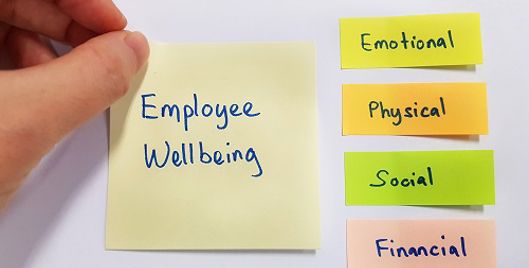
From crisis to prevention: the urgent role of employers in upstreaming health
Dr Julie Riggs explores why employers have a vital role to play in shifting from reactive healthcare to prevention, and how healthier workplace environments can help reduce sickness absence and presenteeism.
 Read Julie’s article

Workplace Wellbeing
Discover how British Safety Council supports organisations to improve employee wellbeing, build healthier cultures and take a more proactive approach to workplace health.

Prevention is better than cure: the role of employers in improving worker health
Learn why prevention should be central to workplace health strategies, and how employers can support better long-term outcomes through early action, healthier job design and practical interventions.

Workplace Wellbeing Course for Employees
Help employees understand the connection between wellbeing, health and safety, with practical learning on physical wellbeing, sleep, diet, alcohol, mental health and everyday choices.
The link between physical and mental health
Listen to another Health and Safety Uncut episode exploring how physical and mental health are connected, and what this means for healthier, more supportive workplaces.
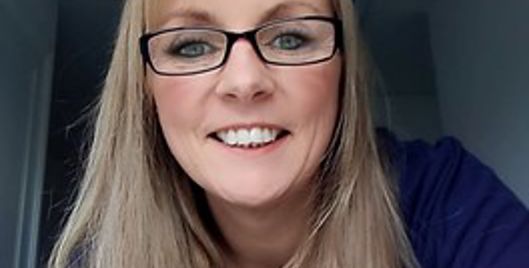
Dr Julie Riggs
Find out more about Dr Julie Riggs, British Safety Council’s Director of Education and Membership, including her experience, areas of expertise and work in occupational health and safety.
More Health and Safety Uncut episodes
Previous episode: Understanding the Building Safety Act, brick by brick
In this episode, Dr Shaun Davis talks about Building Safety Act compliance with BSR's Andrew Saunders and 4site's James Purdy — covering safety case reports, golden thread and high-rise risk.