

As the 2026 FIFA World Cup approaches, concerns are growing around the impact of extreme heat on workers, players, and spectators across North America. With matches scheduled across 16 host cities in the US, Canada, and Mexico, many experts warn that high temperatures and humidity could create serious workplace health and safety risks.
For employers, the tournament highlights an increasingly important issue: protecting workers from heat-related illness.
Heat exposure is a workplace safety issue
Several World Cup host cities, including Miami, Houston, Dallas, and Atlanta, could experience temperatures above 85°F (29°C), with some reaching over 90°F (32°C) during tournament periods.
Researchers warn that thousands of workers involved in the tournament may face conditions exceeding recommended heat exposure limits. This includes:
- Security personnel
- Emergency responders
- Stadium staff
- Ticketing and concessions workers
- Construction and maintenance teams
- Temporary contract workers
Workers performing physically demanding tasks, carrying heavy loads, wearing protective clothing or uniforms, or spending long periods in direct sunlight may face an increased risk of heat exhaustion and heat-related illness.
Heat is already recognised as one of the deadliest forms of extreme weather, and experts say the 2026 World Cup could become one of the hottest tournaments in history.
Why heat stress matters in the workplace
Heat-related illness can develop quickly and may lead to:
- Dehydration
- Heat exhaustion
- Heat stroke
- Fatigue and impaired concentration
- Increased risk of accidents and injuries
Occupational heat-related illnesses become more common when the heat index reaches 80°F (27°C) or higher.
Risk levels increase further during strenuous work activities such as lifting, carrying, digging, or prolonged standing in direct sunlight.
Workers who are not acclimatised to hot environments, such as temporary or seasonal workers, may be especially vulnerable.
Calls for stronger heat safety measures
A group of international health, climate, and sports performance experts has urged FIFA to strengthen its heat safety guidelines for the tournament.
The experts argue that current thresholds for player activity in extreme heat are “impossible to justify”.
They highlight Wet Bulb Globe Temperature (WBGT) as an important measure of heat stress because it accounts for air temperature, humidity, wind speed and solar radiation.
The group has recommended stronger preventative measures, including:
- Longer cooling and hydration breaks
- Match delays or postponements during dangerous heat conditions
- Improved cooling technologies
- Enhanced heat monitoring protocols
While these recommendations focus on sport, the same principles apply to workplace health and safety.
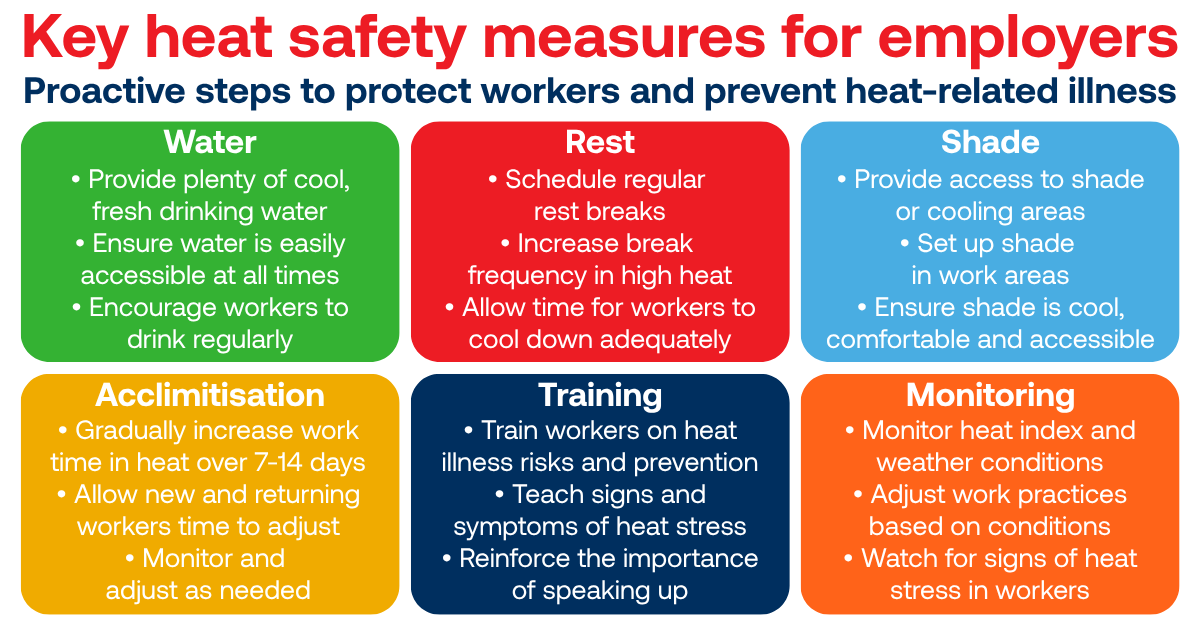
Key heat safety measures for employers
Occupational safety experts consistently point to several effective ways employers can reduce heat-related risks at work.
Providing access to water
Workers should have easy access to cool drinking water throughout their shift, particularly during hot weather and physically demanding tasks.
Scheduling rest breaks
Regular breaks in shaded or cooled areas can help workers recover and reduce heat strain.
Monitoring environmental conditions
Employers should monitor temperature, humidity, and workload levels to assess heat risk accurately.
Supporting acclimatisation
Workers new to hot environments may need time to adapt safely to working conditions
Delivering heat safety training
Workers should be trained to recognise the signs and symptoms of heat illness, report concerns, and respond appropriately in emergencies.
Establishing a heat illness prevention plan
Employers should implement formal heat illness prevention plans and designate responsible heat safety personnel.
Temporary workers may face greater risk
One recurring concern raised by labour advocates is the vulnerability of temporary and contract workers.
Temporary workers may:
- Be less acclimatised to local heat
- Lack adequate training
- Feel less comfortable raising safety concerns
- Have limited access to workplace protections
This reinforces the importance of clear communication, supervision, and consistent safety standards across all worker groups.
The wider impact of rising temperatures
The risks seen during the World Cup reflect a much broader challenge.
Extreme heat is increasingly affecting:
- Outdoor workers
- Construction teams
- Event staff
- Emergency responders
- Recreational and youth sports
- Public events and festivals
Heat exposure can also worsen existing cardiovascular, respiratory, and mental health conditions.
For employers, this means heat risk management is becoming an essential part of workplace safety planning.
A growing focus for health and safety
The increased attention on heat safety at the World Cup mirrors growing regulatory focus elsewhere.
OSHA recently renewed its National Emphasis Program for heat hazard prevention, increasing inspections and enforcement activity around heat-related workplace risks.
Inspectors may now assess heat hazards during both indoor and outdoor workplace inspections, particularly on “heat priority days” when temperatures exceed safe thresholds.
Employers are therefore being encouraged to take proactive steps to protect workers before incidents occur.
Final thoughts
The 2026 FIFA World Cup is expected to showcase elite sport on a global stage, but it also highlights the very real dangers of workplace heat exposure.
From hydration and rest breaks to heat illness prevention planning and worker training, the lessons emerging from the tournament are directly relevant to employers across many industries.
As temperatures continue to rise, protecting workers from heat-related illness will remain a critical part of effective workplace health and safety management.
Related items

Brian Grant, Parkinson's Disease and the Hidden Risks of TCE Exposure
Former NBA player Brian Grant's Parkinson's diagnosis highlights the potential long-term health impacts of Trichloroethylene (TCE) exposure and the importance of clean air and water.
 Read more
Workplace Temperature
This course will raise the individual's awareness of the risks of working in hot or cold environments, whether indoors or outdoors.