
Silica Dust Warning Signs Checklist
A one-page printable checklist: download it, pin it up on site, or save it to your phone.
Download nowYour basket has been adjusted. This may be due to an event becoming unavailable or you logging into the site and your active roles changing.

New British Safety Council research
British Safety Council asked 2,104 adults across a range of sectors how concerned they were about workplace risks. Almost two-thirds (62%) said they were concerned or very concerned about silica dust, yet 16% said they had little or no knowledge of silica-related harms.
How many lives is a new kitchen worktop worth?
The beautiful quartz worktop in your kitchen may have come at a cost most people never see. HSE estimates that silica may be responsible for more than 500 deaths each year among people who have worked in construction. Workplace exposures are also linked to around 4,000 COPD deaths annually, with construction workers among the groups at risk.
Workers cutting engineered stone can be exposed to dangerously high levels of silica dust. Many are young. Some develop irreversible lung disease after only a few years at work. A finished worktop lasts for decades.
The damage to a worker's lungs lasts forever.
IN THE NEWS
On 14 October 2026, Sky News reported on silica dust risks in kitchen worktop factories, revealing that Health and Safety Executive inspectors had raised concerns at 58% of businesses inspected.
As part of the coverage, British Safety Council's Strategic and Impact Director, Charlotte Walshe, spoke to Sky News about the dangers of silica dust exposure and the need for stronger protections for workers.
Watch Sky News' investigation below.
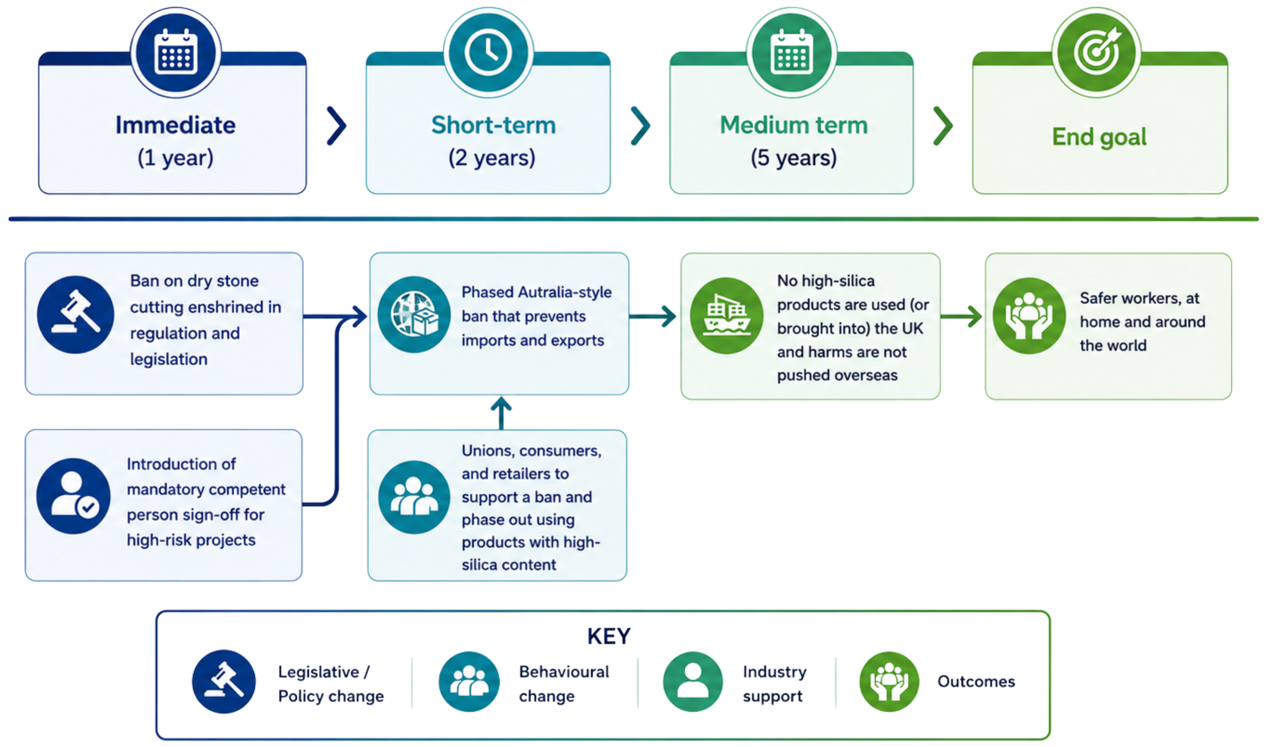
British Safety Council believes the only effective way to protect workers from respirable crystalline silica (RCS) is to phase out engineered stone and other high-silica materials. While regulation and control measures can reduce exposure, they cannot eliminate the risk of workers developing silicosis and other serious diseases.
We therefore support a phased ban within five years, following Australia's evidence-based approach. This would give industry time to adopt safer alternatives, strengthen supply chains and support businesses and consumers through the transition.
During this period, the Government should strengthen regulation by banning dry cutting, introducing mandatory competent-person sign-off for high-risk work, and tightening controls until high-silica engineered stone is no longer used or exported from the UK. The objective is simple: safer workers, safer workplaces, and the elimination of preventable silica-related disease.
Silicosis is a lung disease caused by breathing in respirable crystalline silica dust (RCS) over time. The dust is released when materials like stone, concrete, brick, and engineered stone are cut, drilled, or ground. Once the dust reaches the lungs, it causes permanent scarring that cannot be reversed.
Silica is a natural mineral found in many common building materials. When these materials are worked, they release tiny dust particles into the air. These particles are so small they can be breathed deep into the lungs without workers even realising they’re there.
Anyone who regularly works with stone, concrete, or similar materials may be at risk. This includes construction workers, stonemasons, kitchen worktop fabricators and installers, demolition workers, quarry workers, foundry workers, and people working in manufacturing.
Silicosis develops after breathing in silica dust over time. Every exposure adds to the damage. Workers often do not realise they are being exposed because the dust is too small to see and symptoms may not appear until years later.
Early symptoms can include a persistent cough, shortness of breath, and feeling unusually tired. As the disease progresses, everyday activities such as climbing stairs or walking short distances can become difficult. By the time symptoms appear, permanent lung damage has often already occurred.
No. There is currently no cure for silicosis. Once the lungs have been scarred, the damage cannot be reversed. This is why preventing exposure to silica dust is so important.
Yes, Silicosis is entirely preventable. Using the right controls, such as wet cutting, dust extraction, good ventilation and suitable respiratory protection, can dramatically reduce exposure and protect workers' health.
Only a total ban on silica containing materials, alongside adequate import and export controls, can keep the workers of today and tomorrow safe from silica-related risks.
The growing use of engineered stone has led to higher levels of silica exposure for some workers. In countries around the world, including Australia, doctors have seen younger workers developing severe silicosis after only a few years of exposure to high-silica products.
Too many workers are developing a disease that should no longer exist. We believe stronger regulation, better awareness, and safer products can reduce future cases, give retailers the time they need to introduce silica free products, before a total ban is introduced.

A one-page printable checklist: download it, pin it up on site, or save it to your phone.
Download now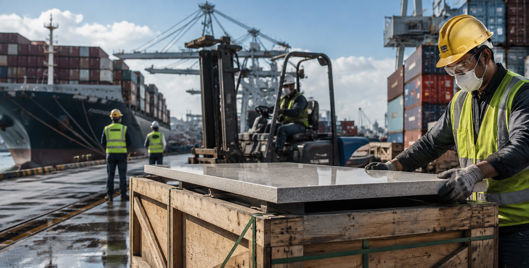
A UK ban on engineered stone must cover imports and overseas supply chains. Explore why consumer demand and global responsibility also matter.
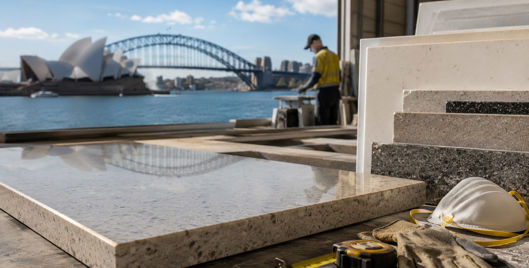
Australia banned engineered stone after workers developed silicosis. Explore what the UK can learn and why British Safety Council is calling for action.
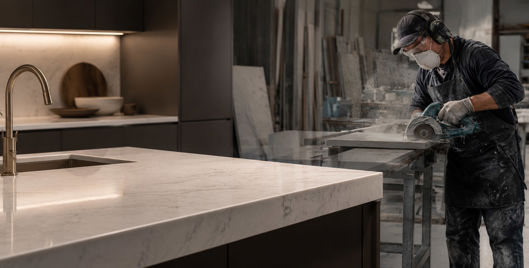
Engineered stone worktops can release highly hazardous silica dust when cut. Learn how this causes incurable silicosis and why UK action is urgent.
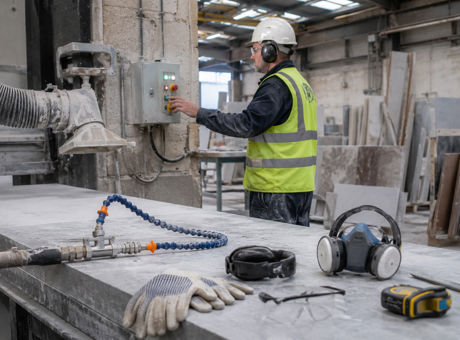
Working with stone, concrete or engineered worktops? Learn the warning signs of unsafe silica dust exposure and the controls that prevent silicosis.
Silica dust warning signs workplace
Clinicians at the Royal Brompton hospital in London have warned about the dangers of silica exposure in a recent study published in Thorax. They are currently treating the first identified cases of silicosis caused by working with engineered stone in the UK and have called for a ban on artificial stone to ward off the potential for an increase in silicosis cases.
Waiting for workers to show symptoms of silicosis means acting too late, a leading clinician working at the frontline of the disease has warned.
With concerns rising that workers who manufacture and install artificial stone kitchen worktops are at high risk of early-onset fatal lung disease, it is vital employers take steps to prevent and control exposure to respirable crystalline silica found in engineered stone materials.

If you are in the market for a new kitchen, you will come across engineered stone or ‘quartz’ worktops. Cheap, premium, luxury are words that will be thrown around photos and videos lingering on expanses of shiny, multicoloured stone. But not in Australia, where since July new engineered stone worktops have been banned (although some states allow a six-month transition period).
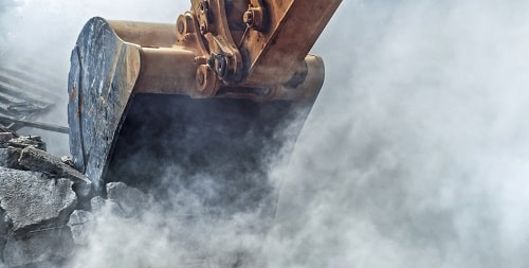
Silicosis is considered to be the most common chronic occupational lung disease worldwide. It is a form of pneumoconiosis and is a progressive, degenerative clinical respiratory condition which causes crippling health conditions and co-morbidities and can lead to death.
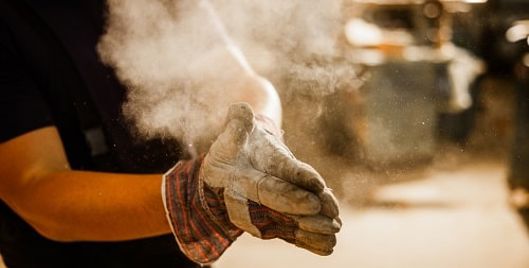
Engineered stone dust contains up to 95 per cent silica, and younger workers are dying in its wake from a disease known as accelerated silicosis. Are we going fast enough to address the problem?

Watch the panel "Is silica the new asbestos? The risks of cutting engineered stone and silicosis", with speakers from BOHS, the National Federation of Builders and British Safety Council.
Watch the sessionsSign up for campaign updates, practical resources and expert guidance on silicosis and other overlooked workplace health risks.
 Read more