

Slips and trips at work are one of the leading causes of workplace injury in the UK. These accidents can occur in almost any setting including offices, warehouses, construction sites and healthcare environments.
While some incidents result in minor injuries, others can lead to more serious harm, such as fractures and head injuries. In many cases, people need time off work to recover.
According to the Health and Safety Executive (HSE), slips, trips and falls on the same level account for 30% of non-fatal workplace injuries reported by employers. This makes them the most common type of workplace accident.
However, many of these incidents can be prevented if organisations identify hazards and manage risks effectively.
What are slips and trips at work?
Slips and trips are accidents that happen while a person is walking or moving around at work.
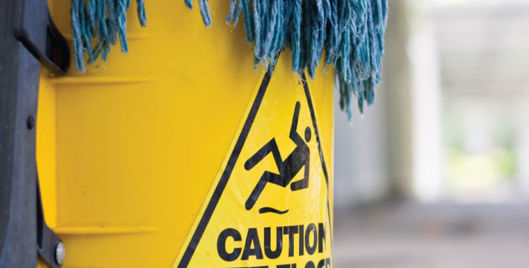
Slips usually occur when there is little friction between a floor’s surface and someone’s footwear. For example, on wet or contaminated floors.
A trip occurs when someone loses balance because of an obstruction in a walkway or an uneven surface.
Slips and trips normally occur on the same level and are different from falls at height, which involve someone falling from an elevated surface such as a ladder.
Both slips and trips can result in injuries such as sprains, fractures or head injuries, and happen across different work environments.
Common workplace causes
Many incidents are caused by everyday hazards.
Some examples include cluttered walkways, wet floors from cleaning or spillages, loose cables or wires, and damaged or uneven flooring.
The risk of these incidents can also increase if workers have unsuitable footwear, or if there is bad weather (such as excessive rain) that can lead to water being brought into entrance areas, creating slippery surfaces.
Poor housekeeping and a lack of floor maintenance can also increase the likelihood of accidents if liquid hazards or damaged flooring are not dealt with quickly.
Employer and manager responsibilities
Employers are legally required to protect the health and safety of their employees.
Under the Health and Safety at Work Act 1974, employers must take reasonable steps to manage risks at work. This includes hazards that could cause slips, trips or falls.
It’s the responsibility of employers and managers to identify hazards, assess the risks they cause and put suitable control measures in place.
This could include maintaining safe floor surfaces, keeping walkways clear and addressing hazards such as spillages or floor damage.
Employers should also consider anyone who could be affected by the work they carry out. Contractors, visitors and the public should be protected from potential hazards. Employees should also be encouraged to report hazards so they can be addressed quickly.
Failing to control these risks could result in injury and possible enforcement action.
Risk assessments for slips and trips
Risk assessments are a key part of preventing slip and trip incidents in the workplace. Employers should identify hazards and consider how they could lead to accidents. The Health and Safety Executive recommend that slip and trip hazards are included as part of routine risk assessments.
Employers might consider factors such as the condition of flooring, lighting levels, cleaning procedures and the layout of walkways.
Entrances and outdoor areas should also be assessed, as these areas could have a higher risk of slips, particularly during wet or icy weather.
Risk assessments should be reviewed regularly and updated when working conditions change or new hazards are identified.

Preventing slips and trips at work
Preventing slips and trips at work often starts with simple safety measures.
Employers can lower the risk of accidents by maintaining floors, entrances and walkways and addressing issues quickly.
Practical steps include cleaning up liquids promptly, keeping access routes clear and repairing uneven flooring.
How many people suffer slips and trips at work?
The HSE reports that 680,000 workers sustained a non-fatal injury at work in 2024/2025 according to the Labour Force Survey (self-reported data). Slips and trips account for around a third of injuries reported by employers.

Reducing the risks of slips and trips at work
Many workplace incidents caused by slips and trips can be prevented through effective risk management.
By identifying hazards, carrying out risk assessments and maintaining safe working environments, employers can significantly reduce the risk of injury.
Simple measures such as good housekeeping and safe flooring also play a role in preventing accidents.
Managing these risks effectively helps protect workers and ensures organisations meet their health and safety responsibilities.
If your organisation requires training, explore our Avoiding Slips, Trips and Falls training course for practical guidance on preventing workplace accidents.
Related items
Avoiding slips and trips
Slips and trips are the main cause of major injuries in the workplace.
 Find out more
British Safety Council Certificate in Risk Assessment
This short course is for anyone who has to carry out risk assessments in the workplace.