

At a glance
Abrasive wheels can cause serious injuries if they are not used correctly. Employers are legally responsible for making sure equipment is safe and workers are properly trained. Our article explains the main hazards, the legal requirements and the steps employers can take to manage the risks.
|
Question |
Short answer |
|
Is abrasive wheel training mandatory? |
Yes. Employers must provide adequate training under PUWER Regulation 9. No specific certificate is required by law. |
|
Do I need training to use a grinder? |
Yes, if the grinder uses an abrasive wheel and is used as work equipment, adequate training is required. |
|
How long does a certificate last? |
There's no fixed legal expiry. Refresher training should be given when needed to maintain skills; some providers set their own validity period. |
Abrasive wheels are used in workplaces for tasks such as cutting, grinding and finishing materials. However, choosing the wrong wheel, mounting or using it incorrectly, can put workers at risk of serious injury.
Employers must make sure abrasive wheels are suitable for the task, properly maintained and used by workers who have received abrasive wheel safety training. They should also make sure workers understand the hazards involved and how to manage them safely.
This blog looks at the most common abrasive wheels risks, why accidents happen and how employers can protect their workers.
What are abrasive wheels and where are they commonly used?
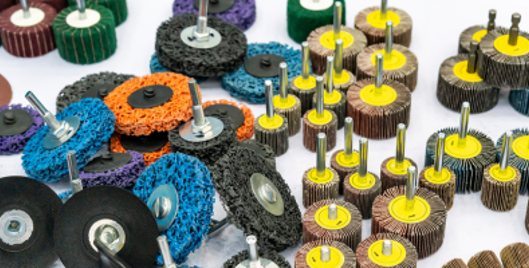
Abrasive wheels are made from abrasive particles bonded together. Different wheels are designed for different materials and applications. They can be fitted to equipment such as angle grinders, bench grinders and cutting-off machines.
They are used across industries including construction, manufacturing, metalworking and mechanical engineering. It’s important to choose a wheel that is appropriate for the equipment, material and task.
What are the most common risks when using abrasive wheels?
Using abrasive wheels can expose workers to several risks. HSE guidance highlights the risk of injury from wheel breakage and contact with a running wheel. Overall, the hazards include:
Wheel breakage
If an abrasive wheel breaks while rotating, pieces of the wheel can be thrown from the machine at high speed. A wheel is more likely to break if it is damaged, mounted incorrectly or unsuitable for the task.
Contact with a moving wheel
Contact with a rotating wheel can cause serious injury. Suitable guards help reduce this risk by preventing workers from reaching dangerous moving parts while machinery is operating.
Flying particles and sparks
Cutting and grinding can create sparks and flying fragments, which can injure the operator or people nearby.
Dust
Grinding and cutting can generate particles and dust that may cause respiratory irritation and lung disease, as well as harm to the skin and eyes.
Noise and vibration
Grinders and other power tools can expose workers to noise and hand-arm vibration. Exposure to high levels of noise can damage hearing, while vibration can lead to hand-arm vibration syndrome (HAVS).
Why do abrasive wheel accidents happen in the workplace?
According to HSE guidance, nearly half of abrasive wheel accidents are linked to unsafe systems of work or operator error.
Accidents can happen when the wrong wheel is selected, equipment is poorly maintained or a wheel is incorrectly mounted. A lack of training or supervision can also leave workers without the knowledge they need to use abrasive wheels safely.
"Safe abrasive wheel use requires more than procedures; it depends on a culture of consistent standards, led by management and maintained by workers."
Is abrasive wheel training mandatory in the UK?
Yes. Employers must ensure that anyone who uses abrasive wheel equipment at work receives adequate health and safety training, under Regulation 9 of the Provision and Use of Work Equipment Regulations 1998 (PUWER). This applies to abrasive wheels used on angle grinders, bench grinders and similar equipment.
The law doesn't specify a particular abrasive wheel course or certificate. Training must be adequate for the equipment, the task and the level of risk involved, and should cover how to use the equipment safely, the risks involved and the precautions workers need to take.
Do employees need abrasive wheel training to use grinders?
Employees need to know how to use grinders safely before operating them. The training they need will depend on the equipment they use, the work they carry out and their existing experience.
British Safety Council’s Abrasive Wheel Safety course covers the key steps involved in working with abrasive wheels safely, including how to choose, check, handle, store and use them correctly. It can be used alongside practical, on-the-job training, and as theoretical refresher training.
How can employers reduce abrasive wheel risks?
Employers should assess the risks involved in using abrasive wheels and take steps to protect workers and anyone else who may be affected. Under PUWER, work equipment must be suitable for its intended use and kept in a safe condition. Employers also need appropriate safety measures in place to support this.
|
Area to assess |
Recommended action |
|
Wheel selection |
Check the wheel is appropriate for the machine, material and task. |
|
Checks before use |
Look for damage or deterioration that could affect safe operation. |
|
Maintenance |
Follow the manufacturer’s instructions and make sure maintenance and repairs are carried out by competent people. |
|
Guards and protective measures |
Fit and use suitable guards to prevent access to dangerous moving parts and help contain fragments or sparks that could be thrown from the machine. |
|
Dust, noise and vibration |
Assess exposure and put suitable controls in place. PPE may also be needed, depending on the task and level of exposure. |
Download: Abrasive wheel safety checklist
Use our free one-page checklist to sense-check training, wheel selection, machine condition and PPE at a glance — a quick reference for supervisors and operators on the shop floor.


When should abrasive wheel training be refreshed?
PUWER does not set a fixed period for refreshing abrasive wheel training. Further training may be needed when working practices, associated risks, technology or machinery change.
HSE’s wider guidance on work equipment states that refresher training may be needed to prevent skills from declining. How often refresher training is required depends on the work, the risks and whether workers’ skills are still up to date.
Staying safe when working with abrasive wheels
Abrasive wheels are used in many workplaces, but they need careful selection, maintenance and training to be used safely. Picking the right wheel, keeping machinery in good condition and making sure workers have the right knowledge and skills, all help prevent accidents.
Abrasive wheels: frequently asked questions
What is abrasive wheel training?
Abrasive wheel training covers the knowledge and skills needed to use abrasive wheels safely. This includes how to select the right wheel for the task, inspect it for damage before use, store and handle it correctly, and understand the main risks such as wheel breakage, contact injuries, dust, noise and vibration. Training should be matched to the worker's role. For example, whether they only operate the equipment or are also responsible for mounting or changing wheels.
How long does an abrasive wheels certificate last?
There's no fixed legal expiry period for an abrasive wheels certificate. Individual training providers may set their own validity period, often reviewed every two to three years, but this is a provider or employer decision rather than a legal requirement. What matters under PUWER is that employers keep training up to date: refreshing it whenever equipment, working practices or risks change, or whenever a worker's skills need reinforcing.
Do you need training to use a grinder?
Yes. Anyone using a grinder fitted with an abrasive wheel needs training appropriate to their role, covering how to use the equipment safely, check it before use and understand the risks involved. Workers who also mount or change wheels themselves need additional practical instruction in that specific task, since incorrect mounting is a common cause of wheel breakage.
Is abrasive wheel training a legal requirement in the UK?
Yes. Under Regulation 9 of PUWER, employers have a legal duty to provide adequate training to anyone who uses work equipment, including abrasive wheels. The law is specific about the outcome (training must be adequate for the equipment, task and level of risk), but doesn't prescribe the format. There's no legal requirement for a named "abrasive wheel certificate", a specific course provider, or a fixed renewal cycle.
Take the next step
Abrasive Wheels Training Course Online
Our abrasive wheels course supports your legal training duty under PUWER, covering safe storage, handling and use of abrasive wheels. Study online from £20 and receive your Certificate of Completion.
 Enrol today

Abrasive wheel safety checklist
Use our free one-page checklist to sense-check training, wheel selection, machine condition and PPE at a glance — a quick reference for supervisors and operators on the shop floor.