

Featured

Dr Shaun Davis
Belron

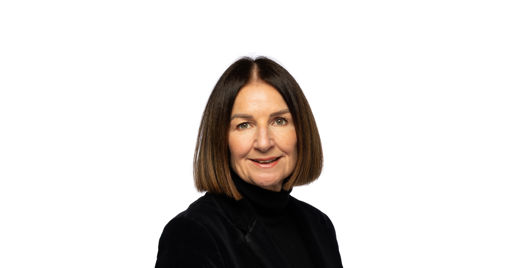
Julie Brooks
Higgins Partnerships
Shaun: Welcome to this edition of the British Safety Council podcast Health and Safety Uncut with me, Doctor Shaun Davis.
I'm delighted today to be joined by a previous colleague and long-standing friend of mine, Julie Brooks.
Julie is Director of Compliance at Higgins Partnerships, a residential solutions business.
Higgins Partnerships adopts a holistic, transparent approach to their projects, delivering on time and budget, often within sensitive communities and paying utmost attention to the environment, added social value and health and safety.
Julie has considerable experience across the construction sector as well as a real strong track record in safety, health, well-being, environment including fire and general compliance.
And she's got a strong focus on ensuring leadership aligns with organizational values.
Morning, Julie.
Julie: Good morning.
Shaun: So, thanks for joining us on Health and Safety Uncut. Let's start by finding out a bit more about you.
What does health and safety mean to you?
Julie: In summary, I think really for me, the safety is about doing it right first time.
It's easy to just think of safety about minimizing and reducing accidents and incidents.
But nowadays with things like the Building Safety Act, quality is such a key component of that.
And actually, that can be something that can affect safety long term, albeit it doesn't actually have a direct impact day-to-day when you're building something.
I think also for me, if something is done right first time, we're not going back to fix it, we're not going back to repair it.
It's usually during these fixes when people are having to find another way around doing something, that the shortcuts happen.
And that's when often things are not done the way they're meant to be done.
They're often not as well supervised and you're dealing with people having additional exposure to chemicals or to situations and I think that's when you're more likely to see an accident happen at that point in time.
So for me, it's a case of getting things done right first time.
I'd also say I think it's about operating to a high standard across the board.
I've rarely seen a site that has good paperwork, good standards, it's clean and tidy, that actually operates unsafely.
So for me, it's about having a real high standard across the board and doing things right first time.
And that becomes a safe workplace rather than just focusing on safety as a single kind of component of what we're actually doing.
Safety should be intrinsically part of everything that we're doing.
Shaun: So when I think back to my time in construction, we talked a lot then about safety, cost and quality. And that relationship, that tripart relationship. Is that something that you philosophically subscribe to?
Is it something Higgins subscribe to?
Is that your personal view?
Have you got another view on it?
Julie: No, definitely.
I think it's a case of an accident costs a lot of money in terms of time, reputation and also just kind of a people's morale.
If something happens, it's like people don't fundamentally want to do something badly.
And I genuinely believe that.
So I think it's a case of, you know, the time, cost, quality piece is such an important part of construction, but particularly when it comes to safety, we want to do things well and the cost of an accident, when you actually start looking at accident costs and rolling that up as a business, it is a high cost and we don't want to be injuring people or harming people or the workplace.
Shaun: I know from our relationship and having previously worked together, you've got pretty strong and developed views on business success and the relationship with safety and the cost element.
How would you and what would you say to new people coming to the profession or people considering the impact that the safety profession can have on a business in terms of that cost element?
What other what other things would you ask them to look out for?
Julie: Do you mean in terms of like where it costs the business or reputational cost, all those sort of bits and pieces?
I suppose.
I think really that it's a case of, as you know from having worked with me, I'm a spreadsheet queen.
Everything is logged.
And I think when you actually start logging things like lost time or accidents and incidents, you can really see how much time that actually that costs a business at that point.
We start logging hazards as well now as a business, because I think much like a near miss, hazards and near misses are something that you can actually start to see the trends come through.
So I think if you're coming into the industry, it's a case of realizing that, you know, it might seem like a small cost, something small happens.
It might only be a few hours, but that might then be somebody that reputational issues, somebody might say, I don't want to work for that company.
They didn't do things properly, or somebody might then have further time off work, or you've actually damaged something, which then means you've got replacements, which costs time as well.
So I think from the point of view of a holistic view, safety is intrinsically part of everything that you do, and doing things right is vital.
Shaun: So I know that before you got into the safety profession, we'll talk about your route to safety, but before that you worked in the city.
So do you think that that financial acumen, that business mindset set you up in a different way to perhaps your standard safety person?
Julie: 100%, I think I'm very aware of putting business cases together and being able to use financial examples.
I think particularly when it comes to things regarding environmental and I'm trying to sell something into the business that I want somebody to do.
It's very easy for me to actually look at the cost, calculate that and say this doesn't look like it's much, but an example of that would be waste.
You look at what goes into a skip.
People just think about the cost of a skip.
They're not looking at the cost of the material that's gone into the skip, how much that adds up and those sort of things.
Once you can start putting a financial spin on things, it makes it a lot easier to sell things into the business because while safety is vital, it's still money that actually influences people a lot of the time because whether we like it or not, projects that generally deem successful with finances as well.
And if you can't make money, you don't have a successful business.
And I know I've talked about this before, but it's all well and good being safe and safety should be a key priority, but a high, the top priority has to be a working business that is viable.
And you can be the safest business in the world, but if it's costing you X amount of money to be safe and you can't make any profit, then you're not going to have a viable business.
So I think the point of view, being able to look at it from a financial standpoint definitely helps.
Shaun: So I'm guessing you're a big advocate for the balanced scorecard approach then.
So if you've got the, you know, the customer element, the financial element, the society/people element, performance, what's your views on that?
And what's your views on People, Planet, Profit CSR ESG measures?
Julie: Totally agree with that.
The people, planet profit is something I roll into everything that I do and I think it really does work in terms of safety because if you look at the people, you can't be harming people and actually have an ethical and moral business.
You can't also be wasting materials or polluting because that's also an environmental impact.
But both of those things, harming people and harming the planet then has a financial cost.
So, I think this is where the whole holistic approach and fortunately in my role I have health, safety, environment and quality all within my remit, which actually means I'm able to actually influence across all of the board on that.
So, it massively impacts everything I think about.
I think you have to use that whole ESG sustainability piece to think about safety.
Shaun: So, I'm often asked my views on health and safety, environment quality, compliance, etcetera.
I am an integrationalist by nature.
I, I think there's a lot of value in integrating those elements.
I think you're saying the same thing.
If there are people out there that are considering that from both a performance, efficiency, standardisation perspective, what would you encourage people to think about in that space?
Julie: Well, the one thing I always look at really from the integration approach is because I'm very much aligned with that is environment, particularly.
When I used to just focus on the environment years back, I would often be focusing on things like dust as a nuisance.
But if dust is a nuisance, it's also a health implication.
So how do you separate the two at that point in time?
And that's where to me, you, you, it's very hard to not be integrated because going back to that ESG piece, if I'm creating dust, I'm creating nuisance to the people and the residents in and around the area, which has reputational damage potentially, but I'm also potentially harming people on site.
So, for me, the whole integrated approach is just about the only way I see that this works well.
But also, I'm not a fan of having safety being put alongside everything else because I think then people do the job they're doing or the task they're doing, then think about the safety piece of it.
Whereas actually safety has to be fundamentally part of everything that we do.
And I'll often use driving your car as an example, particularly in this day and age, if you get into your car and try to drive off without putting a seat belt on, it won't let you.
So actually, is that a part of the process of driving your car or is that a safety feature?
It's actually integrated.
So, for me, that's where we need to get safety to be so that people are not just thinking about doing a task, they're thinking about doing the task the right way.
And safety becomes part of that process.
Not what do I have to do to get this task done then what do I need to do to make it safe?
Shaun: Good, good. So if we look specifically now at Higgins, so Higgins Partnerships works in some complex fields.
How do you ensure that compliance right across the board, as you referred to it, is applied when working in complex environments and I'm thinking about residential areas, working with your investors, developers, local authorities and the like, How do you get compliance on the agenda and keep it on the agenda?
Julie: I think in this day and age, it's got a lot easier with things like the Building Safety Act, particularly with clients and investors.
It is so high priority that there's no way we can't be thinking about safety now, and it's definitely changed for the way we work.
I think from my perspective, the one good thing about my role is when I took over safety, the team was rebranded as compliance and I think that has made a big difference because straight away it sounds a lot more integrated.
It sounds like we're not just looking at health and safety, but from my perspective it is about if I look at the Higgins values, we have collaborative, responsible, committed and respectful.
But the collaboration piece is absolutely key for me and that's collaborating with our project teams, with the pre-con team, how we win the work and how we're actually putting the work together so that we are involved from winning the work to understanding the complexities, even turning up at tender interviews where we're meeting clients and then actually understanding the neighbourhood we're working in.
And sometimes we won't realize until we're actually started on site.
And you will realize there's a couple of key people who for whatever reason have got challenges that could be disabilities and we have to ensure that we can still allow them access to their property when we're working.
So there's a number of different ways we're looking at that.
So from my perspective, it is that whole being part of the process, being part of the team and having my compliance team fully integrated into the business and having the project teams using us as a trusted advisor and as part of their team, not just somebody that sits alongside and they come to when there's a problem.
Shaun: I think it's interesting, the point about rebranding as compliance because I talked to quite a few people and there's two camps at the minute where one of very much in the compliance space and one of very much about not using compliance because of the language element.
And it's seen to be a bit more draconian, a bit more heavy-handed.
Sounds to me like you had a positive experience of, of rebranding, but how did you manage that?
How did you manage that transition and that rebranding exercise to make sure it was still considered appropriate?
Julie: A couple of things that we did within Higgins was we went from having unannounced safety visits to actually having planned compliance visits.
This was actually done deliberately so that when we turn up on site, we can actually work with the teams to ensure that they, if any issues they've got they want to discuss with us.
That might be going through subcontracted RAMS or meeting with subcontractors that are causing them issues.
That we could actually make sure that we had the project teams time when we turned up.
The problem with unannounced visits was they might have got the client there that day.
They might have something key going on.
We turn up for a visit saying, ‘we need your time’ and they don't have that time.
So, the visit became not as valuable as it should have been.
But by trusting them, by telling them we're coming, we're saying we trust you to do the right thing.
And then actually if they get a terrible score, we might then do an unannounced visit off the back of that just to follow up.
But we try to fundamentally give them trust that we believe they're doing the right thing.
So, I think whilst we are compliance, it is a case of we trust them rather than believe in they're trying to do the wrong thing.
And I think once you've got that trust with your project teams, it makes a very big difference.
And we'll find now they will come to us rather than us having to go to them for things.
People will directly come to us and ask us questions if they've got concerns and run through any problems.
So for me, that's where the shift was, was about how we kind of moved forward with the compliance brand and left the sort of just the safety labelling behind.
And it's not that I disagree with it just being health and safety.
I just felt that you need this collaborative approach to make it work properly.
Shaun: Yeah, yeah, totally.
So you just mentioned an acronym there, RAMS.
Do you want to unpack that a little bit more for people who maybe not familiar with that term and explain a bit more why that's important?
Julie: Yeah, no problem.
I think we use the word RAMS so much because it's so intrinsic to my industry.
RAMS is Risk Assessment and Method Statement and it is basically how you are going to do something.
And for me everything links back to this.
So, when our subcontractors start on site, they submit a risk assessment and method statement explaining absolutely the process of what they're going to do, which is a step by step.
The easiest way to think about it is if you were getting dressed in the morning but you had never done it before, how would you get somebody to list what you do?
Shaun: The method statement is?
Julie: The method statement piece?
Yes.
So, looking at how would you put on a pair of trousers, people might just say you put them on.
If you've never done that before, how would you know what to do?
And it's talking people through the whole process of that, of what they're doing day-to-day.
And the risk assessment is risk assessing each of those tasks within that.
For example, if you were using something that would involve cutting, you would risk assess the likelihood of being cut, the severity.
And then you would actually look at whether you need a PPE, what other bits and pieces were needed.
And that will give you an output of actions that have to be undertaken to ensure that task can be taken safely.
And it is fundamental to everything we do.
And in my world, if it's not on the risk assessment and method statement, it doesn't happen on our sites.
And often when we do a site walk, we will see something and we will say is that in your RAMS?
We will go and check.
If it's not, we then ask them to update their RAMS to put in this procedure that they're doing.
Shaun: So the risk assessment's got the hazards, got the risk, the mitigation, then you're assessing the probability and severity and flow that through to, in other words, a safe system of work, which in, in construction terms is a method statement, which is a methodology and the approach.
And then presumably you then use that to assess your contractors or your own people's performance and see if there's any gaps, right?
Julie: Yes.
So like when we were doing a site walk around, we will pick out a particular subcontractors method statement for that day, look at what they're doing on site and check whether what they're doing matches what they say they're going to be doing.
And that might be down to their choice of access equipment.
We find somebody working off a pair of steps.
We say, is that in your, your RAMS?
Go back and look at it, it says no, they're using a podium.
So, we will then say, right, can we get those steps removed from site please get a podium in for that piece of work.
Shaun: And in your experience, what sort of frequency of disconnect do you see between a risk assessment method statement that they've committed to versus what you see on the site?
Julie: It can really vary, particularly with little things like access equipment.
It's very easy for somebody to just grab the first piece of equipment that they've got.
And This is why I'll often say don't say you're going to use a podium.
If the task is something that's going to take 10 seconds in a cupboard, I'd rather you said we're going to use a hop up.
And I know that's what you're going to use.
Because I think sometimes people will write what they think they should be doing, not what will actually happen.
And I'd rather people put in what genuinely is going to happen on site.
But overall, for example, some of the bigger contract, bigger subcontractors, such as our frame contractors, that often flows a lot better because the work is very much the same thing every, every floor that you go up, we're doing the same again and again.
But often it's the first few months of somebody being on site.
When you've just got them on site, that's when you have to adjust the risk assessment and method statement because things might be changing from what they thought they were doing.
Shaun: Very good.
You talked quite a lot about quality and safety and cost.
There's another element to that ethics and ethical business performance.
And I know that Higgins are known for having an emphasis on the environment and, and ethical performance.
And how do you keep that high on the agenda and maintain the focus on that when there's so many other competing priorities, budgets are being challenged.
What's your approach for managing that?
Julie: It's a tricky one because as I've just talked about, like with waste for instance, but kind of the thing for me is I think having been in the industry for a long time now, you look at things like waste diversion from landfill.
It used to be if you're getting 80% diversion from landfill, you were doing well.
But I think sometimes it's shifting that focus, as I was mentioning before about looking at the cost of things.
So ethically, do we want to be wasting materials that could be recycled elsewhere?
We don't need to be using in the first place things like energy as well.
It's a case of quite often people don't realize they've got power running overnight until you tell them and you start putting the financial cost onto it.
So, whilst I do believe people ethically want to do the right thing, particularly when it comes to things like harming the planet, sometimes you have to use a cost to focus on to get people to understand that there is the ethics piece as well as the financial piece, the balance.
Because at the end of the day, in a high… in an environment like construction, which is, you know, quite high risk, sometimes it's easy to not necessarily think about the ethical approach of the environment.
I will say things like the Building Safety Act and things like having to look at Passive House now for energy efficiency has meant that materials have become a lot more focused on, which I think has made us a lot more ethical in what we are sourcing because we're looking at things like net zero.
So we're having to consider our scope 1-2 and 3 costs, which does mean people having to look at end of life as well as actually what materials they're using.
Shaun: So what strategies have you used then for influencing your executive and your board?
How do you put across a solid business argument for commitment to and or investment in safety, health, environment, quality. What's your what's your approach?
Do you have a model that you use, or an approach that you use that you'd perhaps encourage listeners to think about?
Julie: I think for my sort of view, it's really looking at it from a fully rounded approach, looking at everything.
And it's not just while, while safety is vital, it's actually looking at that whole process of safety and understanding the processes.
I think when I've kind of put a business case together, I will look at all of the aspects of time, cost, quality, ethics, people planet profit kind of work that the whole way through so that you can actually see if there is a cost.
You can see that the cost will be underpinned by a benefit somewhere else within the business.
I think again, this is why I do like the People, Planet, Profit model because you can actually start.
If you can hit two of those, you know you're coming out winning.
Particularly if you can get People and Profit or Planet and Profit, you can start seeing that the business will understand that there is going to be a benefit.
If you can hit all three, you're definitely in the sweet spot.
But I think for me, it's been able to use a model like that of where I can actually pull everything together.
And I do like putting a business case together for something. I think it's really important.
You have to know your mark, your audience.
If your audience are financial, which generally lots of people running businesses are, if you can put it together in a business case, you stand much more chance of influencing them to understand why you need to do something.
Shaun: To get them to understand the points you're making though, there has to be a level of literacy and, and I mean topic literacy.
So, understanding that, have you been on a journey of, of understanding, upskilling, educating your executive and board or were they already and are they already pretty well educated?
Julie: I think most people are fairly well educated within my business because people have been in the industry for a long time so they understand a lot of the staff and grown through it.
I think sometimes what you will find is new topics come in and then it's up to me to do the education.
A key example of that be would not be safety so much as more the net-zero piece and understanding what that looks like for us as a business.
So whilst it isn't safety, it's been something that we're having to deal with on this journey at the moment and that's something that we've been looking at quite a lot.
And sometimes it's just breaking that down into bite sized chunks of bullet points, keeping it short, keeping it concise.
I think it's very easy when you are the subject matter expert, which we are as safety professionals, is making sure that you keep that short and sweet and concise.
I think when you are going to a board with something, it's really important that you do make it easy for them to read and give them that summary of what it looks like.
If you go off on a tangent or waffle too much, you lose your audience.
Shaun: OK. Now you mentioned earlier on, in fact you've mentioned a couple of Times Now about the industry and about the male dominance of that.
So, one thing that we as safety, health and well-being practitioners are aware of is this gender gap.
How have you found being a woman in in the construction industry and what can the industry do to ensure there's a pipeline of women for the future and also particularly in our profession?
Julie: It's very interesting because I think when you actually look at the traditional safety professional for many years ago it was the middle-aged man with his tweed jacket, with the leather patches on the elbow with a clipboard sort of thing.
And we're very much moved away from that.
Ironically, when I took over safety, there was quite a heavily male focused team and we seem to be very female focused now.
So that wasn't intentional.
It's just been when I've interviewed the people that have actually been the best for the role, the most suitable have been female.
I actually think women work really well in the construction industry.
I think it can seem intimidating because there's an awful lot of men on site, but I do feel the balance of male, female, and that diversity really adds something to the industry.
I think we will often think about a problem or a situation in a very different way from a man and I think we can actually defuse situations quite well.
So if we're going in and speaking to people, sometimes it seems a little bit softer than a guy coming in and having a pop at somebody for not doing something on site.
We go in with a different approach.
So, from my perspective I've been very fortunate and not found it a difficult transition into construction.
However, I did work in finance before, which is another very male dominated industry, so that for me probably helped.
But I do think we're seeing more women.
When I look around the industry, a number of the frame contractors we deal with have got female safety advisors, which is interesting to see more and more women coming onto site.
I think the other benefit it gives you being female is you stand out and you're remembered.
Because there's so many men on site, it's easy to forget them.
If I meet subcontractors, they were much more likely to remember me or my team if they're women because we do stand out a little bit.
But I think in terms of getting women into the industry, I think it's making people aware that it's a that this is a role available to them.
I don't know about you, but whenever I've gone to careers days, it's often they'll talk about construction, people will talk about other roles within the industry, but safety is often not considered.
It will often be the surveyors, the project leads, the technical side of things.
Safety is not often a role that appears at some of these sort of school and vocational days about careers.
And I think that's something that maybe needs to be better focused on because particularly for women, and I say this without sounding patronizing to women, but if you have children, the role is relatively flexible because of the nature of the work.
You're not required to necessarily be on one site day in, day out.
There's a lot of ability to do certain things remotely to visit sites.
I think it's a great role because it allows that flexibility if you have children that you can actually develop with that role.
And that's the same for men as women as well, depending on who is, you know, primary caregiver.
But I think a lot of women wouldn't even know about this as a role.
And I think that's where we need to actually get out there and start speaking about it more.
Shaun: Very good.
OK, so each of these episodes that we like to ask, or I like to ask guests, which one take away they'd like a listener to have from this conversation.
So summing this up, what would yours be?
What's the big take away you'd like people to think about?
Julie: I think from my perspective, people think health and safety are there to catch you out.
I would say that's absolutely not the case.
And I tell the teams at work, we're here to catch you in, not catch you out.
Work with your safety team.
There is nothing that we cannot risk assess to ensure that we can make things happen safely.
We want things to be done effectively, efficiently, safely on site.
Use us as a trusted partner.
Don't fear us.
We're not there to stop you doing things.
We're there to enable you.
Shaun: Great.
Well, that's a great place to close.
And I, I echo all that.
I think it's incumbent on, on us and our profession to be business contributors, enablers and to be invested in the ongoing success of the organisations that we're in.
So thank you very much for your time.
That was really, really fascinating and good luck with your the rest of your journey.
Julie: Thank you.
Links will be in the episode description.
 Visit Higgins Partnerships