Featured

Dr Shaun Davis
Belron

Nathan Walker
British Safety Council

Matthew Frost
FCDO Services
Shaun: Hello and welcome to this edition of the British Safety Council podcast Health and Safety Uncut, with me, Doctor Shaun Davis.
I'm delighted today to be joined by two guests.
Nathan Walker is EHS education manager at the British Safety Council.
Prior to joining British Safety Council, Nathan was involved in training in the British Army as well as Head of Training and becoming General Manager at Inspire International.
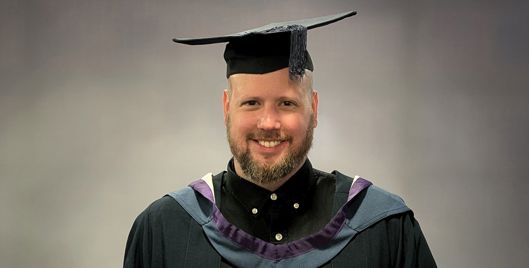
My 2nd guest is Matthew Frost; he is the senior health and safety advisor at FCDO Services.
While studying the NEBOSH Diploma with British Safety Council, Matthew received the Best Candidate award for achieving the highest mark globally, an incredible 95% for the first unit of his NEBOSH Diploma.
Great to have you both here.
Matthew: Thank you.
Nathan: Great to be here.
Shaun: If we could start with you, Nathan.
Let's talk, please, a little bit about what does health and safety and specifically training more broadly mean to you.
Nathan: Well, for me, health and safety is really simple at its core.
And I see health and safety as people going home safe and well at the end of the day.
It's not just about compliance. Compliance is very important, obviously, but that should not never be the end goal. Essentially, no one deserves to be injured or made ill as a result of their work.
People are there to earn a living, not to compromise themselves so that someone else, companies/people can make more money and that for me is why training is so important.
Standards and procedures only work if in real life if people actually buy into them. From my experience, people are far more likely to follow a standard or procedure when they understand the why. So, what the risk is, what prevents it and how it protects them and other people.
And when people understand what the consequences of their actions are, not in a fear mongering way, but in a very practical way, the standard stops feeling like admin and starts feeling like protection.
And for me is where we shift from this is just a tick box activity into this actually matters and they're doing it for my safety.
Shaun: OK. Now we've only just met today, so I didn't know about your background with the Army and the military. Did you bring anything from that experience into your role?
I've obviously I've got some preconceptions about how the military is set up in terms of standards, disciplines and procedures.
Do you think that's an advantage, a disadvantage, a bit of both?
Where, where's your where's your thinking on that?
Nathan: I absolutely think it's an advantage there.
There's a lot of transferable skills from the military into health and safety.
The discipline, the standards, the rules, we have to follow them. For me, for me personally, I am, I was actually in the military police and now in health and safety.
So I'm not sure if I just like to be disliked or what it is, but I don't, I don't think there's one single reason for military suiting health and safety or that that being that match.
But I do think that a big part of it is that it's a stable career choice, as with the military, right?
And what I mean by health and safety, as we know, is not going anywhere. Standards of health and safety are constantly improving. And it's also such a broad area.
So, people from the military can find a niche that suits them and develop and progress in a similar way that they do in the Army as well.
So, for me it's just a simple transition, a lot of transferable skills and thinking about risks, standards, planning, report and communicating, you name it.
They're all key skills for military as well.
Shaun: Yeah, I think in my experience it is an attractive proposition and a profession to to military and ex-military.
And I've had the privilege of leading teams where I've had ex-military in there from, from all from a number of different forces I might add.
And they do bring a discipline/structure/rigour and then appreciation of it.
I've got to say, there's been a couple that I can think of who were particularly strong in terms of leadership. And I know that's a big element in in the in the in the military.
Nathan: So. So why do you think it is an attractive career, other than the reasons that you mentioned?
Are there anything else where it's an attractive career? I'm just in personal interest. It's more than podcast interest.
Nathan: Yeah, it's, it's kind of difficult.
I think a lot of people, depending on how long they've served, they kind of come when they're coming to the end of their career, whether it's they've done 22 years or whether they've done just a couple of years.
Sometimes they find it difficult to transition into civilianstry and sometimes they might be a little bit of a loss and don't really know where to go.
So, a lot of it will be, well, for me personally, I didn't really… wasn't ever a goal of mine to get into health and safety from the military.
It was more when I made that decision to leave the military, I explored my options. And for those reasons that I've said just a moment ago, I wanted another stable career.
I wanted something that offered me progression, that offered me goals, roots into more leadership and it just seemed like a real natural fit for me personally.
And, and I think those skills that you learn and develop in the Army make a career in health and safety attractive.
Shaun: Well, very good. Good.
Matthew, so if we come to you next, so you are at the FCDO, or you're at FCDO services.
So, can you tell us a little bit about that, who they are, what they do and then what does health and safety mean to you in your current role?
And we'll come on to the importance of good training a bit later, but currently a bit more about you and what safety means to you.
Matthew: Yeah. So, for me, similarly to what Nathan said, so it's the prevention of harm.
It's that's what drives me the most.
It's the sort of sense of pride from passing my knowledge and expertise from, you know, my safety background to others to get them more engaged in safety. And it's sort of that sense of pride and seeing them obviously take on that advice and support.
So, for myself, I initially sort of started working in retail up to sort of store manager level.
And then during the like COVID lockdown, so I was sort of furloughed and it made me sort of, you know, take that step back and sort of rethink about sort of my career and my trajectory.
And it was sort of that obviously being told to like stay at home because I wasn't a key worker.
It's sort of, yeah, sort of revaluate.
Shaun: Yeah, choices and career choices, etcetera. Yeah.
Matthew: Yeah. And it made me rethink about, yeah, what, you know, that desire to be a key worker and make a, like, make a real difference because then my sort of, you know, in my personal life, I've known like, close family and friends and members that have sort of suffered minor injuries through work that's had like a big impact on their lives.
Shaun: So there's a personal kind of interest and personal investment in it, as well as they're kind of thinking about your career and next steps.
Matthew: Yeah, yeah.
So, it's a yeah, combination of the two.
Shaun: So, you say you're working retail so you so there must have been a safety, you must have had some safety exposure previously as working in retail, but obviously that was running a store, a branch of some description, was it?
Matthew: Yeah, it was a clothing store.
So, we had sort of, yeah, it was, there was elements to do with sort of like manual handling, slip trips and falls that are sort of right broad to everyone and really common causes of injuries.
So, when I say about like when my mum was injured, it was, you know, it was filling a water cooler in an office job.
And it was sort of where I think there's some sort of industries and some aspects where health and safety sort of gets overlooked rather than sort of properly embedded in sort of every role.
And because, you know, stuff like manual handling, slips trips and falls, they're common to everyone across the board no matter what industry you work in.
I think risk profiles obviously, yeah, differ a lot from different organizations.
And where I work at FCDO Services, we do such a broad range of stuff from like driving, from installing, from construction, from like working in warehouses. And it's bringing that sort of, y’know, level of detail and expertise from in adherence to like health and safety.
And similarly to what Nathan was saying, we've got quite a lot of ex-military within the civil service as well. And I think there is that sort of natural sort of rule following and procedural, you know, driven.
Shaun: So you started on your safety journey relatively recently then in terms of professional qualifications, right by the sounds of it.
And so, from a learner's point of view, what makes for a good training experience?
What makes for what… Why the British Safety Council? What worked for you? What helped you in your learning journey?
Matthew: So, my first experience with the British Safety Council is from doing the NEBOSH General Certificate.
So, through doing the online training, I was able to take in the content at my own pace and learn it around, you know, my structure and my availability.
And then when I then went to undertake the NEBOSH Construction Certificate and the NEBOSH Diploma, I went down the tutor-led learning route.
I think a major element for like good quality training is having a good quality tutor. And I was very lucky with, especially with my Diploma, that my tutor David was really engaging, really engaging tutor. And we had a really engaging group as well that participated in a lot of group discussions.
I really advocate this the tutor-led study route especially for the diploma as it's like a really good opportunity for good interactions with your tutor with the group and you're able to ask all the questions you have whilst absorbing the knowledge which I don't think you get from the independent learning route.
Shaun: And I guess the kind of experience sharing the lesson, learning the different perspective and helping you kind of understand a bit more about the subject that you're that you are learning.
That's pretty good.
Matthew: Yeah, because I think David was brilliant at pulling out examples from his past career in the oil and gas industry to bring the content to life. It made the sessions a lot more interactive and he pushed us through doing like regular quizzes and tests to like test our understanding.
Shaun: Good and Nathan, if I can just bring you in on that.
So, training as we know in all job functions, is important, but what makes it so important in safety?
We heard some elements there from Matthew about his learning experience, but from yours what makes it important and what makes for good training?
Nathan: Yeah, I mean, I, I think as you say, training matters in every job function, but for me, in health and safety, the consequences of getting it wrong are often far more severe than in, in other functions and, and in many cases can't be reversed.
So, you're essentially dealing with people's lives.
And obviously the importance of that should not be underestimated. And, and that isn't to undermine other types of training at all. It's just that in health and safety, the margin can be very small.
And for me, yeah, it's just kind of expanding on what Matthew’s just said about the training… good training starts, I think first of all, with taking a little bit of ownership when you're taking on a course of doing adult learning as just…
Shaun: As the learner?
Nathan: As the learner, yeah, it starts, it starts with that. This, this isn't school.
We're not here to talk at you. Nobody wants death by PowerPoint.
And, and I think understanding that and appreciating that there's a certain level of commitment that you need to adult learning and doing these courses.
And a lot of people have to fit it around busy lifestyles, work, families, other things going on.
I particularly remember my, my diploma and when I was studying mine, my, I’d just had a newborn and I was trying to find times in the evening as well as working as well as sleepless nights which is very challenging.
Shaun: I think that's a really important point.
I think it's incredibly important point to make that it is there is an impact on your personal life.
You've got you've got to be really committed. You've got to really think it through.
You've got to be committed through the returns are amazing and the sense of pride and accomplishment and the learning is amazing.
But you do have to think, and you also have to think about the impact it's going to have on those at home as well.
You know whether, if you've got children, partners, caring responsibilities, A demanding job and really think it through because… I'm glad, I'm glad that you've called that out.
Because I do think I, I've done a mix of my, in my, over my time of, of tutor-led learning and an online distance learning, But they've all got the same thing in common.
And that is you've got to be committed and you've got to, you've got to know what you're signing up for because it's and if it if, if it was easy, everybody would do it, right?
Nathan: Absolutely. Yeah, I couldn't agree more and don't get me wrong we do get some people come through the door that are expecting that because perhaps they haven't done any anything like these courses since school so they're almost expecting it to be like school where… they they're not spoon fed.
There's a lot of we want to draw on these experiences, particularly with our trainers, with David bringing in his real-life experiences.
We want the students to do the same. Let's bring that in let's discuss that because well, for me there there's no better way to learn than making it relevant to the student.
Shaun: Definitely.
Nathan: And that only happens through discussion-led sessions.
And, you know, the content is the content.
Yes, there's certain things that we have to deliver and certain objectives, but the key thing is making sure that students really understand the why and, and get down to the nitty gritty of it, yeah.
Shaun: Good.
And Matthew one, one thing we know as health and safety professional practitioners is that there are relatively few younger people, both male and female joining the banks and that might pose a problem in a few years time.
But it's in your view what can industry and the profession do to attract younger people into the ranks?
Matthew: Yeah. So I think a lot of it is around sort of rebranding the how we're advertising it and how we're the image of the safety professional, right.
So, I think there is that sort of tendency to think about them as some clipboard warriors, some of the red tape and bureaucracy and getting in the way and telling people off.
And I know certainly our FCDO services, we've had quite a lot of engagement with the team and we've got a really good safety culture where we're working.
But you do still get that sort of bit of hesitancy with people reaching out to the health and safety team.
It's sort of after working with us, they then see the benefits and see how we're helping them.
But there's always that sort of drawback or pullback where they think that we're just going to quote laws and legislation at them rather than given them like real practical advice and working with them.
So, I think there's a lot that needs to be done around sort of reframing the safety professional was to sort of not just there to implement like rules and regulations, but to be sort of human centred and, you know, really caring for the individual, I think.
Yeah, health and safety wasn't really an option.
Like that was discussed like, you know, during school and, you know, sort of planning your future as, you know, health and safety, it bleeds into every single industry, every single aspect of life.
Shaun: I think I personally, have been having made a very rewarding career out of it.
I, I think it is a fantastic profession to be in because of diversity of thought, diversity of exposure, diversity of experience.
I've never worked… I can never imagine working in in another profession where you can be on the shop floor right up to the boardroom.
You can be working with insurers, you can be working with legal professionals, you’ve been working with HR and people even working with ops.
I went on bringing this back to education. I went and did an MBA, a master's in business, because I wanted to be able to understand the people that I was working with, the HR director, finance director, because I think I wanted them to understand my world.
I wanted them to know about rules, regulations, legislation, policy, standards, procedures. And I thought it was incumbent on me to do the same thing for them.
And I've got to say that partnership mindset has really, really worked well and served me well. And just echoing your comments, Matthew, about we're not there to stop people doing things.
We're there to enable the business and to make the business a success and, and to partner and collaborate. And I really love what you said about being people centred.
That's what that's why we do what we do. You know, we want, we want to make a difference to people and keep people safe, healthy and well.
You know, my personal vision is I want people to go home at the end of every day to your point, Nathan, at the end of every day, at least at least as well as they came to work, but ideally even better.
I mean, my vision is that your employment experience is that enriching and rewarding that you go home at the end of that day feeling better for it, better for your experience, better for the investment in you, better for your, better for your well-being.
And I think education programs and the work of the British Safety Council, NEBOSH etcetera is, is, is key to that, really key to that.
So...
Matthew: Can I just…?
Shaun: Of course you can.
Matthew: And saying that, there's one thing I also think we need to emphasize, it's sort of some of the draws from like the younger generation that I think the younger generation are a lot more sort of in tune to sort of well-being, ethics.
You've got a lot more focus on mental health on, you know, the ethics, whether it's animal testing, climate change, you know, use of palm oil.
But I don't think there's a enough connection made between the elements of the health and safety professional and, you know, the generational mindset.
Shaun: Right.
So help me understand that a bit more, what you think that there's more for people in the profession now to learn from the younger, from the younger generation or do you think what's help me understand that a bit more?
Matthew: I just think the where the younger generation are more focused on sort of the importance of well-being and how much that is across the board from health and safety and well-being perspective.
I don't think that sort of driven as an opportunity that the younger generation where they sort of embody, well, they're more focused on well-being and they can actually use that to drive and make a change.
Shaun: Right.
Nathan: I think that that's a really it kind of lends itself to what you said like you went away and did an MBA to understand the business side of it, HR directors and things like that.
I think if, if we want to entice the young into this kind of career path, then, yeah, we need to understand their mindset a little bit better as health and safety professionals as well.
What, what are their drivers? What, what can we do to kind of bring them in and let them see?
I think for, for me, as I said, health and safety wasn't a career choice and, and it wasn't for any particular reason.
But you hear the words health and safety and it's instantly, you know, it gets a bit of a bad rep and having been in the profession, it's an unwarranted bad rep.
You know, it's kind of, you know, it's but what changed my mindset was that awareness and and understanding it more.
And that's what we can do with younger people potentially.
Shaun: And so can we change the younger generation?
What can we do? How can we do that?
I mean, I agree with what you say and I agree with that the principles. So what do we do?
How do we do it? What what? What's your views on that?
Nathan: It's yeah, kind of I've made the comment on a bit of a whim, but I think it's, it is all about innovation, how health and safety is, is a constant evolving beast.
And, and, but there there's so many different things. I mean, the emergence of AI, all of these kind of things that are coming through.
There's there's so many things and so many different avenues and areas. We can absolutely be that change. We just need to scream, scream from the rooftops about about this.
Do these things, these podcasts, you know, relate to people, but we need to understand them a bit more. You know, I don't think it's as simple as saying we just need to understand well-being more. We we absolutely need to understand the climate, people, what their drivers are.
Shaun: I was listening to both of your stories and you were both talking about, I'd sum it up, that kind of health and safety found you rather than you found it in your experience of COVID furlough, reevaluating… you leaving the military.
And I've got a very similar experience.
I always say it found me. So how do we make it more enticing, attractive, engaging, exciting for people? So, it's a choice rather than something that finds them.
I mean, my personal view, I want, I want to be talking to people where they are saying I want to be a safety director in the same way that people say I want to be a finance director or an IT director.
So what do we do?
Matthew: Possibly need more sort of advocating for it, so whether it's, you know, guest speakers in schools, colleges, universities to discuss it as a career option.
Shaun: And didn't do, I mean, I've, I don't see a lot of that.
I've got to say, I get, I'm lucky enough to be invited to do bits of that, but I don't see that as mainstream.
So do you think organizations like the British Safety Council, like NEBOSH should be doing more PR/pushing engagement?
You know, is it is there a time for NEBOSH to say we've got a super exciting opportunity for you to be, you know, a leader of tomorrow come and study safety?
Are they, you know, what's your thoughts on that?
Nathan: Yeah, absolutely. We should.
I mean, a lot of the talks and things that we go to all to people that are already professionals in the industry, we're not targeting those people that are thinking about career choices and don't know what they're going to do.
And I think absolutely Matthew's point is great, like target schools, you know, let's hit those school leavers, those that sort of age where they're considering, I don't know if they health and safety.
I don't ever remember being at sort of fairs, career fairs or anything like that. It's not something that is advertised very well to your people. I think it can be.
[Cross talk]
Shaun: it's got to be kind of understood and and be seen as a viable option and exciting I think I do think for everybody out there that's listening to this, I think we can all play a part in this.
I think we can all share our stories, experiences, and how exciting it is to kind of get people to think about it.
And I think there are other organizations, as I said, like the British Safety Council and other organizations out there that can help us with this.
And so, I've got a question for both of you now then.
So, what one piece of advice would you give to learners thinking about starting out on their learning journey?
Matthew: Yes.
So, I think this won't be one piece of advice… I'll try and keep it brief.
So, I think the first bit starts with the research. It's researching the learning provider and whether it's their performance, their pass rates or something like that.
But it's more about like speaking to people that have used their service, undertaking the taster sessions where they are available and making sure that sort of their style of delivery matches your style of learning.
So, for me, I really benefit from how British Safety Council ran their sessions.
We were able to share, we were able to get a hold of past exam papers that we went through in preparation days.
I think that that was really useful in terms of seeing what, you know, you were going to come up against in the exam.
And we were able to go through it, see what good looks like.
And I've got a little bit of sort of sense of, you know, personal pride that David sort of reached out to us whether he could use my exam paper in as part of that process.
Shaun: Good, good.
Nathan: Yeah, I think for me it's my takeaway would be recognizing that health and safety training isn't about compliance. As we said, it's it shouldn't be the end goal and it's not a tick box.
It's, it's certainly about either as a trainer or a delegate, recognizing that training is about helping people to understand the why, because if they understand the reasoning for things, they're far more likely to, to carry on.
It's that raising awareness for people, you know, and, and often people attend training expecting all of the answers. And in my opinion, some of the best sessions are where people go away with more questions than answers.
What are we doing in our workplace?
What can we do to make that better?
What can we do to make that safer?
And that to me says that the training is being thought provoking and getting those people to go away and consider what they can do better in their workplaces.
So.
Shaun: And back to the earlier point as well about investing and, and in yourself.
Then it's incumbent on the learner then to go away to kind of discuss it, unpack it, reflect on it, do additional reading, think about think about what they've learned.
Because you know, someone said to me years ago, and I absolutely love this, love this story: what's the best day of a 2 day course?
And it's day three.
So what you actually do after you've finished it, going out there, applying the learning, kind of reflecting, developing yourself.
And that's, that's stuck with me.
I've got to, I've probably stuck with me for 30 years because I just love that idea that when you're immersed in the classroom, yeah, you're learning, you're absorbing it, you're taking it in.
But the reason you're doing that is to go and then apply it to go. And I mean, it's a bit like the analogy of learning to drive the car.
You know, you learn to pass your test and then you learn to drive because the experience of being a road user, etcetera, etcetera.
And I think I just echo all the comments that you've made then about do your due diligence, make sure that you look into the, the training providers, make sure you can commit the time and, and the, the energy and the focus to that.
Don't take it for granted.
You know, remember that, you know, you are going to have to learn and reflect and then apply it, tap into the network and tap into the community and, and kind of learn together and then go out there and apply it.
So, when we do or when I do these episodes, I like to ask the guests to give us one key take away that they would like to listen to have from the conversation.
Matthew: Yeah, I suppose mine would be sort of reiterating what Nathan touched on earlier. It's about giving the learning the sort of respect it deserves.
So, the time, the dedication, the effort to do the wider reading, whether it's, you know, case law, health and safety guidance, legislation, ACOPs, it's doing the revision and taking the time to practice yourself under the exam conditions.
One of the other aspects to say is about is also not being fooled by the open book format.
I think a couple of people go into it thinking, oh, I've got access to the Internet, it'll be fine. I'll just Google the answer and when I get to the exam, but you don't sort of in that exam period, you don't have the time to sit there and teach yourself whilst answering the question.
You need to put that dedication in, you know, at the start so that when you come to take your exams, you're, yeah, you're not teaching yourself what's trying to answer the exam.
You're actually just applying your knowledge that you've already absorbed.
Shaun: The take away for that then is about being prepared and being… setting yourself up to succeed from the beginning, right?
Matthew: Yeah, I think that's something called, Yeah, my tutor David really sort of, yeah, leaned in and honed in and asked about, you know, that time, that dedication that, you know, don't take the exam for, for granted that you need to yeah, you need to absorb the learning and apply it the right way.
Shaun: Good.
Nathan: I think, yeah, I think correct.
You need that.
It's impossible to teach you everything you need to know on a course.
We don't know what's going to come up in in the exam.
It could be a question about chemicals, it could be about dust, you know, and we can't go into every granular detail in the training about that.
So, it is about giving that baseline knowledge, which we can do in the in the course, whatever course it is you're attending.
But yeah, the, the level of commitment and dedication, it definitely has to has to be there for adult learners.
And I think that would be my, my probably my key take away is recognizing that that commitment level, it is difficult, particularly for the Level 3 and 6 courses.
So the certificate and diploma level courses, 20 working days sounds like a lot at this when the paper is released.
But yeah, from experience it, it soon creeps up on you and you know when you have got a life to live as well as doing this, it's it, it, it is very, very difficult and you have to, you have to be dedicated.
Shaun: But it’s rewarding, right?
Nathan: Absolutely.
Shaun: Playing back… is kind of worth the investment, worth the prep, and it's rewarding.
Well, thank you very much for your sharing your experiences and your learnings.
And I wish you both the very best of luck as you as you continue to take this forward.
And here's to the future of the profession.
Nathan: Yeah, thank you very much.
Thanks for having us, it's been a pleasure.
Matthew: Yeah. Thank you very much.
Links will be in the episode description.
 Visit FCDO Services