

Featured

Dr Shaun Davis
Belron

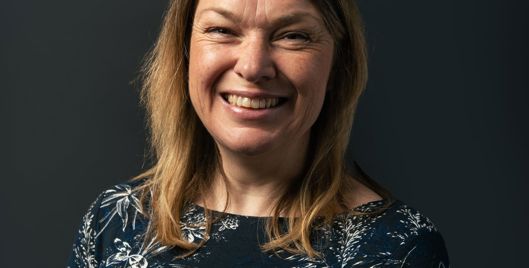
Sally Gilson
Road Haulage Association
Shaun: Welcome to this episode of Health and Safety Uncut with the British Safety Council. I'm delighted to be joined by Sally Gilson, Policy Lead (Skills and Drivers) of the Road Haulage Association. Previously at the Freight Transport Association. Sally has great experience in skills, apprenticeships, training and workforce development right across the logistics sector.
Earlier this year, Sally received the Order of Merit from the Worshipful Company of Carmen, which is presented to individuals who've demonstrated outstanding service, commitment and impact within the transport industry. Congratulations, Sally, and welcome to the podcast.
Sally: Thank you very much. Thank you for having me.
Shaun: Pleasure. Thank you for joining us. Can we start Sally by finding out a bit more about what you do? What does health and safety and skills and training mean to you and what's been your journey, pardon the pun, at the Road Hauling Association?
Sally: I think it's fair to say it's been a very varied journey to, to get into road transport. I never quite found my calling. It wasn't until sort of late 30s that I was, I was in sales, and I actually joined the Freight Transport Association, or Logistics UK as it now is, as an account manager.
And on my very first day of the, the introduction, I met the policy team. I had no idea that this kind of job existed. People who actually go out and talk to MPs and, and, and I knew straight away that that was the role that I wanted to get into.
And I think I've always, I've always had an interest in skills and training. And I highlighted that we're kind of missing that on our policy side. So, there was sort of a role created with regards to skills and just haven't looked back.
And I think that the road transport sector is, there's a lot of passion within the sector, people you either fall into it like I did, or you're born into it. And either way you stay, you know, it kind of grabs you and you, you're not allowed to leave.
And you, you really do feel the passion of the industry there. There's a lot of long hours in road transport. So I think you probably do have to love it. So that's sort of how I, I landed up in, in working in policy and road transport.
I kind of have the freedom to, to work on the policy issues that I, I feel are most important for our sector. Obviously, that's very much led by our membership, but health and safety, driver well-being is so key to it because you know, without drivers we, we really do have nothing.
You know, the UK economy would grind to a halt. So, it's incredibly important to me that they are kept healthy and safe.
Shaun: Couple of things there that got me thinking. So the the sales background and working in sales previously, I've long held a view that a lot of work that we do in safety, health and well-being has a sales element to it because we're kind of selling in an idea or a kind of concept and we're trying to take people with us.
Has that, has that been, has that been your experience, it's been beneficial? Have you used any sales techniques in your policy implementation world?
Sally: Really interesting because I was terrible at sales, but I've never really thought about it like that before.
I I'm, I suppose there is, yeah, there, there are a lot of elements within sales and accounts, account management. Certainly, when I'm talking to politicians and you are trying to explain the issues, it's all about making them as simple and ...
Shaun: accessible and understandable, yeah.
Sally: Sometimes you really don't get very long with a politician, so you've got to be able to explain to them the problem in a very, very short space of time.
Shaun: ...build rapport quickly. Yeah, yeah, yeah.
Sally: Exactly. So yeah, I haven't really thought about it before, so.
Shaun: And then the other thing is when you mentioned policy, policy is often considered quite dry, difficult to implement, kind of quite wordy. I mean, I'm a big, big fan of language simplification and, and getting people to understand, understand policy and standards and be able to implement them.
But, and what's your, what's your approach at the RHA in terms of operationalising a policy? How? How have you gone from creating that to then implementing that across your membership or supporting the implementation of that?
Sally: Yeah, that's a pretty interesting one because within our our sector, 86% of our membership are SMEs.
And I think it's safe to say that there isn't a strong academic background. So, simplifying the message is key. I think there's actually quite a high, a number or percentage that are dyslexic.
So, you're, you're, you're constantly trying to make sure that any kind of messaging you're putting out is written the right way. But from my own personal background, so as a team of about 12 of us, I think in our policy and public affairs team, I'm the only one that didn't go to university.
But certainly, I write differently to everybody else in the team, and I think the language I use is probably simpler.
Shaun: That's interesting. And that's, that just illustrates right, the really to me... really simply illustrates the importance of diverse teams, diversity of thinking, writing, engagement.
And that's why kind of when you're building teams, particularly, I, I think to me and my, my kind of day job, my team all bring a very different aspect. And I've got one, I've got one individual who is incredibly robust on policy standards, procedures.
I've got another one who's excellent on communication engagement. And I've got another one who's great on plain speak. And so, kind of that combination together is... it works. So I think that's that's encouraging that you kind of you're bringing a I play in English, kind of for want of a better expression, dimension to to that good.
Sally: Sadly, it doesn't mean that it takes me forever to write a report.
Shaun: There you are, pros and cons. So, you mentioned in your introduction there about welfare and well-being. So what are the main health, safety, well-being and welfare issues that you come that you come across at the RHA?
Sally: So I think I've obviously in logistics as a whole, there are many, many different occupations, but the, the, the core job that we come across most often is, is, is the job of driving. You know, it's, it's with, without the drivers, none of our members could operate.
So clearly, they are going to be first and foremost my mind, there's so many different elements to their, their health, safety and well-being. So, you've got the fact that they are out on the road alone. So, the loneliness of the long-distance driver.
Then you've got the safety aspect. You know, you're, you're, you're driving a 44-ton truck. So, there are the issues that that brings.
Shaun: I guess also personal safety. I was thinking I was, I, I was travelling down to the South Coast a couple of weeks ago.
We've been to a concert. I was driving down later at night, pulled into a service station. I was looking at the, you know, the, the drivers there that were parked up to get the rest, but they're in dark parking, parking lots and going off to shower or going, leaving the vehicles. It's the personal safety element as well as a well, a well-being safety.
Sally: And one of the real issues that we have is that the parking facilities for truck drivers goes from really great places... amazing places where they actually really think about what a driver needs to some of the more motorway services.
They're obviously they're not set up for truck drivers. They're, they're, they're set up for, for car drivers. That's, that's where they make the money. We, we have a real problem with regards to security. So, one of the things that we've actually been asking for the forthcoming budget is £6,000,000 to help fund something called NaVCIS.
And this is all about trying to stop freight crime and keep drivers secure. Because if you can imagine, you know, there's, there's a, there's a high value behind their truck and they're sleeping in their cabs.
So, in 2024 there was £111 million worth of goods stolen. And it's, it's, it's increasingly organised crime gangs. So think about if you are trying to sleep in the cab of the truck and there isn't actually any secure fencing around where you're sleeping, there isn't the security lights, how good a night's sleep would you get?
And, and yet this is what we're expecting people to do on a nightly basis. So, it's really key. We've got, like I said, we've got some great truck stops, but then we've got quite a number that aren't.
Shaun: When you think about... the immediate thing I thought about them was the relationship between sleep, physical health, mental health and it's not a big leap, is it, to think of people and again and then driver fatigue and then the risks that that presents to other road users and to the individuals.
So, so it's, I think it's a really, really important, I mean, they need to, the drivers need to, to know that when they are going to get their rest, it can be, you know, solid rest, not sleeping with one eye open, kind of pardon the pun. Yeah.
Sally: And it's, it's, you know, it's, it's no surprise that there are more accidents in the afternoon. And it's because of fatigue. You know, I mean, there are many different reasons behind that fatigue. You know, it's crucial to be able to get a good night's sleep if you are then going to be doing 9 hours of driving. But we know it's not a nine-hour day. Drivers frequently do 60-hour weeks.
You know, they, they, they are long weeks. So, it's really important they get that sleep. But the other thing, and it was fascinating listening to the the previous podcast that you did about the toilets, because one of the things as we know, the cause of fatigue is dehydration.
And if you are not being able to stop and use a toilet, well, you're not going to keep taking on the fluids and it's going to make you a very, very tired driver. And again, that feeds into the fact that you've got to the afternoon, you've got 4 1/2 hours before your next break.
You're not going to keep on taking on water.
Shaun: No, no, no. And, and you mentioned in that previous section there about, about we've discussed a little bit about mental health and about and about driver loneliness. What, what, what work are you and your members doing on that?
Because I think that to me, you know, I'm, I'm, I like my own time, but I'm also incredibly sociable and social. I, I would find that isolation, I think very, very difficult to manage. Now I know that people, there will be people who choose that career because they like that, but I think there's a whole range of people.
Sally: Yeah, I mean, I would say that if if you were a tramper. So that's the people that stay away throughout the week; called a tramper. Well, it's tramping, but they would be a tramper. Yeah, that's what it's called. And you know, it's hard to put a number on the number that do those bits.
We reckon it's somewhere sort of around the 40 to 60,000 do that, that form of truck driving. So yes, they are staying away from home all week and a lot of them love it, you know, they that that's, that's the, the life they've chosen.
But just because you love something and being on your own doesn't mean to say you want to be on your own all the time, because everybody has the same struggles going on. And when you don't have someone that you can then get to the end of the day and easily chat to and it it, it's tough.
So, I think so one of the things we've introduced is we've got a member assistance program called PAM, it's A 24-hour hotline. So, anybody within our, our membership can, can utilise that. So, whether that's a driver just wanting to talk to someone and, and, and share their stresses to more practical help. So that's available.
Shaun: So, is that like a traditional employee assistance programme or is it more of a ‘stay connected’ coaching or is it a hybrid? What is it? How does it actually work?
Sally: So, it's, it's a little bit more of a hybrid, I suppose, because it's there for an emergency.
So if you really need to talk to someone, and luckily that doesn't happen that often, thankfully, but it's also there to be able to give practical guidance as well. So if someone's maybe having financial troubles, they, they can access advice if they want to talk to someone about current home life scenario or whatever.
Shaun: So it's got, it's got an EAP kind of dimension, an employee assistance programme dimension to it. Interesting. Yeah, that's very good.
You mentioned on the previous podcast where we talked about TAL [T-A-L] and the work that they were doing on kind of welfare and facilities.
Is that something that that you think you and your members would find helpful? Is it? Is it?
Sally: I think so from, from, from the knowledge I've got from the podcast at the moment I'm it's probably not quite there for if you have a 44 tonne, right, Yeah, to park up.
Shaun: Yeah, that, that when they're talking about coffee shops and things, I can imagine you're kind of driving down the the High Street and parking up. I did wonder that, but. Exactly. It's a natural progression for them.
Sally: And then I'm sure it will be. And I mean, I go back to my, my sales days and I was always told as, as, as the top tip, always accept a tea or coffee because, because you're setting a time frame for the, for your sales appointment.
And if you sip it really, really slowly, you can make sure you're there for a little while. But of course, what's the first thing you want to do? Then when you're, when you finish your, your call, because you've had tea and coffee, you need to go to the loo. And invariably I'm on a business or an industrial estate. Well, it's exactly the same for our drivers.
They're an industrial estate where there are no toilets and quite often. Sorry, I'm going off on a tangent here a little bit, but very often if they're delivering to a regional distribution centre, they're asked to be in a waiting area.
Now good places have toilets available in the waiting areas. They don't all. So even in that little break where they're loading and off-loading, there's no access to a toilet.
Shaun: Yeah. It's not a given that's it’s going to be there. So we talked then about, we've talked so far about some of the policy elements, some of the practice elements.
What about the ever-elusive culture? What’s say, you know, how do you, how are RHA supporting safety culture? It's that, you know, there's obviously a number of different strands of work there, but you're beyond the formal training and accreditation programmes.
What are you doing as an organization with your members to help promote and embed a safety culture?
Sally: So I, I find it fascinating that so as, as a sector, we are highly regulated, but most of that regulation is on the vehicle.
So, the first thing a driver does in the morning, they do the driver walk around, check of the vehicle and make sure it's safe to go out on the road. But nobody does that for the driver. And it's something it, it, it's a conversation that is becoming prevalent.
I think we're recognising that more and there are a lot of good organisations now who are spending more time on making sure that the driver is equally as roadworthy as the vehicle.
And so it's a piece of work that I'm, I'm looking at the moment that there's been, there's been some great work in the past. And I think this goes back to something we talked about earlier and, and the accessibility of information. And there is some, some great documents out there, but they're written in such a way that they're, you know, for a, for a director or some, or an academic, they're not for the transport planner or manager who is looking after the drivers and planning their, their weeks.
And it's, it's that level that we need to get the information to. And it's quite shocking actually that so in terms of driver medicals, we are quite behind in the UK if you compare what other countries test drivers for in there.
Shaun: You mean, the depth of that we go into, into?
Sally: Yeah. So, you don't have to have... so when you first take your HGV licence or bus/ coach you have to do a medical. But if you passed at 18, you then don't officially need a medical until the age of 45.
Shaun: So from 18 to 45?
Sally: Yep, no medical required from the age of 45 onwards. Every five years you have to have a medical up until the age of 65 when it becomes yearly. But you, I, I can't do the math off the top of my head between 18 and 45.
But yeah, that's a lot of ... [Shaun: 27] yep, there you go. That's a lot of.
Shaun: I mean, it's a lot of years, full stop, but it's a, it's a lot of years in terms of medical. How if I think back over my health journey from being 18 to 51, I've been blessed with good health, but I have had health issues over that time.
Wow.So that is quite... [Sally: You're not. You're not sat on your backside.] And I'm not, yeah. And I'm, you know, I'm a, I'm a non-smoking vegetarian. I exercise regularly. I really take. So actually it's that is quite that is that is surprising.
Sally: And, and it's amazing when you actually look at other countries as well. If you compare it to Singapore, you compare it to South Africa. All of these other countries are fun, are stricter on their driver medicals. And it really shocked me when I started looking into this that we don't test for diabetes in that five yearly medical and yet we know that two-in-five drivers have it or have undiagnosed diabetes and diabetes is, when it's untreated, it's very dangerous.
Shaun: When it's failing, yeah, obviously. Clearly much more to do there.
Sally: So, one of the things that I'm looking at now is we, we don't necessarily want loads more regulation, but what we do need is, is better best practice.
And and we need that to feed through.
Shaun: Is there a global ... is there a global community? Is the RHA part of a global community in itself? Do you, how do you share best practice from the likes of, you know, you mentioned there, India, South Africa, you know what I mean? Other, other, other markets, other countries.
Is there a way of bringing together that best practice and constantly raising the bar?
Sally: Yeah. So, the the IRU is an organization that brings together all of the trade associations across the whole world. So, I am a part of that.
So, take part in, have a number of meetings with them and, and you do get to share what's then going on in other countries. So, there's been a lot of work recently on trying to diversify the sector. And of course, then that brings in all of these issues because once you start to go down that road actually and drive for welfare, it becomes quite crucial.
So yeah, there are other ways of doing this, but I think one of the things that I'm currently looking at is how can we easily make it accessible for our members here now without having to change the regulations.
So, we've got the men's health strategy that's coming up in November. So kind of piggybacking off of that, we're just driving that awareness that from the age of 40 you are entitled to a free NHS health check. And now the first thing a driver was like, well, I'm away all week.
I don't, I can't get to my GP. It's like, well, you can go to a pharmacy and have that done. So, it's signposting where people can go easily, but also not just making the drivers aware, making sure then that the transport managers are aware, making sure that they can access this, but also then bringing those kinds of things where the drivers are.
So if there was a free health check available on juncture 24, the M5, and I mean that's just perfect because it's at the truck stop.
Shaun: And you take it and you take in the service to the the to them rather than them going to that.
Sally: Exactly. It's all about that accessibility.
Shaun: And if you think then about legislation regulation kind of building into policy stuff, we're going to bring it back to where we started. How do you, how do you personally and the organization keep up with legislation, influence that have a voice in it, represent your members?
How? How are you doing that currently?
Sally: So the way that RHA is set up, so we have a number of regional councils which members take part in. So that's, that's one way that we formulate our policy.
So, in fact, one of the reasons why I'm currently so focused on driver medicals is because somebody brought it to the Regional Council to for a discussion that they were quite shocked of, of how little is actually tested. So that's sort of part of our governance.
Then we, we take those to the board and then we decide what’s going to formulate policy going forward, and then of course, we take that to the Department for Transport or, or whatever.
And the government department is, is is best to, to cover that particular policy ask.
And then of course, we weren't when with other trade associations, we worked with lots of other associations like them doing the work at the moment with the NHS. There's there's lots of ways that we formulate this, but it, you know, we're a member-led organization, so these things come from our members.
They have to work for our members. There are sometimes some tricky conversations because we are we are a sector that is predominantly led by over 50-year-old males.
And so sometimes it can be challenging in a world where, you know, it's fast moving, things are changing. Trying to discuss the fact that actually the workforce of the future won't be doing 60-hour weeks.
Shaun: Well, that's, so that, that leads me into my, to my next question, because I was going to ask you about what you're seeing coming through... two strands, what you're seeing in terms of the workforce of the future. But also the the point that we touched on really early around the kind of diversity.
And we've talked a lot about when we talk a lot about the male drivers, but what about your female drivers? And what about the whole diversity piece, which I know is quite political at the moment, But I'm, I'm looking at this through my kind of safety, health and wellbeing lens.
And we've got to protect people. It's quite right. We protect people however they identify. So I'm parking up that piece, but what's being done in that space?
Sally: So we've actually got a report coming out in December, which so we, we were the secretariat of the APP, so the All-Party Parliamentary group for freight and logistics, and we launched an inquiry into improving diversity and logistics.
So that's coming out in December.
And there was a lot of great ideas that came through from that. And a lot of things are already happening. So there are, there's, there's great work at, as some of the larger organisations like GXO and their case studies highlighting what's happening, especially trying to attract females into the sector is, is, is crucial.
But actually, from my perspective, in some ways, I'm more interested to know what the SMEs are doing and how they're managing to make it work because they're who's going to talk to our membership, and what I'm finding is where no surprise where you have females in leadership teams, they get it, you know, they, they understand that, you know, people do need to be back for a certain time because they've got to pick the kids up.
Now we, we are now in a world where you need 2 salaries to be able to purchase a house, whereas that might not have been the case 30 years ago.
And you know, the, let's face it, the driver might not be the big earner of the family either, you know, and, and they might be having to do the lion's share of the work.
But even if you don't have kids, why, why are we expecting people to do 60-hour weeks? It's crazy. So we, we are having these challenging conversations and there are some great companies doing some really good things.
They are making sure that they are doing different shift patterns, whether that's four days on, four days off, ensuring that people get back at a reasonable time on a Friday. So I, I, I had one of our members saying we're actually now starting to turn down work for the Friday so that then there aren't these last-minute diversions for a driver so they can return to base.
Shaun: Well, there's other things as well, right, with things such as uniform clothing, comfort, not just having a standard catalog where people go and get and it's, you know, medium, small, medium, large, large, extra-large, that's it. You know, thinking about accommodating simple adjustments like that.
Accommodating for female drivers is a good example.
Sally: So I've gone to countless events where they hand you the high-vis vest and is massive. You know, so you could look at that and go, ‘well, what's it matter if it's big on you?’ but actually, it's a safety issue if you've got lots of fabric flapping around.
Well, how is that good? And the safety boots, if they don't fit my feet properly, then they're not going to be comfortable.
Shaun: Yeah, and comforts it's... Yeah, comfort and safety and, and, and the whole thing about personal protective equipment, there's a clue in the title in terms of it being personal and suitable for the individual, not off the shelf standard
Sally: I've got a particularly small head, yeah, so lots of hats don't fit me. So making sure that you know the the your safety helmets are fully adjustable so that they fit.
Shaun: Yeah, which again plays into the culture part, the inclusion part, the belonging part, which helps with culture improvement, which helps with retention, attraction in the 1st place.
Sally: Yeah. So we are still at a point where only about 1% of drivers are female and that has not changed. I've, I've been doing policy now in skills for 12 or 13 years. It's not changed during that time. We do a lot to try and attract.
Shaun: Is that the problem... are you challenged with attraction or retention? Can you get them but can't? Or is it a bit of both?
Sally: Pre-COVID I would have said it was both. I think we have a much bigger retention problem now.
Shaun: That's what I'm hearing in, that's what I'm hearing in other sectors that I'm linked into automotive, construction, waste.
I'm hearing that the attractions not as a big a problem, still a problem, but not as big a problem, as retention is.
Sally: Yeah, don't get me wrong, we do still have an attraction problem, which I think I'm in my opinion, it still very much goes back to the hours.
But that retention problem is even bigger with the hours. And I think what we did really, really well post-COVID, we got a lot of media interest in the driver shortage. It was on the front page of so many of the papers you had some of the big supermarket's offerings of 50-60 thousand salaries and it you know, it was, it made it very appealing.
We got a lot of people trained up by the school's, boot-camps again, never had so much funding available for training people. It was awesome. But then people start to work in the sector and ‘whoa, oh, right. So I'm going to be doing 15 hour a day?’ and we've got to overcome this.
And I, it's going to be hard for some businesses to be able to change the mindset. And this is a massive mindset change for the sector that we are going to have to do logistics differently.
And that's going to come right way down from, from customer demands. I mean, who doesn't want their item delivered the next day? But actually, there's a cost to that. And it's not just a cost as in pounds, it's a cost in the fact, yes, there's a human cost to those... the way that we have changed how we buy things.
And so it's not just our members that need to think about, ‘well, do I actually have to turn down that bit of work because that person's not going to make it back in time to be able to do the school run in the afternoon or.’
Shaun: Or other caring responsibilities or other...
Sally: So many things... just have a life. We've just been talking about the fact that people are, are, are sat most of the day in their cabs. Well, actually, isn't it really important that they get back home in the evening to be able to go out for that run on that walk or go to the gym and also things like that
Shaun: I, I, you got me thinking earlier on, I had a friend that was a driver who I remember him telling me the story about, he transitioned from one job to another. So he'd had an office job, went to be a driving job and he said he stopped being able to go to birthday dinners and drinks with mates and, and playing, you know, he played squash at the time and people gradually the invitations dropped off and people would say, Oh well, Steve can't come anyway.
So stopped asking him and that social isolation piece for him really bothered him because he just fell out of, he fell out of the family circle. He got his, he got his, his wife and children, but he fell out of that and he fell out of his social connectivity and it and it, it really bothered him and he and he, he had to work really hard to kind of keep it alive.
Sally: So we we've been doing, we've been trying to track driver numbers for a little while in, in in a more accurate way. I think we were a little bit too quick to start out these huge numbers of the driver shortage wasn't really based on much fact.
... It was more of a doesn't work on a podcast, holding your finger up in the air trying to work out. But so we've, we've been putting a lot more science behind it. And going back to, as I said earlier, we, you've got the driver license, the, the HGV license, which is obviously one mechanism, but those who have trained, fully trained up in their driver's CPC and they get something called a DQC card. And if they're also working, they'll have a Tacho Card. So we're trying to monitor those numbers.
And what we've seen is that over the past year, over 100,000 people haven't renewed those elements. So we, we know that we have lost a huge amount of drivers and we've been like, oh, crikey, OK, so this, this, this due to retirement, Isn't it?
When we look through the numbers the one of the biggest groups is that 35 to 45 bracket?
Shaun: Yeah, I mean, if you think about it, things that I've got, I'm thinking of my, I've not got children, but I've got nieces, nephews and the like.
One of the big thing while they were growing up was being able to go to their school plays or being able to go and see them in their assemblies or see them after school. I think if you're, you know, if you're a parent, male, female, you want to be around to do that. And that, that age group, that 35 to 45 is that.
And so I can, yeah, can. It's not a big leap to think that people would be... They're not prepared to compromise their life and lifestyle for a job.
Sally: And, and don't get me wrong, like I said, that there are some companies doing this really well. And there's, there's one that's fairly local to me.
And not surprisingly, it's being led by a female in the leadership team who's absolutely amazing a lady called Lorraine Brits, who he's renewed my faith in in in many things logistics.
But she recognises that. So, in the summer, somebody wanted to make sure that they could attend the school sports day, watch their kid. So what she does is she recognises that she can't have everybody finishing early. So but she opens it up to the whole team of drivers.
Look, they want to get back for this time. Who, who can cover it? It's it's having those conversations, it's communicating, it's making sure that everybody realises that yes, jobs still have to be done.
Shaun: And a sense of community, right? a sense of collective decision making, community and kind of inclusion.
And the fact that then you would hope from a cultural point of view that creates further teamwork. And then when that that person who stepped in needs something that that there's someone in there. Yeah, that's, and that that's, that doesn't require an engineering change, big investment, a big policy change.
It's just about humanity and talking and some thoughtfulness, right?
Sally: Yeah, Yep. It's having those conversations with the drivers. It's making everybody realize that they are actually all part of a big team.
Shaun: Yeah. Now, as I bring this to a close, each episode that we do, I like to ask our guests what one take away they would like the listeners to take away what one take away or what one thing would you ask people to do or think about differently as we close?
Sally: So I think beyond hours that comes up a lot as to why people leave. The other thing that I hear the most from drivers is the lack of respect. So, for, for me, it's whenever you have any kind of engagement with a truck or a truck driver, so don't complain about them on the road.
They're delivering your goods, you know, make sure you give them space on the roads and give them the respect when they come to you, your, your place of work [Shaun: or your home] or your home. Make sure that you are friendly. You are not insulting, you know, it's respect that, that this is the piece that I want everybody to take away.
Please be respectful of these drivers because without them, you know, we really do get nothing. And please just look after them.
Shaun: You know what you got me thinking then I had a new bed delivered and the delivery 2 delivery drivers turned up and they were great.
They were bang on time. They, they kept on when they were coming, they were great, brilliant. And it was during the hot spell. And so I, when they were leaving, I said, you know, I asked me to want to drink. They said, no, no, we're fine. And when they're leaving, I said, I've got some cans of Coke in the fridge. Would you like a can of Coke?
And they just stopped and looked at me and they said, yes, please. I was like, do you want a couple like you wouldn't, you would be surprised how many people don't, don't even offer us a glass of water... To me, I mean, if I'd got a guest in my house, which they are when they're delivering, it's natural to me that you would.
Sally: I I get out the biscuits. [Shaun: Yeah, you would. Of course you would] Not Biscuits. There you go, I've I've blown that. Yeah, the healthy eating, haven't I?
Shaun: But they, yeah, they were, they were, they were great. And I was very appreciative. But actually that was just a small act. But yeah, they, they, you know, they'd been, they told me they've been at that depot loading from 5:00 AM and they were working a long day.
And it was, you know, in the 30s, it was really hot. It was during the summer, the summer. And it was a small app that made a big difference. I would definitely. [Sally: Perfect behaviour]. I would definitely, definitely recognise that. Well, Sally, thank you for your time. Thank you for sharing with us your insight.
I'm, I'm really encouraged by the things that you've, you've talked about and I, I wish you and, and everyone at the the Road Haulage Association all the very best of luck in your journey.
Sally: Thank you very much for having me. Thank you.
Links will be in the episode description.
 Visit now