
Learning that saves lives
Success can sometimes be a problem. The better we become at preventing incidents, the harder it can be to see what is actually preventing them.
By Mike Robinson, chief executive, British Safety Council on 11 September 2026

Success can sometimes be a problem. The better we become at preventing incidents, the harder it can be to see what is actually preventing them.
By Mike Robinson, chief executive, British Safety Council on 11 September 2026

Migraine can have a profound, and often avoidable, impact on people’s working lives and careers. The Government’s growing focus on workplace health offers an important opportunity to change this, but only if this common, often disabling and frequently invisible neurological condition is properly understood and addressed by Government, the NHS and employers.
By Rob Music, The Migraine Trust on 07 September 2026

With rising temperatures posing a growing health risk to UK workers, the TUC is calling for HSE guidance to be updated to require employers to take specific steps to protect workers' wellbeing when temperatures exceed pre-set trigger points.
By Huma Haq, TUC on 01 August 2026

A legal anomaly that makes it more difficult for sufferers of asbestos-related lung cancer to obtain compensation than people who have developed mesothelioma means large numbers of people are dying before receiving full compensation that could prove vital in the final months of their lives.
By Daniel Easton, Association of Personal Injury Lawyers on 30 October 2025

Each day across the UK, millions of employees take to the roads as part of their working lives. Whether delivering parcels, attending client meetings or riding bicycles between jobs, road use plays a vital role in keeping businesses going. While the general health and safety landscape has evolved significantly over recent decades, work-related road risk (‘WRRR’) remains an area that is too often overlooked by employers.
By Ben Pepper, CL Medilaw on 30 October 2025

Businesses increasingly understand the benefits of integrating their approach to worker wellbeing with their sustainability goals – and there are some practical, low-cost and simple ways of achieving this.
By Dr Audrey Fleming and Dr Keith Whitehead, British Safety Council on 23 October 2025

Although in past years asbestos-related mesothelioma deaths have been associated with exposures among construction and related trades working on the fabric of buildings, emerging evidence suggests that future cases of mesothelioma will be dominated by those exposed as children and teachers in schools in recent years, today and in the future.
By Charles Pickles, Airtight on Asbestos on 02 September 2025
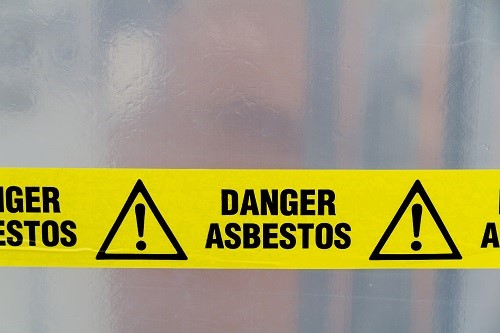
Why we urgently need to improve training standards and awareness about asbestos exposure.
By Richard Blunt, Mesothelioma UK on 02 September 2025
The National Education Union (NEU) was formed in 2017 from an amalgamation of the National Union of Teachers (NUT) and the Association of Teachers and Lecturers (ATL). In total we have around half a million members, who work as teachers, support staff and leaders.
By Sarah Lyons, National Education Union (NEU) on 03 September 2025
In a relatively short time, Artificial Intelligence (AI) has become synonymous with technological development, but development doesn’t inherently mean that the workers of the world will have a safer future.
By Mike Robinson FCA, British Safety Council on 07 October 2025
With employers likely turning their attention to Christmas and end-of-year parties for their teams, autumn is an ideal time to launch prevention, support and education programmes around alcohol at work, providing a real opportunity to protect health, productivity and performance.
By Susan Laurie, Alcohol Change UK on 01 October 2025
To anyone outside the occupational safety and health (OSH) field, the job may appear deceptively simple. First, we identify hazards, then we create solutions, and finally, we watch risks disappear into history.
By Mike Robinson FCA on 01 September 2025
The Product Regulation and Metrology Bill currently before Parliament offers the opportunity to reduce the fire risks posed by sub-standard e-bikes, e-scooters and their lithium-ion batteries, but the Government needs to go further and faster to protect public safety.
By Lesley Rudd, Electrical Safety First on 03 July 2025