
As 2025 draws to a close, we reflect on a year of success and safety. It also allows us to look forward to the coming year, recognising that with each new year comes the unbridled hope and opportunity to create the safest year in human history for the workers of the world.
Opinion
Beyond 2025: The journey towards a safer world
By
on 22 December 2025
We entered 2025 having marked the 50th anniversary of the Health and Safety at Work Act and looking ahead to the 50th anniversary of our national regulator, the Health and Safety Executive. This pairing, regulation and regulator, has delivered an almost 80 per cent reduction in workplace fatalities and injuries since 1974. It’s a legacy we should all be proud of, and one in which we all share.
Yet, the changes and challenges of today and tomorrow, driven by rapid transformation, mean that a safer future is not guaranteed. Safety is not something that simply happens. It is a commitment each of us makes to the future, to the workers we know, and to those we will never meet. We do this because the promise of a better and safer tomorrow is what drives societal progress.
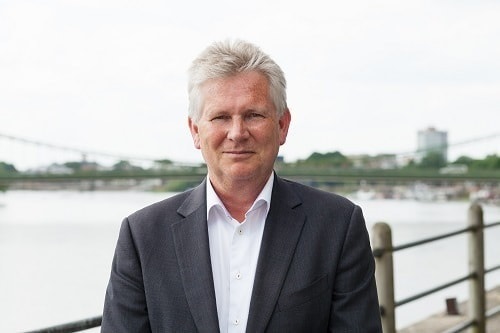
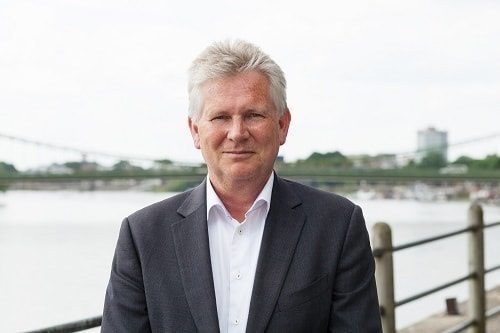 Mike Robinson: "The changes and challenges of today and tomorrow, driven by rapid transformation, mean that a safer future is not guaranteed."
The new year also marks the end of an extraordinarily busy season for retail workers, from Christmas trading through to New Year sales. Historically, this period has seen an increase in abuse and violence directed at those working across retail, leisure and hospitality. Despite being the season of goodwill, goodwill was often in short supply. In our post-pandemic world, violence against retail workers has become a constant challenge, prompting many to seek work in safer industries. Safety means nothing unless it is built on a foundation of dignity, respect and wellbeing for workers.
2025 also saw us expand our catalogue of charity publications, working with Dr Tim Marsh to publish Wisdom and Wit from a Safety Psychologist. The book aimed to raise funds for our sister charity Mates in Mind, and mental health charity Brawd. Throughout the year, hundreds of generous supporters at events across Great Britain supported this project, raising more than £5,000 to fund vital mental health support.
In July, we published our Impact Report, reflecting on a year of our impact in action, and what a year it was. More than 12,000 learners were trained across 90 countries, and we launched our first international charitable initiative, providing safety training to more than 7,800 migrant workers in India. We continued campaigning on the issues that matter most to our members and clients, including everything from automation and AI to silicosis and asbestosis.
In September, our Chair, Peter McGettrick, hosted a fringe event at the Labour Party Conference in Liverpool. The discussion focused on the next steps to protect workers from asbestos-related harms. Attended by campaign groups, trade unions and Sir Stephen Timms, Minister of State for Employment, the event provided an important opportunity to reflect on progress so far, confront the challenges workers continue to face, and shape the future we want to build together.
So, as we look ahead to that future, whether on asbestos, psychosocial risk management, or AI, we recognise that the decisions we make today will shape the working lives of millions for generations. Our choices will either continue a proud trend of progress or risk undoing it. For me, and for millions of occupational safety and health professionals, that is no choice at all.
We often underestimate how much can be achieved in a single year. In many ways, this is because each year’s progress is built on what has come before: the hard work, learning and determination of those committed to keeping workers safe. With the deep knowledge held across the global occupational health, safety and wellbeing community, we can help create a world where every worker returns home safely at the end of each working day, and where the pain and suffering caused by workplace harm becomes a thing of the past.
And so, as 2026 approaches, we are presented with an extraordinary opportunity. The chance to build a future in which safety is not only a priority but an expectation, not an aspiration but a shared reality.
Mike Robinson FCA is Chief executive of the British Safety Council
OPINION

Rethinking homes as centres of economic activity (amongst other things)
By Andy Lake, Flexibility.co.uk on 08 October 2026
The decentralisation of work away from fixed workplaces, the rise of AI and demographic changes are creating new opportunities for people to carry out ‘hands-on’ work in the home, such as production of fashion, textiles, food and drink, and delivery of health services and therapies. However, our existing housing stock is not designed to accommodate such functions, so it’s essential that future town planning creates homes that support different kinds of enterprise, both to support business success and the wellbeing of these new home-based workers.
Learning that saves lives
By Mike Robinson, chief executive, British Safety Council on 11 September 2026
Success can sometimes be a problem. The better we become at preventing incidents, the harder it can be to see what is actually preventing them.

Migraine in work: a test of the Government’s plans to Keep Britain Working
By Rob Music, The Migraine Trust on 07 September 2026
Migraine can have a profound, and often avoidable, impact on people’s working lives and careers. The Government’s growing focus on workplace health offers an important opportunity to change this, but only if this common, often disabling and frequently invisible neurological condition is properly understood and addressed by Government, the NHS and employers.