

Although technologies like computer vision analysis, machine learning and wearable sensors are increasingly being used to identify and assess the causes of work-related musculoskeletal disorders (MSDs), it’s essential to consider data relating to all aspects of work design when seeking to reduce MSDs in the workplace.
Features
Human-centred technology for better work design: rethinking musculoskeletal disorder prevention
By
on 02 January 2026
It’s been almost 25 years since I treated my first musculoskeletal injury in the physio clinic. We used plastic goniometers to assess joint angles and grip strength was measured with a squeeze of the thumbs. Now we have technologies that extend way beyond the clinic and the biomechanics lab and into the workplace itself. Wearable sensors track postures continuously throughout shifts. Computer vision analyses thousands of hours of footage automatically. AI generates risk scores and prioritises interventions. Yet musculoskeletal disorder (MSD) rates remain stubbornly high across industries.
Most organisations ask ‘what technology should we deploy for MSD prevention?’ when the real question should be ‘what problem are we actually trying to solve?’ I consistently see technology selected before the problem is properly defined. Organisations enamoured by machine learning applications that excel at measuring shoulder angles and generating Rapid Upper Limb Assessment (RULA) and Rapid Entire Body Assessment (REBA) scores while missing the work design failures, psychosocial hazards, and systemic issues actually driving MSDs.
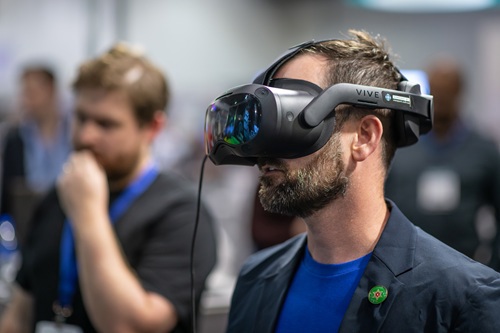 Cam Stevens: "Most organisations ask ‘what technology should we deploy for MSD prevention?’ when the real question should be ‘what problem are we actually trying to solve?’" Photograph: PKG Safety Innovation
As a safety innovation consultant who blends experience in physiotherapy, ergonomics, human-centred design and technology into holistic practice, I’ve seen this pattern from multiple angles. Clinically, I understand that MSDs develop through complex pathways involving tissue loading, recovery time, stress responses, and individual factors. From an ergonomics perspective, I know that sustainable work design requires attention to physical demands, cognitive load, environmental conditions, and organisational factors. As a technologist, I see tools capable of capturing all these dimensions, but too often deployed with narrow biomechanical focus that fundamentally misunderstands the problem we’re solving.
What data do we need to prevent MSDs?
Computer vision systems generating automated RULA and REBA scores represent genuine technological achievement. They process thousands of hours of footage and detect postures that would take observers weeks to catalogue. But here’s the major limitation: these systems optimise for biomechanical scoring when what we need is holistic work system understanding. A RULA score tells you a shoulder is elevated beyond 90 degrees. It doesn’t tell you why, what systemic factors make it necessary, or how to redesign work to eliminate the need.
I’ve unfortunately experienced many companies where they collect vision-based risk data and then simply default to ‘manual handling training’ as the intervention. The pattern is depressingly consistent: sophisticated technology identifies high-risk postures, generates impressive heat maps and risk scores, and the organisation responds with training sessions, reminder posters, and stretch break programmes. Six weeks later, identical exposure patterns persist because the interventions targeted individual worker behaviour while ignoring the work design issues that made those postures necessary in the first place.
Working with a major food retailer, we used computer vision to understand barista interaction with coffee machine layouts. The vision systems alone weren’t providing the fidelity of data needed, so we supported this with wearable sensors. The data revealed issues with coffee grinder location, bench heights, syrup and cup placement, and ordering system screen position. Our intervention wasn’t pre-start warm-ups and stretching; it was work redesign. We installed automated grinders, lowered bench heights, and completely redesigned the workstation layout to eliminate the awkward reaches and sustained postures the technology had revealed.
Similarly, with a manufacturing client, computer vision helped us understand workflow sufficiently to identify that the wrapping machine’s location relative to input and output created unnecessary double-handling of boxes. With a packaging company, we discovered stock split between two warehouses required an 80-metre walk that could be condensed, eliminating repetitive travel and handling.
This is the fundamental distinction: measuring problems without understanding causes, generating data without enabling action, deploying sophisticated technology to document failure rather than enable improvement. The issue isn’t that biomechanical measurement is wrong; it’s that it’s incomplete. MSDs arise from complex interactions between physical load, temporal patterns, environmental conditions, equipment state, cognitive demands, psychosocial factors, and organisational decisions about how work is designed and managed. Technology that measures only biomechanics reveals symptoms while the MSD risk progresses unchecked.
 "Technology that measures only biomechanics reveals symptoms while the MSD risk progresses unchecked." Photograph: PKG Safety Innovation
Expanding the aperture: what different types of data reveals about work design
If the problem we’re solving is ‘how do we design work that prevents MSDs while enabling performance’, then we need different types of
data revealing the full work system, not just body mechanics. This requires thinking differently about what data technology should capture and why.
Work scheduling and temporal patterns profoundly affect MSD risk, yet rarely appear in conventional assessments. Workforce management systems contain rich data on pace pressures, overtime patterns, consecutive work periods without breaks, and workload variability. I’ve analysed work schedules from sales software data for a clothing manufacturer who experienced MSD spikes during seasonal sale periods. When products go on discount, volume surges. By analysing specific stock types along with voice interviews, we revealed interesting trends. A homewares company selling a particular type of cushion with a hidden internal zipper; excellent for aesthetics but problematic for the workers preparing cushions for sale.
The force, posture, and repetition required was manageable at normal volumes, but when those cushions went on discount and volume skyrocketed, MSD risk followed. This could be predicted. Voice interviews validated the difficulty workers experienced with this product line and provided closed-loop feedback to the design team to fix the product itself. The intervention wasn’t training workers to handle cushions better; it was redesigning the product to eliminate the ergonomic problem at source.
Fatigue and recovery represent critical factors bridging individual physiology and work design.
We can learn from sport about workload monitoring. As an elite-level springboard and platform diver, my work–rest schedules were heavily monitored; fitness trackers, sleep tracking, heavy training loads outside competition cycles, then tapered loads during competition. All high-performance athletes are monitored this way. Yet workers performing repetitive physical tasks? Not so much.
The key distinction: industrial athlete-style monitoring should inform work design changes, not ‘work hardening’ of employees. During injury recovery, graduated workload monitoring becomes valuable; safely increasing job demands within boundaries of safe return to work. Technology enabling optional fatigue monitoring, shift pattern analysis, and workload tracking can reveal when work design creates unsustainable demands requiring redesign.
Environmental conditions modify both task demands and human capacity beyond biomechanical assessment. Working in Alaska at -20°C, we needed many layers of clothing that were very restrictive, making it hard to bend and grip objects. Required PPE fundamentally changed how tasks could be performed, increasing physical demand. I’ve worked with organisations providing women experiencing menopause with more thermal control over their work environment, recognising that temperature regulation affects both comfort and capability. Vibration from vehicles and powered tools accumulates across shifts. Lighting affects compensatory postures when workers lean closer to see. Smart environmental sensors integrated with exposure data can reveal correlations between conditions and injury patterns invisible to conventional assessments.
Equipment condition and maintenance directly affect physical demands. Wearable vibration sensors on powered tools can reveal when maintenance is needed. I’ve used these with powered gardening tools like chainsaws, where cumulative indicators show when blades need sharpening or lubrication. Tool telemetry capturing torque peaks and trigger forces can reveal degradation patterns affecting both equipment performance and worker exposure. This enables maintenance prioritisation based on ergonomic impact. A dull blade doesn’t just slow work; it increases physical demand and MSD risk.
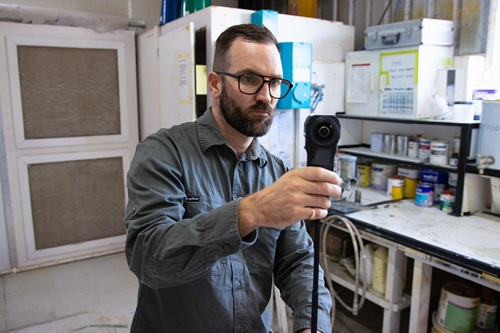 "Multi-dimensional data achieves nothing without systematic conversion to action through closed feedback loops operating at multiple timescales." Photograph: PKG Safety Innovation
Psychosocial hazards and work organisation profoundly influence MSD outcomes yet remain largely absent from technology-enabled risk assessment. Job demands, workload intensity, time pressure, social support, role clarity, and reporting culture all affect how workers approach physical tasks and whether early symptoms are addressed or ignored. Ironically, automation intended to reduce physical demands can introduce new psychosocial hazards that elevate MSD risk.
I visited the automated fulfilment centre of a large supermarket retailer where one worker’s job was opening paper bags for robots to fill. The role was boring, repetitive, socially isolated, paced by robots to meet KPI quotas, with no decision-making control. The result: in addition to knee, back, and hand–wrist MSDs; high staff turnover, stress and compensation claims emerging from work that appeared simple but combined physical repetition with psychosocial stressors.
Similarly, I’ve observed a glass recycling facility and waste sorting operations where poor work design created multiple hazard interactions: prolonged standing, high noise levels, potential needle puncture exposure, social isolation, boring repetitive tasks. The glass recycling facility was exploring vision picking systems and lidar scanners to autonomously sort and remove hazardous objects, and trialling wearables that allowed workers to control line speed based on their preference; recognising that worker autonomy over pace affects both psychological wellbeing and physical injury risk. Pulse surveys, safety coaching app data, early symptom reporting with visible action tracking, and management of change workflows can expose these factors systematically rather than waiting for injury clusters to reveal problems.
Capturing work as done: voice and video for contextual understanding
Voice and video technologies represent particularly powerful tools for capturing context that structured data sources miss. Video documentation along with Natural Language Processing (NLP) can analyse video and worker voice notes describing why procedures can’t be followed as written, what equipment issues create workarounds, where specific environmental factors create challenges, and how work actually gets accomplished despite system constraints.
During a ride-along with a street sweeper who was wearing a GoPro camera, a voice-based narrative provided clear understanding of what did and didn’t work. The operator explained which roads along the route provided the most challenge, specifically describing how he had to strain his neck to see the position of the brush against the curvature of the kerb.
This contextual insight, impossible to capture through biomechanical measurement alone, led to installation of a camera and additional mirror. Post-implementation voice narrative confirmed the intervention solved the problem. Video combined with NLP can identify not just what postures workers adopt but the contextual factors explaining why: equipment positioning forcing reaches, parts arriving in orientations requiring rehandling, clearances inadequate for task completion. This qualitative data, synthesised through AI, reveals work design failures that no amount of biomechanical measurement would expose.
The organisations achieving significant MSD reductions treat technology as a tool for work system understanding, not worker surveillance. They integrate data from scheduling systems, environmental sensors, equipment telematics, maintenance records, early symptom reporting, workforce surveys, and voice-based contextual feedback to understand why MSDs occur and how work design can prevent them. The technology enables what ergonomics has always advocated: fitting work to people rather than expecting people to adapt to poorly designed work.
Closing feedback loops: from insight to action
Multi-dimensional data achieves nothing without systematic conversion to action through closed feedback loops operating at multiple timescales.
Real-time intervention provides immediate feedback when thresholds are exceeded. Wearable haptic devices vibrate when postures exceed angles, proximity systems alert workers before collisions, environmental sensors trigger alarms when heat stress emerges.
Daily and weekly review enables supervisors to identify patterns. Heatmaps show which tasks generate highest exposures, trending data reveals whether interventions work. This transforms reactive incident investigation into proactive pattern recognition. Manufacturing environments now routinely review ergonomic exposure dashboards alongside quality metrics in daily production meetings.
Monthly and quarterly analysis correlates injury clusters with contributing factors across the full work system. This requires integrating injury records, workforce management data, maintenance databases, equipment telemetry, environmental sensors, and employee surveys. Organisations discover injury patterns they’d never find through conventional investigation.
Strategic work redesign uses longitudinal data to fundamentally rethink jobs and systems. These interventions require investment, but multi-dimensional data provides irrefutable business cases: reduced injuries, improved productivity, lower compensation costs, better retention.
The critical requirement across all timescales is response capacity. Technology revealing problems without organisational capability to address them creates cynicism. The most sophisticated sensor networks fail when implemented without authority to halt problematic work pending redesign, maintenance prioritisation based on ergonomic impact, and leadership accountability for acting on identified risks.
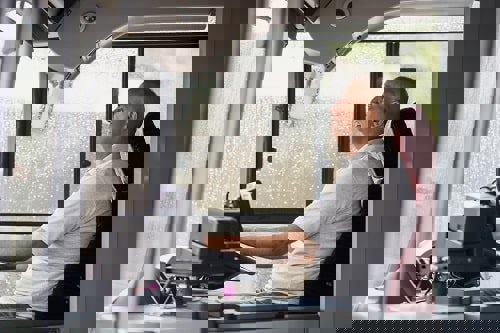 "Work scheduling and temporal patterns profoundly affect MSD risk, yet rarely appear in conventional assessments." Photograph: iStock
Technology as an enabler for better work
The most important question about technology and MSD prevention isn’t what we can measure – it’s what we’re trying to achieve. If the goal is designing work that enables human flourishing while delivering organisational performance, technology must serve several purposes: revealing work system failures, enabling evidence-based redesign, providing developmental feedback, and creating transparency that builds trust.
Computer vision shouldn’t simply score hazardous postures; it should support work design improvements. Wearable sensors shouldn’t monitor individual compliance; they should provide organisational feedback to design better work. Video and voice-based systems shouldn’t surveil workers; they should capture expertise about how work is done so it can be optimised and improved. Data integration shouldn’t produce dashboards for end of month management reports; it should enable collaborative problem-solving.
The physio clinic where I started 25 years ago still exists. I’m confident workers still arrive with the same injuries arising from poorly designed work. The difference now is that we have the capability to understand why those injuries occur across multiple dimensions, and the tools to redesign work before MSDs happen. The question isn’t whether technology can help prevent MSDs; it demonstrably can. Technology can help us see work systems clearly, capture insights from multiple perspectives, and close feedback loops from measurement to meaningful improvement. What we need is the mindset for innovation, the curiosity to do something different, and the genuine desire to design safer, healthier, better work.
Cam Stevens is safety technologist, a chartered safety professional and CEO of Pocketknife Group.
As an AIHS chartered health and safety professional with BSc Physiotherapy, MSc in Human Factors, and postgraduate studies in AI ethics, Cam has supported more than 200 emerging technology deployments in high-risk enterprises globally. As CEO of Pocketknife Group and founder of the Safety Innovation Academy, Cam is a world leader in digital safety transformation and international keynote speaker on the intersection of safety and technology. Connect with Cam at:
linkedin.com/in/cameronmstevens
pocketknifegroup.com
FEATURES

Who is the wolf in your life? Listening to the people behind the hard hat
By Inna Cebotari, Kinth Square on 02 October 2026
A new play explores the lives of migrant construction workers in the UK, using humour, real-life experiences and physical theatre to capture the banter, friendships and absurd moments that make life on site bearable, alongside the pressures that often go unseen. Ahead of the play’s premiere in London on 12-14 November, playwright Inna Cebotari explains how Three Little Pigs aims to add to the public debate about how best to support the wellbeing of construction workers.
Eliminating barriers in reporting: how conversational AI can unlock safety engagement
By Julian Taylor, ecoPortal on 04 October 2026
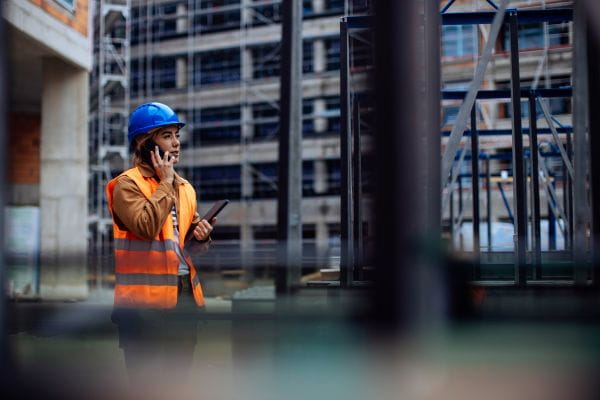
Online reporting systems that require lengthy and cumbersome form filling and typing can discourage workers from reporting safety incidents and concerns. However, AI-powered mobile apps that allow reporting simply by speaking can simplify and speed up the process, boosting reporting rates and overall staff engagement with safety systems and culture.

Why UK employers need to rethink recruitment, retention and support for older workers
By Orchie Bandyopadhyay on 04 October 2026
With workers over the age of 50 now comprising almost one third of the entire UK workforce, recruiting and retaining older workers is now core to the success of the economy. However, not all employers are offering what’s needed to retain and recruit older workers, and ageist attitudes, limited flexible working opportunities, and employment support that doesn’t fit with health, caring, or other responsibilities are leaving too many people locked out of the labour market.