

Employers are increasingly keen to effectively manage psychosocial risks such as stress, bullying and poor work-life balance, and EHSQ digital tools make it easier both for workers to report psychosocial problems and for managers to spot patterns and trends, intervening early to protect everyone’s mental and physical wellbeing.
Features
The psychosocial safety challenge: why UK organisations must rethink risk management
By
on 09 December 2025
There’s a telling moment that happens in many organisations when you first raise psychosocial safety. People nod knowingly. They mention their wellbeing programme, their mental health first aiders, and perhaps their employee assistance programme. Then you ask: “But how do you identify psychosocial hazards systematically? How do you assess risk? How do you monitor whether your controls are working?”
That’s when the conversation shifts. Because psychosocial safety isn’t about having wellbeing initiatives, it’s about rethinking how we understand and manage risk in the workplace.
The scale of what we’re facing
HSE data shows 22.1 million working days were lost in the UK to work-related stress, depression, or anxiety in 2024/25. And the Chartered Institute of Personnel and Development has identified mental ill health as the top cause of long-term absence across the UK.
This isn’t a fringe issue anymore. It’s a central challenge for how we think about workplace safety and organisational performance. And the regulatory landscape is responding. HSE guidance expects organisations to manage psychosocial hazards with the same rigour as physical hazards. ISO 45003 provides guidelines for managing psychosocial risks within occupational health and safety management systems. The bar is being raised.
But working with organisations across Europe, I’ve observed something consistent: the treatment of psychosocial safety, unlike traditional physical safety, often falls short. The old systems may not be sufficient. And that’s creating real challenges for OHS professionals trying to get this right.
Why psychosocial risk is different
Traditional physical safety risks are relatively straightforward; machinery hazards, fall risks, chemical exposures. You can often engineer them out, provide PPE, implement procedures, and measure compliance fairly objectively. Psychosocial risks operate differently. Workplace stress, harassment, bullying, poor work-life balance, job insecurity, lone working - these are subjective experiences. They’re cumulative rather than acute. They’re often invisible until they manifest as poor morale, high turnover, or decreased performance.
You can’t inspect your way to psychosocial safety. You can’t issue PPE for workplace stress. The controls aren’t about physical barriers or lockout procedures. They’re about how work is organised, how people are managed, how teams function, and ultimately, how the organisational culture operates.
This creates a dilemma for organisations. The systems and approaches that work well for physical safety often miss the mark when applied to psychosocial risk. Policy statements rarely change toxic cultures. Wellbeing campaigns don’t address systemic issues with workload or job design. Tick-box risk assessments don’t capture the lived experience of psychological harm.
The cultural and leadership challenge
Psychosocial safety requires a shift from compliance thinking to cultural thinking. Physical safety can be compliance-led: implement standards, audit against them, measure conformance. Psychosocial safety demands something more. Leaders need to care about how people experience work. Organisations need psychological safety where people feel able to raise concerns without fear. Managers must recognise signs of distress and respond with compassion and practical support.
Many organisations find this challenging. Measuring training completion seems simpler than honestly assessing whether organisational culture enables or erodes wellbeing. Leadership accountability becomes critical. This can’t be delegated entirely to HR, individual managers or EHS teams. When psychosocial risks are causing half of all workplace ill-health, this is a board-level issue. It impacts productivity, absenteeism, turnover, and increasingly, legal and reputational risk.
The approach requires moving from observation to active listening and embraces both individual and systemic thinking. Physical hazards can be spotted through workplace inspections; psychosocial risks require continual feedback with your workforce through surveys, conversations, and check-ins.
Effective psychosocial safety management needs both perspectives working together; so individual and systemic factors that could affect mental wellbeing are addressed collectively and in an integrated fashion. Physical safety often focuses on individual behaviour: did they wear the correct PPE, did they follow the correct procedures, did they complete training? Psychosocial safety requires examining wider factors such as workload distribution, management practices, and organisational design. It also demands person-centred support; recognising that individuals experience these systemic issues differently and need personalised responses.
The most effective approaches don’t choose between individual and systemic interventions. They integrate both. Systemic changes, like reasonable workloads and clear role expectations, create healthy foundations. Individual support through counselling, flexible working or adjusted duties provides the person-centred care that recognises everyone’s unique circumstances and needs.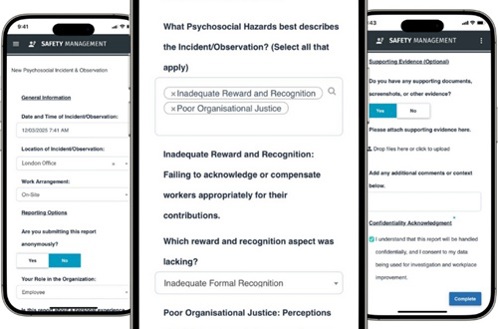
Where technology can actually help
Given this human and cultural challenge, where does technology fit? In a supporting role, not a starring one. Digital tools and data can’t create psychological safety or change toxic cultures. But they can enable visibility, structure, and accountability that support the human work of work.
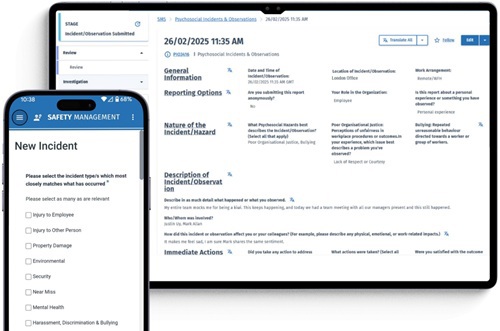
Making the invisible visible: Modern EHSQ platforms provide insight that is inherently difficult to see. When psychosocial incidents are reported through the same system as physical safety issues, patterns can emerge. You might notice that stress-related reports spike in particular teams, at certain times of year, or after specific organisational changes. That visibility matters. Confidential reporting mechanisms, when properly designed with role-based access and data protection, can help people raise concerns they might not voice otherwise. The technology doesn’t solve the trust problem, but it provides a voice when organisational culture is still developing
Connecting the dots: Integrated systems allow organisations to see connections between psychosocial and physical safety that would otherwise remain hidden. Workplace stress increases physical incident risk. Excessive overtime correlates with both psychological strain and physical accidents. Poor work-life balance impacts concentration and decision-making.
When psychosocial risk data sits in HR systems while physical safety data lives in separate health and safety platforms, these connections stay invisible. Unified systems enable a more holistic view of worker health and safety.
Supporting systematic management: ISO 45003 provides a framework for managing psychosocial risks in the workplace, guiding organisations to identify hazards, assess associated risks, implement appropriate controls, and monitor their effectiveness as part of an ongoing improvement process. Technology can support this continuous cycle. Digital risk assessments can prompt consideration of psychosocial factors. Automated workflows help to ensure that psychosocial incidents trigger timely investigation and response. Dashboards can visualise trends, track control effectiveness, and support data-driven improvements over time.
But these are enabling tools, not solutions. The actual work of understanding psychosocial risks, designing appropriate interventions, and building psychologically healthy cultures remains deeply human work.
What effective psychosocial risk management looks like
Based on what I’ve seen in organisations making progress, several elements consistently appear:
Integrated assessment: Psychosocial risk assessment isn’t separate from physical risk assessment. Work design, management practices, and organisational culture are examined alongside physical hazards, recognising that they’re interconnected.
Proactive monitoring: Rather than waiting for crises, organisations implement regular pulse surveys, wellbeing check-ins, and monitoring of indicators like absence rates, turnover, and overtime patterns to identify issues early.
Manager capability: Frontline managers receive training on recognising signs of distress, having supportive conversations, and creating psychologically safe team environments. They’re seen as critical to psychosocial risk management, not just physical safety.
Company support programmes: When psychosocial risks are identified, the response considers all factors. Are workloads reasonable? Do people have control over their work? Are role expectations clear? Is there adequate support? These aren’t quick fixes; they’re organisational design questions.
Destigmatised dialogue: Mental health and wellbeing become normalised topics of conversation, not untold stigmas. Leadership models this openness, making it acceptable to not be okay and to seek support.
The organisations getting this right aren’t necessarily the ones with the most sophisticated technology. They’re the ones that recognise psychosocial safety as a cultural imperative, supported by appropriate systems and structures.
Moving forward
For organisations beginning this journey or seeking to strengthen their approach, the path forward isn’t primarily technological. It’s cultural and strategic.
Psychosocial safety requires different thinking from physical safety. Leadership commitment matters more than health and safety ownership alone. Cultural change runs deeper than compliance programmes. Investing in manager capability creates a lasting impact, as managers influence psychosocial safety through how they lead, communicate, distribute work, and respond to distress.
Your systems can either support or hinder this work. Do they enable confidential reporting? Can they surface patterns and trends? Do they integrate psychosocial and physical safety data? Remember: systems enable the work; they don’t do the work.
Effective psychosocial risk management is about creating organisations where people can thrive, not just survive. The goal is workplaces where awareness, accountability, and compassion shape how we approach psychological health. Technology can support that goal. But the commitment, the culture, and the care must come from us.
For more information, and details of educational webinars and resources from HSI on managing evolving workplace risks across the UK and Europe, go to:
donesafe.com/uk
Jose Arcilla is CEO at HSI
FEATURES
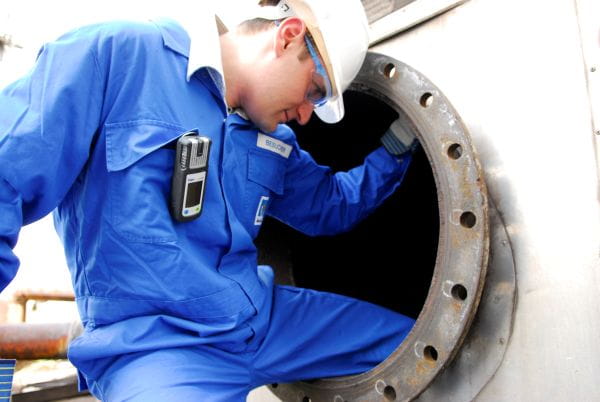
Confined spaces: why training is key to keeping workers safe
By Adam Barker, Draeger Safety UK on 22 September 2026
Suitable training plays an essential role in preventing fatalities and dangerous situations during work in confined, hazardous spaces like tanks, silos and sewers, but it’s essential that any course selected genuinely reflects the specific tasks, hazards and risks workers will be faced with.
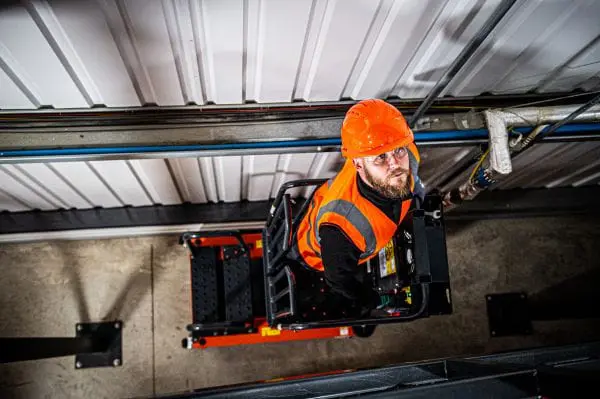
Why the future of low-level access starts with rethinking old habits
By Samuel Butterworth, JLG Power Towers on 22 September 2026
Low-level access equipment like powered lifts can help make work at height safer by providing a secure, enclosed working platform, but they can also bring other benefits, such as avoiding the need for awkward stretching to reach work areas, which helps to prevent musculoskeletal injuries.
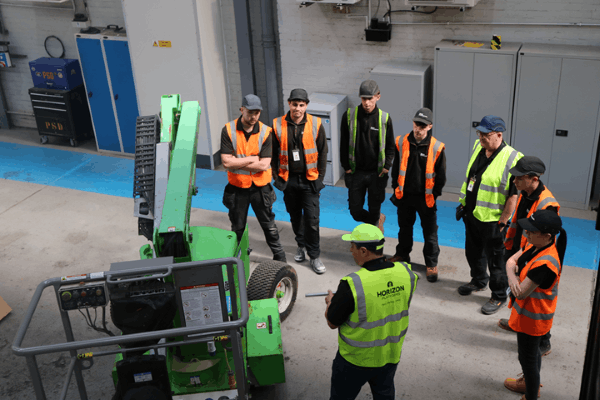
Why paperwork alone isn’t sufficient MEWP rescue preparation
By Ben Hughes, Horizon Platforms on 22 September 2026
A recent safety awareness day has highlighted the importance of contractors regularly practising emergency rescue from mobile elevating work platforms, rather than relying on one-off training sessions and paper procedures that are not always easy to follow during a fast-moving incident.