

The UK has over 260,000 miles of paved roads. Motorways may dominate our mental picture of the road network, but they account for just 2,300 miles. Much of our network is made up of smaller U-roads, from residential streets to rural lanes. In turn, these cover almost 196,000 miles (that’s enough to circle the globe almost eight times). For an estimated 1.9 million people, almost 5% of the UK’s workforce, these streets and lanes are also their places of work.
Opinion
Road works. Safety must too.
By
on 16 November 2026
How we keep these often-forgotten workplaces safe must be more than an afterthought for leaders and policymakers. A road does not have to be a motorway to be somebody’s workplace, nor does it have to carry thousands of vehicles an hour for a moment’s inattention to have life altering consequences. For the people working on it, a quiet residential street deserves the same foundational risk assessment as any major route.

Think about the street outside your front door. It might be where your bins are collected, a pothole is repaired, or a broadband connection is being installed. To you, it’s the beginning of the school run or the last turn on your homeward journey. To somebody else, it’s where their working day begins. That same stretch of tarmac must serve both purposes and often with very little room to spare.
That’ s why familiarity must not be allowed to breed complacency. We know the bend, the junction, the place where cars tend to park. But knowing a road today is not the same as knowing what will be around the next corner tomorrow. A familiar journey can still bring us past an unfamiliar working environment. The people in that environment should not have to rely on every passing driver making the right decision at precisely the right moment. Workplace safety cannot, must not, be a game of chance in which the winners are safe and the losers are not. The consequences matter too much because they decide who gets to go home safely at the end of each day.
For employers, the starting point should be the work itself. What needs to happen, who will be nearby, and how will people be protected while it happens? Those questions belong in the planning of a job, not in a hurried conversation once a team has arrived on site. All too often the latter is the reality and its workers who pay the price.
Alongside clear communication and careful planning, workers need straightforward ways to report safety concerns, and confidence that those concerns will be taken seriously. They are our eyes and ears on site, often best placed to notice when conditions change or when a plan is not working as intended. Listening to them should be part of managing the job, not an optional extra. Employers must make it clear how concerns can be raised, who is responsible for responding, and how action will be communicated back to the team. A culture of openness depends on follow-through: asking people to speak up achieves little if nothing changes when they do. When workers can raise concerns without fear of blame, and see them addressed promptly, reporting becomes a practical means of preventing harm rather than simply recording it.
And for those responsible for managing these projects, a commitment to safety means little if the timetable or budget leaves no room to deliver it. The question should not simply be how quickly a road can be cleared and normal service resumed; it should be how the job can be completed without treating the people doing it as an obstacle to everybody else’s day.
I’ve long wondered what would happen if every road in the UK carried a sign recording how many workers had died building or repairing it. We might see more than a route to wherever we need to be, it may cause us to pause before treating a lane closure as an inconvenience or a few minutes’ delay as an injustice. Such signs would make visible a human cost that is too easily forgotten once the cones are gone and the traffic is moving.
But recognising our roads as workplaces should not depend on a reminder of those who never came home. It should begin with protecting the people still working on them and building a culture of understanding that getting to our destination must never matter more than someone else getting home safely.
Ultimately, reopening a road is not enough to call a job a success. If convenience comes at the expense of the people doing the work, we are measuring the wrong outcome. Protecting workers is not a competing demand to be balanced against keeping the network moving. It is the standard by which we should judge whether the work has been done properly at all.
Mike Robinson FCA is chief executive of British Safety Council.
OPINION

Road works. Safety must too.
By Mike Robinson, British Safety Council on 16 November 2026
The UK has over 260,000 miles of paved roads. Motorways may dominate our mental picture of the road network, but they account for just 2,300 miles. Much of our network is made up of smaller U-roads, from residential streets to rural lanes. In turn, these cover almost 196,000 miles (that’s enough to circle the globe almost eight times). For an estimated 1.9 million people, almost 5% of the UK’s workforce, these streets and lanes are also their places of work.
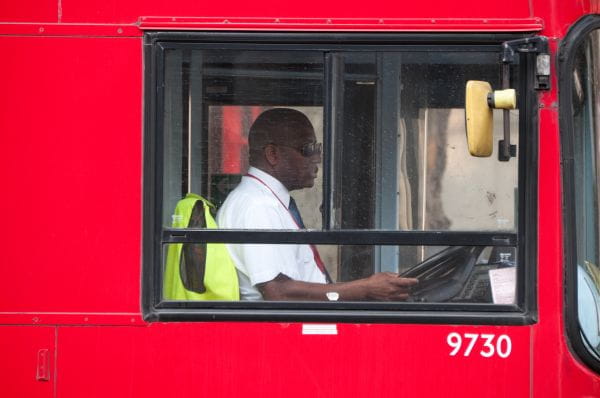
Why London’s transport workers need better protection against violence and aggression
By Elly Baker AM, Labour London Assembly Member on 12 November 2026
Transport for London recently announced plans for a new five-year strategy to tackle violence and aggression against London's transport workers, such as Tube, bus and taxi drivers. However, it's essential this strategy translates into tangible action for staff who continue to face abuse, threats and aggression as part of their daily work

Building a future worth working in
By Mike Robinson FCA, British Safety Council CEO on 12 October 2026
It’s easy to become myopic about the future of work. Take a quick look at the world today and the signs can seem discouraging: political instability, economic volatility, the accelerating disruption posed by AI and climate change. Together, these factors paint a picture of uncertainty that can make our belief in progress seem naïve and tempt us into believing that the future can be no better than the past, that our best days are now behind us. That would be a profound failure of imagination.