

Transport for London recently announced plans for a new five-year strategy to tackle violence and aggression against London's transport workers, such as Tube, bus and taxi drivers. However, it's essential this strategy translates into tangible action for staff who continue to face abuse, threats and aggression as part of their daily work
Opinion
Why London’s transport workers need better protection against violence and aggression
By
on 12 November 2026
Violence and aggression against workers in public-facing jobs is a serious health and safety issue, impacting the lives of those affected and the effective operation of employers, leading to physical and mental illness and damaging wider staff morale. I was a transport trade union official before being elected to the London Assembly and had sat on many health and safety committees over the years. I wanted to use London Assembly Transport Committee time to hear directly from London transport workers about the real-world incidents and impacts.
I believe there are few working in transport who don’t consider this a genuine problem, yet the statistics indicate a worsening situation. The Transport Committee came into this investigation with genuine questions – are the existing measures for tackling the issue working for those affected, and what systemic improvements can be made for London transport workers?
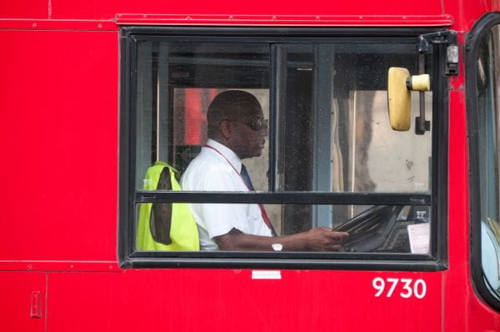
‘Deeply troubling’
The Committee worked closely with trade unions to bring the voices of workers affected to the Chamber in City Hall. We took evidence from those employed directly by Transport for London (TfL), and those working both for outsourced operators and self-employed drivers. The evidence that we heard from frontline workers was deeply troubling.
Paul Feakes, a revenue control inspector at London Underground, told us that there is a culture of victim blaming, and that those who want to submit a report of work-related violence and aggression will be asked, “What did you do to make him spit at you? What did you do to make him swear at you? What did you do to make him hit you?”
Workers described the frequency and severity of abuse they faced while carrying out their duties. Deban Aderemi, a bus enforcement officer at TfL, said he experienced verbal abuse “and there is almost always hate crime” as well as physical abuse including spitting and being pushed. It was also particularly concerning to hear that such behaviour is often viewed as an expected part of the job.
It seemed to us that underreporting of workplace violence, a workplace culture that treats incidents of assault as normal, and limited support for staff, are chronic issues which existing safety systems were not addressing.
Guests at our meeting lay part of the blame for underreporting at the feet of the “very antiquated” reporting system on the London Underground. Luke Banks, a Revenue Control Officer on the London Underground, told us it can take 35 to 45 minutes to fill in the relevant forms, and that can deter workers from reporting.
There also seems to be a particular lack of support for transport workers not employed directly by TfL, such as bus drivers, and taxi and private hire drivers. Kola Olalekan, a private hire driver, told the Committee that private hire drivers do not have access to TfL’s Workplace Violence and Aggression (WVA) Team for support following incidents, and that drivers have been asking for this to change. Selington Rock Santan Fernandes, a bus driver for Transport UK, told us that following a serious incident that left him unable to work, he received no support from the bus operator and is now on sick pay.
‘Fatally flawed system’
A workplace culture that treats incidents of assault as normal and where workers are being questioned, rather than supported, following incidents of assault is both deeply concerning on a human level, and is fatally flawed as a system for improving health and safety.
Worryingly, we also heard multiple accounts of the British Transport Police (BTP) taking hours to show up or not showing up at all to serious incidents. Unite the Union’s evidence to the Committee suggested the current situation creates “a perception of impunity, where offenders believe they can treat transport staff poorly without consequence”. This echoed our findings from 2025 on fare evasion on the network.
After the meeting, the Committee sought answers from TfL on key issues:
- Work that is ongoing or planned to encourage workers to report all incidents of work-related violence and aggression
- How TfL plans to address the cultural issues across the organisation that may be normalising assaults on transport workers and blaming victims when incidents occur (including support to, resourcing and training for middle managers)
- Options being considered to improve post-incident support and communication for victims of workplace violence
- How taxi and private hire drivers licensed by TfL could opt-in to support from TfL’s Workplace Violence and Aggression Team
- What consideration it has given to how it could implement stronger consequences (for example, withdrawal of implied service) for those who verbally or physically assault staff.
We also wrote to the Home Secretary supporting TfL and the wider transport sector’s calls for a new specific offence of assaults on transport workers.

‘Important step’
Since the Committee’s meeting, TfL and the Mayor brought together key stakeholders at a summit on work-related violence and aggression on 12 March 2026, marking an important step in recognising the scale and seriousness of the issue. At that summit, TfL also announced plans to develop a new five-year strategy to improve staff safety, signalling a commitment to longer-term change. While this renewed focus is welcome, it is essential that it translates into tangible action for staff who continue to face violence and aggression as part of their daily work, and whether this new five-year strategy will achieve this remains to be seen.
Major questions remain for the transport industry, which our investigation could only touch upon and which I believe deserve to be returned to. How does Transport for London, as the transport authority, effectively control safety risks for workers when so many are outsourced or self-employed? Is this a situation Londoners believe is adequate, or should more responsibility be taken? Are our employment laws adequately interacting with health and safety at work legislation to provide the protection that everyone deserves at work?
And for me, one question rings out loud and clear – why in current society are we having to increasingly discuss mitigating these risks of violence for public-facing workers when we should be treating those helping passengers as human beings? Perhaps it is a question we cannot answer in these pages, but one that policymakers and politicians need to take very seriously.
Elly Baker AM is a Labour London Assembly Member. She was chair of the London Assembly Transport Committee in 2024-25 and she is currently the deputy chair of the Transport Committee.
For more information, see:
london.gov.uk

OPINION

Why London’s transport workers need better protection against violence and aggression
By Orchie Bandyopadhyay on 12 November 2026
Transport for London recently announced plans for a new five-year strategy to tackle violence and aggression against London's transport workers, such as Tube, bus and taxi drivers. However, it's essential this strategy translates into tangible action for staff who continue to face abuse, threats and aggression as part of their daily work

Building a future worth working in
By Mike Robinson FCA, British Safety Council CEO on 12 October 2026
It’s easy to become myopic about the future of work. Take a quick look at the world today and the signs can seem discouraging: political instability, economic volatility, the accelerating disruption posed by AI and climate change. Together, these factors paint a picture of uncertainty that can make our belief in progress seem naïve and tempt us into believing that the future can be no better than the past, that our best days are now behind us. That would be a profound failure of imagination.

Rethinking homes as centres of economic activity (amongst other things)
By Andy Lake, Flexibility.co.uk on 08 October 2026
The decentralisation of work away from fixed workplaces, the rise of AI and demographic changes are creating new opportunities for people to carry out ‘hands-on’ work in the home, such as production of fashion, textiles, food and drink, and delivery of health services and therapies. However, our existing housing stock is not designed to accommodate such functions, so it’s essential that future town planning creates homes that support different kinds of enterprise, both to support business success and the wellbeing of these new home-based workers.