

Opinion
Urgent action needed to improve the working conditions of London’s bus drivers
A few years ago in one north-west London bus depot, two coffin-like boxes appeared in the drivers’ break area. Although they resembled cupboards that locked from the outside, they were actually ‘sleep pods’ designed for drivers to rest in.
Unsurprisingly, these cramped boxes, complete with one single flat pillow, did not appeal to exhausted drivers. At the time of writing, the £10,000 cupboards are now being used for storage as drivers refused to nap in them.

The sleep pods were one of many failed solutions for London bus driver fatigue, following the publication of a report into the problem in 2019 by Loughborough University. After the results of this were published, Transport for London made £500,000 available to bus companies for the running of a ‘fatigue, health and wellbeing bus safety innovation challenge’ – which, compared to the £11 million invested annually in network graffiti removal, brings into perspective their thinking.
However, it is clear none of these initiatives, from Compass, which provides ‘emotional support’ on driver wellbeing, to videos for drivers to watch on managing their health and online educational courses on fatigue, go anywhere near far enough in fixing the problem of driver fatigue. This is likely because TfL took the decision to cherry pick from the Loughborough list of recommendations, without enacting recommendations that would tackle the structural issues that cause fatigue.
Unite survey of drivers
At the end of last year, Unite the Union surveyed over 2,000 of our London bus driver members. The results made for stark reading. Our polling found that almost half (48%) have had a ‘close call’ due to fatigue in the last 12 months and over a third (36%) of drivers have experienced sleepiness while driving two or three times a week, while 24% had this happen once a week.
Meanwhile, over 60% of drivers are being forced to do overtime weekly. That is not forced for financial reasons – that is physically forced to do so, being disciplined if they do not continue on when their working day has finished and they haven’t made it back to their start point due to poor scheduling. That is being harassed at home to come in on their days off, while over 80% feared discipline or loss of earnings if they said they were fatigued.
Over three quarters of the drivers say they sometimes to very often attend work when they are unfit to do so due to factors such as fear of being disciplined or losing pay.
The root causes of fatigue – long shifts, insufficient rest time and breaks and inadequate running times resulting in drivers undertaking overtime to complete journeys – are not being addressed.
There are also serious problems with scheduling. In March 2020, 20 mile-per-hour speed limits were introduced in London, but bus schedules have not significantly changed, meaning drivers do not have enough running time to finish journeys on time.
At the moment, many drivers are forced to neglect their personal lives just to survive the workload. Homes are left untidy, meals are skipped and recovery time is sacrificed just to get a few hours of sleep before the next demanding shift – and this is when fatigue becomes insidious.
Fatigue is not simply ‘being tired’. If you are tired, you can easily alleviate this feeling by resting or sleeping.
Fatigue can cause a wide range of issues, including stress, anxiety, headaches, chronic pain and heart problems – all experienced by drivers who responded to our survey.
Drivers also said fatigue caused them to experience concentration issues and ‘microsleeps’ – a fleeting, involuntary episode of lack of consciousness which can last a few seconds and is highly dangerous when driving.
The drivers know the situation best. As one of our members said: “One of the biggest issues is the current shift patterns. Working seven days with only two days off and finishing as late as 9:30pm only to return at 7:48am the next morning, does not allow enough time for proper rest. The minimum rest period of nine hours is simply not enough. By the time you travel home, eat, shower and try to unwind, you are left with very little time to sleep.”
The member added: “There are times when I am working my fifth, sixth or seventh consecutive day, having already completed around 40 hours in the first four days. During these shifts, I sometimes feel like I am driving on ‘autopilot’, almost as if I’m dreaming. I’m not fully alert, and this is extremely dangerous. Fatigue like this can easily lead to serious or even fatal mistakes.
“On average, I only get around five to six hours of sleep because of these shift patterns. This is
not enough for anyone responsible for safely transporting passengers. These conditions increase the risk of collisions, incidents in depots, passenger injuries, and driving offences such as speeding or jumping traffic lights.”
Safety crisis
Unite believes the race to the bottom tendering process in London, run by TfL and the Mayor of London, Sadiq Khan, has created a workplace safety crisis.
The greatest issue affecting London bus health and safety standards is in the tendering framework. As long as each contract is tendered and won at the lowest bid, health and safety will be impacted. That is why we are calling on Sadiq Khan and TfL to make contractually-binding minimum standards around scheduling, so that bus driver fatigue can be tackled. Currently, we are recording over 40 damage instances a day on London buses and these have been increasing (stats below).
- 2021: 12,380 incidents
- 2022: 13,754 incidents
- 2023: 14,986 incidents
- 2024: 15,939 incidents (nearly 16,000)
- 2025: 15,390 incidents.
Many of our demands, including a minimum of 12 hours between rostered duties, removing forced overtime, improving rest and welfare facilities, are exactly what the Loughborough Report called for seven years ago but have not been enacted.
Poor access to toilets
Drivers involved in Unite’s Fight Fatigue Now London bus safety campaign have also raised concerns about limited access to toilets, with recent data suggesting that there are 198 routes without 24/7 toilets and 175 routes across the city without a toilet on either end.
TfL has announced it is providing additional funding to enable the building of 53 new toilet buildings across the capital over the next three years and has now made a commitment to installing facilities at the remaining six routes without toilets at either terminus. But more needs to be done. The right to a toilet at work is a basic human right and should be a given for all workers. Our polling found over half of drivers still have poor facilities at work and some drivers are still taking toilet breaks by the side of the road.
Break facilities are essential to driver wellbeing and tackling fatigue, but the bus companies don’t give them the importance they deserve. For example, Go Ahead London is currently consulting on closing all canteens in its depots, replacing them with ‘mini marts’ that are essentially glorified vending machines. Through our Fight Fatigue Now campaign Unite will continue to lobby to ensure every London driver has access to clean and safe rest, toilet and welfare facilities.
Major win on air conditioning
Yet, Unite has had a major win this year, the commitment to have air conditioning in every driver’s cab by the end of May 2027. Securing this undertaking from TfL is a huge victory.
This summer, only 500 London buses had air conditioning fitted, with the remaining 7,500 having cheaper and largely ineffective air-cooling systems which can only lower temperatures by two or three degrees during heatwaves. In practice, this means that when the temperature outside is 40 degrees, the marginally reduced-temperature air blowing at the driver is still scorchingly hot.
This summer, London experienced a record-breaking 40 days where the weather exceeded 30 degrees Celsius, and it was our campaign that shone a light on the impact it was having on drivers.
Unite members spoke out about the impact this had on their health, suffering problems including heatstroke, dehydration and fatigue as the temperatures inside their cabs rose to highs of 50 degrees, with many services disrupted as drivers physically couldn’t continue.
As part of our groundbreaking Extreme Weather Taskforce, that brings together TfL, Unite, all bus operators in London, the GLA and the Mayor’s office, it has also been agreed that UV film, which will reduce UV exposure by 99%, will be fitted in every cab, addressing concerns about the long-term health effects of being exposed to sunlight, such as skin cancer.
Opportunity to improve working conditions
Unite has recently welcomed plans by TfL to launch a publicly-owned bus company, Buses for London in late 2027. Bringing London bus routes back into public ownership presents an important opportunity to improve jobs, pay and conditions for bus workers in London.
In the future, we will be doing everything possible to ensure that Buses for London provides well-paid, unionised jobs with excellent conditions, showing it is possible to run world leading services and look after workers.
Bus drivers do essential jobs driving millions of Londoners across the capital every day. Buses are the most used form of public transport in London, but the current system is not sustainable. If the industry wants safer roads for all, healthier drivers, fewer accidents, and better staff retention, working conditions must improve, and we will fight to bring about that change.
Follow the Fight Fatigue Now campaign at:
unitetheunion.org/campaigns/fight-fatigue-now
Nadine Edwards is a regional officer and Fight Fatigue Now campaign lead at Unite the Union.

OPINION
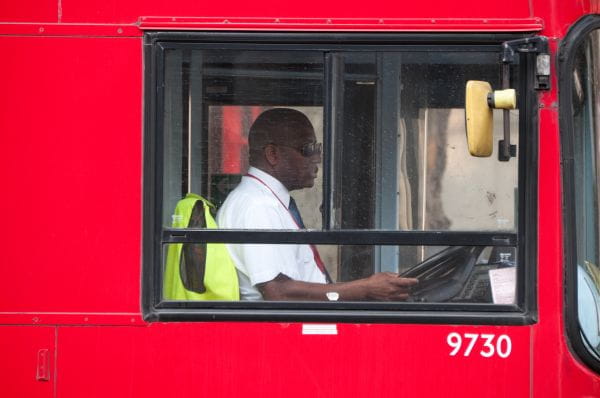
Urgent action needed to improve the working conditions of London’s bus drivers
By Nadine Edwards, Unite the Union on 19 November 2026

Road works. Safety must too.
By Mike Robinson, British Safety Council on 16 November 2026
The UK has over 260,000 miles of paved roads. Motorways may dominate our mental picture of the road network, but they account for just 2,300 miles. Much of our network is made up of smaller U-roads, from residential streets to rural lanes. In turn, these cover almost 196,000 miles (that’s enough to circle the globe almost eight times). For an estimated 1.9 million people, almost 5% of the UK’s workforce, these streets and lanes are also their places of work.
Why London’s transport workers need better protection against violence and aggression
By Elly Baker AM, Labour London Assembly Member on 12 November 2026
Transport for London recently announced plans for a new five-year strategy to tackle violence and aggression against London's transport workers, such as Tube, bus and taxi drivers. However, it's essential this strategy translates into tangible action for staff who continue to face abuse, threats and aggression as part of their daily work