
Constant changes to job roles, tasks and working arrangements can create worries and stress among teams, so it’s essential to constantly review the support offered to ensure workers’ concerns about the need to learn new skills and the financial implications of switching jobs are adequately addressed.
Features
When roles change faster than support: rethinking wellbeing for a workforce in transition
By
on 18 October 2026
Most conversations about the future of work centre around two things: the technology that is changing what we do, and the training meant to help us keep up with it. Both matter. There is a third element, though, that tends to fall out of the planning, and it belongs squarely on the health and safety agenda. When a job changes shape, the support built around that job often fails to change with it. The result is a widening gap between what we ask of workers and what we have in place to support their mental and physical wellbeing while they adapt to developments like new technology, changing work demands and new skillsets.
For occupational safety and health (OSH), wellbeing and HR professionals, it is worth paying close attention to this gap. Constant change has become a feature of working life rather than an occasional disruption, and the pace of change carries a human cost that is easy to miss when the focus remains fixed on systems and skills. The worker being asked to keep up with both the new technology and the necessary additional training is the person often overlooked in these plans.

The job keeps changing shape
Few roles look the way they did five years ago. Automation has absorbed routine tasks, software has rewritten workflows, and hybrid patterns have redrawn where and when work happens. A recent article in Safety Management examined how artificial intelligence (AI) and monitoring tools are reshaping safety-critical work, along with the unease that can accompany their arrival. Workers are being asked to learn new tools, take on unfamiliar responsibilities and let go of practices they have spent years mastering.
Reskilling programmes exist precisely because of this, and for the most part they are well intentioned and carefully designed. However, they often treat reskilling as a purely technical exercise, and fail to address the psychological impact placed on workers by frequent changes to job roles, skillsets and intellectual demands. Being asked to become a different kind of worker, again and again, can unsettle a person’s sense of competence and security in ways that a training module on its own does not resolve.
Arguably, the biggest shift has been the increasing frequency of changes to technology, work demands and skillsets. A single workplace change programme, absorbed once and then settled into, is a manageable event for most staff. However, many employees now face a state of near-continuous adjustment, where one new tool or process arrives before understanding and following the last has become second nature. Adaptability is increasingly viewed as the prize skill of the modern workforce, but constantly asking employees to adapt to new work demands and technology is putting a strain on people’s mental and physical wellbeing, motivation and productivity.
The growth in hybrid and homeworking has added another layer of demand and pressure. The growing shift away from a single fixed workplace has been framed largely as an opportunity for greater flexibility and discussions about the health and safety implications. These have largely centred on ergonomic risks, with attention focused on whether kitchen and dining room tables are a suitable and safe substitute for a proper, office-style desk.
Although the musculoskeletal dangers of poor home desk set-ups are a real concern, the potentially more serious, and often overlooked, risk lies in home workers’ mental wellbeing. With homeworking and dispersed teams, the everyday support a workplace used to provide by default, from a colleague noticing someone is having a hard morning to a manager spotting that an individual’s workload has crept up, no longer arrives automatically. This manager and peer support, supervisory and monitoring structure has to be rebuilt deliberately – for example, through regular one-to-one ‘check-ins’ and discussions about work demands – because it no longer happens automatically.
Understandably, the ergonomic risks of homeworking have proved quicker and easier to manage. Once the shift to homeworking became permanent following the pandemic, affected employers moved quickly to consider whether staff had suitable chairs, screens and safe postures, because these risks are familiar and easy to picture. The more difficult question of how to keep employees connected, supported and productive when their entire working pattern has been rearranged took longer to be addressed. In many organisations this has still not been properly considered and factored into the wider system for managing risks to health, safety and wellbeing.
Change has a human cost we rarely price in
Uncertainty is a recognised source of psychosocial pressure. If an employee cannot clearly envisage how their role, their hours and their position at work will look in a year’s time, the resulting anxiety often translates into poor concentration, sleep, mood and physical health. This is not a soft concern sitting at the edge of workplace health. The Health and Safety Executive (HSE) reports that stress, depression and anxiety remain the leading cause of work-related ill health in Britain, affecting 964,000 workers in 2024/25 and accounting for a large share of the total number of working days lost annually to work-related illness.
Job insecurity and poorly managed organisational change are two of the most common causes of work-related stress. If a workforce is in perpetual transition – for example, due to changes to technology or working patterns – there is a high risk of employees facing a heavy psychosocial load. Indeed, it is not uncommon for employers to diligently track conventional safety risks, such as manual handling hazards or display screen equipment problems, but overlook the mental strain that comes from asking people to reinvent themselves – namely their skillset, knowledge and working arrangements – on a rolling basis.
For employers striving to proactively manage worker health, safety and wellbeing, there are difficulties in spotting these problems because this kind of mental pressure often goes unseen, unheard or unspoken.
When workers are struggling to adapt to a changing workplace, task or working arrangements, this will not necessarily trigger an incident report or show up in a near-miss record. The mental pressure and stress will likely slowly surface, in the shape of rising absence, quiet disengagement, presenteeism and the gradual loss of experienced people who decide they no longer want to work for an organisation where staff are not adequately supported through frequent changes to roles, responsibilities and skill requirements. By the time stress and poor wellbeing is visible in the statistics and HR reports and records, a good deal of harm has usually occurred to workforce wellbeing, morale, engagement, retention and productivity.
Also, pressure arising from transition at work generally affects employees in a different way to stress caused by ‘conventional’ stressors like high workloads. A busy, hectic week has an end in sight, while a role that keeps being redefined offers no such bright horizon. If changes to technology, tasks, knowledge, skills and working patterns seem continuous and open-ended, this can gradually wear down individuals’ resilience and mental wellbeing. If employees appear to be struggling with changes at work, employers should therefore look at the structural factors that may be behind this – such as a lack of training and manager support – rather than automatically assuming it is due to an individual’s personal struggle to remain resilient in the face of stress.

Support was designed for the ‘old job’
In many cases where staff are struggling to adapt to changes at work, it becomes clear that most of the support wrapped around the role, the pay structure, the benefits, the protection, the progression path, was designed for a job as it existed at a particular moment. However, as the job changes, the support structure is often not updated to reflect the adjustments required to enable employees to cope with the changing mental and other demands of the role. A worker may be provided with training for a new task, role or skill several times, but their reward package, pension arrangements and sense of where they are heading within the business and their career remain frozen against a version of the role that no longer exists.
However, forward-thinking organisations have begun to address this problem. In a recent article for Safety Management, the Centre for Ageing Better explained how employers can recruit, retain and develop older workers through approaches such as ongoing career development at all ages.
This is an example of support that is designed to proactively keep track of people’s changing circumstances and needs, rather than employers failing to pay attention to how the changing demands of a job mean the training, skills and other support provided need regularly updating to enable staff to both cope and thrive. Although the article focuses on how to retain and support older workers, the principle of supporting career, skills and personal development applies to all people at work. When roles are regularly being reshaped, all employees benefit from knowing that the structure around them is being reviewed too, and that they will receive adequate support to adapt to the changes.
Managers also face the burden of change
When the demands placed on people at work are subject to regular change, employers sometimes fail to consider how best to equip line managers to deliver the support staff will require to cope and thrive with new responsibilities and tasks.
Line managers are usually tasked with spotting the signs that a team member is struggling, having difficult conversations to understand the root of any stress or poor mental health, and pointing people towards available help, such as the company’s employee assistance programme. However, as roles and demands change, managers also face the same challenge of coping with and understanding the upheaval, learning new systems and taking on new responsibilities – often with no more preparation than the staff they are meant to be supporting.
Therefore, to ensure staff are adequately supported through change, managers must be trained to recognise the early signs of stress and strain, and will need personal development training that enables them to build the confidence to act on any struggles or distress they see or suspect. They also need to be allowed to take time to support any team members struggling with transition at work.
Money is the quiet variable
Strong finances and financial management skills are an integral part of an individual’s sense of security, and money worries can negatively affect performance at work, and mental wellbeing. During periods of workplace change, money worries can weigh heavily on individuals, but employers often fail to consider, discuss and address these concerns. If a worker is unsure whether their new or amended role will pay a sufficient salary to meet their essential needs and wishes, and help them build towards fincial security in retirement, this can affect their wellbeing, concentration and performance.
Indeed, there is substantial evidence that financial concerns can affect work performance. The Chartered Institute of Personnel and Development (CIPD) indicates that money worries affect performance across the pay scale rather than only among the lowest paid, with 13% of employees saying financial concerns made it hard to concentrate or make decisions at work, and 19% reporting lost sleep. Research shows that financial pressure erodes focus, disturbs rest and pulls attention away from the task in hand. When workers are being asked to adapt to workplace changes, financial worries can exacerbate the pressure they are feeling.
It is therefore essential that the wellbeing and reward strategies form part of an integrated approach to managing work, job roles and people. If people are to adapt to change without it negatively affecting their wellbeing and performance, it is essential to address their financial security as part of the overall plan for managing and supporting people, rather than treating it as an afterthought.
In practice, this means reviewing the financial benefits and protection incorporated into a role whenever that role changes. To ensure the financial support provided to staff is adequate and suitable, some employers decide to partner with a financial planning firm that can provide and arrange tailored packages for staff, incorporating benefits such as pensions, plus financial education programmes that help people manage their current and future financial affairs. In short, employees with ‘good’ financial health will be better placed to cope with change at work, as there is less risk of money worries simultaneously arising as changes unfold.

What good support looks like
The level and type of support provided to staff should be regularly reviewed, to ensure it continues to address any challenges arising as changes unfold.
For instance, to support financial wellbeing, it is essential to direct staff to impartial sources of advice, such as the free Money Helper website run by the UK Government. This is a simple and free method of supporting employee financial health, and directing people to suitable forms of advice can help them better manage their money and avoid crisis situations.
Other ways of providing financial support include:
- Ensuring that financial benefits and rewards are automatically reviewed whenever there are significant restructures or reskilling programmes, so the support meets any new challenges that might arise.
- Holding honest conversations about job security and progression, since silence tends to amplify anxiety rather than prevent it.
- Phasing significant changes over time where possible, so people are not asked to absorb new tools, tasks and expectations all at once.
- Measuring the impact of change using existing tools and systems, such as absence patterns, staff surveys, and informal feedback, and act on what they reveal.
The measures described above are generally either free or low-cost, and do not require vast amounts of management time or resources. However, the key to supporting staff through change is to view the support as something that develops in line with the work, rather than a fixed framework that never changes once people are recruited. Employers who fail to adapt their support as roles and demands change can face significant costs, in terms of lost experience as team members depart, repeated recruitment exercises and the slow erosion of trust among staff who remain but feel abandoned or ignored in the face of stress and worries.
Keeping pace with the changes employers ask for
Clearly, transformation at work is important, as businesses adapt to changing demands, new skills required for tasks and new ways of working that affect industries worldwide. Workplaces will keep evolving, and employers need to help their teams adapt, both from a business perspective and from the angle of supporting ongoing staff development and skill building. However, a business will adapt more successfully to changing demands and needs if the support around their teams keeps pace with the demands placed on them.
For safety and wellbeing professionals, this is familiar ground approached from a new angle. Effective OSH management has always been about anticipating harm and designing it out before it arises, and the same principles of prevention should apply when making changes at work. The OSH and HR professions are moving in the same direction, with advice bodies such as the CIPD now treating financial wellbeing as a workplace matter that employers have a real part in tackling and addressing. Employers should treat wellbeing, security and reward as one connected question, and review these areas whenever a role changes. In this way, the workers who are being asked to adapt to workplace transformation have something solid to stand on while changes unfold. In short, employers must plan for the future of work with the whole person in mind, and not just the skills they happen to possess today.
Note: this article is intended for informational purposes only and does not constitute professional financial, legal or HR advice. Employers should consult qualified financial advisors and HR professionals, and refer to current HSE guidance on managing work-related stress, before acting on the issues discussed here.
Chloe Miller is a business graduate and freelance writer, specialising in industry insight and the latest best practice for marketing, business and HR. Contact her at:
chloe-miller.co.uk
E. [email protected]
FEATURES

When roles change faster than support: rethinking wellbeing for a workforce in transition
By Chloe Miller, CC Consulting on 18 October 2026
Constant changes to job roles, tasks and working arrangements can create worries and stress among teams, so it’s essential to constantly review the support offered to ensure workers’ concerns about the need to learn new skills and the financial implications of switching jobs are adequately addressed.

When did health and safety become the science of human performance?
By Dr Julie Riggs, British Safety Council on 18 October 2026
British Safety Council’s Hidden Hazards campaign asks us to recognise workplace health risks that are easily overlooked because they are not always visible or immediate. The emerging science of human performance takes that challenge further, and we therefore need to ask: what if some hidden hazards matter not only because they can make people ill, but because they can quietly change how well people think, judge and respond while they work?
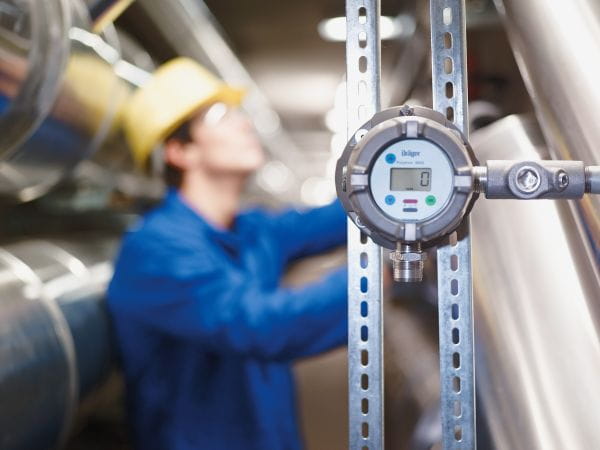
Safety on demand: the role of renting safety equipment in the workplace of the future
By Euan McIntosh, Draeger Hire on 18 October 2026
Businesses have traditionally purchased safety equipment like portable gas detectors or breathing apparatus outright. However, many employers are now supplementing asset ownership with rental models, valuing the ability to quickly source ready-configured equipment to meet fast-changing on-site requirements, and appreciating immediate access to specialist knowledge on the most appropriate kit for a particular hazard, and training on how to operate it.