
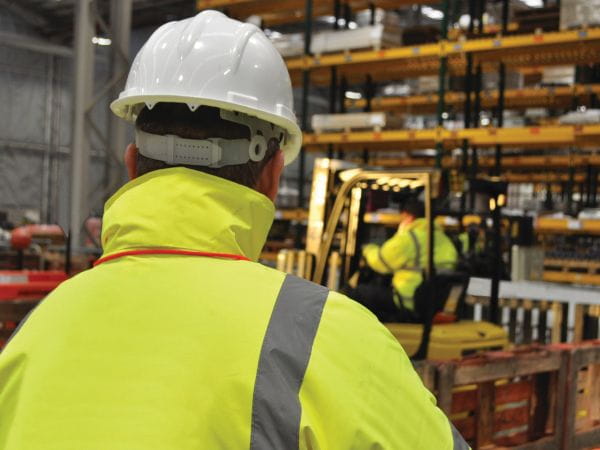
For most warehousing, distribution and retail businesses, the Christmas period sees increased use of material handling equipment, as goods handling surges to match customer demand. However, it’s vital that managers retain strict oversight of the safe operation of this type of mobile equipment to protect staff, customers and visiting delivery drivers from serious injury.
Features
The manager’s role in workplace transport safety during the Christmas rush
By
on 13 November 2026
Christmas can be the most demanding time of year for warehouses, retail operations and distribution centres. Orders climb, deliveries intensify, deadlines tighten and temporary workers join already busy teams. In workplaces where material handling equipment (MHE) is operating, that combination can quickly magnify risk.
During these busy periods, managers have a crucial role to play in maintaining standards. They are the critical link between written safety procedures and what happens on the floor. From preparing temporary workers and monitoring operating practices to ensuring productivity targets never take precedence over safety, effective leadership can make a significant difference to risk-levels on site.
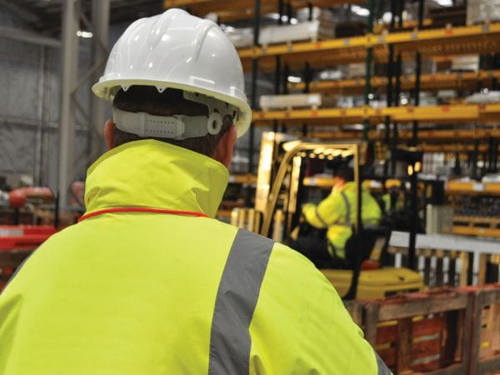
So, as seasonal pressure builds, what should managers do to ensure people remain safe at work?
Regularly review safe systems of work (SSOW)
According to previously published HSE figures, in the UK, around 1,300 serious injuries are caused by accidents involving forklift trucks in a typical year. With many incidents preventable through the adoption of effective safety measures, the figures underline the importance of managers taking a proactive role in identifying risks, implementing appropriate controls and ensuring safe working practices are followed.
Effective management of workplace safety begins well before activity peaks. Managers should regularly review existing policies, risk assessments and SSOW and consider how seasonal changes might affect the way people, vehicles and goods move around the site. Higher order volumes, additional deliveries and increased activity can all change how a workplace operates, potentially creating new hazards that need to be addressed.
As ever, pedestrian routes should be physically separated from vehicle operating areas where possible, with clearly marked walkways and designated crossing points. Managers should ensure that site rules are communicated clearly and that suitable arrangements are in place for visitors and delivery drivers. Customer-facing sites, where members of the public may be in proximity to MHE operations, may also experience a seasonal increase in footfall, so sites must be extra vigilant to the heightened risk and ready to manage this safely.
Winter conditions can introduce further challenges, including reduced daylight, poor visibility and slippery surfaces. Checking lighting, maintaining clear routes and ensuring equipment is suitable for the conditions should form part of seasonal preparations.
By anticipating these challenges and reviewing safety arrangements before the busiest period begins, managers can identify potential issues early and put appropriate controls in place.
Prepare and support the workforce
A safe workplace depends on people understanding the risks associated with their roles, the importance of working safely, and having the skills to act in a safe and competent manner. Managers must therefore ensure that everyone receives appropriate training and supervision, regardless of whether they are permanent, temporary or agency workers.
When taking on new starters who will be operating or working near MHE, previous experience should not automatically be taken as proof of competence. A worker may have operated a forklift at another site but still need training on the specific equipment, operating procedures and working conditions at their new workplace. When temporary staff need to be brought in quickly, managers must ensure that training is not rushed in an effort to meet operational demands.
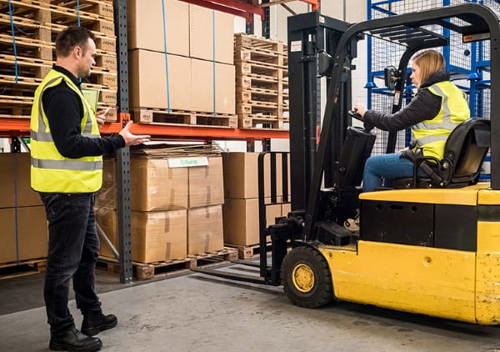
For lift truck operators, the HSE’s Approved Code of Practice for rider-operated lift trucks (L117) sets out a structured approach covering basic training, specific job training and familiarisation with the equipment and working environment. Managers should make sure all three stages are completed, and competence is confirmed before authorising operators to start work. (And fundamentally for site safety, only those with proper authorisation should be granted access to MHE.)
Blended learning courses, which combine online theory elements with in-person practical lessons, can help to support an efficient training process – enabling operators to meet required standards while minimising operational downtime. This new method of forklift training, which is starting to become more prominent within the industry, maximises flexibility and reduces classroom hours, allowing learners to complete online theory modules at their own pace ahead of time, before attending instructor-led practical training on the truck.
Crucially, managers responsible for training must remember that it is not a one-off exercise.
It is vital to monitor operators’ performance and consider further training or reassessment when unsafe practices emerge, an incident or near miss occurs, equipment changes, or working conditions introduce new risks. This ongoing support can help maintain safety standards, even when seasonal pressures are at their highest.
Effective monitoring is essential
While essential, SSOW and training programmes are only effective if followed. This means that those overseeing forklift operations have a key role to play in actively monitoring and supervising their teams.
Whether this is done by reviewing CCTV footage, truck telematics or regularly ‘walking the floor’, reinforcing the importance of safe operation can help to foster a culture of accountability and continuous improvement.
The best approach is likely to be a combination of methods and requires the manager to have a strong understanding of good and bad practice. After all, effective monitoring relies on a manager’s ability to recognise unsafe practice and act promptly.
Indeed, under the Provision and Use of Work Equipment Regulations 1998 (PUWER), employers must provide adequate health and safety training, not only for people who use work equipment, but also for those who supervise or manage its use, so that they understand the risks and necessary precautions.
While managers do not need to be qualified forklift operators, they do need enough knowledge to identify unsafe behaviour and intervene confidently. Where that expertise is lacking, specialist training courses for those overseeing forklift operations can provide the skills needed to help ensure teams are working safely and effectively.
Developing a positive safety culture
One of the most important contributions a manager can make is to set the right tone. During the Christmas rush, when pressure to meet deadlines and manage increased workloads can be particularly high, employees will take cues from how their managers behave and the priorities they demonstrate. If shortcuts are tolerated, unsafe behaviour can quickly become normalised. It is therefore essential that safety remains a clear priority, regardless of operational demands.
Remember, by law, businesses have a responsibility to protect employees and manage health and safety. Supervisory staff play an important role in putting these responsibilities into practice
by ensuring that safety procedures are followed, concerns are addressed and appropriate controls remain effective, even as conditions change.

Creating a positive safety culture requires more than simply having the right procedures in place. Managers must demonstrate through their actions that safety comes before speed, encourage employees to raise concerns without fear of repercussion, and ensure that workers are never pressured into taking shortcuts to meet targets.
Peaks in demand may be unavoidable, but increased risk is not. Proactive managers can make a huge difference – the steps they take help to ensure that no deadline or productivity target compromises safety.
So plan early, train thoroughly, monitor consistently and then continue to review: these are not simply seasonal measures, but the foundations of safe, well-managed operations all year round.
Andy Cartwright CFIOSH, FIIRSM RSP, MIIAI, AIEMA, is technical manager at Mentor FLT Training.
For more information see:
mentortraining.co.uk
E. [email protected]
T. +44 (0)1246 555222
FEATURES

Reducing lithium-ion battery fire risk in warehouses: new guidance points the way
By Ed Dolley, UK Warehousing Association (UKWA) on 13 November 2026
Lithium-ion batteries are arriving in warehouses in growing numbers – in tools, laptops, e-bikes, and consumer returns – but they can pose a significant fire risk if handled or stored incorrectly. To help warehouse operators manage the risk, the UK Warehousing Association has published new guidance setting out practical controls on safe storage, segregation, emergency planning and staff training.
The manager’s role in workplace transport safety during the Christmas rush
By Andy Cartwright, Mentor FLT Training on 13 November 2026
For most warehousing, distribution and retail businesses, the Christmas period sees increased use of material handling equipment, as goods handling surges to match customer demand. However, it’s vital that managers retain strict oversight of the safe operation of this type of mobile equipment to protect staff, customers and visiting delivery drivers from serious injury.

How fleets can reduce the risks posed by the Fatal Five
By Leo Taylor, Drivetech on 13 November 2026
The Fatal Five is a term used by police forces for the five factors that contribute most to deaths and serious injuries on UK roads. These behaviours pose a risk to all road users, including those who drive for work, so fleet managers must understand these key dangers and take steps to protect their drivers and vehicles.