
Health and Safety Executive figures show that over a quarter of all self-reported cases of ill health in the transport sector are due to work-related stress, so it’s vital employers in the industry identify and design out working practices and cultures that can negatively affect employee mental health.
Features
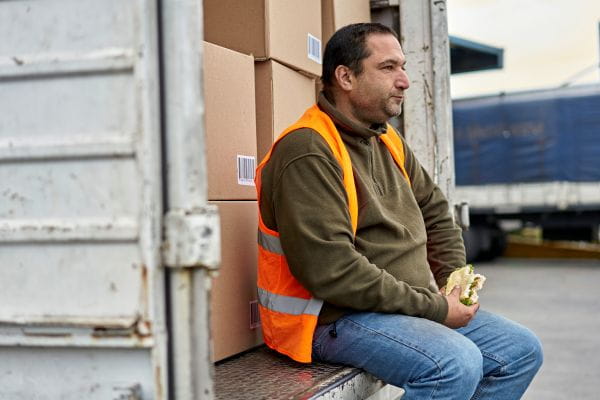
Driving change to improve mental wellbeing across the transport sector
By
on 20 November 2026
Before reading this article, please take a moment to pause and look around you.
Everything you see, from the materials used to construct the building you are in, to the clothes you are wearing, from the device you are reading this on, to the tea or coffee in your hand, every single item has been through the transport and logistics sector.
The items will have reached you through a wide range of transportation modes, including planes, ships, trains, HGVs, lorries, vans, cars, motorbikes, forklift trucks and even buses (if we want to include the movement of people accessing jobs in the equation). The one thing they all have in common is the human (for now at least) operating them.
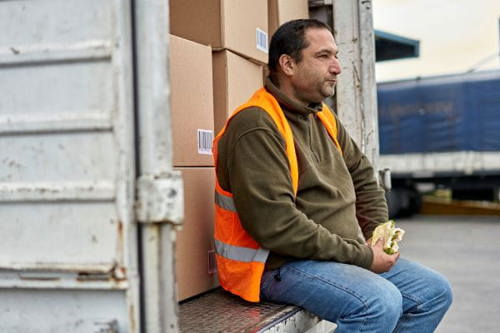
The Road Haulage Association (RHA) has found that the transport, distribution and logistics sector employs 1.86 million people. And this is likely to continue to grow as more people work from, or receive deliveries directly to, their home. The RHA also found that the sector accounts for approximately 5.6% of the UK’s total GDP, and contributes £13.5 billion to the UK economy each year.
That is a lot of goods being moved by a huge workforce. But have you ever considered the load the driver is carrying? And I’m not just talking about the physical boxes in the back of the van. I’m talking about the mental load, the pressure to deliver within assigned slots, contending with traffic, parking issues, irate customers, and dealing with all of that alone.
Picture the scene: the parcel delivery driver has already been on shift for over 8.5 hours, has covered 116 miles, is on their 97th drop of the day, with four more to go, and has already lifted 485 kg of goods. They haven’t had a conversation with anyone – other than the necessary words exchanged during a drop – and the only check in they have received is through the automated alert message telling them what they already know; that they are falling behind schedule. They should have dropped their van back at the depot and have been enroute home 30 minutes ago. They don’t want to be running late any more than you do.
It’s no wonder that these workers experience both mental and physical ill health due to their work. In fact:
- The Health and Safety Executive (HSE) found that 28% of all ill health in the transport sector is due to stress, anxiety or depression, and that 47% is due to musculoskeletal disorders.
- HSE also found that the economic costs from work-related ill-health and workplace injury across the transport and storage sectors were an estimated £1.4 billion in 2023/24.
- The Office for National Statistics (ONS) found that forklift truck drivers have an elevated risk of death by suicide at 85% above the national average, whilst it is 25% higher for van drivers and 20% higher for HGV drivers.
- A report from the RHA found that the “HGV driver workforce is disproportionately older and male, with just 1.6% under 24 and only 2% female drivers”. Statistically, this cohort is less likely to speak about their mental and physical health due to workplace culture, stigma, stoicism, and fear of it impacting their job.
What these statistics don’t reveal, however, are the experiences of the individuals working in this sector.
The main issues have been identified as: job insecurity, work-life balance, long hours, night shifts, continuous performance tracking, physical strain from lifting and moving loads, the sedentary nature of the work when driving for long periods, poor diet and lack of – or poor quality – hygiene facilities on the road, mental health issues such as loneliness and stress (including stress arising from compliance demands and tight time windows), as well as the general health issues that can affect anybody. But the very nature of the work – being predominantly on the road – means drivers find it difficult to access health, including mental health, support.
Unmanageable stress
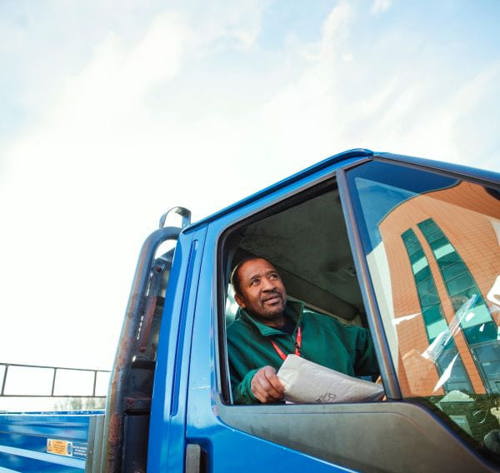
The RHA report also forecast that 40,000 new HGV drivers will be needed in the next five years, whilst Randstad’s 2023 Health and Wellbeing in the Workplace report found that 19% of respondents were planning to leave the profession in the next 12 months because of unmanageable stress or mental health conditions, adding additional pressure to those still working in the sector. To all of those issues should be added dealing with anger and abuse – whether on the road, or the doorstep.
This is why, at Mates in Mind, we advocate for building positive mental health in and through work. We do this through working collaboratively with organisations of any size to create a culture of prevention that is founded on psychosocial safety and backed by evidence-informed primary and secondary interventions, which enable organisations to identify and design out working practices that cause employees mental ill health, wherever the worker is based.
Before this can happen, though, it is essential to get senior leadership buy-in to the process – without that, the organisational culture will not change, nor will it reach every corner of the organisation.
Once this has been achieved the next step for Mates in Mind Members is to complete a comprehensive assessment which identifies gaps in mental health support provision and results in a bespoke recommendations report that provides advice on how to strengthen the organisational strategy for supporting workforce mental wellbeing. Members also receive a plan of action which highlights priority areas to address and incorporates targets against which the employer can measure progress in this area.
It is important to ensure there are relevant workplace policies in place – for example, a mental health policy. The organisation should also establish a culture that makes clear the values the business expects of all employees. For instance, this should emphasise how managers and team leaders have an important role to play in identifying and mitigating the risk of stress, and should set out the behaviours that are expected from all workers – for example, that all employees are respected and valued, and that bullying and harassment are not acceptable.
To reinforce these measures, and support new starters, a peer mentoring network can also add value.
During our (almost) 10 years of operation, we have found that educating, training and supporting all employees across the whole workforce ensures that everyone has the skills, clarity and confidence to take action on mental ill health. By ensuring there is a continuous, comprehensive and well communicated solution in place, mental health awareness becomes everyone’s responsibility, and no-one reaches crisis point.
To discover how this works in practice, please read Mammoet’s case study below to discover the positive impact of taking action to support mental health at work.
Final thought
No doubt you will have seen signs stating clearly that ‘abuse will not be tolerated’ in shops, medical facilities, hospitality venues and more. The same is also true on public transport. But what about the delivery drivers?
As we approach the busiest time of year for these workers, let’s take a moment to appreciate what they do and even pause to thank them for it – after all, it is almost the season of goodwill.
Please visit the Mates in Mind website for free resources, including a blog and infographic on working in isolation; guidance and videos on stress awareness, suicide prevention and post-suicide response. We also have blogs providing guidance on how organisations can optimise the mental wellbeing of their teams. This December, please also look out for our new awareness campaign on social media.
Case study: Mates in Mind Member Mammoet
Before joining Mates in Mind, Mammoet had identified a need to strengthen the way mental health and wellbeing were understood and supported across the organisation.
As a global company operating in the heavy lifting and transport industry, our people work in safety-critical environments where projects can be complex, demanding and often involve long hours, travel and time away from family. We recognised that these factors, alongside the pressures people may experience outside of work, could have an impact on mental health and wellbeing. We wanted to take a proactive approach to mental health, in the same way that we approach physical health and safety. This meant breaking down the stigma around mental health and encouraging more open and honest conversations.
Mates in Mind stood out to us because of its practical, industry-focused approach to improving mental health and wellbeing. We felt it offered a structured framework that could help Mammoet build greater awareness. Importantly, Mates in Mind provided the expertise, resources and guidance to help us turn our commitment into meaningful, long-term action across the organisation.
Our membership with Mates in Mind has helped us strengthen our wellbeing culture, equip colleagues and managers with greater confidence to recognise and respond to mental health concerns, and reinforce the message that mental health is just as important as physical health.
The annual assessment has been valuable in helping us understand where we are performing well and, importantly, where there are opportunities to improve.
It has given us a clearer view of the gaps in our approach to wellbeing and provided a structured roadmap, while giving us a way to measure progress over time.
The biggest impact of our membership is that it has helped us create an environment where talking about mental health is becoming more normal, people feel more comfortable asking for support, and everyone understands that looking after mental health is a shared responsibility.
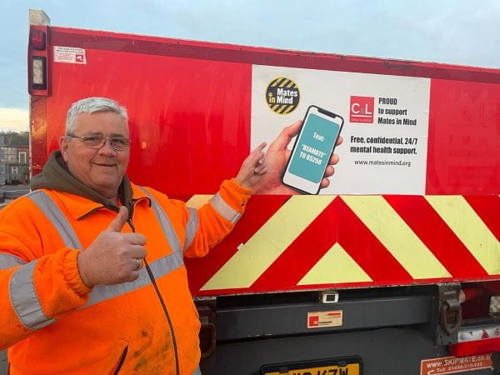
“The picture above shows a colleague-led initiative by a driver in our Westbury Civils depot that enabled us to promote our partner, Mates in Mind and their excellent BEAMATE service on the widest physical platform available to us, putting it in front of a huge amount of the population and especially those professional drivers who mainly operate alone and can be at risk.”
Allan Wright, managing director – Civils & Lintels Ltd
For more information see:
matesinmind.org
linkedin.com/company/mates-in-mind
@MatesInMind
facebook.com/MatesinMind/
Sam Downie is managing director of Mates in Mind.
FEATURES

Turning telematics data into decisions with AI
By Steve Thomas, Ctrack on 20 November 2026
Developments in AI look set to make it dramatically quicker and easier to analyse all types of vehicle data – such as video footage of unsafe driving – allowing employers to rapidly determine where fleet risk exists and correct the problem.
Driving change to improve mental wellbeing across the transport sector
By Sam Downie, Mates in Mind on 20 November 2026
Health and Safety Executive figures show that over a quarter of all self-reported cases of ill health in the transport sector are due to work-related stress, so it’s vital employers in the industry identify and design out working practices and cultures that can negatively affect employee mental health.

From selection to protection: the 8 key steps to RPE success
By Ian Kelsall, Draeger Safety UK on 20 November 2026
In many workplaces, respiratory protective equipment (RPE) is an essential tool for protecting workers against exposure to substances that pose either an immediate risk to life or a risk of causing serious and life-threatening health conditions and diseases. However, it’s crucial that employers have a suitable management plan to ensure that RPE performs as intended when deployed in the field.