

In many workplaces, respiratory protective equipment (RPE) is an essential tool for protecting workers against exposure to substances that pose either an immediate risk to life or a risk of causing serious and life-threatening health conditions and diseases. However, it’s crucial that employers have a suitable management plan to ensure that RPE performs as intended when deployed in the field.
Features
From selection to protection: the 8 key steps to RPE success
By
on 20 November 2026
For many organisations, the provision of respiratory protective equipment (RPE) for their employees is focused firmly on selecting the right mask; ensuring it meets relevant standards, that it offers the appropriate level of protection, and that it suits the task at hand.
However, in practice, this is only part of the story. The real and lasting effectiveness of RPE depends both on what is purchased and on what happens afterwards.
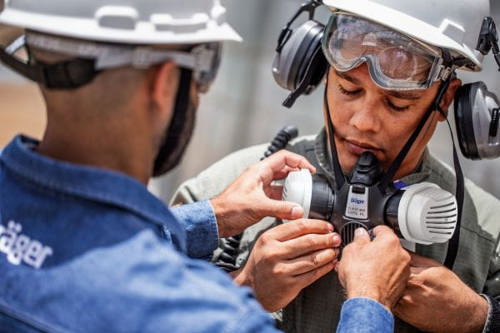
Consider the findings from a Health and Safety Executive (HSE) survey in the woodworking sector. Among companies where tight-fitting RPE had been specified, only 27% achieved adequate compliance, while 59% of sites were found to be providing insufficient protection. These figures highlight a stark truth: simply specifying RPE does not guarantee protection.
However, it’s not only the incorrect specification of RPE that is to blame. Instead, the findings reflect gaps in how RPE is rolled out within an organisation, from poor fit to a lack of training, inconsistent use by wearers, and inadequate maintenance. In short, the issue often lies in the absence of a structured RPE management programme.
From product to programme
An RPE management programme encompasses all the activities required to ensure that RPE performs effectively in practice. It is not a single action, but a coordinated effort, from selection and training through to maintenance, storage and disposal.
RPE programmes can often be seen as an administrative burden. Yet, in reality, most businesses already operate many elements, at least informally. The challenge is therefore often not starting from scratch, but formalising and strengthening what already exists to ensure consistency and help control exposure.
This matters more than ever. According to HSE statistics, around 11,000 deaths each year are linked to past occupational exposure to respiratory hazards, with a further 22,000 new cases of breathing and lung problems reported each year as being caused or made worse by work.
Why introduce an RPE programme?
Compliance is often the primary driver for implementing an RPE programme. Businesses need to meet legal requirements and be prepared for scrutiny from regulators, insurers, and industry bodies.
However, the benefits go beyond compliance alone. Effective RPE management also supports commercial outcomes by reducing downtime, increasing worker productivity, and safeguarding reputation, as well as improving organisational culture by embedding safety as a core value rather than a tick-box exercise.
Additionally, there is a moral responsibility to ensure workers are genuinely protected from long-term ill health.
Ultimately, a robust programme provides assurance that equipment is not just present, but effective.
The 8 key steps of an effective RPE management programme
A successful RPE programme can be broken down into eight key elements, with each playing a vital role.
Select: more than just specification
Selecting RPE requires more than choosing a compliant product. It must be both adequate – i.e. that is capable of protecting against the specific hazard – and suitable for the wearer, task, and environment.
This means understanding the nature and concentration of the hazards that are to be protected against, as well as practical considerations such as fit, comfort and compatibility with other personal protective equipment (PPE). In addition, the task being undertaken and the working environment will affect the choice. Failure to consider suitability often leads to poor adoption, misuse, or even an individual not wearing the device.
Crucially, tight-fitting RPE must fit the individual wearer. Without fit testing and ongoing reassessment, even technically ‘adequate’ equipment can fail to protect the user.
Train: turning equipment into protection
RPE only works if it is used properly. Workers must understand not just how to wear and use equipment, but why it is needed, how it functions, what to do if it is not working correctly, and what its limitations are.
Effective training covers the full lifecycle of use, from the correct way to put on and fit-check the RPE through to cleaning, storage, and disposal.
It should be delivered by competent individuals and reinforced regularly, not treated as a one-off.
Without proper training, bad habits can quickly develop, and once embedded, they can be extremely difficult to change, so suitable times to introduce RPE training include during a new employee’s induction period, when undertaking fit testing and when introducing new equipment.
Refresher training and materials such as posters, flyers and videos, along with mandatory information sheets, can help to ensure that the training remains relevant and that bad practices do not creep in over time.
Supervise: maintaining standards in practice
Supervision ensures that procedures are followed correctly and consistently, acting as the bridge between policies and real-world behaviour and serving to catch any poor behaviours that may creep in over time.
Typically, the most effective supervision is often proactive and supportive rather than punitive, and by focusing on key moments throughout the working day, such as the beginning and end of shifts, organisations can monitor and reinforce critical behaviours, including the correct way to put on RPE, pre-use checks, and appropriate storage between tasks.
Organisations that foster a collective approach, where everyone feels responsible for standards, are far more likely to achieve sustained compliance.
Check: empowering the user
While supervision focuses on employer oversight, regular checks are the responsibility of the wearer. Pre-use inspections and fit checks are essential to confirm that equipment is clean, intact, and functioning correctly and should be performed every time RPE is used, not just at the start of a shift. Under pressure, this step is often rushed, skipped or overlooked, yet it is one of the simplest and most effective ways to prevent failure.
Powered air purifying respirators (PAPRs) usually include alarm features and functions to help identify common problems such as filter clogging, battery charge or incorrect assembly as an aid to the pre-use check. The wearer should check that the alarm functions are working and that they have sufficient battery life for the duration of the task they are about
to undertake.
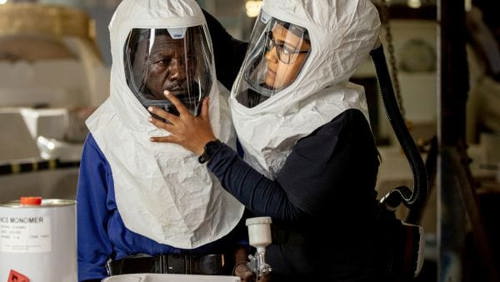
Maintain: protecting the equipment
Cleaning and maintenance are crucial to ensuring that reusable RPE remains effective and can ultimately extend the life of the equipment.
For routine cleaning, each manufacturer’s RPE will have specific cleaning requirements and instructions; these will cover the pre-cleaning and cleaning required, such as removing dirt and contamination, disassembling parts and then immersing them in a cleaning solution. Plus, rinsing, disinfecting where necessary and drying. Reputable manufacturers will have tested their equipment with specific cleaning and disinfection solutions to ensure continued performance.
Maintenance should be undertaken to check the RPE for damage that may impact protection or impede worker function to a point that may compromise compliance. Many maintenance functions can be carried out by workers on a day-to-day basis (charging batteries, replacing clogged or saturated filters, rough cleaning).
However, for more involved steps, having people trained in the correct procedures is necessary to eliminate the potential for damaged or missing components in RPE. Training should be provided by a competent person in accordance with the manufacturer’s guidelines to ensure that the maintenance is undertaken and recorded correctly. Manufacturers will identify components that require maintenance over time and maintain the availability of spare parts for the lifespan of the product. Some will also offer the option of outsourced service and maintenance, and whilst this may be more expensive, it can help ensure that legal requirements are being met without the need for additional staff members.
Poor maintenance not only compromises safety but also leads to higher costs through reduced equipment lifespan and increased downtime. Clear procedures, trained personnel, and accessible facilities are essential.
Record: demonstrating compliance
Records and documentation play a crucial role in both management and compliance. Fit testing, training, and maintenance records provide evidence that systems are in place and working effectively. They also support continuous improvement, helping organisations identify trends, gaps, and opportunities for refinement.
Store: the overlooked link
Improper storage can quickly undo the benefits of cleaning and maintenance, yet it is frequently overlooked.
Guidance on correct storage should be provided by the manufacturer, and this typically advises on how to prevent exposure of the equipment to ‘extreme’ conditions such as high and low temperatures, UV light or excess humidity.
Appropriate storage should seek to achieve three key goals:
- Prevent damage or deterioration of RPE whilst in storage
- Prevent contamination and cross-contamination
- Ensure easy access to the RPE between shifts and after breaks.
Balancing both cleanliness and accessibility is key, particularly as the most significant source of contamination in the storage area is often the RPE itself if it is not cleaned properly before storing. Once a storage facility becomes soiled, there is the potential for transfer to other parts of the RPE, or other PPE, that can lead to exposure through inhalation, skin absorption or open wounds, or secondary exposures such as ingestion due to poor hygiene.
Dispose: managing the end of life
This applies not only to the RPE itself but also to individual replaceable components such as filters, which do not simply become ordinary waste at the end of their life. In many cases, they may contain hazardous substances and must be disposed of accordingly. Reputable manufacturers of electronic RPE equipment such as Powered Air Purifying Respirators (PAPRs) may design equipment with end-of-life in mind, for example, to consider the need to disassemble equipment to separate plastics from electronics. In some cases, manufacturers may also offer return schemes for responsible recycling to fulfil their regulatory obligations.
Making it manageable
For organisations feeling overwhelmed, it is important to recognise that support is available. HSE provides comprehensive guidance, including Respiratory Protection at Work: A Practical Guide (HSG53) and task-specific resources, while fit testing providers, occupational hygienists, and equipment manufacturers can all contribute expertise.
Many RPE suppliers and manufacturers now offer support that extends beyond supplying products, from assisting with appropriate selection and training to ongoing service and maintenance. Leveraging this expertise is often the key to building a practical and sustainable RPE programme.
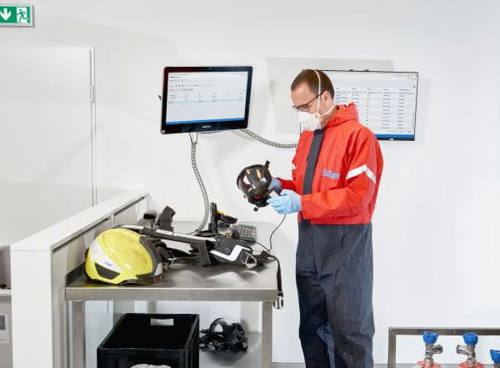
A shift in thinking
The message for health and safety professionals is clear: RPE provision should not be viewed as a procurement exercise but as an ongoing process.
Choosing the right equipment is essential, but it is only the beginning. The true measure of success lies in how that equipment is managed, maintained, and used over time.
In an environment where the consequences of failure can take years to emerge, as chronic respiratory diseases so often do, getting this right is critical.
Because when it comes to RPE, what you do after the purchase is what really protects people.
For further information, please see:
draeger.com
Ian Kelsall is an RPE technical specialist at Draeger Safety UK.
FEATURES

Turning telematics data into decisions with AI
By Steve Thomas, Ctrack on 20 November 2026
Developments in AI look set to make it dramatically quicker and easier to analyse all types of vehicle data – such as video footage of unsafe driving – allowing employers to rapidly determine where fleet risk exists and correct the problem.

Driving change to improve mental wellbeing across the transport sector
By Sam Downie, Mates in Mind on 20 November 2026
Health and Safety Executive figures show that over a quarter of all self-reported cases of ill health in the transport sector are due to work-related stress, so it’s vital employers in the industry identify and design out working practices and cultures that can negatively affect employee mental health.

From selection to protection: the 8 key steps to RPE success
By Ian Kelsall, Draeger Safety UK on 20 November 2026
In many workplaces, respiratory protective equipment (RPE) is an essential tool for protecting workers against exposure to substances that pose either an immediate risk to life or a risk of causing serious and life-threatening health conditions and diseases. However, it’s crucial that employers have a suitable management plan to ensure that RPE performs as intended when deployed in the field.