

Much of today’s debate about economic growth revolves around familiar pressures: economic inactivity, labour shortages, stagnant productivity, and the challenge of remaining competitive in a rapidly shifting global landscape.
Opinion
Holistic health: the foundations of future prosperity
By
on 04 June 2026
These are all important issues. Yet, they are often treated as if they exist independently of the health and wellbeing of the population itself.
In reality, they are deeply interconnected.
The economies that succeed in the future will be those that invest in the health of their people today. A healthy population is not simply a social good; it is one of the clearest foundations of a productive and resilient economy. Strong economies create the conditions for people to thrive, but it is equally true that thriving people are what make strong economies possible.
Despite this, we continue too often to separate economic performance from health outcomes. We discuss productivity without wellbeing, and economic inactivity without fully considering the physical and mental health factors that may limit participation in work.
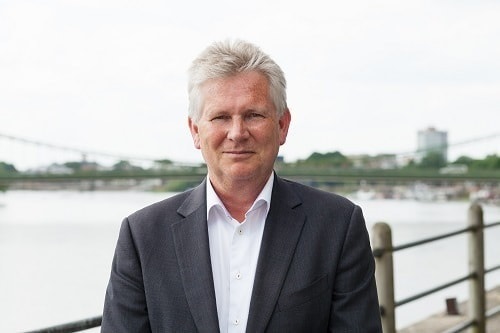
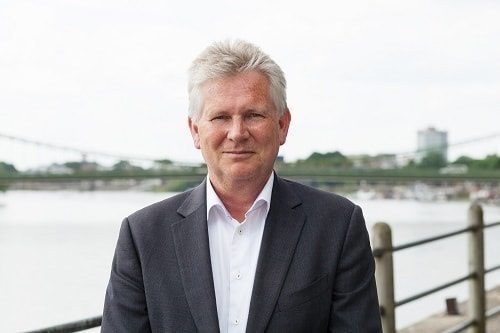 Mike Robinson: "Good work can provide purpose, connection, personal development, and financial security."
If we are serious about aligning economic growth with public health, a joined-up approach is not optional, it is essential.
Work, and the workplace, sit at the centre of this relationship.
The average person spends around a third of their life at work. Given this, workplaces have a profound influence on human health; for better or worse.
Good work can provide purpose, connection, personal development, and financial security. It can strengthen physical and mental wellbeing, build confidence, and enable people to realise their potential. Poorly designed work, by contrast, can undermine health, erode confidence, and diminish performance.
This places employers in a pivotal role; not only as economic actors, but as leaders and custodians of culture.
As we ask business leaders to engage with this responsibility, our understanding of wellbeing also needs to evolve.
Traditionally, wellbeing has often been addressed through discrete interventions: awareness campaigns, employee assistance programmes, health benefits, or wellbeing initiatives. While valuable, these approaches can unintentionally frame wellbeing as something separate from how work itself is designed and delivered.
A more holistic perspective, reflected in this month’s Safety Management magazine, asks a different question: not how we support wellbeing alongside work, but how work itself generates wellbeing.
The answer lies in the environments we create and the cultures we embed, at heart it asks the question whether our workplaces are psychosocially aware and psychologically safe?
People are more likely to thrive when they feel safe, respected and included. They perform better when they trust leadership, understand their purpose, and feel able to contribute meaningfully.
Psychological safety in particular fosters learning, openness and innovation. It represents an evolution in thinking, a wellbeing 2.0, built on the lessons of the past decade and beyond.
So what, then, constitutes “good work”?
It is work designed to support sustainable performance and resilience, to encourage strong social connection, and to enhance both wellbeing and engagement over time.
Health is holistic, and so too are the conditions that shape it.
This is why the perceived tension between organisational success and employee wellbeing is increasingly unhelpful. It implies a trade-off that, in practice, often does not exist.
Organisations depend fundamentally on people, they are our most important asset. Their success is built on human capability, creativity, judgement, and collaboration.
When people are healthy and able to perform at their best, organisations are better equipped to adapt, innovate and succeed. In many cases, the conditions that support wellbeing are the same conditions that support performance.
Trust strengthens teamwork. Inclusion improves decision-making. Healthy workplaces build resilience. Effective leadership drives engagement. What benefits people often benefits organisations too.
Perhaps the broader lesson is that this principle works at scale too. Just as organisations flourish when their people thrive, economies flourish when their populations are well, healthy and happy.
Health and prosperity are not competing priorities; they are mutually reinforcing.
As we look ahead, leaders in business, government, and civil society have an opportunity to move beyond fragmented approaches and embrace a more integrated understanding of health, work and economic success.
Holistic health is not simply a wellbeing agenda. It is an investment in human potential. And societies that create the conditions for people to thrive are also those most likely to achieve lasting prosperity.
Mike Robinson FCA is Chief executive of the British Safety Council
OPINION
Building a future worth working in
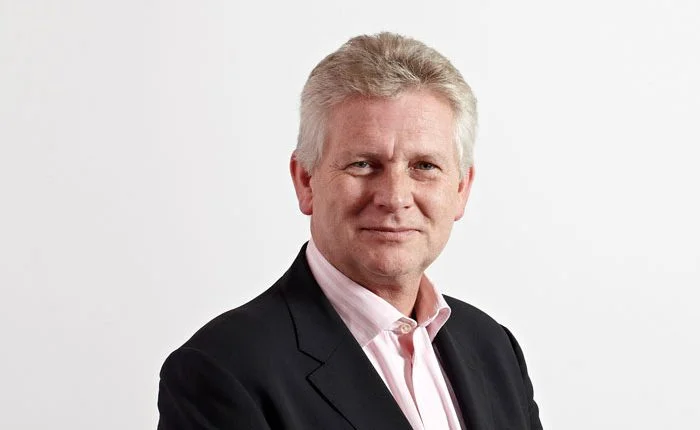
By Mike Robinson FCA, British Safety Council CEO on 12 October 2026
It’s easy to become myopic about the future of work. Take a quick look at the world today and the signs can seem discouraging: political instability, economic volatility, the accelerating disruption posed by AI and climate change. Together, these factors paint a picture of uncertainty that can make our belief in progress seem naïve and tempt us into believing that the future can be no better than the past, that our best days are now behind us. That would be a profound failure of imagination.

Rethinking homes as centres of economic activity (amongst other things)
By Andy Lake, Flexibility.co.uk on 08 October 2026
The decentralisation of work away from fixed workplaces, the rise of AI and demographic changes are creating new opportunities for people to carry out ‘hands-on’ work in the home, such as production of fashion, textiles, food and drink, and delivery of health services and therapies. However, our existing housing stock is not designed to accommodate such functions, so it’s essential that future town planning creates homes that support different kinds of enterprise, both to support business success and the wellbeing of these new home-based workers.
Learning that saves lives
By Mike Robinson, chief executive, British Safety Council on 11 September 2026
Success can sometimes be a problem. The better we become at preventing incidents, the harder it can be to see what is actually preventing them.