
While most UK CEOs believe that the adoption of artificial intelligence (AI) is inevitable and cannot be slowed down...
Opinion
AI in the workplace: risks, rewards and responsibilities
By
on 31 July 2026
..over half have identified new technologies and AI as one of their greatest workplace challenges. AI is rapidly changing the way we work and the way our workplaces operate. It has the capacity to improve or undermine employee wellbeing at work, depending on how employers choose to deploy it.
The impact of AI extends beyond productivity into job design, trust, and employee wellbeing. AI can impact the health and wellbeing of the workforce in many ways, so it is essential that it is employed ethically and responsibly so benefits can be reaped not only by individuals, but by businesses too.
Healthy business, healthy employees
AI can be instrumental in reducing barriers to employee retention, enabling the necessary upskilling of employees so that the workforce is ready for an AI-enabled future. Automating routine administrative tasks is still one of the main ways businesses are using AI today.
Used responsibly, AI can ease workloads, enable employees to work more flexibly, and free up time for collaboration, which can improve both wellbeing and productivity. But as AI becomes more embedded in how work is managed and decisions are made, its impact on health and wellbeing becomes broader and more complex.
AI benefits to health and wellbeing
AI can be used to spot patterns and signal potential risks to health and wellbeing, for example by identifying patterns linked to stress, overload, or out-of-hours working. Used carefully and with human oversight, this can support earlier and more targeted interventions.
It can also be used to empower employees to manage their workloads better. By using AI to support with the automation of administrative tasks, it can reduce workloads, helping prevent overworking, pressure, and burnout, and can help employees foster a better work-life balance.
This can improve wellbeing, particularly amongst employees who require more flexibility in their working patterns, including those with caring responsibilities and neurodiverse individuals. AI can also give employees greater choice and control over how they organise their work and can support in creating roles which are more adaptable to fluctuating health needs.
Businesses are increasingly using AI as an enabler for colleagues who benefit from transcription, summarising, writing support, or easier access to policies and guidance. This can particularly help some employees with temporary or long-term health conditions by removing friction and making daily tasks more manageable.
In order to realise the health and wellbeing benefits of AI, employers need to employ it responsibly and ethically. But this relies on employers using AI in the correct ways, without abusing employees’ trust, and proactively considering and evaluating the impact it is having on employee experience.

Amy Butterworth is Inclusion and wellbeing issue director, Business in the Community (BITC)
Risks of AI on health and wellbeing
The digital divide is growing as workplaces become more AI-enabled, with certain groups having less access to AI and the benefits and opportunities it presents, and being more likely to be negatively impacted by its advancement in organisations. Promoting access and training is critical to bridge this gap and ensure no one gets left behind at work.
Technology-induced stress is one of the main risks to employee health and wellbeing associated with unethical AI use. With the increasing pace and scale of AI adoption, it is becoming easier for employers to track employee activity through data collection.
AI-enabled workforce monitoring can come in many forms, such as the tracking of app usage, clicks, and keystrokes. While often introduced to improve productivity or consistency, this can feel intrusive if not handled carefully, increasing pressure and reducing employees’ sense of autonomy and control.
Overuse of AI for employee monitoring, particularly if introduced without clear explanation, can damage employee trust and negatively impact wellbeing. It can also change behaviour in less visible ways, making people more cautious, less open, and more focused on avoiding mistakes, reducing creativity and innovation.
AI can also widen existing workplace inequalities in ways that directly affect wellbeing. For example, AI productivity tracking algorithms are often modelled on a ‘normal’ nine-to-five working day, employees who work flexibly may be unfairly penalised. This can increase anxiety and stress, deepen existing inequalities, and reduce engagement.
AI, jobs, and wellbeing
AI is beginning to reshape hiring patterns and job design in ways that create both opportunities and risks for wellbeing. In some cases, automation and the augmentation of human tasks through AI is contributing to fewer opportunities in some entry-level and professional roles, while in others, it can support new roles, better job matching, and more effective ways of working.
Where recruitment becomes more cautious and competition for roles increases, this can negatively affect health and wellbeing, particularly for jobseekers and those wanting to change roles, by increasing uncertainty and prolonging job searches. The impact is unlikely to be evenly distributed, with younger people and those early in their careers among the most affected.
Some employers are taking a more responsible approach to this transition by reskilling, redesigning jobs, and redeploying employees, rather than treating AI automation simply as a route to reducing headcount.
When organisations help people build new skills, move into emerging roles, and understand how new technology will affect their work, it can support wellbeing by reducing anxiety, strengthening confidence and employability, and helping employees see a future for themselves in an AI-enabled workplace.
Helping employees thrive in an AI-centric workplace
AI should be developed and deployed in ways that are ethical, transparent, and people-centred. To help employees thrive and make the most of AI in a way that has a positive impact on their wellbeing, employers should consider the following actions:
- Actively protect and advocate for employee health and wellbeing
It is critical to proactively assess and audit the risks of AI for employee stress, burnout and other mental health impacts, and keep this under review as AI is embedded into different business functions and systems. Employers must assess how these risks may be experienced differently across the workforce, so everyone’s wellbeing is protected.
- Upskill employees and build trust
When shaping the AI agenda for their workplaces, employers need to build trust and engagement by consulting employees. They need to be transparent about how AI is being used, how it may affect workload, and whether it is being used to monitor activity. Clear boundaries around AI use are needed so organisational expectations around AI are understood and worker autonomy is protected. It is also vital that employers train employees on responsible AI use, so the workforce is upskilled and supported.
- Become a responsible AI leader
As AI becomes increasingly integrated into workplaces, organisations need strategies and policies that support responsible use. Employers can create ethical AI governance functions, with clear accountability for employee wellbeing. Leading employers should act as role models, helping to shape wider expectations so AI supports a healthier and more sustainable workforce.
 "Automation and the augmentation of human tasks through AI is contributing to fewer opportunities in some entry level roles." Photograph: iStock
For more information see: bitc.org.uk
Amy Butterworth is inclusion and wellbeing issue director at Business in the Community (BITC).
OPINION

Building a future worth working in
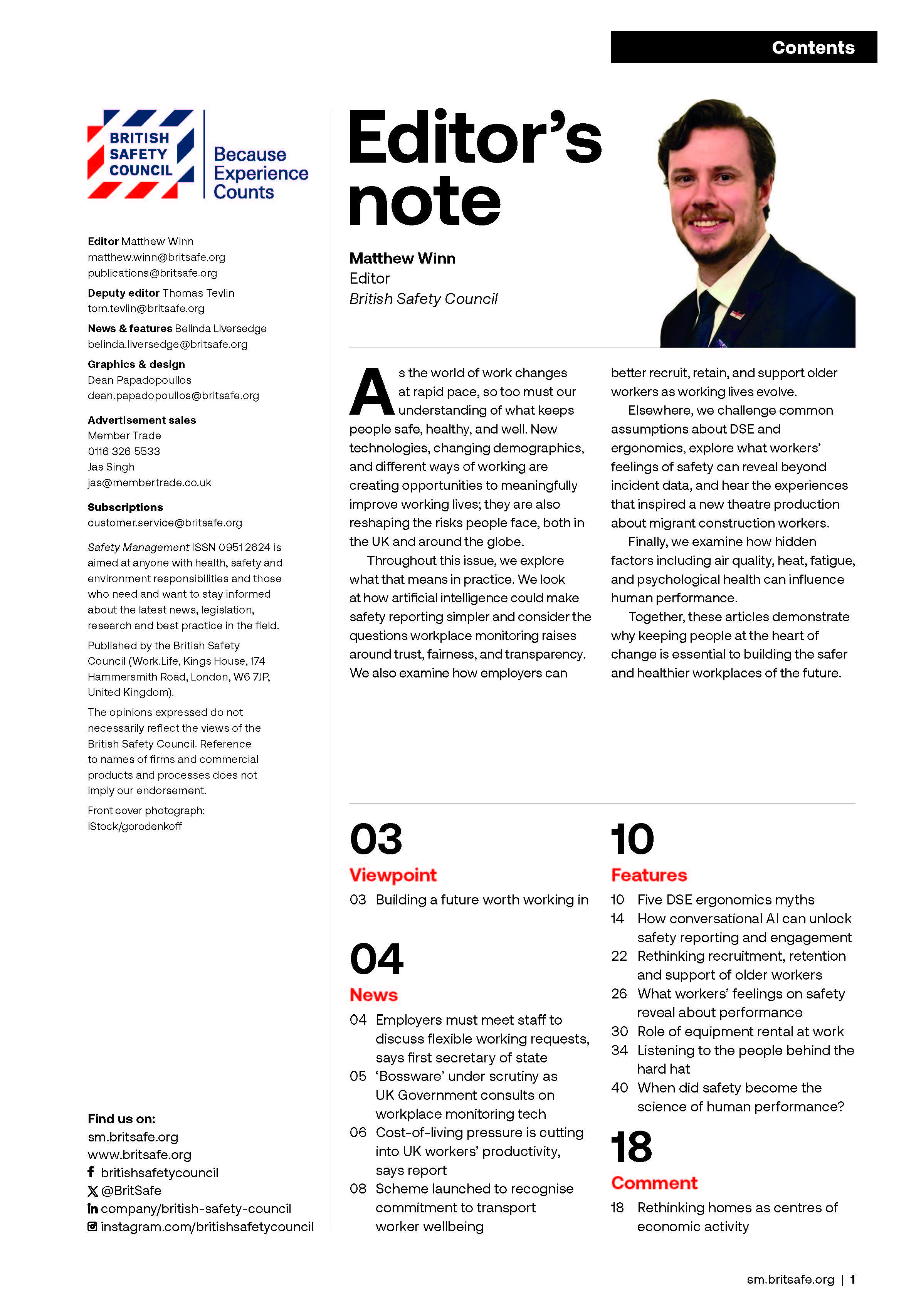
By Mike Robinson FCA, British Safety Council CEO on 12 October 2026
It’s easy to become myopic about the future of work. Take a quick look at the world today and the signs can seem discouraging: political instability, economic volatility, the accelerating disruption posed by AI and climate change. Together, these factors paint a picture of uncertainty that can make our belief in progress seem naïve and tempt us into believing that the future can be no better than the past, that our best days are now behind us. That would be a profound failure of imagination.

Rethinking homes as centres of economic activity (amongst other things)
By Andy Lake, Flexibility.co.uk on 08 October 2026
The decentralisation of work away from fixed workplaces, the rise of AI and demographic changes are creating new opportunities for people to carry out ‘hands-on’ work in the home, such as production of fashion, textiles, food and drink, and delivery of health services and therapies. However, our existing housing stock is not designed to accommodate such functions, so it’s essential that future town planning creates homes that support different kinds of enterprise, both to support business success and the wellbeing of these new home-based workers.
Learning that saves lives
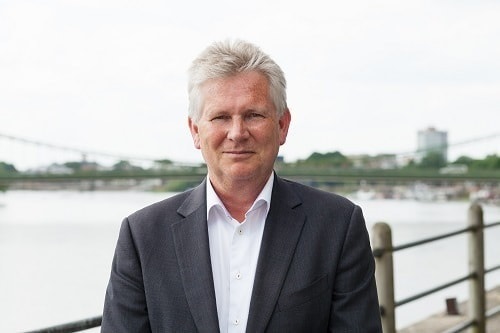
By Mike Robinson, chief executive, British Safety Council on 11 September 2026
Success can sometimes be a problem. The better we become at preventing incidents, the harder it can be to see what is actually preventing them.