

Much of the conversation about artificial intelligence (AI) and the future of work is framed as a question of tomorrow. How will AI reshape entire industries in the years and decades to follow?
Opinion
AI, big tech, and the dignity deficit hiding in plain sight
By
on 08 July 2026
These are important questions, and they deserve serious answers, but they also risk serving as a kind of comfort blanket, allowing us to treat AI’s harms as a problem of the future rather than a reality of the present.
The uncomfortable truth is that AI is already learning, deciding, and acting today, and it is doing so in ways that disproportionately affect the workers we’re least likely to see, hear from, or think about.
This matters because the systems being built by big tech do not learn in a vacuum. They learn from the data we feed them, much of which is generated by the day-to-day grind of low-visibility work in developing nations.
These are workers whose labour is often invisible to the public, poorly represented in workplace data, and rarely consulted when new technologies are designed or deployed. If AI is learning from a world that already overlooks these workers, it risks encoding this into the systems that will govern their working lives for generations to come.
Out of sight and out of mind has always been a risk factor in occupational health and safety. Workers on the margins, without union representation, without permanent contracts, without a clear employer to hold accountable, have historically borne a disproportionate share of harm.
What is different now is the scale and speed at which AI can entrench marginalisation. An algorithm trained on flawed or incomplete data does not simply replicate existing inequalities; it can amplify them, automate them, and apply them across millions of decisions, often without anyone noticing until harm is done.
Consider the gig worker whose app-based performance score quietly penalises them for taking a toilet break, or the warehouse worker whose targets are set by an algorithm that has never set foot on a warehouse floor and has no concept of human fatigue.
Consider the care worker whose shifts are allocated by a system optimising for efficiency, with no understanding of the cumulative toll of back-to-back visits with no travel time built in. These are not hypothetical scenarios. They are happening now, in workplaces across the country, often to people with the least power to challenge them.
This is why human dignity must be the organising principle, not just for the AI-powered future we are building, but for the AI that is being trained, tested, and deployed today.
Dignity cannot be an output we hope to achieve once the technology matures; it must be a design requirement from the outset, because the data and decisions of today become the foundations of tomorrow’s systems. If we build on flawed foundations now, we’ll spend decades correcting course, just as we are grappling with inequalities baked into our current systems by previous waves of industrial change.
Big tech companies carry a particular responsibility here, precisely because of their reach. A change to an algorithm’s design, made in a boardroom far removed from any actual workplace, can ripple out to affect the working conditions of millions of people almost overnight.
That power demands a level of care and consultation that matches its scale. It is not enough to test these systems against the workers who are easiest to engage, those in visible, well-organised, well-resourced workplaces. The systems most likely to cause harm are precisely those touching the workers least likely to be in the room when they are designed.
So, what would taking dignity seriously look like in practice? It means actively seeking out the experiences of low-visibility workers when developing and refining systems, not waiting for complaints to surface after the fact.
It means meaningful human review of decisions that affect worker safety, income, or wellbeing; with a genuine route to challenge an outcome, regardless of employment status. It means recognising that data gaps are not neutral; the absence of data about a group of workers is itself a signal that they may be most at risk of being failed by systems trained without them in mind.
It also means resisting the temptation to treat AI ethics as a future-facing exercise, a set of principles for the AI of tomorrow, while today’s systems continue to operate with far less scrutiny. The workers most at risk from AI right now are not waiting for a future framework. They are living with the consequences of decisions being made today, by systems being trained today, often without their knowledge.
We have learned, time and again, that the people most affected by change are too often the last to be considered, and the first to suffer when things go wrong. As AI continues its rapid evolution, we have a genuine opportunity to do things differently: to ensure that dignity is not retrofitted once the harm becomes visible, but embedded from the very first line of code, for every worker, especially those we are least likely to see.
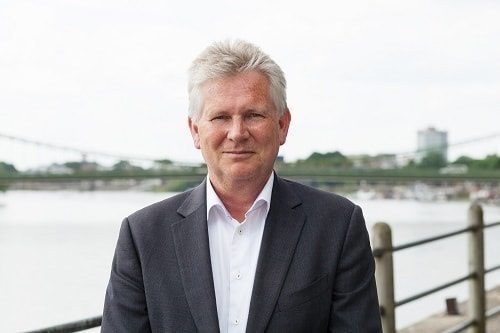
Mike Robinson FCA is chief executive of the British Safety Council
OPINION

Rethinking homes as centres of economic activity (amongst other things)
By Andy Lake, Flexibility.co.uk on 08 October 2026
The decentralisation of work away from fixed workplaces, the rise of AI and demographic changes are creating new opportunities for people to carry out ‘hands-on’ work in the home, such as production of fashion, textiles, food and drink, and delivery of health services and therapies. However, our existing housing stock is not designed to accommodate such functions, so it’s essential that future town planning creates homes that support different kinds of enterprise, both to support business success and the wellbeing of these new home-based workers.
Learning that saves lives
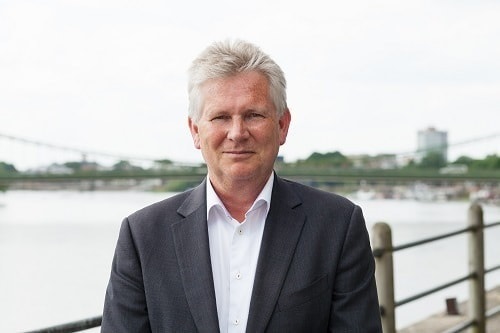
By Mike Robinson, chief executive, British Safety Council on 11 September 2026
Success can sometimes be a problem. The better we become at preventing incidents, the harder it can be to see what is actually preventing them.

Migraine in work: a test of the Government’s plans to Keep Britain Working
By Rob Music, The Migraine Trust on 07 September 2026
Migraine can have a profound, and often avoidable, impact on people’s working lives and careers. The Government’s growing focus on workplace health offers an important opportunity to change this, but only if this common, often disabling and frequently invisible neurological condition is properly understood and addressed by Government, the NHS and employers.