
The UK government has set out plans for a new Workplace Health System, placing employers at the centre of efforts to prevent people with health conditions from falling out of employment unnecessarily.
News
Government unveils plan for UK’s first Workplace Health System
By
on 12 November 2026
The UK government has set out plans for a new Workplace Health System, placing employers at the centre of efforts to prevent people with health conditions from falling out of employment unnecessarily.
The latest update from Sir Charlie Mayfield, co-chair of the Keep Britain Working programme, highlights the urgent need for earlier intervention and better workplace support as economic inactivity linked to poor health continues to rise.
Around 300,000 people with a health condition leave work every year, but much of this is preventable, says the Department for Work and Pensions. Research cited in the Keep Britain Working report shows that an employee absent from work for between four and six weeks has a 96% chance of returning. However, after a year away from work, fewer than half successfully return.

Since 2019, the number of working-age people out of work due to ill health has increased by 800,000, and the resulting impact on the economy is estimated at approximately £212 billion annually.
The new plan has been designed to address this challenge by creating healthier, more inclusive workplaces while ensuring employees receive support before health issues become barriers to employment.
The initiative aims to bring together employers, the NHS, local authorities and support providers into one coordinated system to ensure people don’t fall out of work unnecessarily and that companies have better data on workplace health and inclusion to drive change.
Writing in the report, Sir Charlie Mayfield said: “Britain has spent too long treating economic inactivity as a welfare problem. It is not. Instead, it’s one of the largest and most attainable growth opportunities this country has. We’ve had a National Health Service for almost 80 years. We’ve never had a Workplace Health System. That is why the same people appear on the welfare bill, on NHS waiting lists and in the productivity figures without anyone being able to join them up. It’s also why we are missing the best moments to help people. The new Workplace Health System would change that.”
He added: “Ten months of building and testing with employers, mayors, providers, unions and disabled people have made us even clearer about what needs to change and more confident that a new system that helps to drive economic growth is within reach. The task now is to build it.”
A key focus of the programme is ensuring workplace health support is accessible to smaller employers, not just large corporations.
Pat McFadden, Work and Pensions Secretary, said: “Too many people fall out of work because of a health problem that could have been caught earlier, and too many employers have no way of knowing whether they are getting this right. This programme is working hand in hand with employers, mayors and local leaders to change that, so that good workplace health support is not just for big companies and it delivers growth across every postcode.”
Alongside practical support measures, the programme is also seeking to address significant gaps in workplace health data.
However, the report has drawn criticism from a number of disabled people’s organisations (DPOs), according to Disability News Service (DNS). Leading DPOs reportedly said the government had kept them “firmly on the outside” of the review and provided “few concrete measures” on how employers can support disabled people to remain in work.
Svetlana Kotova, director of campaigns and justice for Inclusion London, told DNS: “While there are many positive aspects to the report, we are disappointed to see that it contains few concrete measures for how employers can support disabled people to stay in work.”
Alex Pearl, policy and campaigns officer for Disability Rights UK, told DNS: “DPOs are firmly on the outside of the Mayfield review; we’ve been invited to two update meetings over the past year.”
She criticised the failure to do more to involve DPOs “despite the fact that only disabled people can truly know what works to keep us in employment”.

NEWS

Pregnant women to gain stronger protections against unfair dismissal
By Orchie Bandyopadhyay on 12 November 2026
Pregnant workers and new parents will have stronger safeguards to protect them from unfair dismissal, in a new crackdown on unfair workplace practices, the government has announced.

Government unveils plan for UK’s first Workplace Health System
By Orchie Bandyopadhyay on 12 November 2026
The UK government has set out plans for a new Workplace Health System, placing employers at the centre of efforts to prevent people with health conditions from falling out of employment unnecessarily.
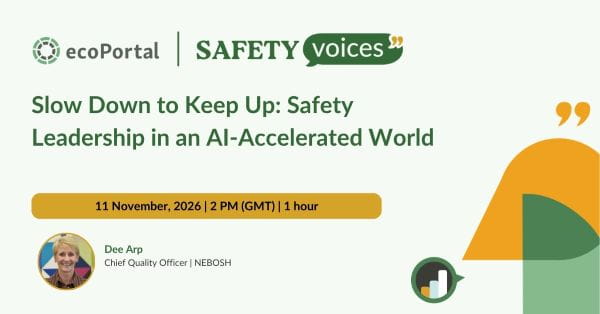
Webinar argues slowing down is one of the most important safety leadership skills in the age of AI, with NEBOSH’s Dee Arp
By British Safety Council on 30 October 2026
ecoPortal’s free session on 11 November examines how safety leaders can embrace AI without losing care, presence and human connection.