

As the UK prepares for summers that will regularly test the buildings we work in, the practical business of keeping an indoor workplace safe from heat is no longer purely a policy or HR question. It sits, increasingly, in the building services brief, and safety leaders need to be part of that conversation earlier than most currently are.
Features
Beyond the thermostat: why the indoor heat problem is an engineering problem too
By
on 25 August 2026
Workplace heat has had a lot of airtime in recent summers. The Trades Union Congress (TUC) has campaigned for a legal maximum indoor working temperature. Ministers have been pressed on whether the 1992 workplace regulations are still fit for purpose. The Climate Change Committee (CCC) has warned that heatwaves exceeding 40°C could reach every part of the UK by 2050, and has called for a rollout of air-conditioning in schools, hospitals and care homes within the next 10 years.
Most of this has been a policy and HR conversation, focused on outdoor workers. Both matter. However, there's a quieter question sitting alongside them, and it becomes more important the hotter it gets. What does it actually take to keep an indoor workplace within safe thermal limits when the outside temperature reaches into the mid- to high-30s? That question is an engineering one, and it is one occupational safety and health (OSH) professionals are going to have to engage with much more directly than they have so far.

Where the policy debate has landed
The policy picture in mid-2026 is, at best, unsettled. In 2025, Green Party peer Baroness Bennett of Manor Castle tabled an amendment to the Employment Rights Bill that would have required the government to consider setting a maximum legal temperature for workplaces, although the amendment was ultimately withdrawn before the bill became law. British Safety Council itself has pushed back against a rigid maximum in favour of a risk-assessment approach that recognises the roles of humidity, air movement, radiant heat, personal protective equipment (PPE) and individual vulnerability. That position aligns with the wider consensus that “temperature” alone is a poor proxy for the actual thermal risk a worker experiences.
The Health and Safety Executive’s (HSE’s) current guidance reflects a similar view. Employers must provide a “reasonable” working temperature and take reasonably practicable steps to manage heat stress, particularly for hot work. There is no statutory maximum, and there may not be one for some time.
Whichever way the debate resolves, the practical work of protecting an indoor workforce from heat will still have to happen inside real buildings, using real mechanical, electrical and ventilation systems. That is where the engineering conversation starts.
Why this is an engineering problem before it is anything else
The temperature a worker experiences at their desk, workstation or bedside is the sum of many decisions taken long before the heatwave arrives. Solar gain through glazing. The thermal mass of the building fabric. Insulation levels. The sizing, zoning and control strategy of the heating, ventilation and air-conditioning (HVAC) system. Whether ventilation is natural, mechanical or mixed-mode. How internal heat sources such as IT equipment, lighting and dense occupancy are managed. Whether the plant is capable of coping with peak outdoor temperatures that have quietly shifted upwards over the past two decades.
Many of the buildings the UK works in were designed for a different climate. Offices, schools, hospitals, warehouses and older commercial premises that were comfortable in the summers of the 1990s and 2000s are now, on hot days, running well above the internal temperatures that are considered acceptable for occupied space.
That gap cannot be closed on the day of a heatwave. The variables that decide how a building performs in extreme heat, from glazing and insulation to HVAC sizing and ventilation strategy, are locked in at design or refurbishment stage, often years earlier. That makes overheating an engineering problem before it is anything else, and the practical answer sits with the discipline that specifies and integrates those systems.
Consultancies such as BSE 3D, working across hospitality, healthcare, education and commercial property, are already designing HVAC systems for long-term resilience in sectors where getting it wrong has immediate consequences. In practice, that means providing cooling and ventilation systems with the size and capacity required for the summers the UK will face over the next 30 years, not the ones it saw over the last 30. It also means building in capacity headroom for changing demand, and integrating heat resilience into wider decarbonisation work so that a net zero retrofit does not accidentally make a building harder to keep cool.
That work is anchored in recognised industry standards. The Chartered Institution of Building Services Engineers’ (CIBSE) overheating guidance, TM52, sets out an adaptive comfort model that many existing UK buildings would now fail if formally assessed against it. Getting a workplace back inside that envelope is possible, but retrofit is slower, more expensive and more constrained than getting the specification right at the design stage. For an OSH professional, the practical implication is that keeping the workplace cool is mostly about what happens at design, procurement and refurbishment stage, months or years before the hot weather arrives.
Why safety leaders need to be in the conversation earlier
The traditional divide in most organisations puts occupational safety, facilities and building services in different rooms, with different reporting lines. Facilities and estates handle the plant. Safety handles the risk assessments. Building services engineers are commissioned by projects, not by safety teams. That split has become harder to justify. When indoor overheating starts affecting cognitive performance, incident rates, medication safety in healthcare settings, or exam performance in schools, the safety, wellbeing and building services questions are the same question, seen from different sides.
The argument is close to the one I explored in an article for Safety Management magazine earlier this year around integrating safety and sustainability into a single duty of care. Heat resilience is an obvious next candidate. Decarbonisation retrofits, ventilation upgrades, solar gain mitigation and cooling strategy all sit at the intersection of net zero, energy efficiency and worker wellbeing. Treating them as separate briefs makes it difficult to difficult to tackle these challenges collectively and effectively.
Practically, this means the safety, HR and facilities functions should consider some key questions together, as a group, well before the first hot day of the year, namely:
● What is our building rated to cope with under CIBSE TM52 or a comparable overheating standard, and when was that last assessed
● Which of our sites, teams or shifts are most exposed to overheating, and why
● Where our plant is nearing end of life, is heat resilience being written into the replacement brief
● If retrofit is on the table for net zero reasons, is thermal comfort in a warming climate a formal design objective, or just a hoped-for by-product
● What does our risk assessment for heat stress actually say about the building itself, as opposed to the tasks being carried out inside it.
None of these are exotic questions. They are the questions competent building services engineers are already asking. They are more useful when safety, HR and facilities ask them together.

What good looks like from here
Good practice on indoor workplace heat, whatever the regulatory framework, is likely to share a few characteristics.
It treats the building itself as part of the risk picture, not just a container for the work. It uses recognised engineering standards, such as CIBSE's overheating guidance, as a baseline for assessing existing space rather than waiting for reports of headaches and dizziness on the hottest day of the year. It integrates heat resilience into every major refurbishment, plant replacement and decarbonisation project, on the sensible basis that it is cheaper to design in than to retrofit later. It brings the safety and wellbeing functions into building services discussions early enough to influence the brief. And it accepts that a mid-range UK office in 2035 will face conditions its designers in 2005 never anticipated.
The good news is that most of this is available to any organisation willing to start asking the right questions of its estate. A properly briefed thermal assessment can be commissioned today. Heat resilience can be written into the next refurbishment cycle. Safety, HR and facilities can start meeting in the same room about the same buildings. None of that waits for legislation, and the organisations that move first will spend the next decade in workplaces that already work in a warmer UK, while everyone else is still catching up.
Note: this article is intended for informational purposes only and does not constitute professional engineering, legal or safety advice. Organisations should consult with qualified building services engineers, HSE-recognised duty holders and health and safety professionals, and refer to current HSE guidance and applicable CIBSE standards.
Chloe Miller is a business graduate and freelance writer, specialising in industry insight and the latest best practice for marketing, business and HR. Contact her at:
FEATURES

Who is the wolf in your life? Listening to the people behind the hard hat
By Inna Cebotari, Kinth Square on 02 October 2026
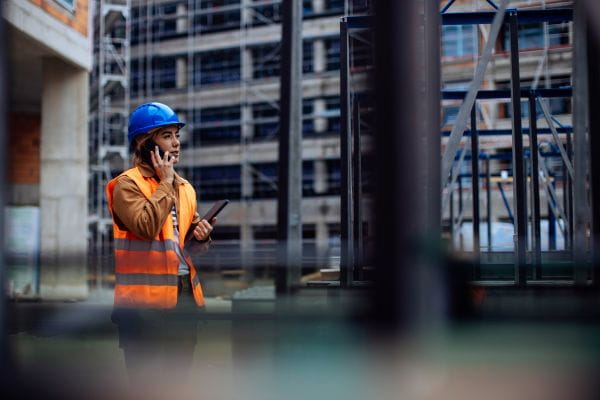
A new play explores the lives of migrant construction workers in the UK, using humour, real-life experiences and physical theatre to capture the banter, friendships and absurd moments that make life on site bearable, alongside the pressures that often go unseen. Ahead of the play’s premiere in London on 12-14 November, playwright Inna Cebotari explains how Three Little Pigs aims to add to the public debate about how best to support the wellbeing of construction workers.
Eliminating barriers in reporting: how conversational AI can unlock safety engagement
By Julian Taylor, ecoPortal on 04 October 2026
Online reporting systems that require lengthy and cumbersome form filling and typing can discourage workers from reporting safety incidents and concerns. However, AI-powered mobile apps that allow reporting simply by speaking can simplify and speed up the process, boosting reporting rates and overall staff engagement with safety systems and culture.

Why UK employers need to rethink recruitment, retention and support for older workers
By Orchie Bandyopadhyay on 04 October 2026
With workers over the age of 50 now comprising almost one third of the entire UK workforce, recruiting and retaining older workers is now core to the success of the economy. However, not all employers are offering what’s needed to retain and recruit older workers, and ageist attitudes, limited flexible working opportunities, and employment support that doesn’t fit with health, caring, or other responsibilities are leaving too many people locked out of the labour market.