

PPE designed to protect against hazards like chemicals can contribute to an increase in body heat and humidity inside the clothing, placing the wearer at increased risk of heat stress. However, advances in materials science, physiological modelling and testing methodologies mean employers can now make more informed decisions about how effectively protective garments support heat dissipation and moisture management – in turn potentially boosting PPE wear rates and wearer acceptance.
Features
Heat stress, PPE compliance and the science of comfort
By
on 30 July 2026
Personal protective equipment (PPE) is designed to keep workers safe. Yet in workplaces around the world, safety managers face an ongoing challenge: ensuring PPE is worn correctly, consistently and for the duration required.
It is often assumed that PPE non-compliance stems from poor safety culture, inadequate training or a lack of risk awareness. While these factors can play a role, they do not always explain why experienced workers who fully understand the hazards they face sometimes modify, misuse, or even remove protective equipment.
According to DuPont, one driver of this behaviour that is often overlooked is heat stress.
“Most workers don’t set out to take risks,” says Chloé Caux-Wetherell, EMEA marketing manager at DuPont Personal Protection. “But when people become physically uncomfortable, hot and fatigued, they start looking for ways to relieve that discomfort. Sometimes that can lead to behaviours that unintentionally compromise protection.”
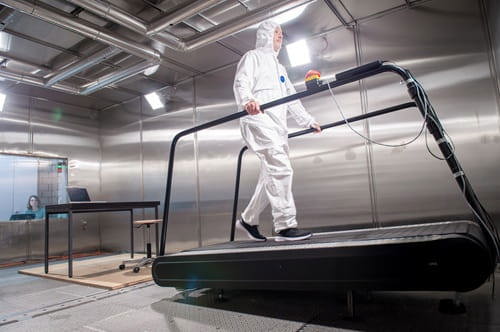 Physiological modelling, breathability testing and garment performance evaluation are providing a much clearer understanding of how protective clothing interacts with the body during use. Photograph: DuPont Personal Protection
As global temperatures continue to rise and heat exposure becomes a growing concern, understanding the relationship between heat stress, comfort and PPE compliance is becoming increasingly important.
Heat stress is more than a comfort issue
Workplace discussions around heat have traditionally focused primarily on comfort. Workers might complain about feeling too hot, so employers provide hydration, ventilation, and work-rest schedules.
However, growing evidence suggests that heat stress should be viewed as a safety issue rather than solely a wellbeing concern.
“Heat stress occurs when the body can no longer effectively regulate its temperature,” explains Aldjia Begriche, global application development leader at DuPont Personal Protection. “As physiological strain increases, the effects go far beyond feeling uncomfortable. Workers can experience fatigue, reduced concentration, slower reaction times and impaired decision-making.”
In safety-critical environments, these effects can have significant consequences. Whether operating machinery, handling chemicals, working at height or carrying out physically demanding tasks, worker safety relies on their ability to remain alert and make sound decisions throughout a shift.
“When people are exposed to excessive heat, cognitive performance can be affected,” says Begriche. “They may become less focused, more prone to mistakes, and less able to respond effectively to changing situations. That’s why heat stress should be considered a genuine workplace safety risk.”
Many industrial environments already expose workers to elevated temperatures through process heat, physical exertion or confined working conditions. Combined with more frequent periods of extreme weather, these conditions are placing greater emphasis on effective heat stress management.
For employers, managing heat stress is therefore becoming an increasingly important aspect of occupational safety.
When protection creates additional thermal burden
Protective clothing plays a critical role in safeguarding workers against chemical, biological and electrostatic hazards. However, PPE can also contribute to heat stress.
By its very nature, protective clothing creates a barrier between the worker and the environment. This can restrict airflow, limit moisture evaporation and reduce the body’s ability to dissipate heat.
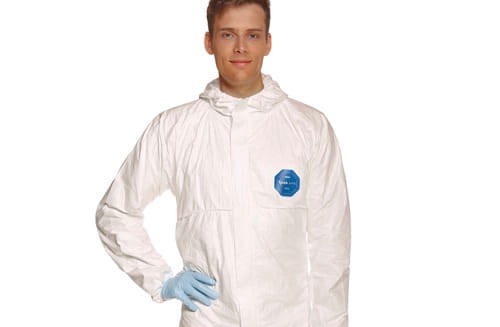 Photograph: DuPont Personal Protection
“Protective garments are essential, but they can also increase thermal burden,” says Begriche. “When heat and moisture become trapped within the clothing system, workers may experience greater physiological strain, particularly during physically demanding tasks or long shifts.”
As discomfort increases, workers may begin to alter how they wear their protective clothing. Garments may be partially opened, sleeves rolled up or wear times shortened. In some cases, workers may remove PPE altogether.
“The issue isn’t that workers suddenly stop understanding the risks,” says Caux-Wetherell.
“It’s that discomfort creates pressure. The hotter and more uncomfortable someone becomes, the greater the temptation to seek relief. That’s where organisations can begin to see a gap emerge between intended PPE use and actual PPE use.”
This is why the conversation around comfort is changing.
Why comfort is becoming a measurable safety factor
Until recently, comfort has been a subjective concept. One worker might describe a garment as comfortable, while another might disagree.
As a result, comfort has been viewed as a matter of personal preference rather than an objective performance characteristic. Now, advances in materials science, physiological modelling and testing methodologies are allowing comfort to be assessed in a far more objective way.
“The industry is beginning to recognise that comfort isn’t simply a matter of opinion,” says Caux-Wetherell. “Many of the factors that influence comfort can now be measured, analysed and compared using scientific methods.”
This shift towards comfort as a science gives safety professionals access to evidence-based criteria when selecting PPE. Rather than relying solely on wearer feedback, organisations can evaluate how effectively protective garments support heat dissipation and moisture management.
This allows comfort-related performance to be considered alongside more traditional measures such as protection, durability and chemical resistance.
“Ultimately, comfort affects how people interact with PPE,” says Caux-Wetherell. “If we can measure the factors that influence comfort, we can make better decisions about garment performance and potentially improve both safety outcomes and wearer acceptance.”
Understanding the role of breathability
One of the most important factors in this discussion is breathability. In the context of PPE, breathability refers to the ability of a material to allow heat and moisture vapour to escape from the body. This is critical because sweating is one of the body’s primary cooling mechanisms.
“When sweat can evaporate effectively, the body is better able to regulate its temperature efficiently,” explains Begriche. “When evaporation is restricted, thermal strain increases.”
Objective measures of breathability include water vapour resistance, commonly referred to as Ret. Ret values provide a means of evaluating how much resistance a material creates against the transfer of moisture vapour.
Lower Ret values generally indicate that moisture can escape more easily, helping to support thermoregulation.
“What’s important is that safety professionals now have access to measurable data,” says Begriche. “Instead of relying solely on subjective perceptions, they can compare products using recognised testing methodologies and make more informed decisions.”
This represents a significant evolution in how PPE performance is assessed. It also provides manufacturers with the insights they need to develop protective materials that better support thermoregulation without compromising safety performance.
Engineering comfort without compromise
For many years, developing chemical protective clothing involved a difficult compromise between protection, durability and comfort.
While manufacturers understood the challenge, their ability to quantify the relationship between breathability, thermal burden and wearer comfort was limited.
Today, advances in physiological modelling, breathability testing and garment performance evaluation are providing a much clearer understanding of how protective clothing interacts with the body during use. This is helping drive a new generation of materials engineered not only to protect against workplace hazards, but also to reduce the physiological burden associated with prolonged wear.
“It’s not enough to simply measure breathability,” says Caux-Wetherell. “The real challenge is using that understanding to develop materials that maintain the protection and durability workers need while helping them remain comfortable enough to wear PPE correctly throughout their shift.”
According to DuPont, this deeper understanding of heat stress and wearer physiology is enabling materials to be engineered around measurable comfort parameters rather than subjective perceptions alone. Rather than viewing comfort and protection as competing objectives, manufacturers can optimise both characteristics simultaneously.
For safety professionals, this has important implications. It suggests that the historic trade-off between protection and comfort can be overcome, opening new possibilities for improving both compliance and worker wellbeing.
The future of PPE selection
As understanding of heat stress continues to evolve, the role of comfort in PPE selection is becoming increasingly evidence-based.
That does not mean protection becomes less important. Rather, it means recognising that protection, compliance and comfort are closely connected.
“When workers are comfortable, they are more willing and able to wear PPE correctly for longer periods,” says Begriche. “That has obvious implications for both compliance and safety.”
For organisations reviewing their PPE strategies, the message is clear. Heat stress should not be viewed as a separate issue from protective clothing. Instead, it should be considered part of a broader evaluation of worker safety, physiological performance and risk management.
“Better data leads to better decisions,” concludes Caux-Wetherell. “As the industry continues to develop more sophisticated ways of measuring comfort and physiological burden, safety professionals will be better equipped to select PPE that supports both protection and worker wellbeing. Ultimately, that’s good for compliance, good for productivity and, most importantly, good for worker safety.”
More information about heat stress and PPE selection is available in the e-guide, Heat Stress in the Workplace: Rethinking Comfort as a Measurable Safety Factor, which is free to download from:
dupont.co.uk/personal-protection/dupont-tyvek-apx.html
Chloé Caux-Wetherell is EMEA marketing manager at DuPont Personal Protection
Aldjia Begriche is Global application development leader at DuPont Personal Protection
Tyvek® APX™ fabric: an industry first
Launched in 2025, DuPont™ Tyvek® APX™ fabric is described as the first extremely breathable chemical protective fabric to combine high levels of protection, durability and wearer comfort. Its development was informed by physiological modelling, biometric monitoring and human wear trials, reflecting the industry’s growing focus on measurable comfort. Information about Tyvek® APX™ fabric and wear trials can be found here: tyvek.co.uk/apx
FEATURES

Who is the wolf in your life? Listening to the people behind the hard hat
By Inna Cebotari, Kinth Square on 02 October 2026
A new play explores the lives of migrant construction workers in the UK, using humour, real-life experiences and physical theatre to capture the banter, friendships and absurd moments that make life on site bearable, alongside the pressures that often go unseen. Ahead of the play’s premiere in London on 12-14 November, playwright Inna Cebotari explains how Three Little Pigs aims to add to the public debate about how best to support the wellbeing of construction workers.

Eliminating barriers in reporting: how conversational AI can unlock safety engagement
By Julian Taylor, ecoPortal on 04 October 2026
Online reporting systems that require lengthy and cumbersome form filling and typing can discourage workers from reporting safety incidents and concerns. However, AI-powered mobile apps that allow reporting simply by speaking can simplify and speed up the process, boosting reporting rates and overall staff engagement with safety systems and culture.

Why UK employers need to rethink recruitment, retention and support for older workers
By Orchie Bandyopadhyay on 04 October 2026
With workers over the age of 50 now comprising almost one third of the entire UK workforce, recruiting and retaining older workers is now core to the success of the economy. However, not all employers are offering what’s needed to retain and recruit older workers, and ageist attitudes, limited flexible working opportunities, and employment support that doesn’t fit with health, caring, or other responsibilities are leaving too many people locked out of the labour market.