
The need to act on climate change is all the more urgent as the gas and economic crises take hold. If we are to deliver the UK Government’s 2050 Net Zero target, we also need to radically change our behaviour, systems processes and lifestyles.
Opinion
It’s time to act on Net Zero
By
on 01 June 2022
As pressure mounts on government to act on the cost-of-living crisis, the long-term answers are inextricably linked to investment in a Net Zero future. The time for talking and targets has passed, the focus needs to turn to delivery. In late 2021, following the UN COP26 Conference in Glasgow, the Net Zero All Party Parliamentary Group (NZAPPG) published our Net Zero Road Map calling for measures that will usher in changes needed to get to net zero by or before 2050.
 Alex Sobel MP is Labour and Co-operative Member of Parliament for Leeds North West. Photograph: UK Parliament
Our NZAPPG roadmap sets out how the UK can go faster to achieve the post-pandemic green recovery and what can be done – post COP26 – to get to Net Zero; achieve a green economy; sustainable cities and regions whilst decarbonising hard to abate sectors.
In our NZ roadmap report, we consider the scale or the challenges ahead; remembering UN secretary general António Guterres calls for urgent action in the 2021 IPCC report, the need to tackle climate change is “a code red for humanity. The alarm bells are deafening, and the evidence is irrefutable” and “we must act decisively now, to keep 1.5 alive”. The NZAPPG is concerned that many in government and wider society do not yet appreciate the scale of the challenges and the level of change coming.
There is incredible potential for win-win solutions, notably in this time of crisis, we can increase energy independence, food security and improve public health and air quality. But there is an increasing risk of public backlash against poorly designed and implemented climate policies, as illustrated by the ongoing energy crisis and resurgence of fossil fuels around the world.
Preparing for a green landscape
The NZAPPG report provides a roadmap to lead the UK government on a path to successful policy interventions. The government must make up-skilling the workforce a priority to prepare industries and sectors for a green, post-Brexit, post-pandemic landscape.
The skills gap is a threat to the delivery of a number of key technologies required to decarbonisation and achievement of legally binding targets. In order to transform heat with a national heat pump programme, build transport infrastructure, implement hydrogen solutions, prepare for major shifts in aviation, shipping and heavy industries the skills gap needs to shrink significantly.
Skills and innovation barriers will only be overcome with investment in people, projects and technology. Private capital must be leveraged around the regions on a huge range of initiatives. The barriers to moving capital have been built overtime and exacerbated by current circumstances. Years of policy uncertainty and changing market conditions worsened by Brexit and Covid have held investment at bay. Businesses are now ready to invest and can see the case for decarbonisation and acting on climate change but need both Government leadership and regulatory intervention.
Regional investment will bring desperately needed finance. This investment must come in concert with greater powers. Local leaders and communities must be empowered to lead in their own neighbourhoods, making greener, healthier choices, ensuring sustainability and decarbonisation lead decision making and planning processes.
Coordinated communication and targeted action at local, regional and central government is essential to maintain community support. Transparency is fundamental: policies must be effective, as well as being ‘seen’ to be effective, in delivering Net Zero. Our Net Zero Roadmap demonstrates that there is a concern that government has failed to engage the public on the long-term challenges.
The 2021 Net Zero Roadmap and the Net Zero APPG’s earlier Decarbonisation Report reflect the scale of the challenge before us and focus on a set of deliverable short and long-term actions that the UK needs to take. In addition to immediate emission reductions, planning and investment needed the government must address the “final 25 per cent” challenge of emissions in hard-to-abate sectors if it is to ensure a smooth, just and socially inclusive transition.
Achieving Net Zero will not be without its challenges, but with bold leadership and a strategic vision, the UK can scale up and lead the way to Net Zero. Government must put in place a delivery plan to achieve our collective prosperity and resilience. Now is the time to act.
Alex Sobel MP is chair of the Net Zero All Party Parliamentary Group:
OPINION

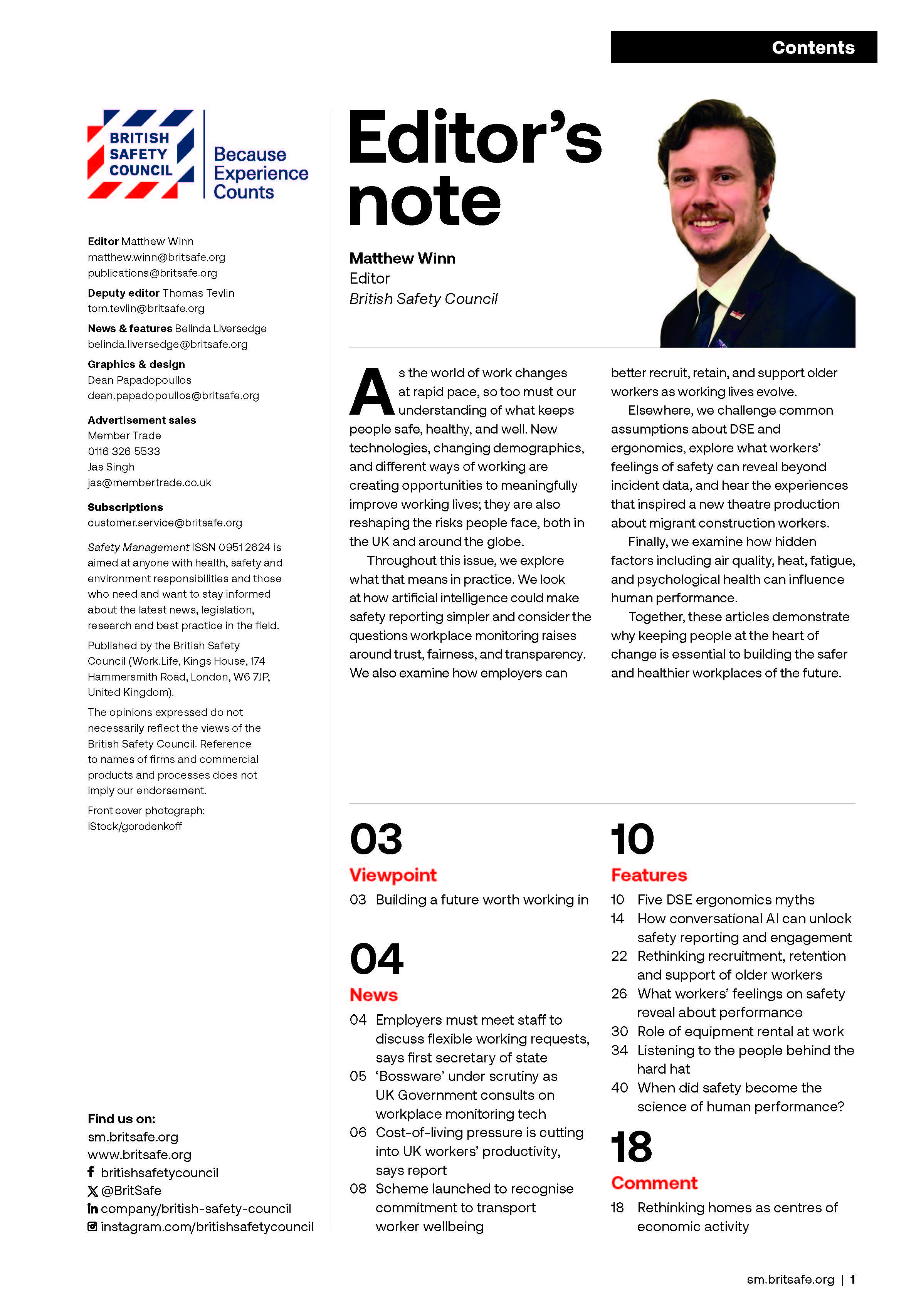
Building a future worth working in
By Mike Robinson FCA, British Safety Council CEO on 12 October 2026
It’s easy to become myopic about the future of work. Take a quick look at the world today and the signs can seem discouraging: political instability, economic volatility, the accelerating disruption posed by AI and climate change. Together, these factors paint a picture of uncertainty that can make our belief in progress seem naïve and tempt us into believing that the future can be no better than the past, that our best days are now behind us. That would be a profound failure of imagination.

Rethinking homes as centres of economic activity (amongst other things)
By Andy Lake, Flexibility.co.uk on 08 October 2026
The decentralisation of work away from fixed workplaces, the rise of AI and demographic changes are creating new opportunities for people to carry out ‘hands-on’ work in the home, such as production of fashion, textiles, food and drink, and delivery of health services and therapies. However, our existing housing stock is not designed to accommodate such functions, so it’s essential that future town planning creates homes that support different kinds of enterprise, both to support business success and the wellbeing of these new home-based workers.
Learning that saves lives
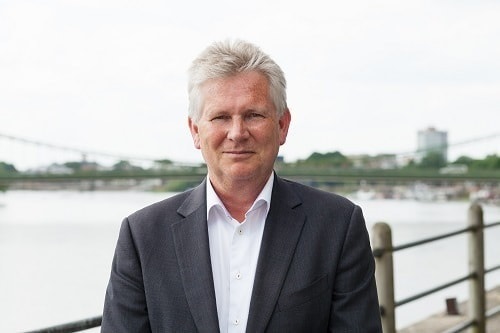
By Mike Robinson, chief executive, British Safety Council on 11 September 2026
Success can sometimes be a problem. The better we become at preventing incidents, the harder it can be to see what is actually preventing them.