

People working at height may be tempted to take shortcuts that can put them in serious danger, so it’s essential to choose access equipment that makes it easier and quicker to complete the task safely, rather than relying on workers to follow instructions from one-off training sessions.
Features
Why training alone won’t fix the fall-from-height plateau
By
on 21 September 2026
Falls from height have been the leading cause of workplace deaths in Great Britain for over 20 years. That is despite two decades of investment in training and guidance. The full scale of harm caused by falls from height is also far wider than the fatality figures suggest. Around 59,000 injuries are currently formally recorded under RIDDOR each year across all injury types, but the Health and Safety Executive (HSE) itself estimates this captures only about half of what is reportable. For researchers and policymakers, that gap between recorded and actual harm is arguably as significant as the headline fatality figure, since it limits how precisely resources and regulation can be targeted. The statistics listed at the end of this article set out the wider picture.
Why the dial isn’t moving
The pattern behind those figures is easier to see at task level. Take a facilities engineer on the fifth job of the day, for example. Imagine they are changing a light fitting in a corridor that was mopped an hour earlier and is still faintly damp underfoot.
The first job of the morning involved a proper pre-use check and a level, dry surface. Later in the day, another routine task presents a different set of conditions. The floor is still slightly damp. The correct response is to stop, make the area safe or retrieve equipment suitable for the conditions. Yet there’s a temptation to think the job will take only two minutes, the surface looks dry enough, and any delay feels disproportionate.
This is not necessarily carelessness. Repetition, fatigue and time pressure can all affect judgement, particularly when the safest option is also the least convenient. Similar decisions are made every day on construction sites, in warehouses, schools and offices. Training remains essential, but the task, equipment and working environment must also be designed to reduce the consequences of predictable human error.
Where training runs out of road
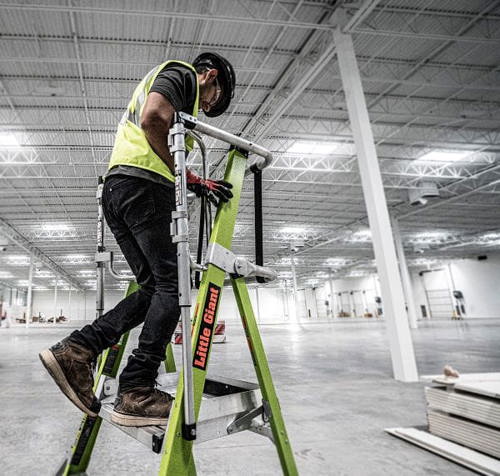
In ladder incidents, familiar failures include movement at the base, overreaching and using equipment that is unsuitable for the task or conditions. All three are covered in detail in every accredited training course and toolbox talk across the sector.
HSE’s own human factors guidance is blunt about this: even trained, experienced people make mistakes, and fatigue, unfamiliar surroundings and repetitive short-duration tasks all erode judgement over a long shift. A system that depends on everyone making the right call every time, across thousands of tasks, will eventually produce the wrong judgement call. The implication is that suitable training should be paired with equipment and working environments that reduce how often good judgement is required.
Designing around the reality of human behaviour
This is where the more useful conversation is taking place. Can working at height be avoided? If not, what will prevent a fall or minimise its consequences? To achieve this, a growing number of organisations are shifting from equipment that demands precise, correct use every time to equipment that is inherently more forgiving: platforms with a larger footprint, built-in levelling for uneven ground, and less need to reposition mid-task.
None of this requires a worker to remember more; it makes the safe method easier to follow.
A range of height access equipment is available to purchase or hire, and reputable suppliers provide clear operating instructions and training for both operators and the people overseeing their use, such as safety managers.
There is also a demographic dimension. Around a third of workers killed are over 60, and the wider workforce is ageing across most trades. Equipment that reduces physical strain and does not require the same balance and reach as a traditional ladder matters more as that shift continues.
Specifying equipment that suits an ageing, physically varied workforce is no longer a niche consideration. It belongs in the same procurement conversation as load rating and compliance.
The overlooked risk in short-duration work
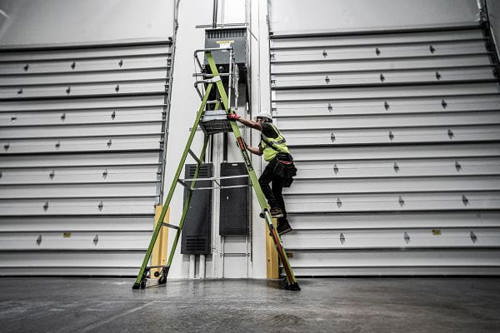
Short, low-level maintenance tasks, carried out by facilities and building services teams rather than construction crews, make up a large share of all work at height. These are exactly the jobs where that pattern plays out: the task is brief, the setup feels disproportionate, and improvisation becomes tempting. Equipment that can be deployed quickly and stands securely without careful positioning removes that temptation, rather than relying on the worker to resist it.
HSE and the Ladder Association already publish decision frameworks for matching work-at-height equipment to the right tasks. The gap is rarely a missing framework; it is whether the same questions get asked consistently, for every job, not just during induction or when equipment is first issued.
The regulatory picture
Just as individual judgement cannot catch every unsafe setup, external enforcement cannot catch every unsafe product either, and that capacity is under real strain. The All-Party Parliamentary Group on Occupational Safety and Health says HSE funding has been cut by roughly half over the past decade, limiting proactive inspections.
The Product Regulation and Metrology Act 2025 creates an opportunity to introduce clearer product-safety duties for online marketplaces. This will hopefully include non-compliant ladders sold through third-party sellers, but no law can catch every unsafe product before it reaches a worksite. That makes the safeguard within a buyer’s control more important: verifying the compliance of work-at-height access equipment at the point of purchase, rather than assuming a supplier’s claims are true or hoping enforcement will catch what slips through.
What this means in practice
If verified compliance is the safeguard within reach, three shifts turn that from a principle into practice for safety managers and procurement teams:
Three practical steps
- Build task-specific selection into pre-task briefings, not just induction. Ask those carrying out and managing the work to consider how long the job will take and whether the surface is level, every time, not only when the equipment is first issued.
- Treat work-at-height access equipment procurement as a safety decision, not a price decision. Specify the applicable current standard for the specific type of equipment and, where classifications exist, select ‘Professional for workplace use’. Check the Ladder Association’s standards guide. Ask for evidence relating to the exact model being purchased. Where testing or third-party certification is claimed, verify the issuing body, scope and current validity.
- Formal, task-appropriate training remains essential. Reinforce this with short refreshers delivered close to the point of use.
Where this leaves the industry
Work at height sits at an unusual moment. Regulation is tightening, the workforce doing this work is ageing, and short, low-level tasks are an established part of facility maintenance, warehousing, fit-out and many other work-at-height operations. What hasn’t shifted in two decades is the underlying pattern: the same avoidable failures, repeated job-after-job, and falls remaining the single leading killer, even as the raw fatality numbers have slowly improved. Asking people to try harder is unlikely to move that pattern much further. The more productive question is what the equipment, the processes and the working environment are asking of the people using them.
The scale of the problem
- 31 fatal falls were recorded among 126 worker deaths in HSE’s 2025/26 reporting year (published 1 July 2026), the most recent data available.
- HSE’s Labour Force Survey estimates up to 44,000 workers were injured in falls from height in 2024/25, the latest year for which this figure has been published.
- That compares with around 59,000 injuries formally recorded under RIDDOR across all injury types, which HSE itself believes captures only about half of reportable incidents.
- Falls from height accounted for around half of all construction fatalities over the past five years.
- Workers aged 60 and over made up around a third of all workplace deaths in 2025/26, despite being just 12% of the workforce.
- The total cost of falls from height to the UK economy was estimated at over £956 million in 2023/24 (No Falls Foundation).
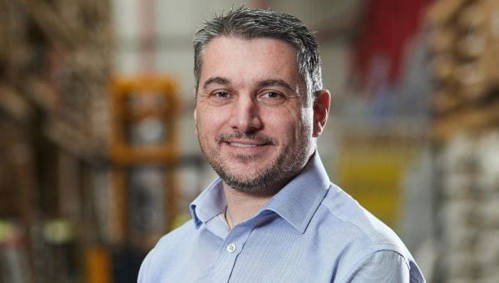
Francis Camilleri is technical director at TB Davies, a Cardiff-based ladder manufacturer with over 80 years’ heritage in access equipment. He chairs the Ladder Association Technical Committee and chairs the BSI B512 Committee on Ladder Standards. For safety guidance and training resources, visit:
ladderassociation.org.uk
For more information, visit:
tbdavies.co.uk
Connect with Francis Camilleri on LinkedIn.
FEATURES

Who is the wolf in your life? Listening to the people behind the hard hat
By Inna Cebotari, Kinth Square on 02 October 2026
A new play explores the lives of migrant construction workers in the UK, using humour, real-life experiences and physical theatre to capture the banter, friendships and absurd moments that make life on site bearable, alongside the pressures that often go unseen. Ahead of the play’s premiere in London on 12-14 November, playwright Inna Cebotari explains how Three Little Pigs aims to add to the public debate about how best to support the wellbeing of construction workers.
Eliminating barriers in reporting: how conversational AI can unlock safety engagement
By Julian Taylor, ecoPortal on 04 October 2026
Online reporting systems that require lengthy and cumbersome form filling and typing can discourage workers from reporting safety incidents and concerns. However, AI-powered mobile apps that allow reporting simply by speaking can simplify and speed up the process, boosting reporting rates and overall staff engagement with safety systems and culture.

Why UK employers need to rethink recruitment, retention and support for older workers
By Orchie Bandyopadhyay on 04 October 2026
With workers over the age of 50 now comprising almost one third of the entire UK workforce, recruiting and retaining older workers is now core to the success of the economy. However, not all employers are offering what’s needed to retain and recruit older workers, and ageist attitudes, limited flexible working opportunities, and employment support that doesn’t fit with health, caring, or other responsibilities are leaving too many people locked out of the labour market.