
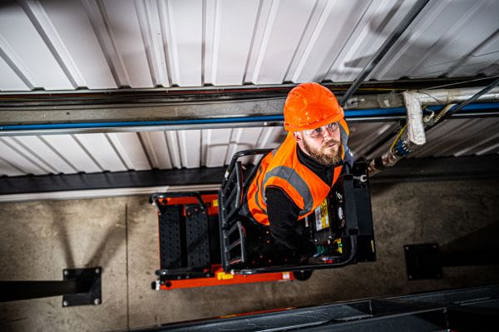
Low-level access equipment like powered lifts can help make work at height safer by providing a secure, enclosed working platform, but they can also bring other benefits, such as avoiding the need for awkward stretching to reach work areas, which helps to prevent musculoskeletal injuries.
Features
Why the future of low-level access starts with rethinking old habits
By
on 22 September 2026
Across construction, facilities management, maintenance, and fit‑out projects, working at height, particularly at low levels, is a routine part of daily operations. For decades, organisations have relied on a mix of access methods, including ladders, podiums, scaffold, and platforms, each chosen according to the task at hand.
However, as safety culture evolves and employers place greater emphasis on worker wellbeing, many are now taking a fresh look at the options available. Modern low-level access (LLA) solutions are part of this rethink. Not necessarily to replace traditional methods, but to give decision makers and users more choice, more control, and more opportunities to work in ways that support long term health and productivity.
The scale of the issue
Low level access tasks may feel like a standard part of daily operations, but they carry significant risk. UK data continues to show the impact.
Over the last decade, an estimated 425,000 non-fatal falls from height have occurred and around 37,000 workers self-reported a fall-related injury in the last annual period. Non-fatal falls from height result in approximately 416,000 lost working days per year, costing the economy around £687 million in 2024/25. Falls from height can also prove fatal, and are the leading cause of death among workers, with 31 fatalities in 2025/26.
At the same time, musculoskeletal disorders (MSDs), often linked to repetitive reaching, constrained posture, and manual handling, affected more than 511,000 workers in 2024/25 and led to 7.1 million lost working days. These strains have great potential to occur in environments where workers regularly access ceilings, fixtures or plant equipment at height.
No particular type of equipment is to blame for these statistics. The causes may be multi-faceted. However, it is important to recognise that task intensity, frequency and equipment ergonomics matter when it comes to protecting people. Modern solutions such as powered access equipment may help reduce the strain on people performing these tasks day-after-day, and can be useful additions to equipment fleets.
What is low-level access?
When talking about low-level access, this typically refers to a working height of 5 metres and below. This may not sound like a high elevation when compared to equipment on the market that lifts more than 10 times that.
However, this constitutes working at height for the purposes of safety. The Health and Safety Executive (HSE) states that working at height means working anywhere where, if no precautions are taken, a worker could fall a distance liable to cause personal injury.
Falls from height are not always ‘freak accidents’. They more often are a symptom of a failure to take the right measures, whether that is training, equipment choice or operator behaviour. Falls tend to be predictable outcomes of predictable habits, like overreaching, carrying tools while climbing, or working one‑handed to maintain balance.
HSE makes its position clear. As much work as possible should be done from the ground, and advises organisations to follow a simple hierarchy of control for work at height:
- Avoid working at height where possible
- Prevent falls using appropriate equipment
- Minimise the distance or consequences of a fall if one occurs.
Modern LLA solutions can support this hierarchy by providing stable, secure enclosed platforms, reducing the need to overreach or adopt awkward positions, and eliminating the need to climb in many scenarios. For instance, choosing modern LLA solutions may help employers and site managers to take a more controlled, consistent approach to repeated routines. LLA offers businesses additional routes to support compliance efforts, support workforce protection and increase flexibility in daily operations.
- Designed for people, not just productivity
Today’s workforce not only expects equipment that keeps them safe, but also supports comfort, efficiency and long‑term health. Modern low‑level access platforms have been designed with these expectations in mind. - Designed with ergonomics in mind – LLA solutions provide space to support natural working postures, which may help reduce shoulder, wrist and back strain common in overhead and repetitive work.
- A stable platform for focused working – guardrails and enclosed platforms are designed to provide collective fall protection, supporting workers to concentrate on the job rather than maintaining balance.
- Reduced climbing requirements – many platforms are designed to reduce the need for climbing, which may help reduce the strain associated with repeated ascent and descent during busy shifts.
- Space for tools and materials – having equipment at platform height can help reduce unnecessary reaching or improvisation and supports more organised, efficient work.

Productivity may therefore be influenced by good design. When a worker feels comfortable, supported and confident at height, the quality and consistency of their tasks may improve naturally.
None of this diminishes the ongoing role that ladders, scaffolds or podiums have in many workplaces. Instead, it demonstrates how a broader selection of tools helps employers choose the right method for the right task, taking account of ergonomics, duration, reach and frequency.
It helps directors, facilities management teams and health and safety professionals to create a culture that puts people first, with ways to select equipment that helps demonstrate strong risk management, aid long-term workforce wellbeing and optimise productivity. Equipment choice becomes not simply a compliance decision, but a strategic one.
Confident to choose the best option
Changing safety culture must stem from the top. However, equipment operators have a vital role to play as well. Every worker should feel empowered to ask questions about how they complete their tasks. Installers, electricians, maintenance technicians, or anyone working at height, need equipment that supports them, protects them and enables them to produce their best work. Employees should have the confidence to ask: “Is this the best way to work at height today?” Having a choice of solutions to match the task, operator, or environment is key.
Smart future solutions
Work at height, especially at low levels, is not going away, but the way organisations approach it continues to evolve. With a wider range of access methods, including modern low‑level access platforms, employers can support teams with equipment that fits today’s expectations of safety, ergonomics and productivity.
This is not about rejecting traditional methods; it is about expanding what’s possible and reducing avoidable risks. Because safety shouldn’t rely on luck, and people deserve better.
For more information see:
jlg.com
linkedin.com/company/jlg-industries
Samuel Butterworth is business development manager UK & IE - LLA at JLG Power Towers.
FEATURES
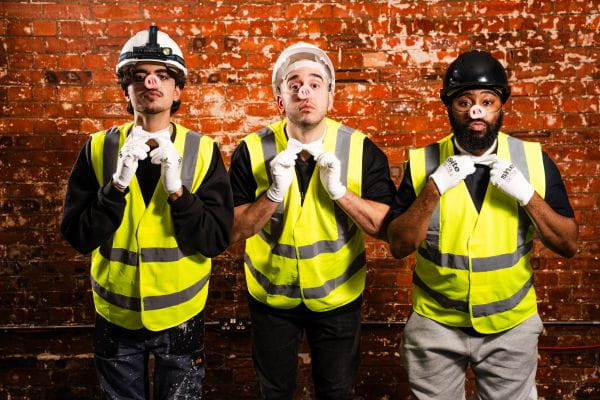
Who is the wolf in your life? Listening to the people behind the hard hat
By Inna Cebotari, Kinth Square on 02 October 2026
A new play explores the lives of migrant construction workers in the UK, using humour, real-life experiences and physical theatre to capture the banter, friendships and absurd moments that make life on site bearable, alongside the pressures that often go unseen. Ahead of the play’s premiere in London on 12-14 November, playwright Inna Cebotari explains how Three Little Pigs aims to add to the public debate about how best to support the wellbeing of construction workers.
Eliminating barriers in reporting: how conversational AI can unlock safety engagement
By Julian Taylor, ecoPortal on 04 October 2026
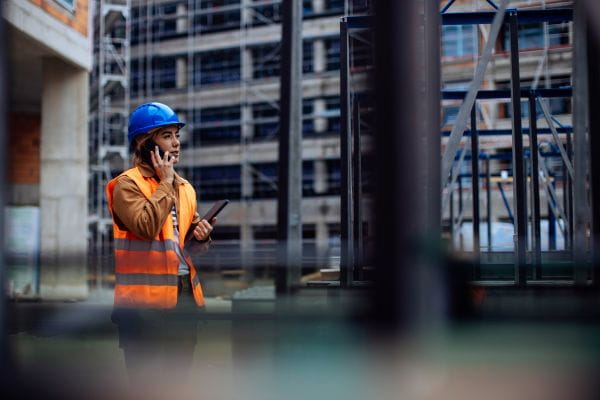
Online reporting systems that require lengthy and cumbersome form filling and typing can discourage workers from reporting safety incidents and concerns. However, AI-powered mobile apps that allow reporting simply by speaking can simplify and speed up the process, boosting reporting rates and overall staff engagement with safety systems and culture.

Why UK employers need to rethink recruitment, retention and support for older workers
By Orchie Bandyopadhyay on 04 October 2026
With workers over the age of 50 now comprising almost one third of the entire UK workforce, recruiting and retaining older workers is now core to the success of the economy. However, not all employers are offering what’s needed to retain and recruit older workers, and ageist attitudes, limited flexible working opportunities, and employment support that doesn’t fit with health, caring, or other responsibilities are leaving too many people locked out of the labour market.