
Health and safety professionals are uniquely placed to help businesses meet ever-increasing sustainability challenges, but a new survey suggests they need to rapidly expand their knowledge of the relevant regulations, risks and technical practices if they are to effect real change within organisations.
Opinion
What health and safety professionals really know about sustainability
By
on 17 March 2026
Health and safety has always evolved in response to risk. Today, that risk landscape is inseparable from sustainability. Climate change, resource scarcity, biodiversity loss, supply chain disruption and regulatory reform are no longer peripheral concerns. They are shaping operational resilience, governance expectations and professional accountability.
How prepared is the health and safety profession to respond?
Last year, the Institute of Sustainability and Environmental Professionals (ISEP) launched the Green Skills for Health and Safety Assessment – a self-assessment quiz designed to benchmark sustainability capability across four domains: Knowledge, Technical Skills, Behaviours and Competencies. The response was significant, with 1,765 professionals participating. The findings, which we will present in full at this year’s Health and Safety Event at the NEC Birmingham on 28–30 April, offer a revealing snapshot of a profession in transition.
This year, we will run the assessment again. The intention is not just to compare data points, but to track movement across the sector: are we building confidence, depth and leadership in sustainability – or simply increasing awareness?
 Lisa Pool: "The health and safety leader of the future must be as comfortable interpreting carbon metrics as incident statistics."
Knowledge: awareness is widespread, expertise less so
Understanding sustainability standards, regulation, emerging technologies and their implications for operational practice is now fundamental to effective health and safety leadership.
Among 1,602 respondents to the Knowledge section:
- 31 per cent scored High
- 61 per cent scored Medium
- 8 per cent scored Low.
The headline is neither alarming nor reassuring. Most professionals possess working knowledge, but fewer than one in three demonstrate the depth of understanding required to interpret regulatory shifts, anticipate risk exposure or influence strategic decision-making.
This gap between familiarity and fluency has practical consequences. Without strong knowledge foundations, opportunities for innovation can be missed. Compliance may become reactive rather than strategic. Influence at board level may weaken.
At the same time, the data shows strong potential. A majority already sit within reach of high proficiency. Targeted professional development – structured learning, applied casework, standards literacy and systems thinking – can convert “medium” capability into confident expertise.
Technical skills: a workforce mid-transition
If knowledge underpins credibility, technical skill is what enables delivery.
Carbon accounting, waste management optimisation, ecological protection, environmental modelling and data interpretation are no longer niche specialisms. They are increasingly integrated into operational safety, procurement decisions, estates management, and supply chain assurance.
Of the 1,602 respondents:
- 23 per cent rated themselves High in key technical skills
- 67 per cent Medium
- 10 per cent Low.
This distribution reflects a profession in development. Familiarity with green technical practices is growing, yet true mastery remains limited.
Organisations setting net zero targets or embedding environmental management systems require practitioners who can interpret carbon data, interrogate lifecycle impacts, challenge inefficient processes, and translate sustainability commitments into operational controls.
The predominance of ‘medium’ ratings suggests that many professionals have begun acquiring technical literacy but lack applied depth. That presents both risk and opportunity; those who invest now in strengthening technical sustainability capability will be positioned to direct change, as opposed to just supporting it.
Behaviours: commitment is not the problem
Encouragingly, the Behaviours category tells a different story.
Participants were asked to assess their willingness to champion sustainability, lead by example, and adhere to environmental management system principles:
- 58 per cent scored High
- 37 per cent Medium
- 4 per cent Low.
Commitment is visible in this area. Many professionals see sustainability as integral to their role and are actively modelling responsible behaviours.
However, behavioural confidence without technical authority can create frustration. Professionals may be motivated to drive change but constrained by limited tools, data fluency, or organisational leverage.
Embedding sustainability requires empowered individuals operating within supportive governance frameworks, backed by credible expertise – not just passion. Culture is a great springboard to progress, but capability is what sustains it long-term.
 Many professionals see sustainability as integral to their role and are actively modelling responsible behaviours. Photograph: iStock
Competencies: the leadership threshold
Competency goes beyond knowledge and skill. It’s about the ability to design policy, drive operational improvement, uphold legal and ethical standards, and continuously optimise resource use.
In this category:
- 35 per cent rated themselves High
- 57 per cent Medium
- 8 per cent Low.
Only a small minority feel underprepared, which signals widespread recognition of sustainability’s importance. Yet with more than half positioned at medium level, there is a substantial cohort who may understand expectations, but lack the confidence or structured experience to lead organisation-wide integration.
The movement from medium to high competency is where organisational transformation happens. It is also where professional identity shifts, from compliance manager to strategic adviser.
As environmental, social and governance (ESG) scrutiny intensifies, health and safety professionals are uniquely placed to influence risk management, operational resilience and workforce engagement. But that influence depends on demonstrable sustainability competence.
What happens next?
Each participant in the assessment receives tailored guidance, identifying learning pathways and development priorities aligned to weaker areas. This personalised feedback model reflects ISEP’s broader position: sustainable progress is achieved through structured skills development, not aspiration alone.
The data from last year provides a baseline.
The reassessment this year will indicate whether interventions, training, and growing regulatory focus are translating into measurable capability gains.
For the profession, this is an important moment. Sustainability has moved from a parallel discipline to being integrated into how risk is defined, mitigated and reported. The health and safety leader of the future must be as comfortable interpreting carbon metrics as incident statistics, and as fluent in environmental governance, as in occupational standards.
ISEP’s role is to support that evolution – through professional training, standards alignment, competency frameworks and practical tools that convert awareness into authority.
We invite Safety Management readers to take the assessment, visit us at the Health and Safety Event, and engage in the conversation about where the profession stands and where it needs to go next.
To take the quiz, visit:
isepglobal.scoreapp.com
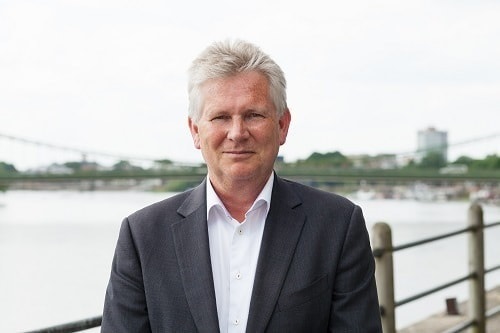
Lisa Pool is Head of marketing at the Institute of Sustainability and Environmental Professionals (ISEP)
OPINION
Learning that saves lives
By Mike Robinson, chief executive, British Safety Council on 11 September 2026
Success can sometimes be a problem. The better we become at preventing incidents, the harder it can be to see what is actually preventing them.

Migraine in work: a test of the Government’s plans to Keep Britain Working
By Rob Music, The Migraine Trust on 07 September 2026
Migraine can have a profound, and often avoidable, impact on people’s working lives and careers. The Government’s growing focus on workplace health offers an important opportunity to change this, but only if this common, often disabling and frequently invisible neurological condition is properly understood and addressed by Government, the NHS and employers.

Noise risk and multi-track enforcement: what EHS managers need to know
By Emma Tattersdill, Bexley Beaumont law firm on 17 August 2026
Noise nuisance from an industrial or commercial site can result in costly and time-consuming legal action from regulators and neighbours, but there are practical ways of ensuring noise levels do not exceed acceptable limits and trigger complaints from nearby businesses and residents.