
With England facing a 6 billion litres per day water supply shortfall by 2055 and the water sector undergoing its biggest reform since privatisation, business has an essential role in demand and efficiency to ensure resilient future supplies.
Opinion
Water sector reform and why efficiency is key to ensuring resilient business supplies
By
on 17 March 2026
Water is essential for staff health and wellbeing, business operations, development, and growth, but demand, population growth, and climate change mean many areas are experiencing water shortages.
88 per cent of businesses are located in areas projected to have a supply deficit by 2030. Demand management and water efficiency by businesses are key to provide headroom in local supplies and ensure enough is available for communities, the environment, and the economy to thrive.
Waterwise, the leading independent voice for water efficiency, has been analysing the UK and Welsh Government’s proposals for water sector reform. In January, the UK Government published a New Vision for Water White Paper setting out its plans to reform the water sector and wider water system.
This was followed by the Welsh Government’s Green Paper: Shaping the Future of Water Governance in Wales, which is a consultation on proposals open until the 7th April 2026 (water is a devolved matter).
Having long advocated for clearer strategic direction to close the supply/demand gap, we welcome commitments by both Governments to set long-term 25-year priorities for water supply and the water environment, and create regulators in each nation focused on outcomes rather than process.
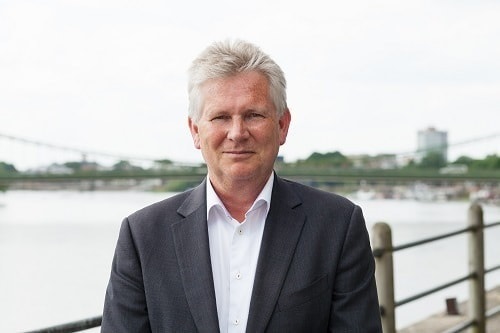
 Tamara Walters: "Waterwise sees the current water sector reforms by the UK and Welsh Governments as a landmark opportunity for better water efficiency."
Critical stakeholders
Non-household users are critical stakeholders in their local water supply and environment, so we are particularly pleased with plans to involve a greater range of sectors in the water resource planning process. Creating space for collaboration across sectors will be essential to delivering a meaningful demand reduction. Through our Waterwise membership network, we already bring together businesses, water companies, and public sector organisations to share insight and accelerate action on water efficiency.
We called for greater support for non-household customers through tariffs to reduce consumption. Both governments plan to explore incentives to adopt water efficiency via tariffs such as removing falling block tariffs (which makes water cheaper the more businesses use), and bringing in rising block tariffs (which work in reverse).
The non-household community have long been leaders on water reuse. The UK Water Reuse Association has stated that incorporating water reuse in all new homes and commercial properties between 2026 and 2030 could cover 20 per cent of the national shortfall.
The UK Government plans to look at ways to increase reuse and rainwater management in large non-household developments and large water users, and will set up a non-household reuse customer journey group to enable it to understand how it can support businesses, commercial and public sector buildings to adopt reuse.
The Welsh Government intends to review planning guidance, regulatory frameworks and investment programmes to enable adoption of reuse at scale, and will be exploring how to support increased harvesting, reuse and recycling.
Water Efficiency Label
A Mandatory Water Efficiency Label for the UK has been a key piece of work for Waterwise for many years, and could save over 1.5 billion litres per day by 2050 and help drive sustainable water use across the country.
The UK Government has reaffirmed its commitment to roll this out and we expect water fittings and appliances – for example, toilets, sinks, dishwashers etc – to be sold with new water efficiency labels by the end of the year.
The business community will be key to its success and raising customer awareness, and we hope they will be pioneers in using it to make replacement decisions across their own estates. Independent recognition, such as Waterwise’s Checkmark Award, can also help organisations demonstrate leadership and credible commitment as they adopt higher efficiency standards across their buildings and operations.
Smart meters can offer many benefits to businesses including accurate billing, leak detection, and enabling analysis of water savings after business changes or efficiency interventions. They also crucially help water companies forecast demand and ensure supplies. We would like to see stronger commitments from both governments to making this technology available to all businesses and non-domestic customers.
Waterwise sees the current water sector reforms by the UK and Welsh Governments as a landmark opportunity for all sectors to be supported to implement and mainstream the widespread water efficiency and reuse measures needed to use water responsibly and tackle water scarcity.
 Water is essential for staff health and wellbeing, business operations, development, and growth. Illustration: iStock
We look forward to more detail as the UK and Welsh Governments produce Transition Plans and the legislation needed to put changes in place.
Waterwise will continue to work with both governments and our partners to advocate for ambitious reforms which ensure water efficiency is at the heart of a fair, sustainable, and resilient water system.
Waterwise is here to support organisations navigating this changing landscape.
Alongside our policy and advocacy work, we offer membership packages, sponsorship opportunities, various training options as well as webinars on water efficiency, and our Checkmark Award to recognise and celebrate water efficiency excellence in organisations’ buildings.
For more information on water efficiency and the work of Waterwise, see:
waterwise.org.uk
Tamara Walters is Policy Manager at Waterwise

OPINION
Learning that saves lives
By Mike Robinson, chief executive, British Safety Council on 11 September 2026
Success can sometimes be a problem. The better we become at preventing incidents, the harder it can be to see what is actually preventing them.

Migraine in work: a test of the Government’s plans to Keep Britain Working
By Rob Music, The Migraine Trust on 07 September 2026
Migraine can have a profound, and often avoidable, impact on people’s working lives and careers. The Government’s growing focus on workplace health offers an important opportunity to change this, but only if this common, often disabling and frequently invisible neurological condition is properly understood and addressed by Government, the NHS and employers.

Noise risk and multi-track enforcement: what EHS managers need to know
By Emma Tattersdill, Bexley Beaumont law firm on 17 August 2026
Noise nuisance from an industrial or commercial site can result in costly and time-consuming legal action from regulators and neighbours, but there are practical ways of ensuring noise levels do not exceed acceptable limits and trigger complaints from nearby businesses and residents.