
There are an estimated 15 million women who menstruate in the UK, 72 per cent of whom are in work (source: ONS). Research shows that menstruation symptoms have a measurable impact on work: employees lose an average of 8.4 days of productivity each year, 13.8 per cent report taking absence during their period, and one in four say it has impacted their career.
Opinion
Creating safer, more inclusive workplaces through menstrual health support is a win-win for employees, business and society
By
on 15 May 2026
It’s time to recognise menstruation as a workplace health and safety priority – one that directly influences inclusion, wellbeing and people’s ability to thrive in their careers.
We’ve made huge progress in recent years in recognising menopause as a workplace priority. The same commitment and momentum are now needed for menstruation. This isn’t about special treatment or ticking a box. It’s about creating truly inclusive environments where everyone can thrive without stigma, silence or unnecessary barriers.
 Deborah Garlick: "The goal isn’t simply to make menstruation visible. It’s to ensure everyone, regardless of their cycle, age or role, can work safely, comfortably and confidently."
The overlooked workplace factor with real impact
For many employees, menstruation is a routine part of life. However, for some it involves serious or chronic conditions such as endometriosis, adenomyosis, polycystic ovary syndrome (PCOS) or premenstrual dysphoric disorder (PMDD).
These can cause pain, fatigue and other symptoms that make work harder to manage, particularly in roles with fixed schedules or limited flexibility. Too often, these experiences remain taboo and unspoken due to fear of judgement.
CIPD research shows that poor support for menstrual health contributes to presenteeism, avoidable absence and, for eight per cent of employees, even thoughts of leaving their jobs. The impact on wellbeing, performance and retention is both substantial and preventable. In safety-critical environments, unmanaged symptoms or fatigue can also increase risk. A proactive approach is not just compassionate; it’s essential for safe and effective work.
The case for employer action
Forward-thinking employers already understand the business benefits of getting this right. Evidence from those introducing menstruation-friendly practices shows higher engagement and better morale among employees. That’s hardly surprising when you consider that when people feel understood and supported, they perform at their best.
Support for menstrual health doesn’t need to be complex or expensive.
The following actions can make a huge difference – at little cost:
- Clear guidance – including menstruation within health and wellbeing policies or guidance ensuring support is visible and accessible to all.
- Manager training – equipping line managers to have informed, empathetic con Manager training – versations.
- Practical facilities – clean, private toilets, sanitary disposal bins and access to period products.
- Flexible working options – allowing adjusted hours or remote working on difficult days.
- Rest spaces – providing somewhere to pause or recover when symptoms are severe.
We’re already seeing inspirational organisations take the lead. Lloyds Banking Group, Huddersfield Town Football Club and Ninja Theory are the first to achieve both Menopause Friendly and Menstruation Friendly Accreditation – setting the standard for inclusive, forward-thinking workplaces.
The legal and cultural landscape
The Employment Rights Act, with its focus on Menopause Action Plans and stronger protections against discrimination, signals a growing recognition of reproductive health in workplace law. Menstruation isn’t yet explicitly named in legislation, but employers should expect it to follow a similar trajectory.
Tribunal cases already show that conditions such as endometriosis may fall under disability discrimination law. Neglecting to support affected employees could carry legal and reputational risks. More importantly, employers that act now will be seen as progressive, caring and ahead of compliance curves – setting the standard for others to follow.
I would like to see Government, health professionals and employers working together to normalise menstruation, provide accurate information and ensure timely support for those affected by menstrual health conditions. Improving understanding is a shared responsibility and through collaboration we can move from silence to openness so every employee can thrive at work with confidence and dignity.
Building inclusive workplaces where everyone thrives
The same model that transformed how we talk about menopause can now do the same for menstruation. A caring culture is the cornerstone. When senior leaders speak openly, when policies are clear and when conversations are normalised, employees feel safe to seek help and colleagues know how to respond.
It’s encouraging that more organisations are seeking training, support and accreditation to set them apart. With evidence-based resources and independent recognition for their action, menstruation-friendly employers aren’t waiting for the law to catch up: they’re leading the way.
The goal isn’t simply to make menstruation visible. It’s to ensure everyone, regardless of their cycle, age or role, can work safely, comfortably and confidently. That’s what truly inclusive workplaces do.
Finally, we must realise that menstrual health isn’t just a women’s matter. It’s a business-critical workplace health and safety priority that attracts, values and retains top talent. When we create workplaces where everyone can thrive, we all stand to gain.
For more information see:
menstruationfriendly.co.uk
Deborah Garlick is CEO and founder of Menstruation Friendly by Henpicked
OPINION

Building a future worth working in
By Mike Robinson FCA, British Safety Council CEO on 12 October 2026
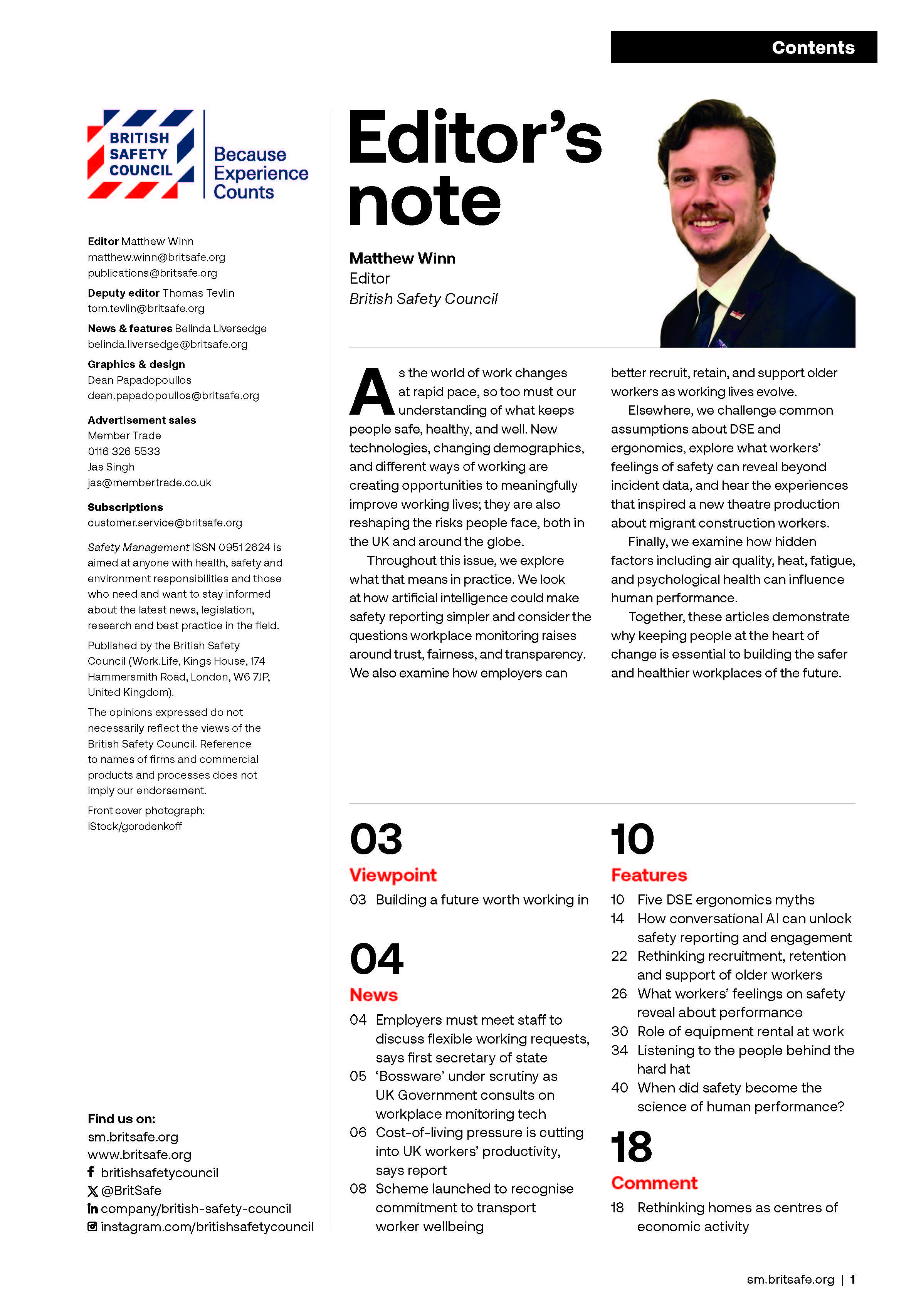
It’s easy to become myopic about the future of work. Take a quick look at the world today and the signs can seem discouraging: political instability, economic volatility, the accelerating disruption posed by AI and climate change. Together, these factors paint a picture of uncertainty that can make our belief in progress seem naïve and tempt us into believing that the future can be no better than the past, that our best days are now behind us. That would be a profound failure of imagination.
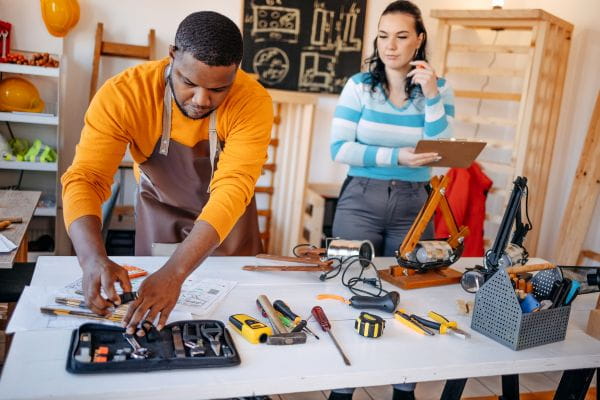
Rethinking homes as centres of economic activity (amongst other things)
By Andy Lake, Flexibility.co.uk on 08 October 2026
The decentralisation of work away from fixed workplaces, the rise of AI and demographic changes are creating new opportunities for people to carry out ‘hands-on’ work in the home, such as production of fashion, textiles, food and drink, and delivery of health services and therapies. However, our existing housing stock is not designed to accommodate such functions, so it’s essential that future town planning creates homes that support different kinds of enterprise, both to support business success and the wellbeing of these new home-based workers.

Learning that saves lives
By Mike Robinson, chief executive, British Safety Council on 11 September 2026
Success can sometimes be a problem. The better we become at preventing incidents, the harder it can be to see what is actually preventing them.