
When we talk about personal protective equipment (PPE), we are talking about a worker’s last line of defence. If it fails, the worker is no longer protected from the hazards they face. This is why we say that all workers having PPE that fits their bodies isn’t just a matter of respect, it can quite literally be a matter of life and death.
Opinion
Why we need to make PPE Fit For All
By
on 12 May 2026
For far too long, women across all industries have been expected to compromise their safety, dignity, and ability to do their jobs because PPE was never designed with them in mind.
What is often described as women’s PPE is, in reality, men’s equipment scaled down: the notorious ‘shrink it and pink it’ approach. It does not reflect women’s body shapes, proportions or physiological needs, and it frequently creates serious safety risks.
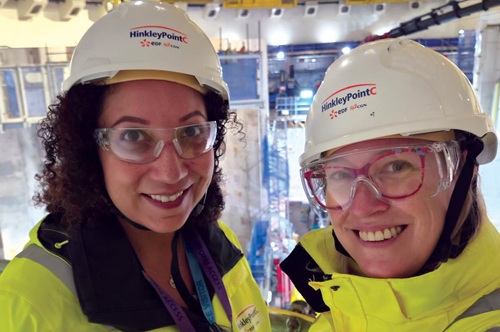 Melanie Bartlett and Lynsey Mann, GMB Union
This is not a problem that affects women alone. Workers from different cultural backgrounds, men who fall outside so-called ‘standard’ height and build ranges, disabled workers and those with health conditions are also routinely let down by PPE that is designed around a narrow and outdated body model.
When equipment assumes a single norm, anyone who does not fit that template is forced to work with protection that is uncomfortable, ineffective, or unsafe. Inclusive PPE is therefore not about catering to one group over another, it is about recognising the real diversity of today’s workforce and ensuring that everyone, regardless of gender, size, background or disability, can work safely, confidently and with dignity.
A widespread and serious safety failure
The scale of the problem cannot be overstated. GMB’s research has consistently found that around 70 per cent of workers experience issues with ill‑fitting PPE. Workers report feeling unsafe, restricted in their movement, distracted, embarrassed and unable to do their job safely.
Employers already have a duty to protect their workforce from hazards and harm by providing suitable and sufficient PPE, yet many are not carrying out end-user fit tests. This has meant a structural safety failure has been long overlooked and now requires immediate attention to protect workers from harm and employers from liability.
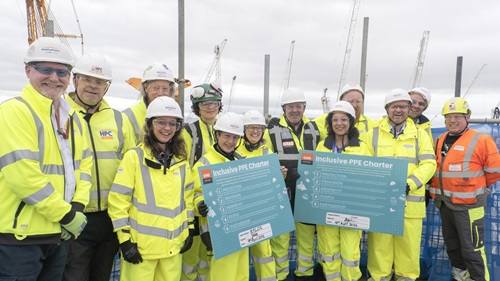 At the launch of the Charter, MPs were invited to try on the kind of ill‑fitting PPE many workers are issued every day. Photograph: GMB
We hear examples every day. Oversized gloves reduce dexterity and create entanglement risks. Hi‑vis jackets swamp smaller frames, increasing the chance of trips or snagging. Respirators fail to seal properly, exposing wearers to hazardous dusts and chemicals. Harnesses don’t sit correctly on the hips or chest, undermining fall protection.
None of this is theoretical, it is what workers are living with on site, in prisons, in refineries, in hospitals and care settings.
One woman custody officer told us that her low‑rise PPE trousers simply did not fit her body shape, resulting in prisoners being able to see her underwear and making sexual comments. This is not just unsafe; it is degrading. No worker should have to choose between protection and dignity.
Introducing GMB’s PPE Fit for All campaign
GMB Union’s PPE Fit for All campaign was born directly from these experiences. This is a member‑led campaign, shaped by the stories, evidence and determination of workers who refused to stay silent. Our reps across sectors began raising the same issue again and again: PPE was excluding people, putting them at risk, and making women feel as if they did not belong in their workplace.
PPE Fit For All is about changing that system. It puts people, not procurement shortcuts or outdated assumptions, at the heart of PPE decisions. The campaign calls on employers and government alike to ensure that PPE is suitable for all bodies: women, disabled workers, pregnant workers, neurodivergent workers, and anyone whose body does not match a narrow, outdated ‘average’.
The Inclusive PPE Charter
A crucial step forward has been the launch of the GMB Inclusive PPE Charter. Employers who sign the Charter commit to provide PPE that genuinely fits and protects their workforce. That means procuring a full range of shapes and sizes, carrying out proper fit testing, consulting with workers and safety reps, and removing the stigma attached to asking for alternatives.
By signing GMB’s Inclusive PPE Charter, employers are moving from ‘one-size-fits-most’ to a practical approach that reflects the real workforce.
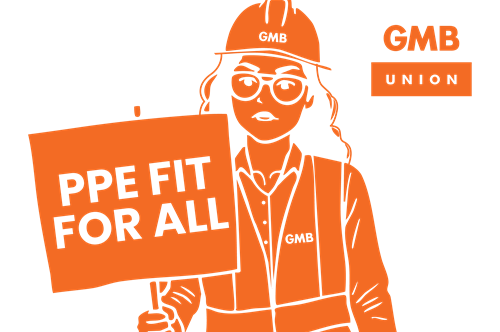 From the GMB's 'PPE Fit For All' campaign
Thanks to the work of GMB reps and activists, change is finally happening. Around 50,000 workers will now be better protected after major employers signed up to GMB’s Inclusive PPE Charter, including EDF, Bylor, BAE Systems, and JCB.
The companies who have signed so far demonstrate something incredibly important: this can be done. Inclusive PPE is not a futuristic aspiration or an unreasonable demand. It is already a reality in workplaces where safety is treated as a priority rather than a cost to be controlled.
Embedding change through standards and policy
Momentum is building beyond individual employers. In 2025, the British Standards Institution published BS 30417: Provision of Inclusive PPE, the world’s first standard to focus on inclusive PPE from selection to procurement, fitting, maintenance, and feedback. The standard is freely available to download. GMB is calling on employers to adopt this guidance now and on Government to make it a legal requirement for public sector procurement contracts.
This is why our campaign has taken workers’ voices into Parliament. At the launch of the Charter, MPs were invited to try on the kind of ill‑fitting PPE many workers are issued every day. It was a powerful demonstration of what abstract policy failures feel like on real bodies.
What comes next
This achievement, protecting 50,000 workers and counting, is something we are proud of, but this is not the end, it is just the start. The next step is to encourage more employers to get ahead of the curve, and for inclusive PPE to be embedded into procurement frameworks, contracts, and health and safety regulations across the UK.
At GMB, our role has always been to fight for fairness and justice at work. For 130 years, we have defended workers against unsafe practices, exploitation, and disregard for their wellbeing. PPE Fit for All is a continuation of that legacy, a clear reminder that health and safety is for all of us, not some of us.
What employers can do now:
- Audit PPE by role and sizes/body shapes: find out who it doesn’t fit, and what changes are needed
- Procure inclusive ranges (sizes, shapes, cuts) as standard, not as exceptions
- Run fit testing and real-world trials for PPE items like respirators, harnesses and gloves
- Create a simple route to request alternatives with no hassle or judgement
- Review PPE failures and near misses with workers and safety reps and make necessary changes
Adopt the BSI 30417 standard guidance – downloadable free of charge.
If you are a workplace with GMB union recognition, sign up to GMB’s Inclusive PPE Charter.
If your company isn’t unionised, contact us, [email protected], to discuss meeting with a GMB officer or organiser in your region.
Inclusive PPE is not about special treatment. It is about everyone having equal access to safety. When PPE fits, it protects. When it protects, workers go home to their families safe. That is what this campaign is about, and this is why we will keep fighting until fit‑to‑form PPE is the standard everywhere.
Melanie Bartlett is GMB PPE Fit For All campaign lead at the GMB Union and Lynsey Mann is National health, safety and environment officer at GMB Union
For more information see:
gmb.org.uk/campaigns/ppe-fit-for-all/
OPINION
Building a future worth working in
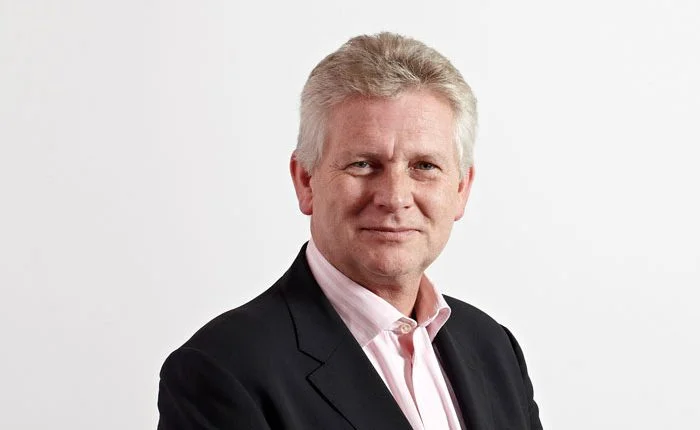
By Mike Robinson FCA, British Safety Council CEO on 12 October 2026
It’s easy to become myopic about the future of work. Take a quick look at the world today and the signs can seem discouraging: political instability, economic volatility, the accelerating disruption posed by AI and climate change. Together, these factors paint a picture of uncertainty that can make our belief in progress seem naïve and tempt us into believing that the future can be no better than the past, that our best days are now behind us. That would be a profound failure of imagination.
Rethinking homes as centres of economic activity (amongst other things)
By Andy Lake, Flexibility.co.uk on 08 October 2026
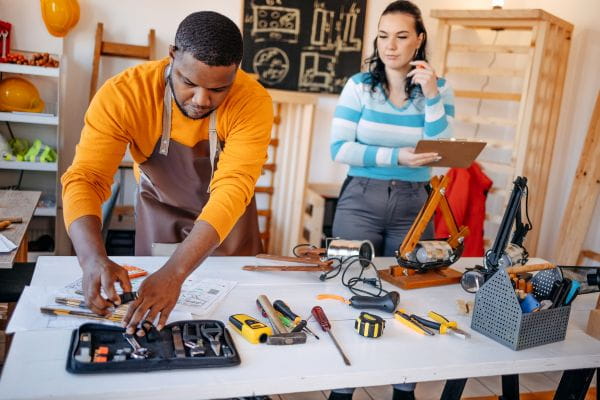
The decentralisation of work away from fixed workplaces, the rise of AI and demographic changes are creating new opportunities for people to carry out ‘hands-on’ work in the home, such as production of fashion, textiles, food and drink, and delivery of health services and therapies. However, our existing housing stock is not designed to accommodate such functions, so it’s essential that future town planning creates homes that support different kinds of enterprise, both to support business success and the wellbeing of these new home-based workers.
Learning that saves lives
By Mike Robinson, chief executive, British Safety Council on 11 September 2026
Success can sometimes be a problem. The better we become at preventing incidents, the harder it can be to see what is actually preventing them.