For years, workers across several industries have relied on PPE which was never designed to fit them properly, putting both their comfort and their safety at risk. The CIOB’s #PPEThatFits campaign and a new British Standard are now driving a long-overdue shift towards inclusive protective equipment.
Opinion
Ill-fitting PPE is more than uncomfortable – it’s unsafe
By
on 08 May 2026
In an industry where safety is paramount, properly fitting personal protective equipment (PPE) should be a given. Yet for many people working across sectors like construction, healthcare and emergency services, for example, that has not always been the reality. For years, workers have had to make do with PPE that simply doesn’t fit.
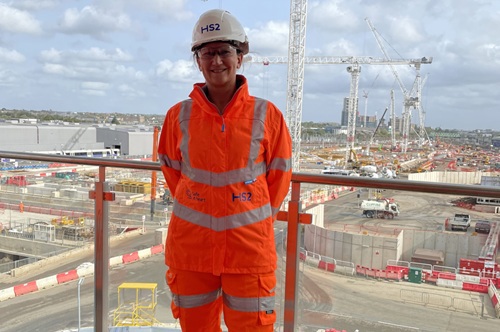 Photograph: CIOB (Chartered Institute of Building)
The Chartered Institute of Building’s (CIOB) #PPEThatFits campaign has been working to change that. Since its launch in 2023, it has helped turn what was often seen as a niche issue into a recognised industry-wide priority.
The campaign was introduced during the CIOB (Chartered Institute of Building) presidency of Sandi Rhys Jones OBE FCIOB, to tackle inequality in PPE provision and ensure everyone has access to equipment that properly protects them.
PPE has historically been designed around a very limited idea of the ‘average’ worker. In practice, that has often meant male, standard build, without consideration of different body shapes, cultural needs, or physical requirements.
The end result is that many people, including women and those with different body types or accessibility needs, have been left using equipment that doesn’t fit as it should.
Naturally, this poorly fitting PPE is uncomfortable, but there is far more to it than that. Incorrect PPE can be dangerous. Gloves that are too big can affect grip and control. Loose clothing can catch in machinery, with potentially life-threatening consequences. Respiratory protection that doesn’t fit properly may not do its job at all, exposing workers to dangerous substances.
Campaign for change
Through #PPEThatFits, CIOB has worked to bring these challenges into the open and push for meaningful change. The campaign has brought together industry leaders, manufacturers, policymakers and workers to build a strong case for doing things differently.
It has also focused on practical solutions, including promoting a global directory of inclusive PPE suppliers and encouraging organisations to rethink how they buy and specify equipment.
 Sandi Rhys Jones OBE FCIOB, past president,
client champion, CIOB
A key part of the campaign has been making it clear that this isn’t about token gestures. As Rhys Jones put it: “This isn’t about pink hard hats or extra-small hi-viz, it is about fundamental safety – something that is essential for an industry to demonstrate that it truly cares about attracting and keeping the people it needs.”
And the message has definitely struck a chord. More organisations are recognising that inclusion and safety go hand in hand.
One of the biggest achievements so far has been the publication of a new inclusive PPE standard by the British Standards Institution (BSI). The standard, Provision of Inclusive PPE (BS 30417:2025), signifies a major step forward for the industry.
It sets out a framework to support organisations involved in selecting and providing PPE. At its heart, it focuses on three things: making sure PPE offers the right level of protection, ensuring it fits the individual properly, and embedding inclusivity into procurement decisions.
At the time, Sara Gibbs, standards development manager at BSI, described the standard as a “landmark moment” for the sector. “For too long, protective equipment has been designed around the average – a model that excludes many and compromises safety,” she said.
“BS 30417 aims to address this critical gap by ensuring that PPE must fit the individual, regardless of gender, body shape, age, or ability.”
She also highlighted that the standard represents something bigger than technical guidance, adding: “This standard is more than a technical document; it’s a statement of values. It reinforces the principle that everyone deserves protection that is not just available, but appropriate.”
The introduction of BS 30417 marks a significant step forward. It turns the principles behind #PPEThatFits into clear, practical guidance that organisations can follow.
Targeting a range of sectors
Thankfully, the campaign’s influence is also reaching beyond construction. As Sandi Rhys Jones highlighted, its impact is now being felt across a range of sectors.
“It is also about more than construction and it is particularly rewarding that the process so ably driven by BSI has engaged with other industries and sectors,” she said.
This growing reach highlights the scale of the issue. Inclusive PPE is not just a construction challenge – it is something that affects workplaces across many industries, wherever people rely on equipment to stay safe.
Momentum is being sustained. The BS 30417 Companion Guide is now live, a practical, accessible resource designed to make implementing the standard clearer, simpler, and more achievable for every organisation.
Attention has also been drawn politically, with the support of Kirsteen Sullivan MP, who in March introduced a bill under the Ten Minute Rule, together with the GMB Union, requiring the public sector to procure PPE ‘fit for form’ in compliance with the BS 30417 standard.
But even with this progress, there is still more to do. We know publishing a standard is only the first step, and the real challenge is making sure it is used in practice.
Sustainability of PPE
Looking ahead, the next step on the agenda is tackling the sustainability of PPE. As the industry becomes more conscious of environmental impact, attention is turning to how protective equipment is designed, sourced and disposed of.
Sandi Rhys Jones has already begun discussions with BSI to explore how the momentum behind inclusive PPE can be extended to address sustainability challenges.
Ultimately, the progress made through our #PPEThatFits campaign, the leadership of Sandi Rhys Jones, and the introduction of the BSI’s BS 30417 standard have shifted the conversation from awareness to action.
Real success, however, will be measured not by policies on paper, but by everyday practice on sites, in hospitals and across workplaces. Ensuring PPE truly fits – while also addressing sustainability – must now become the norm, not the exception.
For more information, and to become a supporter of #PPEthatfits, go to:
ppethatfits.com
OPINION

Building a future worth working in
By Mike Robinson FCA, British Safety Council CEO on 12 October 2026
It’s easy to become myopic about the future of work. Take a quick look at the world today and the signs can seem discouraging: political instability, economic volatility, the accelerating disruption posed by AI and climate change. Together, these factors paint a picture of uncertainty that can make our belief in progress seem naïve and tempt us into believing that the future can be no better than the past, that our best days are now behind us. That would be a profound failure of imagination.
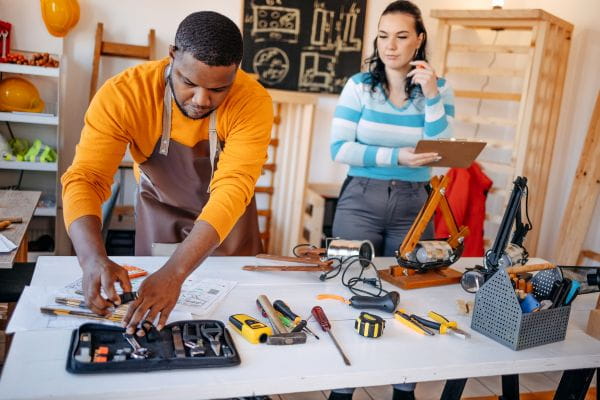
Rethinking homes as centres of economic activity (amongst other things)
By Andy Lake, Flexibility.co.uk on 08 October 2026
The decentralisation of work away from fixed workplaces, the rise of AI and demographic changes are creating new opportunities for people to carry out ‘hands-on’ work in the home, such as production of fashion, textiles, food and drink, and delivery of health services and therapies. However, our existing housing stock is not designed to accommodate such functions, so it’s essential that future town planning creates homes that support different kinds of enterprise, both to support business success and the wellbeing of these new home-based workers.
Learning that saves lives
By Mike Robinson, chief executive, British Safety Council on 11 September 2026
Success can sometimes be a problem. The better we become at preventing incidents, the harder it can be to see what is actually preventing them.