
Personal protective equipment (PPE) came to widespread public consciousness when it became the final line of defence for not only those in care and health services, but also those in retail, education and visiting your vulnerable nan.
Opinion
How do we fix ‘impersonal’ protective equipment?
By
on 05 May 2026
Attention quickly turned to questions of quality (or lack thereof) and the fast-track procurement process in place at that time, along with the resulting scandal that rumbles on to this day. However, as we turned the page on the pandemic years, our attention turned to the work of the British Standards Institution (BSI) with their new Inclusive PPE standard, BS-30417.
PPE is only effective when it protects the individual wearing it. That means procurement must focus not simply on volume or cost, but on whether equipment is safe, usable and fit for the diverse workforce that relies upon it.
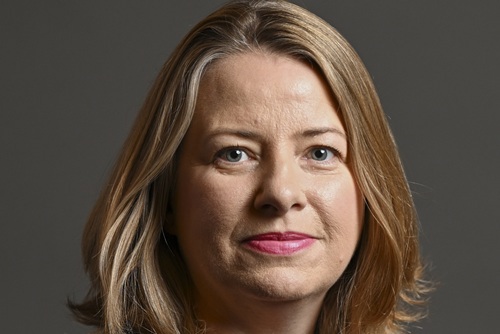 Kirsteen Sullivan MP: "PPE that does not fit is PPE that fails."
Poor fit causes real harm
PPE should be just that; personal. It ought to protect the person. Yet too often, ‘one size fits all’ means protection that does not properly fit many workers at all.
Poorly fitting PPE creates two clear risks. First, it may fail to protect against the original hazard, whether that is respiratory exposure, impact injury, sharp objects or harmful substances. Second, it can create additional hazards through restricted movement, reduced dexterity, poor visibility, loose grip or trip risks.
Over the past 19 months, I have been collecting these stories from the frontline. While many of them are from women, these dangers are stories of poor-fit that could affect any number of us who happen not to be male, five-foot-eight inches and 80 kilograms. It affects anyone whose body shape, size or proportions fall outside outdated assumptions about the ‘standard’ worker.
No margin for error
Across industry, the reaction is often the same: recognition, frustration and a sense that this problem has been accepted for too long. In many workplaces, poor fit is more than inconvenient, it is dangerous.
Firefighters operate in smoke-filled, unstable and highly hazardous environments where speed, balance and confidence in equipment are essential. Fire boots form a critical part of that protective system, helping shield against heat, water, contaminants and injury.
Yet some female firefighters have reported needing to wear multiple pairs of socks, improvise padding or tolerate poor fit because no suitable alternative was available. Where seconds matter, compromised movement or stability can have life-threatening consequences for firefighters, their colleagues and the public.
Similar concerns have been raised in frontline policing. Female officers have reported body armour designed around a male torso shape, leaving gaps in protection or shifting while running. In some cases, stab vests have ridden upwards, striking the chin or exposing vulnerable areas of the body.
This is not about comfort or preference. Protective equipment that does not fit cannot protect properly.
Opportunities to get it right
The British Standard (BS-30417) Inclusive PPE was launched in November 2025. For me, focus is shifting onto the expected legislation.
On the 24th of March, I introduced the Personal Protective Equipment (Inclusive Standards) Bill to the House of Commons. As a Ten Minute Rule Bill, it is unlikely to become law. However, such bills are useful to secure time in the chamber allowing a more detailed contribution. For example, although only 10 signatory MPs can be listed as co-sponsors, interest amongst MPs is growing, including from colleagues present in the chamber when the bill was presented. In the context of the Commons, where 650 MPs vie to speak, opportunities such as Ten Minute Rule Bill really matter.
I used the opportunity to raise significant examples of poor-fit PPE. One such stark example of poor-fit PPE comes from the frontline.
In warzones, ‘unisex’ body armour worn by women has caused direct injury. When travelling across rough terrain, seated in armoured vehicles, the overlong body armour cuts into the top of their thighs. This is not a matter of comfort or preference: body armour that does not fit the wearer cannot provide adequate protection.
Serendipitously, a significant overhaul to the UK Procurement Strategy was announced just shy of a month later. Public sector procurement equates to over £400 billion worth of spending and it is a welcome opportunity to put our public money where our mouth is.
Huge public sector contracts, and local ones alike, represent a large market share of the UK’s total PPE demand. As my proposal stands, manufacturers and businesses would need to prove compliance with BS-30417 to obtain public sector procurement contracts.
As a result, public money would be spent on fit-to-form PPE for employees, whilst instructing the market that the future is inclusive. That means recognising variation in body size, shape, sex, dexterity, mobility and cultural/religious needs, rather than assuming a narrow default user profile.
Furthermore, the UK Health Security Agency’s (UKHSA’s) £1 billion plan to increase our stockpile of health service PPE means we must strike whilst the iron is hot. Value for money is pivotal to new procurement contracts, and assessment of value must prioritise usefulness of the product.
When the smallest glove size currently available on the market is still too large for approximately 86 per cent of female hands, the stockpile risks a repeat of previous PPE fiascos. Alongside the GMB, and their new campaign PPE Fit4All, I wrote to the UKHSA raising the opportunity to ensure that new stockpiles embrace the new BSI standard and raise safety standards in the workplace. It’s an easy win.
The future is inclusive
The workplace and workforce are changing massively. Heavy industries in advanced manufacturing, green energy, and housebuilding are expected to deliver national objectives through re-industrialisation more than at any point in the last 50 years. The workforce must expand and adapt with this shift, and the importance of good-fitting PPE will prove pivotal as more women, disabled people, or people of differing body shapes, work in these growth sectors.
Industry and national objectives are moving into a new era where inclusive PPE standards cannot be dismissed as preferences or politics.
For safety leaders, procurement professionals, and policymakers alike, the message is clear: PPE that does not fit is PPE that fails.
Follow the progress of the Personal Protective Equipment at Work (Protected Characteristics) Bill:
bills.parliament.uk/bills/3696
Follow Kirsteen Sullivan MP:
members.parliament.uk/member/5179/contact
kirsteensullivan.org.uk
linkedin.com/company/kirsteen-sullivan-mp/
@kittysull1
facebook.com/KirsteenSullivan
Kirsteen Sullivan is MP Labour (Co-op) MP for Bathgate and Linlithgow
OPINION

Building a future worth working in
By Mike Robinson FCA, British Safety Council CEO on 12 October 2026
It’s easy to become myopic about the future of work. Take a quick look at the world today and the signs can seem discouraging: political instability, economic volatility, the accelerating disruption posed by AI and climate change. Together, these factors paint a picture of uncertainty that can make our belief in progress seem naïve and tempt us into believing that the future can be no better than the past, that our best days are now behind us. That would be a profound failure of imagination.
Rethinking homes as centres of economic activity (amongst other things)
By Andy Lake, Flexibility.co.uk on 08 October 2026
The decentralisation of work away from fixed workplaces, the rise of AI and demographic changes are creating new opportunities for people to carry out ‘hands-on’ work in the home, such as production of fashion, textiles, food and drink, and delivery of health services and therapies. However, our existing housing stock is not designed to accommodate such functions, so it’s essential that future town planning creates homes that support different kinds of enterprise, both to support business success and the wellbeing of these new home-based workers.
Learning that saves lives
By Mike Robinson, chief executive, British Safety Council on 11 September 2026
Success can sometimes be a problem. The better we become at preventing incidents, the harder it can be to see what is actually preventing them.