

Despite the UK having one of the best health and safety records in the world, falls from height remain the leading cause of workplace deaths in the nation. Although improvements in training, equipment and ongoing educational campaigns have helped to drive down the number of fall injuries in recent years, further work is required to ensure these efforts translate into continuous reductions in the accident rate.
Features
Falls from height: progress made, but risks remain
By
on 08 September 2026
Last year, a construction company was fined £33,500 after a man died when he fell through an unprotected skylight opening. Bhakta Rai suffered fatal injuries at a property in Farnborough in July 2022, after he fell 2.5m onto concrete while helping cover a roof late at night.
Skyladder Construction Ltd pleaded guilty to breaches of the Work at Height Regulations 2005 and the Health and Safety at Work Act 1974. At Basingstoke Magistrates’ Court on 31 October 2025, the company was fined £33,500, ordered to pay £8,472 in costs, and ordered to pay a £2,000 victim surcharge.
Following the hearing, investigating Health and Safety Executive (HSE) inspector Jenny Morris said: “Falls when working at height remain the most common kind of workplace fatality, accounting for around a quarter of all worker deaths. In this case, this was a wholly avoidable incident – Mr Rai died in a fall which should never have been able to happen.”
A second case, involving serious injury rather than a fatality, also highlights the scale of the risk posed by work at height. In August 2026, a construction company was fined £60,000 after a worker suffered serious injuries when he fell through an unprotected roof light while carrying out refurbishment work at a domestic property in London in November 2023.
An HSE investigation found that Lowndes Lumb Construction Ltd failed to implement suitable measures to protect workers from the risk of falling from height. Measures to prevent falls, such as scaffolding, guard rails, an internal crash deck or harness systems, had not been adopted, the court heard.
The company pleaded guilty to breaching regulation 6(3) of the Work at Height Regulations 2005.
Ongoing problem
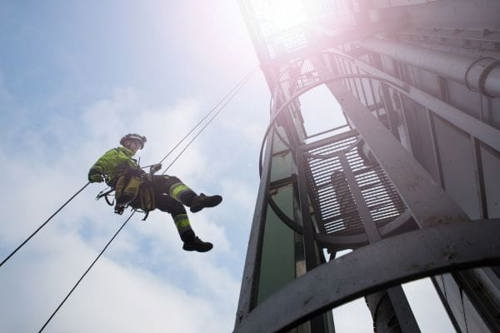
These cases are not isolated incidents, but are part of a larger, ongoing problem. Falls from height remain a particularly serious occupational safety concern, accounting for 30% of all workplace fatalities in the UK, according to HSE. Falls, falling objects, fragile surfaces and bad weather can all turn a routine task into a life-changing or fatal incident. Workers can fall from relatively low elevations such as ladders, low-level scaffolds, roofs and platforms and still sustain life-threatening injuries.
Common incidents include falling through fragile surfaces such as skylights, slipping from ladders or scaffolding, losing balance on elevated platforms, and falling into holes or service shafts. Impact force increases dramatically with height, and even a minor fall can lead to death. Unprotected edges are a particular threat, and damaged ladders, loose scaffold boards or faulty safety harnesses can fail without warning.
Although there is no acceptable number when it comes to fatal falls from height, HSE data points to a clear long-term reduction in such incidents.
In 2007/08, 58 workers lost their lives in falls from height, while 50 fatalities were recorded in 2023/24. The number has fallen further in recent years, with 35 fatal falls from height recorded in 2024/25 and 31 in 2025/26, the latter figure being below the five-year average of 38. However, the toll remains substantial, with the Labour Force Survey estimating that up to 425,000 fall from height injuries may have occurred in UK workplaces over the past decade.
More than 20 years after their introduction, the Work at Height Regulations 2005 remain the foundation of UK height safety legislation. But their impact extends far beyond simple regulatory compliance. The rules fundamentally changed how UK industry approaches work at height, shifting the focus from reactive protection to proactive risk management and establishing principles that continue to shape safety practices today.
According to safety experts, before 2005, height safety often relied heavily on personal fall protection and individual risk-taking. Today, the emphasis is on collective protection, systematic risk assessment and a clear hierarchy of controls that prioritises preventing falls over protecting workers after a fall occurs. Understanding the regulations, therefore, is not simply about meeting legal requirements; it is about understanding the framework that underpins effective work-at-height safety management.
No room for complacency
Speaking about the progress made in reducing fatal and serious falls from height in recent years, Justin White, managing director at access equipment manufacturer Werner UK, says there has undoubtedly been progress, but the latest HSE figures show that there is no room for complacency.
“The industry must continue to raise awareness, improve standards and make safe working practices part of every job, so that every worker can return home safely at the end of the day.”
Werner has witnessed encouraging progress through its own increased focus on training, education and making practical safety guidance more accessible to trade professionals. However, gaps remain, argues White, particularly around selecting the right equipment, carrying out effective risk assessments and consistently following safe working practices.
“These risks can be particularly easy to overlook when working at height is part of an everyday task,” he adds. “Our focus is therefore on helping to close these gaps through continued investment in safety campaigns, training and education. By improving knowledge and confidence around working at height, we can help professionals make safer decisions before they even begin a task.”
While White highlights progress within the industry, Hannah Williams, charity manager at the No Falls Foundation, a UK charity dedicated to preventing falls from height and helping people affected by the life-changing consequences of a fall, agrees that while progress has been made, the figures remain deeply concerning. “We welcome any reduction in fatalities,” she stated. “The most recent figures show a reduction from 35 to 31 fatal falls, but the wider picture remains deeply concerning. These figures have remained static over the last 20 years, with the average number of annual fatalities stubbornly the same.”
Williams points out that the latest Labour Force Survey also estimates that as many as 44,000 people may have been injured as a result of a fall from height last year, which equates to roughly 120 people every day facing injuries that can have profound and potentially life-changing consequences.
“We already have robust legislation in the form of the Work at Height Regulations 2005,” she argues. “The biggest barrier therefore isn’t necessarily a lack of legislation – it is the culture surrounding risk and the gap between what we know should happen and what sometimes happens in practice.”
For Williams, too many people still operate under the dangerous assumption that “it won’t happen to me”.
The role of technology
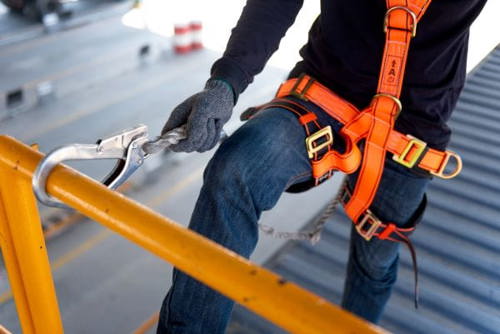
Technology has an important role to play, and the No Falls Foundation believes the biggest gains will come from technologies and approaches that remove people from work at height wherever possible.
“If we can eliminate the need for someone to work at height in the first place, we eliminate the risk of a fall,” says Williams.
However, she adds that technology is only part of the answer: “We also need to make better use of reporting, accident investigation and behavioural insights. We need to understand not just how someone fell, but why the decisions that led to the fall were made and what could have been done to prevent it. This is why the No Falls Foundation is investing in research into human factors and behaviours around work at height as well as our education programme and annual No Falls Week campaign.”
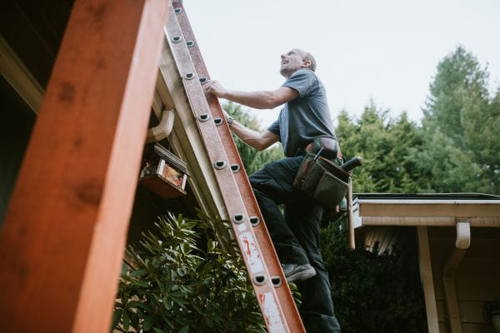
Alongside technology, training and equipment selection remain critical. When it comes to technology and the development of safer ladders and access equipment, the Ladder Association argues that effective training is essential to keeping people safe when working at height and is one way to demonstrate competence. “But competence goes beyond holding a certificate,” the Ladder Association states. “Workers need to understand when a ladder is appropriate, how to select the right type of ladder, and how to use it safely in real working conditions. Crucially, though, even the best training and working practices cannot compensate for fundamentally unsafe equipment.”
Peter Bennett OBE, executive director at the Ladder Association, comments: “Our priority is making sure ladder users are safe; that they use the right equipment, that the equipment is safe, and that they are competent to use it.”
He adds that on the face of it, ladders appear so simple that people assume there’s not much to know. “This results in unsafe practices including poor equipment selection, inadequate pre-use checks, incorrect positioning, failure to secure leaning ladders, overreaching and using unsafe equipment.”
According to the Ladder Association, when a ladder is the right choice, workers should be confident they are using safe, compliant equipment and have the competence to use it correctly. When it is not the correct choice, they need the knowledge, equipment and workplace support to choose a safer alternative.
When it comes to buying ladders, the Ladder Association urges people to take extra care, particularly when buying online. “Do your research, read the reviews, and when you receive it, check the ladder itself, along with all instruction manuals and labels,” adds Bennett. “Importantly, if you think the ladder is unsafe or dangerous don’t use it and report it to Trading Standards or via the Ladder Association website.”
Unsafe behaviours
Some of the most common unsafe behaviours Werner continues to see include choosing the wrong equipment for the task, failing to carry out pre-use inspections, and using ladders where another form of access equipment would be more suitable.
“These behaviours can be driven by familiarity, convenience and time pressure. In particular, experienced users can become overconfident with equipment they use every day and overlook basic safety checks,” said Werner’s MD, Justin White.
Choosing the right equipment for the task is critical. “For example, where a job requires frequent side-to-side movement or reaching, a traditional ladder may not be the most appropriate solution and a platform should be considered,” explains White. “The working environment also needs to be taken into account. On uneven ground, products designed specifically for these conditions, such as Werner’s Adjustable Tripod Ladder or AdjustaStep PRO, can provide a more appropriate and secure solution.”
Pre-use inspections are equally important. “Ladders and access equipment can be damaged when they are being used, transported or stored, and even seemingly minor damage can affect their safe performance,” states White. “Familiarity with a product should never be a reason to overlook these checks.”
Quality of equipment a concern
Beyond the selection and use of equipment, the quality and safety of the equipment available on the market is also a concern. The Ladder Association’s ongoing market surveillance studies have highlighted the real and serious issue of substandard ladders being made available on the UK market, particularly through online marketplaces.
In its most recent study, 78% of the telescopic ladders tested failed the required safety tests, were non-compliant and were dangerous. Every sample purchased from an online marketplace and sold by third-party sellers failed the safety tests. Worryingly, 86% falsely claimed compliance, either on the product listing, packaging or labelling, in a deliberate attempt to mislead consumers.
The surveillance studies, part of the Ladder Association’s ‘Step Up to Safe Ladders’ campaign, are intended to help address this problem, while also highlighting that safe, good-quality ladders are available online and in physical stores.
The findings also highlight the importance of ensuring that workers have access to safe, compliant equipment. Werner works closely with trade professionals and customers to understand the challenges they face on site, using this insight to continually improve the safety, usability and performance of its products. For example, Werner has enhanced its Telescopic Tower with features designed to make it safer and easier to set up and use.
“Looking ahead, we expect innovation to continue making a difference, but the biggest gains will come from combining safer, more intuitive equipment with a stronger safety culture”, states White. “Over the next five to 10 years, we are likely to see greater emphasis on products that help reduce user error, improve stability and make safe working practices easier to follow.”
Ultimately, however, even the most innovative equipment is only effective when it is used correctly. “Businesses must continue to invest in training, risk awareness and best practice, ensuring that technology supports – rather than replaces – good safety behaviours across the industry,” added White.
The focus on changing behaviour extends beyond equipment and training to wider workplace culture. For many, participation in No Falls Week is translating into changes in workers’ behaviour, competence, or workplace practices around working at height.
“No Falls Week has proven to be an invaluable catalyst for shifting workplace conversations from a tick-box compliance exercise to active cultural engagement,” said Williams.
No Falls Week has grown substantially since its launch in 2024. The 2026 campaign saw more than 2,600 organisations sign up, with participation across the three years reaching almost 7,000. There were also nearly 40,000 website visits and more than 10,000 resource downloads during No Falls Week 2026.
“That growth demonstrates that we are reaching more people and that the appetite for greater awareness of work at height safety is there. But frankly, it isn’t happening quickly enough,” Williams admits.
“Because we don’t believe the cultural shift is happening quickly enough to stem the tide of casualties, we are also taking action beyond the campaign week,” adds Williams.
“We are actively engaging with MPs in constituencies where there have been fatalities or serious accidents caused by falls from height. We are calling for an appropriately funded HSE, the reinstatement of the All-Party Parliamentary Group for Working at Height, and for inquiries into workplace fatalities to be mandatory across the UK, as they are in Scotland, so that the whole country can learn from these tragedies.”
Ultimately, the challenge is not simply having the right legislation, equipment or training, but ensuring that safe practices are consistently followed.
“Most workers do not deliberately set out to work unsafely,” says the Ladder Association’s Peter Bennett. “Unsafe practices can develop because of familiarity, time pressure or convenience.
“Employers therefore need to make the safe option the practical option by ensuring suitable equipment is available, properly maintained and easy to access, while allowing workers sufficient time to use it correctly.”
Bennett adds that, although industry has made significant progress in making work at height safer, the next step is to close the gap between knowing what good practice looks like and consistently putting it into practice.
FEATURES

Who is the wolf in your life? Listening to the people behind the hard hat
By Inna Cebotari, Kinth Square on 02 October 2026
A new play explores the lives of migrant construction workers in the UK, using humour, real-life experiences and physical theatre to capture the banter, friendships and absurd moments that make life on site bearable, alongside the pressures that often go unseen. Ahead of the play’s premiere in London on 12-14 November, playwright Inna Cebotari explains how Three Little Pigs aims to add to the public debate about how best to support the wellbeing of construction workers.
Eliminating barriers in reporting: how conversational AI can unlock safety engagement
By Julian Taylor, ecoPortal on 04 October 2026
Online reporting systems that require lengthy and cumbersome form filling and typing can discourage workers from reporting safety incidents and concerns. However, AI-powered mobile apps that allow reporting simply by speaking can simplify and speed up the process, boosting reporting rates and overall staff engagement with safety systems and culture.

Why UK employers need to rethink recruitment, retention and support for older workers
By Orchie Bandyopadhyay on 04 October 2026
With workers over the age of 50 now comprising almost one third of the entire UK workforce, recruiting and retaining older workers is now core to the success of the economy. However, not all employers are offering what’s needed to retain and recruit older workers, and ageist attitudes, limited flexible working opportunities, and employment support that doesn’t fit with health, caring, or other responsibilities are leaving too many people locked out of the labour market.