

Exposure to metalworking fluids can cause serious and devastating occupational diseases like asthma and dermatitis, so it’s essential employers regularly review their control measures rather than simply assuming workers are automatically protected.
Features
Metalworking fluids: why complacency may be the biggest danger
By
on 02 April 2026
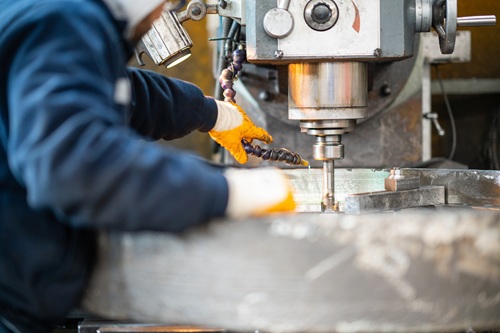
Metalworking fluids (MWF) are so familiar in many engineering environments that they fade into the background. That familiarity is precisely why the risk they pose to workers’ health is still being underestimated. Those who work around them also often do not fully understand the impact MWF can have on their health.
On paper, in many workplaces, metalworking fluid risks often appear well managed: Control of Substances Hazardous to Health Regulations (COSHH) assessments are in place; air extraction is installed; and personal protective equipment (PPE) is issued. There is also commonly-held belief among many employers of ‘we’ve never had an incident involving worker health problems caused by MWF’, but the truth is often much harder to see.
 Photograph: iStock
What are metalworking fluids – and why exposure is often missed
MWF exposure is rarely obvious, largely because the risk does not typically
arise from a single event, but from repeated low-level exposure embedded in routine work.
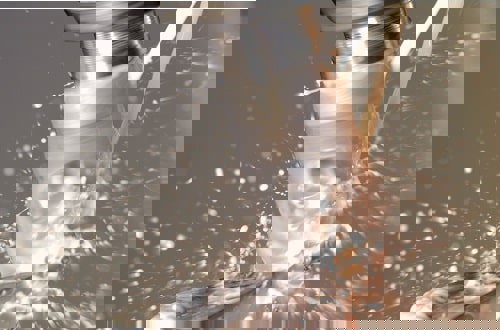
Inhalation is the primary route. Machining and shaping of metals generates fine mists and aerosols as oil or water-based metalworking fluids are sprayed, agitated and heated at the cutting interface. These particles are often invisible and easily inhaled, particularly where enclosures are left open or local exhaust ventilation (LEV) is poorly positioned or inadequately maintained.
The absence of visible mist is frequently mistaken for reassurance. HSE modelling estimates there are around 6,600 deaths each year in Britain from occupational lung disease (excluding mesothelioma), due to occupational exposure to all types of hazardous substances.
Occupational hypersensitivity pneumonitis and pneumoconiosis – which are sometimes caused by exposure to MWFs – account for approximately 300 of these cases. While not all cases of work-related respiratory disease are fatal, many individuals live with life-altering health conditions, including occupational asthma, which can be caused by MWF exposure.
Skin contact with MWF fluid and mist is equally viewed as a normal practice in some workplaces. Hands and forearms are routinely exposed during handling of metal components during machining, machine tool changes and machine cleaning. Contaminated clothing can also prolong contact for hours. Over time, this repeated exposure significantly increases the risk of occupational dermatitis.
Secondary exposure is also frequently overlooked. MWF residues accumulate on machines, floors and work surfaces and may be re-aerosolised during cleaning – particularly where compressed air is used. This extends exposure beyond those directly operating machinery.
Despite this, many organisations believe they are adequately controlling the risk. Long-term use of MWFs without adequate exposure controls breeds familiarity among duty holders and employees. Low odour is mistaken for low hazard; and while COSHH assessments have often been carried out, they are rarely tested against real working conditions. The hazard appears managed; but exposure often is not.
 Photograph: iStock
Where organisations often fall short
Many organisations rely on templated COSHH assessments. However, a common failing is duty holders simply copying and pasting documents covering MWF risk assessments, or templated assessments which bear minimal resemblance to the actual work taking place or the risks involved.
In turn, this leads to a false belief of compliance, and, if assessments are neither suitable or sufficient, this means they will not achieve their intended goal of keeping people safe. The employer’s control measures for MWF are therefore also unlikely to stand up to regulatory scrutiny – for example, during an HSE inspection or prosecution for legal breaches.
Often, the condition of metalworking fluids is not monitored, leading to old, heavily used and contaminated fluids being in service for far longer than is safe. Bacteria and fungi can thrive in poorly maintained water-mix MWFs, and these aerosolised microbial contaminants may worsen respiratory risks. Formaldehyde and nitrosamines can also be found in fluids, and these are carcinogenic.
HSE expects that where a machine is operating at speeds sufficient to generate mist that LEV and/or machine enclosures are used to prevent MWF mist escaping and being inhaled or coming into contact with the skin, but computer numerically controlled (CNC) machining workshops often fall foul of this. For example, LEV is either often not installed at all or is poorly positioned and is often poorly maintained. As a result, the LEV is ineffective at controlling the risk from aerosolised fluids.
Often, there is a clear lack of health surveillance for employees exposed to MWFs, despite this being a legal requirement. Also, many employers fail to educate workers about the health risks from MWF and the signs of skin irritation and respiratory problems. As a result, workers often brush off symptoms of skin damage – such as dry, cracked skin – as ‘normal’ or ‘part of the job’. In turn, what starts as minor skin irritation can develop into more serious skin conditions and permanent skin damage, such as dermatitis.
Sometimes, signs of respiratory problems, such as wheeziness or chest tightness, are not taken seriously, and persistent coughs are brushed off as nothing serious.
However, employers have a legal duty to arrange for appropriate health surveillance where workers are exposed to harmful substances such as metalworking fluids that could cause respiratory and skin diseases. The aim is to detect early signs and symptoms of disease so interventions can be made to prevent the problem becoming worse, such as removing the affected individual from exposure temporarily or permanently.
There is currently no Workplace Exposure Limit (WEL) for metalworking fluid mist particles – the previous limit was withdrawn in 2005 following a serious outbreak of respiratory illness at an automotive factory which was found to be compliant with the limits set at the time. Instead, employers are required to minimise fluid mist levels to ‘as low as reasonably practicable’ (ALARP) through the use of effective control measures.
A recent HSE prosecution (January 2026) of an engineering firm in Bedfordshire reinforces this point. Despite being served Improvement Notices by HSE inspectors, the company failed to implement suitable risk assessments for work with MWFs or effective fluid monitoring. The result was an ongoing risk to both skin and respiratory health from MWF exposure, for which the business was fined £27,200.
The case illustrates the gap that can exist between what a duty holder believes is an appropriate level of documented compliance with the law and what in fact demonstrates poor exposure control that does not meet the standard required by the COSHH Regulations.
What good looks like
Good control of MWFs is not about having a COSHH assessment and Safety Data Sheets (SDSs) on file. It is about demonstrating that exposure is actively managed on an ongoing basis.
Some key areas to check:
- A suitable and sufficient risk assessment has been completed that considers how machining is actually carried out. This includes considering how long machinery enclosure doors are left open (which can allow MWF mist to escape), tool changes (which can expose workers’ skin to fluid when handling the tools), and the effectiveness of cleaning and maintenance (such as ensuring LEV is not blocked by swarf/chips accumulating around the extraction point). The assessment also needs to consider the less obvious hazards, such as mist generation, fluid degradation and operator behaviour – not just the generic SDS information.
- Enclosures on machines are used properly; LEV is correctly specified, positioned and maintained; and the LEV’s airflow is tested and recorded. Where MWF mist is generated, duty holders must check it is effectively captured by the enclosure and the LEV, and not simply assume this is the case.
- Fluid management is effective. Fluid concentration, pH levels and contamination/bacteria levels must all be monitored, and machine sumps must be cleaned at appropriate intervals. Biocide use must also be controlled and documented. When MWF fluid becomes degraded, this can also increase the health risk to workers, so the fluid must be changed rather than work continuing due to pressures to maintain production.
- Skin exposure is treated as a foreseeable risk, rather than a failure by individual workers to follow exposure controls. Suitable gloves are selected for the task and actually worn. Skin care regimes are in place and understood. Clothing contaminated with MWF is removed immediately to reduce skin contact, and contaminated overalls are laundered before re-use.
- Good risk control means exposure is engineered out wherever possible. However, respirable mist levels must be understood and verified, and an ongoing monitoring regime must be in place.
- Health surveillance is implemented where required and used as an early warning system. This is a legal requirement and non-negotiable. Reports of dermatitis or respiratory symptoms by employees must trigger further investigation (for example, by an occupational health or medical professional), not defensiveness on the part of the employer.
- Suitable and sufficient training has been provided to equip workers with appropriate knowledge and understanding of the risks and how their behaviours can influence both the extent of personal exposure to MWF and any potential harm they may experience. If workers are not aware of the risks, they are unlikely to spot exposure risks or realise how severely affected their health may be by work with MWFs.
From invisible to intentionally controlled
Metalworking fluid is not an unknown risk. The health effects are well established, and the legal expectations are clear. When properly assessed and actively managed, exposure can be effectively controlled.
The problem is rarely due to the ignorance of employers – more often, it is due to over-familiarity with tasks involving MWFs. Metalworking fluids are a normal part of day-to-day production in many factories and engineering workshops, and over time that familiarity dulls scrutiny. As a result, a ‘we’ve always done it this way’ culture can creep in.
Employers assume that controls are working effectively because these measures have always been in place. Symptoms of health problems connected to MWF exposure are dismissed because they develop gradually, and risk becomes normalised.
But invisible does not mean insignificant.
Businesses that effectively manage the risks from MWFs do not wait for dermatitis cases, respiratory diagnoses or enforcement action before reviewing their approach. They verify that controls are effective, they monitor fluid condition, and they treat early symptoms as signals. They revisit risk assessments when processes change – not when safety regulators are waiting in reception.
Andy Hooke CMIOSH TIFSM is a chartered health and safety consultant and owner of AH Safety and Compliance. Contact him at:
[email protected]
linkedin.com/in/andy-hooke-cmiosh-tifsm-b7b247158/

FEATURES
Confined spaces: why training is key to keeping workers safe
By Adam Barker, Draeger Safety UK on 22 September 2026
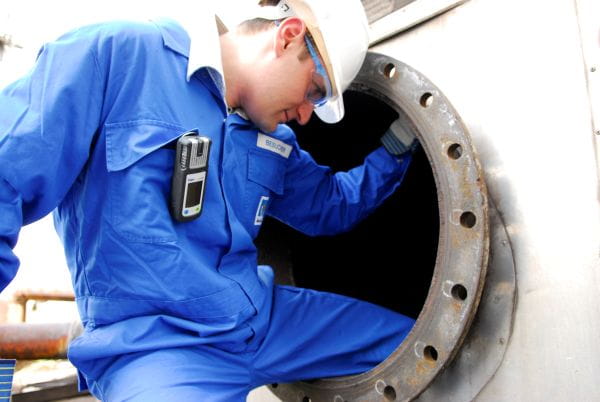
Suitable training plays an essential role in preventing fatalities and dangerous situations during work in confined, hazardous spaces like tanks, silos and sewers, but it’s essential that any course selected genuinely reflects the specific tasks, hazards and risks workers will be faced with.
Why the future of low-level access starts with rethinking old habits
By Samuel Butterworth, JLG Power Towers on 22 September 2026
Low-level access equipment like powered lifts can help make work at height safer by providing a secure, enclosed working platform, but they can also bring other benefits, such as avoiding the need for awkward stretching to reach work areas, which helps to prevent musculoskeletal injuries.
Why paperwork alone isn’t sufficient MEWP rescue preparation
By Ben Hughes, Horizon Platforms on 22 September 2026
A recent safety awareness day has highlighted the importance of contractors regularly practising emergency rescue from mobile elevating work platforms, rather than relying on one-off training sessions and paper procedures that are not always easy to follow during a fast-moving incident.