

Compressed air systems are a vital feature in many workplaces, but it is crucial they are safely used and maintained to prevent workers being put at risk of serious injury.
Features
Compressed air: always manage the risks
By
on 17 April 2026
Compressed air systems are a pivotal part of modern industrial processes. These systems can power everything from pneumatic controls to hydraulic tools in manufacturing, and can be integrated across a spectrum of workplaces.
Often referred to as the ‘fourth utility’ alongside electricity, water and gas, the importance and presence of compressed air cannot be denied, with sectors like food processing, car manufacturing, marine maintenance and more relying on it.
However, beneath this seemingly basic technology lies a set of complex safety considerations and quality standards. The quality of compressed air – and the reliability of compressed air systems – can directly affect worker health and safety; not to mention placing companies under regulatory scrutiny if compressed air systems and tools are not used safely.
 Chloe Miller: "Workers who are continuously exposed to contaminated compressed air can experience anything from mild discomfort to long-term lung damage."
For example, if contaminated air enters these systems, the consequences can be severe. Equipment can fail and malfunction, and workers can be subjected to a wide range of respiratory hazards.
Therefore, it’s essential to understand these dangers and establish the right testing and maintenance procedures to uphold good compressed air quality across the workplace.
The dangers of poor compressed air quality
There are three primary substances that can contaminate compressed air:
1. Solid particulates (for example, dust, rust, metal fragments)
2. Water vapour and liquids
3. Oil residue (mist, vapour and aerosol).
These contaminants can infiltrate systems at various points during operation. Solid particulates can damage sensitive internal equipment and affect product integrity; water contamination can lead to bacterial growth in air pipelines and water can freeze in outdoor environments; while traces of oils can compromise product safety, which is a particular concern in industries like food processing and pharmaceuticals.
Workers who are continuously exposed to contaminated compressed air can experience anything from mild discomfort to long-term lung damage. Compressed air cylinders or over-pressurised lines can rupture, which can even cause fatal accidents. High-pressure air can also cause severe internal trauma, even at pressures as low as 30 psi (pounds per square inch).
These risks mean duty holders must develop and establish comprehensive maintenance strategies for compressed air equipment, particularly as seasons change and air distribution needs evolve. To help duty holders safeguard compressed air systems during colder months and establish a routine that prevents costly failures, Kerr Compressors has shared some invaluable practical tips based on its industry expertise.
Understanding ISO 8573 air quality standards
The International Organization for Standardisation’s ISO 8573 standards define acceptable levels of purity in compressed air. The standards cover three critical categories and ideal benchmarks, which enable organisations to verify and maintain appropriate air quality.
ISO 8573-1, the most frequently referenced part, outlines safe classification levels for each contaminant based on its concentration in the air. These are set out in the table below.
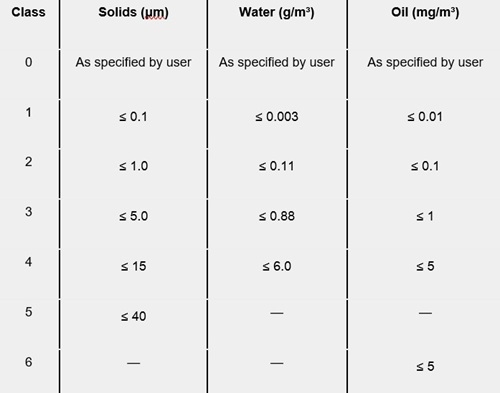
In short, the ISO 8573-1 standard means the following outcomes in practice:
- Class 1 is clean and suitable for most applications
- Class 3-4 is common for general manufacturing applications
- Class 5-6 is suitable for non-critical pneumatic tools.
This systematic approach enables organisations to match their compressed air quality requirements precisely to their operational needs while ensuring compliance with relevant safety regulations.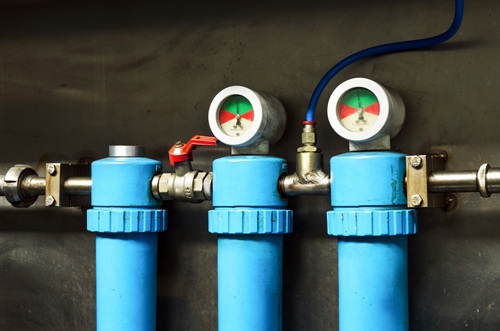 Compressed air cylinders or over-pressurised lines can rupture, which can even cause fatal accidents. Photograph: iStock
Determining appropriate air purity requires organisations to carefully analyse the most sensitive point-of-use within each system. For example, food processing environments generally adopt and follow Class 1 or 2 standards to prevent contamination, while workshops may be able to operate machinery safely if they meet Class 4 criteria.
Other UK regulations to consider
As well as ensuring compliance with ISO 8573, it’s important to be mindful of the following sector-specific and national regulations to guarantee compressed air quality in the workplace.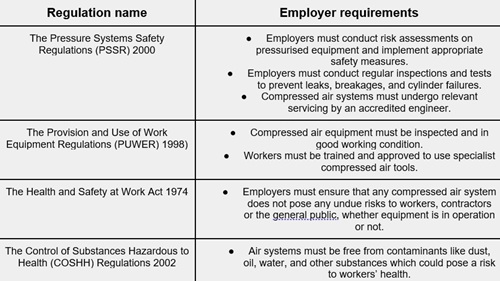
Compressed air testing requirements
Compressed air systems also need to be tested at suitable intervals to ensure they remain safe to use. This means:
- Carrying out daily checks on compressed air lines, cylinders and tools before they’re used
- Regularly checking hoses for leaks and closely examining cylinders to see if there are dents, damage or corrosion
- Operators ensuring air hoses are properly secured and compressed air levels are appropriately set
- Regularly testing emergency shut-off valves and response procedures
- Drawing up a scheme of planned preventative maintenance (PPM) in consultation with third-party air compressor engineers so that equipment is inspected and tested in line with the requirements of PSSR 2000. When necessary, these engineers must replace damaged hoses, couplings, valves, cylinders and water traps, among other essential components and fittings
- Documenting all inspections and repairs to comply with HSE requirements
- Ensuring pressurised air systems are subject to annual independent safety inspections, and a thorough written report is drawn up following the inspection – for example, if defects in the compressed air system have been discovered, the system needs to be isolated, or repairs have been recommended.
Recommendations for upholding compressed air safety
General advice on the safe use of compressed air systems and equipment include:
- Never use compressed air directly onto the body or skin
- Use hose restraints and locks to prevent hoses ‘whipping’ if the hose accidentally becomes disconnected
- Keep air cylinders upright, secured and away from direct heat
- Avoid exceeding the recommended pressure settings for the relevant equipment and machinery class
- Always wear appropriate PPE, such as safety glasses, ear protection and gloves, when using compressed air tools and systems
- Use appropriate filters to remove contaminants from compressed air (for example, coalescing filters for oils, particulate filters for solids, and carbon filters for vapour, etc.)
- Install desiccant dryers for Class 1–2 equipment, and refrigerated dryers for Class 3–4. If in doubt, consult a manufacturer for recommendations
- Ensure all staff are aware of and comply with relevant safety procedures
- Switch off the air supply immediately if a worker comes into direct contact with compressed air, and seek medical help for injection injuries (even if wounds are not visible)
- Evacuate the area immediately if a cylinder leak or rupture is detected
- Report any incidents and conduct investigations accordingly.
By following these recommendations, businesses can ensure their compressed air systems are safe, legally compliant and operate efficiently.
Note: This article is intended for informational purposes only and does not constitute professional legal or safety advice. Organisations should consult with a qualified engineer and refer to the latest HSE guidelines to ensure full compliance with UK compressed air regulations.
Chloe Miller is a business graduate and freelance writer, specialising in industry insight and the latest best practice for marketing, business and HR. Contact her at:
chloe-miller.co.uk
E. [email protected]

FEATURES

Who is the wolf in your life? Listening to the people behind the hard hat
By Inna Cebotari, Kinth Square on 02 October 2026
A new play explores the lives of migrant construction workers in the UK, using humour, real-life experiences and physical theatre to capture the banter, friendships and absurd moments that make life on site bearable, alongside the pressures that often go unseen. Ahead of the play’s premiere in London on 12-14 November, playwright Inna Cebotari explains how Three Little Pigs aims to add to the public debate about how best to support the wellbeing of construction workers.

Eliminating barriers in reporting: how conversational AI can unlock safety engagement
By Julian Taylor, ecoPortal on 04 October 2026
Online reporting systems that require lengthy and cumbersome form filling and typing can discourage workers from reporting safety incidents and concerns. However, AI-powered mobile apps that allow reporting simply by speaking can simplify and speed up the process, boosting reporting rates and overall staff engagement with safety systems and culture.

Why UK employers need to rethink recruitment, retention and support for older workers
By Orchie Bandyopadhyay on 04 October 2026
With workers over the age of 50 now comprising almost one third of the entire UK workforce, recruiting and retaining older workers is now core to the success of the economy. However, not all employers are offering what’s needed to retain and recruit older workers, and ageist attitudes, limited flexible working opportunities, and employment support that doesn’t fit with health, caring, or other responsibilities are leaving too many people locked out of the labour market.