
The fast-moving geopolitical, environmental and social landscape is making it increasingly difficult for organisations to identify, predict and plan for emerging safety hazards and risks, making it more important than ever for safety practitioners to spot the early warning signs before serious harm occurs and alert their employer and the global OSH community.
Opinion
Nothing is wrong – until it is: safety in an age of permanent uncertainty
By
on 30 January 2026
From boardroom to border: the normalisation of global instability
The first sign of global instability is rarely a crisis. It is a shift in tone. Confidence gives way to caution. Decisions that once felt routine are revisited. Timeframes shrink. Conversations start to include phrases like “for now” and “we’ll review this later”. Leaders begin to plan less for progress and more for resilience, often without explicitly acknowledging why. The organisation continues to move forward, but with a quieter tension running beneath its surface.
By the time the world names the crisis, the organisation has already absorbed it. Looking ahead to 2026 and beyond, global instability is unlikely to present itself as a single defining event. It will persist instead as a condition, a low-level, constant pressure shaping decisions long before those pressures are formally recognised as risks.
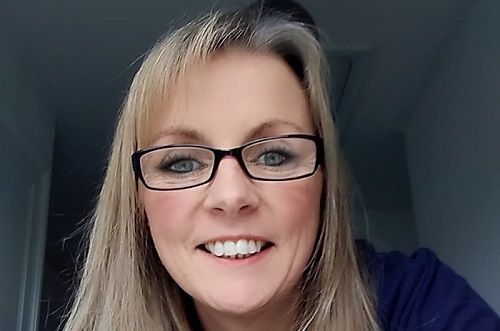 Julie Riggs: "When safety voices are only welcomed once certainty has arrived, they arrive too late."
The familiar pattern of shock, recovery and return to normality is giving way to something more ambiguous and more difficult to manage – prolonged uncertainty without resolution.
Economically, many organisations will continue to operate in constrained conditions. Energy markets remain volatile. Growth is uneven. Inflation may fluctuate rather than disappear, while wages stay under pressure. Cost control no longer feels like a temporary response to difficult times, but a permanent feature of strategic planning. In this environment, risk is less about sudden collapse and more about cumulative erosion. Thinner margins, reduced slack and a growing dependence on efficiency as a substitute for resilience.
Geopolitically, fragmentation is more likely to deepen than resolve. Strategic competition continues to reshape trade, technology access and regulatory alignment. Regional conflicts flare and subside without clear endpoints, creating ongoing uncertainty rather than definitive outcomes. Alliances feel less stable, cooperation more transactional.
For organisations, this translates into planning horizons that shrink even as risk exposure grows.
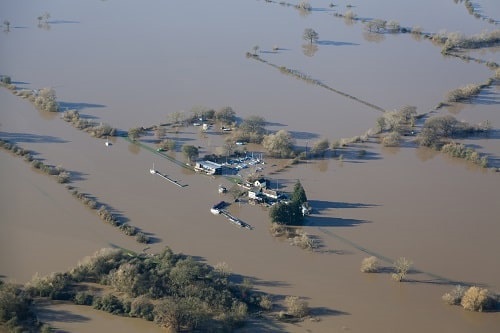 Extreme weather events are no longer anomalies; they are recurring features of the landscape. Photograph: iStock
Climate disruption further complicates the picture. Extreme weather events are no longer anomalies; they are recurring features of the landscape. They disrupt infrastructure, displace workers and strain public systems in ways that ripple through supply chains and labour markets. The boundary between environmental risk and operational risk becomes increasingly difficult to maintain.
Perhaps most significantly, the social consequences of this instability are becoming more visible in the workplace. Financial stress, political polarisation and anxiety about the future shape how people experience work. Trust in institutions continues to erode, while expectations of employers to provide stability, fairness and protection increase. Organisations find themselves navigating not only economic and geopolitical risk, but heightened psychological and emotional exposure across their workforce.
What makes this moment particularly challenging is not the novelty of these pressures, but their simultaneity. Economic constraint, geopolitical tension, climate disruption and social unease no longer arrive one at a time. They overlap, reinforce one another and move faster than systems were designed to adapt.
For safety and risk professionals, this shifts the task fundamentally. The future will be defined less by prediction and more by interpretation.
The critical question is not what the next crisis will be, but how long organisations can operate under sustained strain before adaptation turns into exposure.
In this sense, instability is no longer an interruption to work. It is the context in which work is done, shaping decisions, compressing margins and altering what is being asked of people, often without being named.
Stability, safety and a world that no longer holds still
For much of my career, safety management rested on an assumption of continuity. Not permanence, but relative stability. Change happened, but slowly enough to be assessed, managed and absorbed. Supply chains were predictable. Regulation evolved incrementally. Labour markets shifted, but within recognisable bounds. That world has gone.
 Illustration: iStock
The present landscape is defined by overlapping, persistent disruption. These forces interact in ways that defy linear prediction. What begins as a strategic or geopolitical issue often ends up reshaping supervision, competence, fatigue and recovery, the everyday conditions that determine whether work can be done safely.
Global risk is difficult to manage precisely because it rarely introduces new hazards. Instead, it changes the behaviour of existing ones. Tasks that were once routine become risky when time is compressed. Processes that were robust become fragile when redundant functions and features are removed. Fatigue accumulates not through longer hours alone, but through uncertainty, isolation and the absence of recovery.
In this way, global instability acts as a risk amplifier. It stretches systems designed for steadier conditions and exposes assumptions we no longer have the luxury of ignoring.
Safety practitioners are often among the first to sense this shift. We notice when margins narrow, when work relies more heavily on informal knowledge, when recovery time quietly disappears. But these signals are subtle. They rarely register on dashboards or audit reports. They are felt rather than measured.
The space between knowing and acting
My own interest in uncertainty did not begin with theory. It began with vaping. Smoking had already been banned in the workplace. That decision was clear, decisive and well-evidenced. What followed was quieter. Vaping began to appear indoors; small devices, faint vapour, no obvious smell, no visible residue. At the time, evidence was scarce. The World Health Organization had not yet taken a clear position. Regulation had not caught up with behaviour. Formally, there was no risk to point to.
My unease did not come from moral judgement or rule-following. I had studied indoor air quality long enough to know that “new” often means “not yet understood”. Absence of data does not equal absence of exposure.
Without evidence, leadership defaulted to reassurance. If there was no guidance, the assumption was that it was safe. Nothing dramatic happened. Work continued. Vapour dispersed. And yet that moment stayed with me, because it revealed how risk truly emerges; not with certainty, but with ambiguity; not with alarms, but with normalisation.
The most consequential risks rarely announce themselves clearly. They ask us to act before we feel permitted to do so, and to trust professional judgement when evidence has not yet arrived.
Leading and practising in uncertainty
Leadership under conditions of global instability is not simply harder, it is fundamentally different. For decades, reassurance was rewarded and ambiguity penalised. Leaders who could project certainty were seen as competent; those who raised uncertainty risked being perceived as unprepared. That model no longer serves us.
Rather than projecting certainty, leaders must now acknowledge limits. Rather than seeking reassurance, they must invite doubt. Rather than asking whether systems are compliant, they must ask whether they are sustainable under current conditions.
The role of the safety professional is evolving in parallel. The future of the profession lies less in enforcement and more in interpretation. Less in instruction and more in influence.
Increasingly, we are asked to make sense of signals that sit outside traditional frameworks – fatigue without overtime, error without negligence, stress without crisis. This work requires professional courage. Naming risk before harm occurs can feel uncomfortable, particularly in cultures that value evidence over judgement. Yet waiting for proof is, increasingly, a decision in itself.
When safety voices are only welcomed once certainty has arrived, they arrive too late.
Dynamic strain and future risk
What ties leadership and safety practice together is persistence. Geopolitical instability is not a temporary disruption to be endured until normality returns. It is the operating condition of the foreseeable future.
Future risk, then, is not about anticipating the next crisis. It is about recognising how ongoing uncertainty reshapes behaviour, decision-making and exposure over time and how adaptation, when sustained too long, becomes risk.
Safety management must adapt accordingly. Static hazard control remains essential, but it is no longer sufficient. We must become more attuned to dynamic strain, the early signs that systems are being stretched beyond what they were designed to absorb. This requires curiosity, listening and a willingness to be unsettled by what we hear.
Preparedness can no longer rely on scenario planning alone. The combinations of economic, geopolitical, environmental and social pressures are too numerous, and their trajectories too unpredictable. What organisations need instead is adaptive capacity, the ability to notice weak signals, respond proportionately, and protect people while navigating uncertainty.
This capacity is built through culture as much as systems, through trust, openness and a shared understanding that safety is not defined by the absence of incidents, but by the presence of resilience.
Global instability has erased the comfortable distance between strategic decisions and human consequences. The boardroom and the border are no longer separate domains. They are connected through supply chains, labour markets, energy systems and, ultimately, people.
The future of safety will not be shaped by our ability to predict every risk, but by our willingness to notice what feels fragile, speak plainly about trade-offs, and act before adaptation turns into harm.
Pay attention to what feels fragile, before it finally breaks. That is the real challenge of future risk. Deciding to act when certainty has not yet arrived.
Dr Julie Riggs is director of education & membership at British Safety Council
Connect with Dr Julie Riggs on LinkedIn:
tinyurl.com/2s3ewakk
Navigating future risk: 10 things that matter now
1. Stop asking whether you are safe, start asking where work feels fragile. Early risk rarely appears as failure. It shows up as strain, workarounds and quiet adaptation.
2. Treat uncertainty as a risk signal, not an inconvenience. When people can’t explain why something feels harder, listen. Discomfort is often the first data you will get.
3. Pay attention to what people are absorbing for the system.
If work only succeeds because individuals stretch, stay late or compensate, risk has already been displaced onto them.
4. Do not wait for perfect evidence before acting. In emerging risk, the decision to wait is itself a decision – and often the riskiest one.
5. Ask whether expectations remain realistic under current conditions. Targets set in stable times can become unsafe in unstable ones.
6. Make it safe to raise concern without proof. If early warnings require data, incidents or business cases, they will arrive too late.
7. Use regulation as a baseline, not a comfort blanket. Compliance may tell you what is legal; it rarely tells you what is sustainable.
8. Invest in capacity, not just efficiency. Resilience requires slack. Systems without margin rely on people to absorb shock.
9. Expect risk to travel across boundaries. Global instability reshapes local safety through supply chains, labour markets and decisions made far from the frontline.
10. Act while harm is still optional. By the time risk feels obvious, your choices are already limited.
OPINION
Building a future worth working in
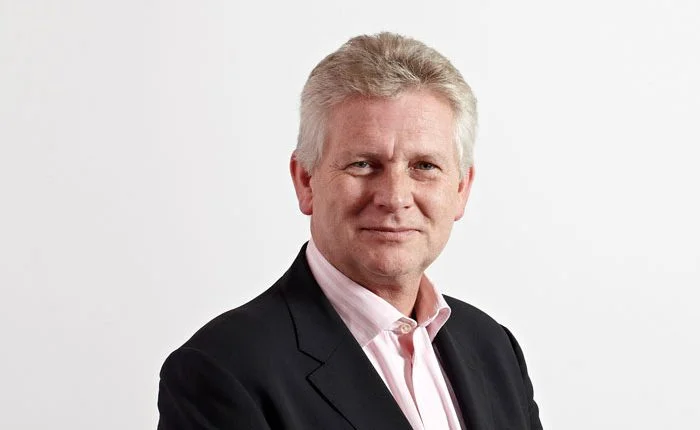
By Mike Robinson FCA, British Safety Council CEO on 12 October 2026
It’s easy to become myopic about the future of work. Take a quick look at the world today and the signs can seem discouraging: political instability, economic volatility, the accelerating disruption posed by AI and climate change. Together, these factors paint a picture of uncertainty that can make our belief in progress seem naïve and tempt us into believing that the future can be no better than the past, that our best days are now behind us. That would be a profound failure of imagination.

Rethinking homes as centres of economic activity (amongst other things)
By Andy Lake, Flexibility.co.uk on 08 October 2026
The decentralisation of work away from fixed workplaces, the rise of AI and demographic changes are creating new opportunities for people to carry out ‘hands-on’ work in the home, such as production of fashion, textiles, food and drink, and delivery of health services and therapies. However, our existing housing stock is not designed to accommodate such functions, so it’s essential that future town planning creates homes that support different kinds of enterprise, both to support business success and the wellbeing of these new home-based workers.
Learning that saves lives
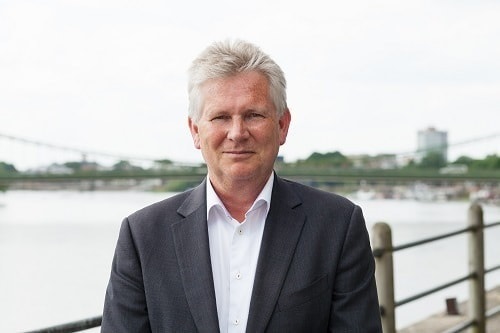
By Mike Robinson, chief executive, British Safety Council on 11 September 2026
Success can sometimes be a problem. The better we become at preventing incidents, the harder it can be to see what is actually preventing them.