

The upcoming nuclear golden age won’t just be built on concrete and steel, but on a fundamental reset of how we define and tolerate risk. Belinda Liversedge looks at the case for change and what needs to happen next.
Features
A new path for nuclear?
By
on 25 June 2026
The UK built the world’s first commercial-scale nuclear power station when Calder Hall went online in 1956.
Yet, shadowed by two major international disasters – most recently the catastrophic failure at Fukushima Daiichi in 2011 – and with nuclear infrastructure subsequently deemed financially “unattractive” by successive governments, our domestic industry dwindled into a decades-long period of wind-down and decommissioning.
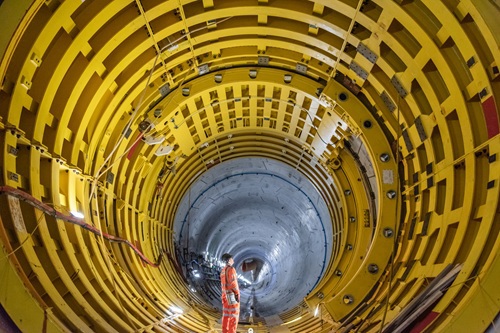 The nuclear industry is poised for a fundamental reset of how it defines and tolerates risk. Photograph: Tunnel at Hinkley Point C / EDF Energy
All that is set to change under the current government. Prime Minister Keir Starmer has heralded a nuclear “golden age”, pledging billions to deploy super-reactors and pioneer small modular reactors (SMRs) faster and cheaper, positioning Britain as a “leading nuclear nation”.
With artificial intelligence creating a new demand for 24-hour power, nuclear is named the definitive solution. Unlike intermittent renewables such as wind and solar, its potential lies in solid, baseload reliability.
Yet what’s fascinating for safety professionals is how the safety regulatory environment – not cost, radioactivity, or public pushback – is being identified as the primary barrier to getting this dream off the ground.
“We have become bogged down in processes that do not actually deliver additional nuclear safety,” said Starmer in accepting all 47 recommendations of the independent Nuclear Regulatory Review led by John Fingleton.
“Fingleton reported on our nuclear industry. He found pointless gold-plating… unnecessary red-tape…well-intentioned, but fundamentally misguided, environmental regulations,” he continued.
The UK is rightly proud of its safety laws and world-leading safety performance. But when it comes to nuclear, has a culture of hyper- regulation been holding back our progress? And what has been the impact on the workers on the ground?
Paperwork: ‘it wears you down’
Nuclear disasters loom large in the public mind when we think of risk. Chernobyl in 1986 caused untold health and environmental damage when the plant failed, shooting clouds of radioactive material into the air across Ukraine, Belarus, Russia, and Europe.
When weighted against catastrophic events of this scale, Fingleton’s assessment that nuclear suffers from a culture of “extreme risk aversion” might initially sound like a good thing.
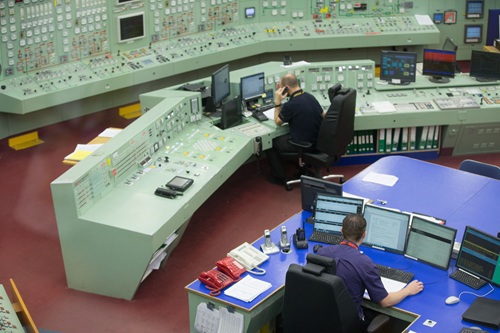 For nuclear reactor operators, hyper-vigilance is a daily reality of working life. Photograph: EDF Energy
However, according to Fingleton, risk aversion in nuclear stems not from fear of radiation, but from a fear of having a plant held up or challenged, such as by a judicial review or environmental pressure groups.
Such hold-ups are eye-wateringly costly and the threat of permission being withheld is paralysing for developers, given that nuclear plants take tens of billions to build.
This systemic need to document every action perfectly however, can create a working environment that’s mentally toxic.
As one operative notes on an industry forum: “Every single document goes through three tiers of internal checking before it even reaches the regulator. If a comma is out of place or a reference code is formatted wrong, the whole package is rejected and you start again. The constant threat of being ‘found out’ over minor clerical errors creates a baseline of daily anxiety that wears you down.”
There is a distinct safety risk to this level of hyper-vigilance and obsessive paperwork. We know from human factors research that under extreme compliance pressures and procedural boredom, workers begin to over-analyse micro-data.
People in Control: Human Factors in Control Room Design, examines how, when a system is engineered to be so safe that the operator feels redundant, a shift occurs from system awareness to compliance awareness. The worker hyper-fixates on the paperwork loop because it is the only dynamic variable they have control over.
The research warns that this causes “complacency tracking” – where workers become masters at passing audits but experience deep cognitive fatigue and a lost sense of agency regarding the actual physical plant.
Over-engineering secondary risks
The nuclear sector operates under the pursuit of zero-risk. The principle of ALARP (as low as reasonably practicable), which underpins our health and safety in the UK, is pushed to its limit because the perceived consequences of a nuclear failure are so severe.
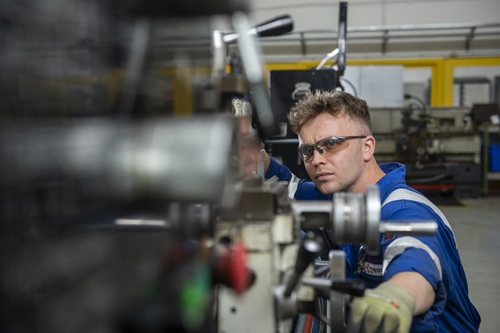 Nuclear plants are like 'factories' with engineering, welding and carpentry happening and with attendant risks. Photograph: EF Energy / John Cairns
Before we examine how this approach might be causing ‘unnecessary’ problems, we need to appreciate the true nature of the work on a typical nuclear site.
It’s not just about managing the hazardous ‘experiment’; the reactor core is just a tiny part of the plant’s layout, explains Professor Kevin Bampton, CEO of the British Occupational Hygiene Society (BOHS), an organisation with long-running ties to the nuclear sector.
“They are like factories,” Bampton shares. “To make that one physics experiment work on a moderately large scale, you need a massive infrastructure. The problem is that there’s a whole cascade of activity and jobs managing the core radioactive risk, and every one of those has its own microcosm of risk.”
Kelvin Williams, an occupational hygiene consultant at Hinkley Point C (HPC) – which is currently under construction and due to come on stream in 2030 – highlights the unintended health consequences of placing nuclear risk so high up the hierarchy that it eclipses conventional workplace hazards.
He gives the example of how concrete surfaces across the site are often mandated to a zero-tolerance smoothness specification. While key in rooms housing precision nuclear equipment, wide swathes of non-critical, underground areas face the same rules.
To achieve this perfect finish, workers must use machinery to grind and sand back the concrete. “Imagine sanding it down,” Williams states. “You get exposed to respirable crystalline silica, you get exposure to noise, you get exposed to hand-arm vibration issues. This could all be avoided if we listened to Fingleton, who says perhaps we should look at what kind of risks we can tolerate. Is that concrete finishing required?”
The threadbare regulator
Fingleton argues the “culture of extreme risk aversion” shapes ongoing operations, not just new builds. “Regulators frequently make overly conservative and costly decisions that are not proportionate to the actual risk being managed,” he writes.
The reality on the ground is that the regulator is heavily cash-strapped, argues Professor Bampton. “The ONR’s occupational health team is tiny, and they’re dealing with this massive estate where some of the biggest amounts of building are going on out of any sector. And there’s hardly anybody to give any support.”
With lack of manpower and few senior inspectors, a rigid and defensive approach emerges.
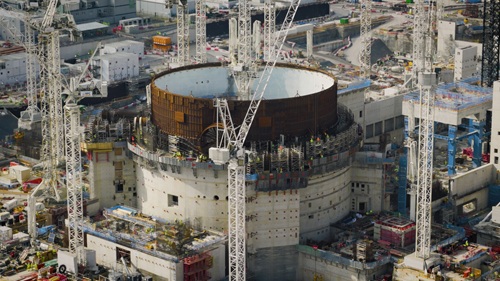 Hinkley Point C's Unit 2 Reactor - the whole plant will come online in 2030. Photograph: EDF Energy
“You get this sort of strange set of behaviours where if the regulator sees something that’s wrong, they stamp on it hard,” Bampton says. “They simply haven’t got the time to have developed collaborative conversations.”
This view is echoed by Prospect union, which submitted evidence to Parliament recently saying that funding cuts have left their inspector members in ‘fire-fighting mode’: “Inspectors are restricted to preventing or responding to emergencies without capacity to develop advisory services and relationships.”
‘Passporting’ design approvals
The government’s plan to accelerate new builds represents a massive change of tack. Instead of what the review calls ‘gold-plating’ designs – applying UK standards to plants that have already been built successfully elsewhere (Hinkley Point C is modelled on French plant, for example) – future nuclear plants will be “passported” in.
While an interesting idea in theory, Bampton warns that other parts of the world maintain lower safety standards than the UK. “Asbestos is still legal in the States,” he cautions. “If we’re going to offshore nuclear safety, on nuclear safety, Europe would be best, because at least you’ve got a chance of some consistency of supply chain components.”
A timely warning, as in September 2025, the UK signed a deal to fast-track approvals of nuclear plants built in the US, cutting the time it takes to get regulatory approval for new nuclear plants in half.
Conversely, a more agile regulatory framework that empowers the experts on the ground could lead to much better decisions for occupational health, adds Williams. He illustrates the current frustration when trying to challenge historical specs:
“Take the concrete roughness specification. We ask, ‘Why does it have to be 6 mil? Why can’t it be 4 mil? Who came up with 6 mil, and can we change it, please?’ And then the team spends weeks trying to find out who wrote that spec and what the engineering rationale was. Of course, it was written 30-odd years ago, the author is long gone, and the thing has got to be built. It’s ‘do you want us to build this project, or do you want us to chase our tails for the next two months over a roughness specification?’ Let’s get on with the build.”
“Let’s rethink our appetite for risk”
The King’s Speech in May set out that major statutory legislation must be passed before these structural changes can take effect. “Without changing UK nuclear regulation at a statutory level we are not going to be able to make progress, because the current safety regime will be insufficient,” summarises Bampton.
Ultimately, the nuclear sector has a historic opportunity to reset how regulations are applied so that both project timelines and worker health benefit.
“It’s that appetite for risk that there is within the industry, which is what Fingleton appears to be addressing,” concludes Williams. “Let’s rethink our appetite for risk here focusing heavily where it seriously matters and stepping back where it does not.”
FEATURES

Who is the wolf in your life? Listening to the people behind the hard hat
By Inna Cebotari, Kinth Square on 02 October 2026
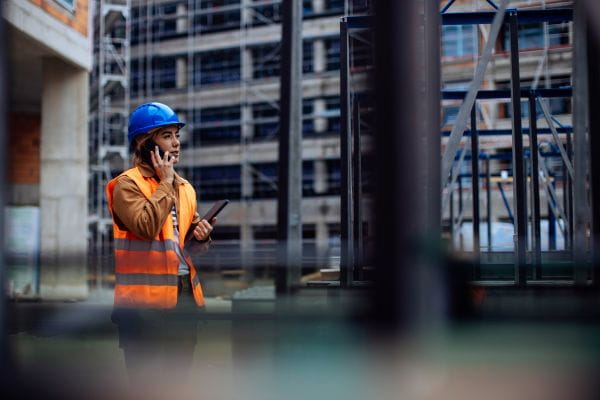
A new play explores the lives of migrant construction workers in the UK, using humour, real-life experiences and physical theatre to capture the banter, friendships and absurd moments that make life on site bearable, alongside the pressures that often go unseen. Ahead of the play’s premiere in London on 12-14 November, playwright Inna Cebotari explains how Three Little Pigs aims to add to the public debate about how best to support the wellbeing of construction workers.
Eliminating barriers in reporting: how conversational AI can unlock safety engagement
By Julian Taylor, ecoPortal on 04 October 2026
Online reporting systems that require lengthy and cumbersome form filling and typing can discourage workers from reporting safety incidents and concerns. However, AI-powered mobile apps that allow reporting simply by speaking can simplify and speed up the process, boosting reporting rates and overall staff engagement with safety systems and culture.

Why UK employers need to rethink recruitment, retention and support for older workers
By Orchie Bandyopadhyay on 04 October 2026
With workers over the age of 50 now comprising almost one third of the entire UK workforce, recruiting and retaining older workers is now core to the success of the economy. However, not all employers are offering what’s needed to retain and recruit older workers, and ageist attitudes, limited flexible working opportunities, and employment support that doesn’t fit with health, caring, or other responsibilities are leaving too many people locked out of the labour market.