

If anyone was still in doubt, the #MenopauseRevolution is truly upon us.
Opinion
Menopausal women need better support at work
By
on 16 December 2021
Thanks to the support of colleagues from all parties across both Houses of Parliament, and the businesses, organisations and hundreds of Menopause Warriors campaigning with us, huge strides have been made in our campaign in six months alone.
The need to vastly improve support and visibility of menopause is now firmly on the political and public agenda, and I’m so proud of how far we’ve come in that short time. Until now there has been next to no attention given to the devastating effects it can have.
Through a momentous effort by all those involved, the government recently announced it would reduce the cost of Hormone Replacement Therapy (HRT) prescriptions to just one annual payment, set up a Menopause Task Force in government co-chaired by myself, and make menopause a core priority in the upcoming Women’s Health Strategy. It wasn’t an easy road to get here, but I welcome the government’s decision to work with us and do the right thing for everyone affected by the menopause.
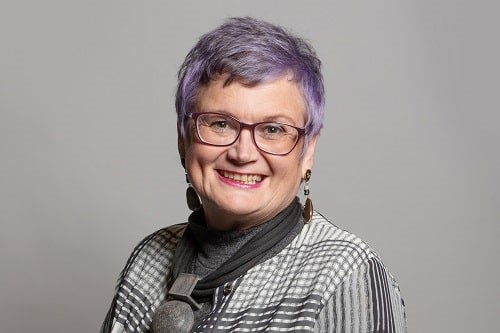 Carolyn Harris MP. Photograph: UK Parliament
Just over 50 per cent of the UK population will experience the menopause at some point in their life, and right now there are 13 million who are currently menopausal or perimenopausal. Millions of these women have or will experience debilitating symptoms, and the impact is not just limited to them – it can extend to friends, families and colleagues too.
Tackling attitudes and policies on menopause in the workplace will be a key piece of the puzzle, which is why it is a central focus of our campaign. For too long, people discussed ‘the change’ behind closed doors – if at all – making it a taboo subject in the workplace more than almost anywhere else.
We’ve heard some awful stories about those who have had to suffer in silence at work, rather than disclose to their employer what they are going through. Even worse, we’ve heard from those who have spoken up to seek help but have been met with employers who have either ignored them or made them feel like their struggles were detrimental to their ability to do their job. While we hope these stories of outright discrimination are in the minority – the reality is the majority are not getting the support they need.
Recent research by the Fawcett Society found that only 22 per cent of those experiencing the menopause disclose it at work, with half saying it made them less likely to go for a promotion and a quarter saying they would consider leaving their roles before retirement. In total, almost a million women in the UK have left jobs because of menopausal symptoms, many at the peak of their careers, which exacerbates gender inequality in senior roles and the gender pay-gap.
 Research by the Fawcett Society found that only 22 per cent of those experiencing the menopause disclose it at work. Photograph: iStock
Yet there are employers who are really acting as trailblazers in this space, such as Timpson who amazingly are paying for HRT prescriptions for staff, and others showcasing best practice in their support for employees – from Network Rail to Bristol Myers Squibb to Tesco and the John Lewis Partnership.
There is a role for both government and employers to play here to work together to drive forward the pace of change. However, due to the current lack of guidance and legislation, many employers don’t have the tools they need to ensure they have effective support in place for menopausal women, and those who are facing discrimination at work don’t have anywhere to turn to seek help.
As co-chair of the new Government Menopause Taskforce, alongside the Health Minister, we will look at all areas of support which are currently falling short and failing women, including guidance and support for employers to better protect menopausal women from discrimination at work.
At the same time, the All Party Parliamentary Group (APPG) on Menopause, which I chair, will continue its inquiry to assess current policy around menopause in the workplace, among medical professionals and in education, and the impact it has on people’s daily lives. Progress is being made, but it’s just the beginning. We want to revolutionise how the menopause is perceived and treated so that women can continue to be wonderful.
Carolyn Harris MP is Labour Member of Parliament for Swansea East
Follow Carolyn Harris MP at:
News from the Menopause APPG at:

OPINION

Learning that saves lives
By Mike Robinson, chief executive, British Safety Council on 11 September 2026
Success can sometimes be a problem. The better we become at preventing incidents, the harder it can be to see what is actually preventing them.

Migraine in work: a test of the Government’s plans to Keep Britain Working
By Rob Music, The Migraine Trust on 07 September 2026
Migraine can have a profound, and often avoidable, impact on people’s working lives and careers. The Government’s growing focus on workplace health offers an important opportunity to change this, but only if this common, often disabling and frequently invisible neurological condition is properly understood and addressed by Government, the NHS and employers.

Noise risk and multi-track enforcement: what EHS managers need to know
By Emma Tattersdill, Bexley Beaumont law firm on 17 August 2026
Noise nuisance from an industrial or commercial site can result in costly and time-consuming legal action from regulators and neighbours, but there are practical ways of ensuring noise levels do not exceed acceptable limits and trigger complaints from nearby businesses and residents.