

Court documents filed in April by lawyers representing actor Stephen Fry say he was injured in a two-metre fall from a stage.
Features
‘The right to a safe means of escape’: what Stephen Fry’s fall teaches us about event safety
By
on 03 June 2026
The circumstances of Mr Fry's fall remain disputed and the court has not determined how the incident occurred. The discussion of stage safety measures in this article is intended as general industry commentary and should not be taken as suggesting any particular failing in the case.
While at the O2 to deliver a talk on artificial intelligence in September 2023, the High Court claim alleges Fry exited the stage and, at some point, he fell, leaving him with a broken right leg, a broken hip, a broken pelvis and broken ribs.
What happened is not for us to ascertain. Organisers CogX Festival Ltd and creative agency Blonstein Events Ltd, defendants in the personal injury claim, say they are in “no way responsible for the incident”.
Nevertheless, a fall from height that resulted in a much-loved celebrity being seriously injured doing an activity we normally think of as being safe is a topic of general interest. While the specific facts of the Fry case await judicial determination, the incident shines a spotlight on the risks that must be managed to keep performers safe.
We draw back the curtain on production safety to find out how a place of entertainment can also be a place of risk, and what skills and methods are used to manage that risk.
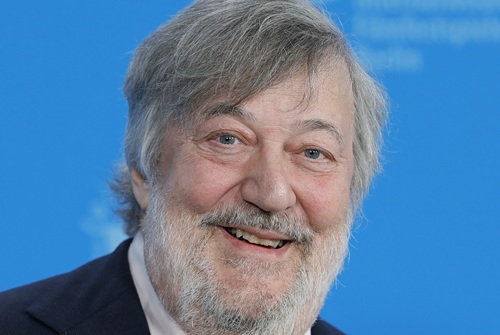 Stephen Fry at the Berlinale for the world premiere of his film 'Treasure'. He was injured in a fall off stage at the O2 in 2023, according to his High Court claim. Photograph: Elena Ternovaja
Establishing the exit
Shakespeare wrote that “all the world’s a stage, and all the men and women are merely players; they have their entrances and their exits”.
Shakespeare was an actor himself and so knew that in theatre, the foundation of any performance is managing where the cast comes on and off.
“It’s not just about receiving applause, it’s about safely leaving the area as much as safely arriving. In a theatrical performance all of that is managed because exits and entrances [often happen concurrently],” agrees Michael Anderson, health and safety manager at the Queen Elizabeth II Centre in London.
“Performers on stage have the right to a safe means of escape. So it has to be illuminated to some degree because there’s a legal right to a safe means of escape. That’s true in every theatre.”
Rehearsal and orientation
Once the exits and entrances are established, it’s important to help orient the actor with them.
“Rehearsal and blocking are the fundamental starting points for any and all stage work, particularly where the individual might be inexperienced in the environment (which we see a lot at the QEII Centre with business leaders being thrust into the limelight),” says Michael.
‘Blocking’ is the process of marking the actor, performer or speaker’s movement. Everyone from TV presenters to dancers uses these ‘bits of tape on the floor’, as Michael puts it, to know where to stand and move to.
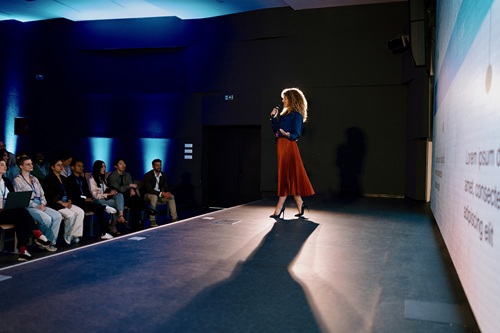 Rehearsal and blocking are the fundamental starting points for any and all stage work. Photograph: iStock
Managing the stressed speaker
Any speaker of a high profile, we know, will be busy and possibly stressed. They may have got caught in traffic on the way or may be very focused on their performance ahead of the event.
What happens if the actor hasn’t arrived in time to rehearse, or if they rehearsed but they didn’t have their mind on things? “What you do then is you have to counter [that risk],” explains Michael. “Someone says ‘ok, he/she didn’t understand what should happen when coming off stage’ We all have our days.”
The responsibility will then fall to the stage or production manager in a theatre or venue (who also manages the rehearsal or learning phase to ensure safety) to then physically stand backstage and direct the actor to the safe and correct exit.
“You would wave [the actor] on to [their] next point and you act as that wayfinder, that point of reference,” says Michael.
Lighting and edges
Preventing falls is really important in a performing venue, which is naturally raised (the O2 is nearly 2 metres like a typical festival stage).
“The most common victim of falling off stage is a member of the public invited onto stage who gets lost because of the lighting (too bright or too dark) or a director stepping back into the orchestra pit – that is a really common thing. It has happened this year in the West End. They get engrossed in their work,” says Michael.
Stephen Fry fell ‘whilst exiting the stage backstage area’ however, not from the front of the stage. This would be normal practice in that actors and performers never simply walk off the front edge downstage [facing the audience]. “You’re only going to leave at the sides or the back,” says Michael.
Backstage, generally speaking, can also have points where a fall could take place if not properly guarded.
There may be points of entry to enable sets to be loaded on and off when the stage is struck, for example. When not in use, such gaps can be made safe using ‘flats’ or handrails.
According to Association of British Theatre Technicians technical standards: “Barriers should be provided to all stairs, ramps, landings, balconies, galleries and other changes of level exceeding 380mm. Performers and crew members should be provided with the same means of protection as are the public.”
Venues can also use lighting as a trick of their trade to help illuminate any gaps or edges.
“We are fortunate in entertainment that we are allowed to work on an open edge. Unlike construction, which mandates physical barriers, entertainment allows open-edge work provided alternative fall-protection measures are in place."
“It’s important that we mark it and one of the responsibilities that we have different to an open rooftop or edge is that we rehearse, we tell people where it is, we light it, we illuminate it, we shine lights on it - and that's how we mitigate the risks in ways that aren't possible in another industry such as construction. And that allows us to ‘adapt’ how we meet our health and safety responsibilities.”
An invisible art
So, there are more risks to performing than meet the eye. We have the expression ‘break a leg’ when someone is about to perform – but this case shows that it can literally happen.
According to Michael, however, who has had more than 30 years in the events business: “Stephen Fry’s case I would say is extremely rare.”
"This two-metre fall doesn’t expose a vulnerability in the event safety system, but the incident serves as an opportunity to appreciate the otherwise hidden art of performance safety."
FEATURES
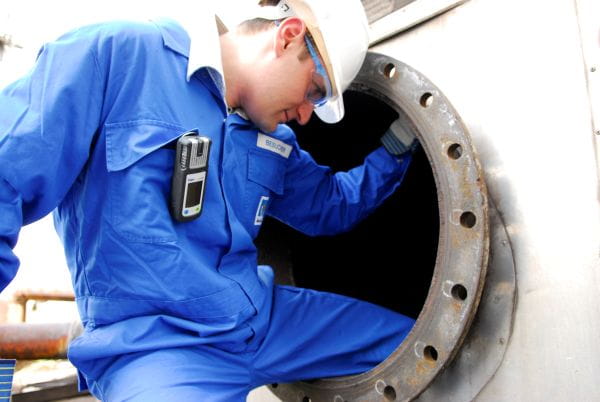
Confined spaces: why training is key to keeping workers safe
By Adam Barker, Draeger Safety UK on 22 September 2026
Suitable training plays an essential role in preventing fatalities and dangerous situations during work in confined, hazardous spaces like tanks, silos and sewers, but it’s essential that any course selected genuinely reflects the specific tasks, hazards and risks workers will be faced with.
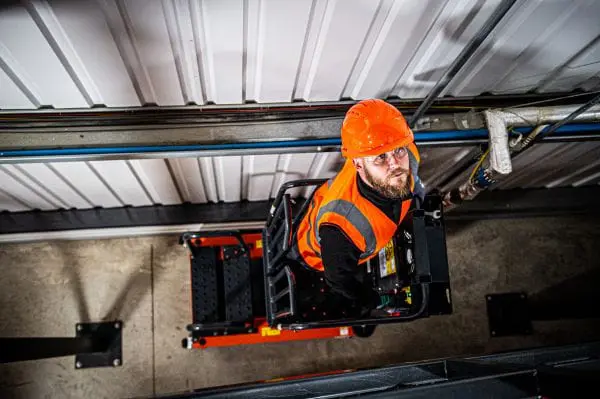
Why the future of low-level access starts with rethinking old habits
By Samuel Butterworth, JLG Power Towers on 22 September 2026
Low-level access equipment like powered lifts can help make work at height safer by providing a secure, enclosed working platform, but they can also bring other benefits, such as avoiding the need for awkward stretching to reach work areas, which helps to prevent musculoskeletal injuries.
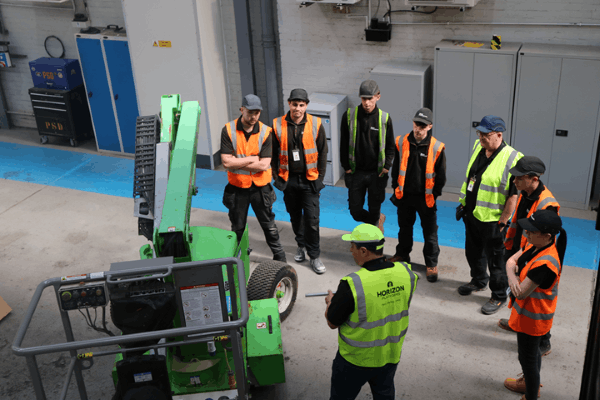
Why paperwork alone isn’t sufficient MEWP rescue preparation
By Ben Hughes, Horizon Platforms on 22 September 2026
A recent safety awareness day has highlighted the importance of contractors regularly practising emergency rescue from mobile elevating work platforms, rather than relying on one-off training sessions and paper procedures that are not always easy to follow during a fast-moving incident.