
When does something designed to protect you from danger become something that restricts your freedom and a cost you would rather avoid?
Opinion
Is it ever right to save money if it could cost people’s lives?
By
on 03 May 2022
It’s a question that has forever dogged health and safety and is once again being asked by politicians eager to ditch so-called ‘red tape’ in a bid to curb the rising cost of living.
Back in the 1980s, when our founder James Tye successfully campaigned to make wearing a seat belt a legal requirement, Lord Balfour of Inchrye opposed it. He argued the “nanny state” would simply intrude further into our lives on things like smoking and – heaven forfend – mandating the use of life jackets. Both of these we now, of course, accept as common sense.
Lord Balfour’s argument at the time was that people should be able to decide for themselves when to wear a seat belt. He, personally, wouldn’t wear one on a local journey, say from his house to another, but would when driving his car on the ‘open road’. Forcing people to wear them, especially the ‘over-worked’ police, was in his view a step too far.
Today, it seems extraordinary to think that something as simple as putting a seat belt on when you get in a car should have even been up for debate. The government’s own estimates show that around 2,000 lives have been saved each year, meaning 80,000 fewer lives have been lost since the law changed in 1983.
The same debate is now being had over whether annual MoTs should only be required every two years. Figures from the Royal Society for the Prevention of Accidents (RoSPA) show that just last year 29 fatal accidents and 345 accidents causing serious injury occurred where a defect with the vehicle was a contributing factor. At the same time, nearly a third (30 per cent) of vehicles were reported to have failed their MOT.
Perhaps the question we should be asking is what value we put on preventing such accidents and deaths, and whether the amount saved is really worth the risk? It’s a question that workplaces across the country ask themselves all the time.
Seeking to slash health and safety rules simply to cut costs is a bit like burning all the lifeboats on a ship in the belief that the weight saved will stop it sinking. It might keep you warmer as you slip into the watery depths, but your chances of drowning are now very much higher.
It strikes me we have a choice as a country and a society – do we want to live somewhere that is more, or less, dangerous for ourselves and future generations?
We sometimes think of health and safety as a ‘burden’, as something that gets in the way. But consider that, in the 50 years since Lord Robens wrote his report which led to the Health and Safety at Work Act (1974), numbers of fatal injuries at work have fallen by 90 per cent. And that’s even after allowing for changes in the kinds of jobs people do during that time.
Clearly, this is good news in terms of human lives saved, but there are also financial benefits from preventing injuries and deaths. So, it’s a false choice to make between our safety and our wallets. Indeed, I believe we all need to prioritise our safety, health and wellbeing, including our financial wellbeing.
That means the government, businesses and employers putting lives first, not chasing cheap solutions, or what appear to be easy fixes. After all, in the long run the most successful countries also tend to be the safest and healthiest.
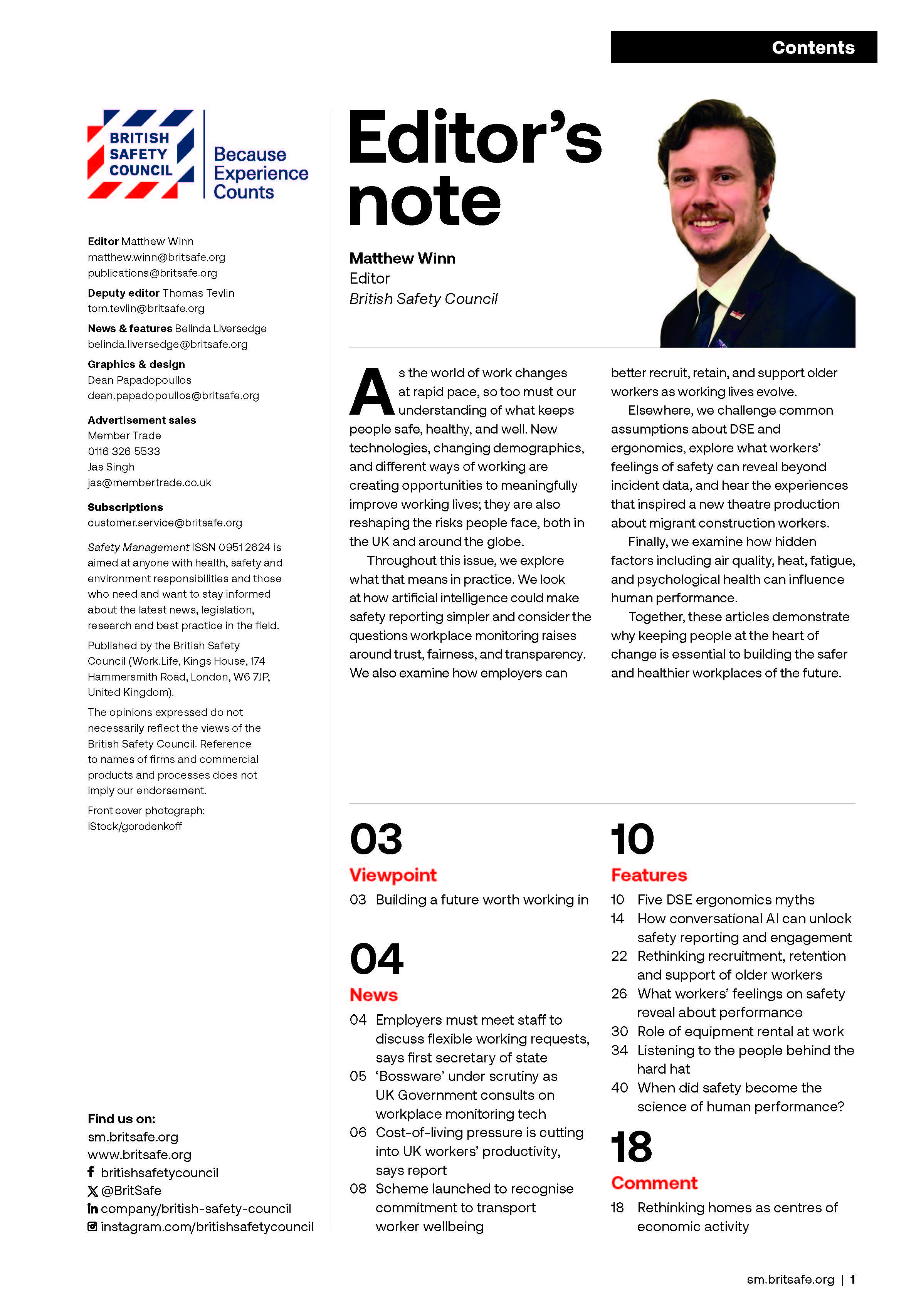
Mike Robinson FCA is Chief executive of the British Safety Council
OPINION
Building a future worth working in
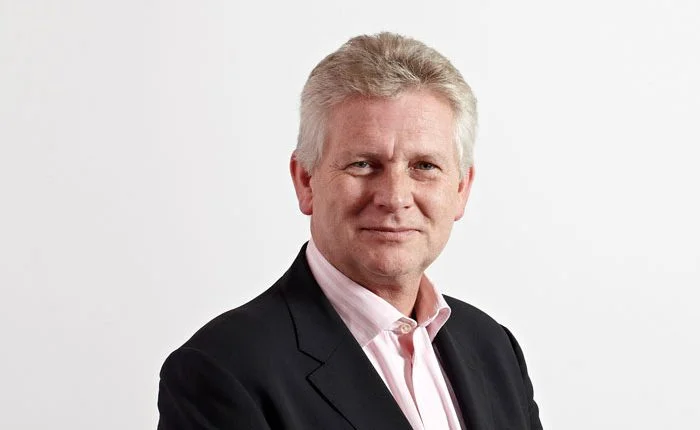
By Mike Robinson FCA, British Safety Council CEO on 12 October 2026
It’s easy to become myopic about the future of work. Take a quick look at the world today and the signs can seem discouraging: political instability, economic volatility, the accelerating disruption posed by AI and climate change. Together, these factors paint a picture of uncertainty that can make our belief in progress seem naïve and tempt us into believing that the future can be no better than the past, that our best days are now behind us. That would be a profound failure of imagination.
Rethinking homes as centres of economic activity (amongst other things)
By Andy Lake, Flexibility.co.uk on 08 October 2026
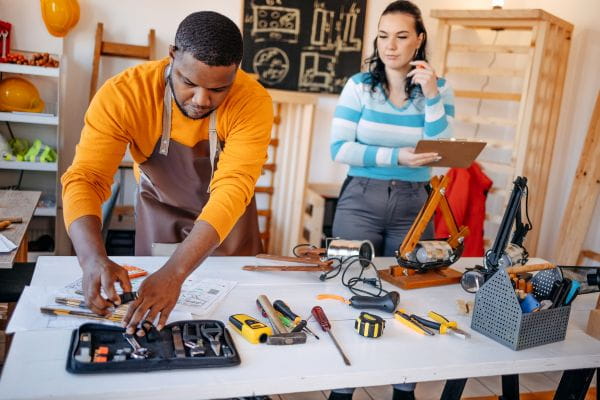
The decentralisation of work away from fixed workplaces, the rise of AI and demographic changes are creating new opportunities for people to carry out ‘hands-on’ work in the home, such as production of fashion, textiles, food and drink, and delivery of health services and therapies. However, our existing housing stock is not designed to accommodate such functions, so it’s essential that future town planning creates homes that support different kinds of enterprise, both to support business success and the wellbeing of these new home-based workers.
Learning that saves lives
By Mike Robinson, chief executive, British Safety Council on 11 September 2026
Success can sometimes be a problem. The better we become at preventing incidents, the harder it can be to see what is actually preventing them.