
This month, our founder James Tye would have celebrated his 100th birthday, on 21 December. In fact, James died a quarter of a century ago, though his legacy endures to this day – both in terms of what he achieved in his lifetime and the way the British Safety Council continues to take forward what he began.
Opinion
Standing up for those without a voice
By
on 09 November 2021
In the late 1950s, when James first started campaigning on health and safety, Britain’s terrible tally of accidents and deaths at work meant the priorities looked quite different to today, but his focus was always much broader than just safety at work.
Indeed, the scope of James’s achievements included not only making seatbelts a legal requirement, and the passing of the landmark 1974 Health and Safety at Work Act, but also putting safety messages and perforations on plastic bags, banning children’s flammable nightdresses and cleaning up our beaches.
These successes barely scratch the surface of his tireless record in 40 years leading the British Safety Council. The truth is, James never forgot what is most important – that every life counts, and we must always act on behalf of those who are heard the least.
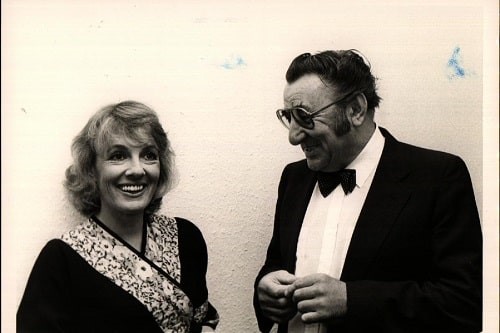 Our founder, James Tye, is pictured here with Dame Esther Rantzen in the 1980s
This winter, as we face the risks that Covid and flu pose to our health, our workplaces and the NHS, we should perhaps draw inspiration from James Tye.
It is tempting to view Covid through a cost/benefits lens. Money that we continue to spend on vaccines is clearly having an impact, and many of the deaths are among those who are older, already ill, have health conditions, or are unvaccinated.
In which case, the argument goes, it’s time to stop spending on the other measures we have been taking, such as test and trace, and leave the precautions behind, including masks, social distancing or protective barriers.
But this would be to forget the wider costs to society of Covid-19, and the pain and suffering it causes not just to the people who catch it.
At a time when staff shortages have been affecting nearly all our economy and are felt most acutely in health and care settings, we can ill afford to pile extra pressure on these vital services by allowing levels of sickness absence to increase.
Our schools know how disruptive it is to have to send students home – sometimes whole year groups – when other children, or even enough staff, test positive.
We all remember the infamous ‘pingdemic’ whose impact was most visible on empty supermarket shelves. But continuing shortages, higher energy bills and farmers unable to get produce to market have become all too familiar aspects of our lives, and risk becoming semi-permanent features.
All of these complex issues have consequences and tend to mean one thing – that people needing vital services, food or education are the ones who suffer, as well as the staff having to deliver them.
I believe James Tye would have spoken up for everyday people’s needs right now. He would not have allowed the impact and risks of Covid to be absorbed by those who can least afford it, just to save money or cut costs.
The risk of allowing Covid to become ‘normalised’ in workplaces and society more generally is too great and it is still too early to know where it will lead. The grim passage of this disease still has too far to go around the world to throw up our hands now or imagine we can resume life as ‘normal’.
We should continue to protect each other by doing what we know works to keep infections, and deaths, as low as possible.
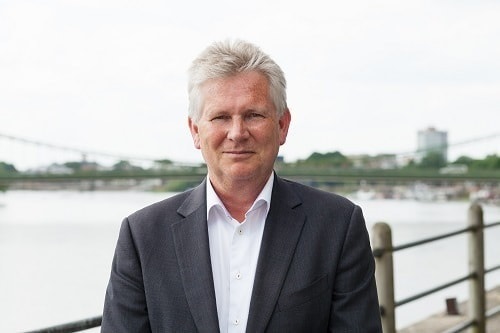
Mike Robinson is Chief executive of the British Safety Council
OPINION
Learning that saves lives
By Mike Robinson, chief executive, British Safety Council on 11 September 2026
Success can sometimes be a problem. The better we become at preventing incidents, the harder it can be to see what is actually preventing them.

Migraine in work: a test of the Government’s plans to Keep Britain Working
By Rob Music, The Migraine Trust on 07 September 2026
Migraine can have a profound, and often avoidable, impact on people’s working lives and careers. The Government’s growing focus on workplace health offers an important opportunity to change this, but only if this common, often disabling and frequently invisible neurological condition is properly understood and addressed by Government, the NHS and employers.

Noise risk and multi-track enforcement: what EHS managers need to know
By Emma Tattersdill, Bexley Beaumont law firm on 17 August 2026
Noise nuisance from an industrial or commercial site can result in costly and time-consuming legal action from regulators and neighbours, but there are practical ways of ensuring noise levels do not exceed acceptable limits and trigger complaints from nearby businesses and residents.