

Ultraviolet light is a highly effective way of disinfecting equipment and surfaces to help control the spread of the coronavirus in buildings.
Features
Lighting the way out of Covid
By
on 13 April 2021
Following the government announcement detailing a roadmap out of lockdown restrictions, health and safety professionals must ensure they are exploring all avenues to make their facilities Covid-safe in preparation for the repopulation of schools, offices, shops and other spaces.
Minimising the spread of coronavirus has been a priority for the past year but mitigating risks has disrupted business and education. Needing to leave equipment to quarantine for 72 hours between uses has led to some organisations putting it out of use totally or having to invest in more.
Similarly, fumigating rooms in between uses leaves the space out of action for hours, limiting how much it can be used in a day. To overcome disruption, health and safety professionals must find efficient, reliable and cost-effective disinfection methods to avoid negatively impacting productivity.
While many facilities have implemented wasteful, arduous disinfection processes using wet wipes and chemicals, some organisations are using a more efficient defence against outbreaks of Covid-19 and other illnesses. Using UV-C (ultraviolet-C) light to disinfect is saving health and safety professionals and other staff time, effort and resources while guaranteeing deeper and more efficient disinfection than wipes and chemicals.
How does UV-C disinfection work?
When short-wavelength UV (UV-C) is shone onto a surface for as little as
five minutes, any pathogens present on the surface are disabled. This happens via an energy transfer which renders microbes unable to reproduce or express proteins necessary for survival, resulting in death or inactivation.
The technology has been widely used since the 1950s to disinfect water supplies and has become a staple in the food and drink production process. UV-C disinfection kills harmful microbes, such as E. Coli and Salmonella, in just a few minutes of exposure. UV-C decontamination is also used to treat wastewater, sterilise science laboratory equipment and has been identified as a water cleaning solution for developing countries.
With a long-standing history of success in treating food and drink and ensuring top contamination control in laboratories, could UV-C technology not be used to disinfect shared spaces and equipment in a time where society is more hygiene-conscious? Medical UV-C lamps kill 99.9 per cent of microbes on a five-minute cycle without the need to quarantine equipment or space after it has been disinfected.
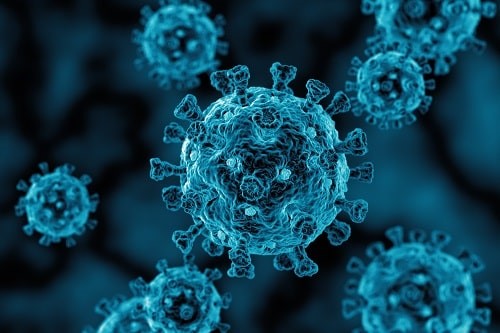 When short-wavelength UV (UV-C) is shone onto a surface for as little as five minutes, any pathogens present on the surface are disabled. Photograph: iStock
How effective is UV-C decontamination?
Despite demanding less time and effort than manual disinfection, UV-C treatment guarantees much more thorough disinfection. Testing carried out by Uvisan found that UV-C kills over 55 per cent more bacteria than using wipes alone.
As well as providing the highest standards of decontamination, UV-C light is zero waste, unlike wet wipes, and more cost-effective in the long run. Furthermore, UV-C light can be safely used on electronics, whereas wet wipes can damage delicate equipment over time.
Where and how can it be used?
UV-C’s versatility means it can be used in a manner of different settings. The disinfecting powers of UV-C can be harnessed in a cabinet that users fill with equipment and put on a short cycle to kill harmful pathogens. This is ideal for any facility using shared apparatus, such as tablets, handsets and computer peripherals.
This technology is being used by Cheshire NHS Trust’s mental health crisis hotline team. Before introducing UV-C to its infection control measures, the Trust was forced to quarantine headsets used by the call centre team for several days between each shift. This meant the Trust was being forced to buy more and more headsets so that there were enough in circulation. The UV-C cabinet now installed means headsets can be disinfected in five minutes for the next shift to use safely.
In educational facilities, UV-C cabinets are being used to boost digital inclusion. iPads are a crucial piece of equipment for many lessons at Hazelwood School in Surrey, but as teachers could not be expected to safely disinfect the tablets between classes they could not be used. With UV-C technology, teachers place the iPads in the cabinet at the end of a lesson so they can be safely passed between class bubbles without the fear of a Covid outbreak as a result.
As well as disinfecting equipment, UV-C cabinets can charge equipment and are lockable, making them an ideal place to store equipment at the end of each day while on a cleaning cycle. The applications of this spread beyond call centres and schools and can be used in any sector which uses portable shared equipment, such as handsets used by shop assistants and courier drivers, keyboards and mice used in offices and tools used in construction and engineering.
For health and safety professionals looking to disinfect entire rooms or fixed equipment, ambient UV-C lamps can be positioned to sanitise rooms and their contents.
Whole room UV-C light has allowed Chichester University to resume the use of its audio production and mixing studio. The studio had been out of use as the specialist equipment inside could not be properly disinfected as using heat or moisture would damage it. To overcome this, carefully positioned UV lights have been installed which disinfect the whole studio and mixing desk.
Ambient solutions can be used in any sized space. The ideal positioning of the lamps is deciphered by a computer algorithm and the set-up has safety measures that stop people from entering the room while the UV-C lamps are on.
As the world reopens over the next year, there will be considerable anxieties over health and safety and UV-C disinfection is a simple and reliable way of keeping facilities free from pathogens.
UV-C kills microbes on whatever surface it is shone on to and is therefore great for disinfecting those hard to clean pieces of equipment. Introducing UV-C technology to infection control measures will give health and safety professionals more time to use elsewhere and other people in the workplace or school peace of mind that they are protected from Covid and other illnesses.
Jarek Salek is Head of engineering and technical operations at Uvisan
FEATURES

Who is the wolf in your life? Listening to the people behind the hard hat
By Inna Cebotari, Kinth Square on 02 October 2026
A new play explores the lives of migrant construction workers in the UK, using humour, real-life experiences and physical theatre to capture the banter, friendships and absurd moments that make life on site bearable, alongside the pressures that often go unseen. Ahead of the play’s premiere in London on 12-14 November, playwright Inna Cebotari explains how Three Little Pigs aims to add to the public debate about how best to support the wellbeing of construction workers.

Eliminating barriers in reporting: how conversational AI can unlock safety engagement
By Julian Taylor, ecoPortal on 04 October 2026
Online reporting systems that require lengthy and cumbersome form filling and typing can discourage workers from reporting safety incidents and concerns. However, AI-powered mobile apps that allow reporting simply by speaking can simplify and speed up the process, boosting reporting rates and overall staff engagement with safety systems and culture.

Why UK employers need to rethink recruitment, retention and support for older workers
By Orchie Bandyopadhyay on 04 October 2026
With workers over the age of 50 now comprising almost one third of the entire UK workforce, recruiting and retaining older workers is now core to the success of the economy. However, not all employers are offering what’s needed to retain and recruit older workers, and ageist attitudes, limited flexible working opportunities, and employment support that doesn’t fit with health, caring, or other responsibilities are leaving too many people locked out of the labour market.