
The public can play a practical role in supporting scientific understanding of problems like air pollution.
Opinion
Citizen science in HS&E
By
on 14 June 2021
Hard science is knowledge about the natural world based on evidence learned through experiments and observation. Science plays a vital role in health, safety and the environment, such as the setting of legal limits for harmful pollutants.
In the 14th century, science meant collective knowledge. So, is there a role for less traditional methods to inform the body of scientific knowledge? Modern technology and greater public engagement in scientific research have led to a rise in ‘citizen science’.
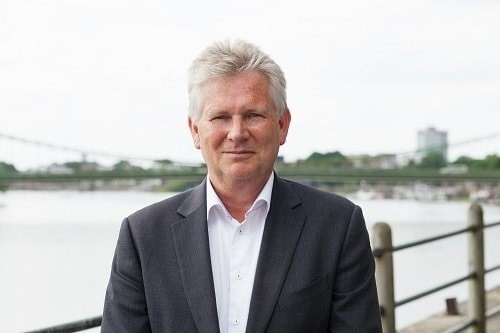 Mike Robinson: "Citizen science can bridge the gap between science and the community."
This is the collection and analysis of data relating to the natural world by members of the public, in partnership with professional scientists, to provide critical data sets for local decision-making or large-scale scientific priorities. It offers the power of science to everyone, and the power of everyone to science.
Citizen science may more commonly be known for projects that ask the public to make observations of birds while on a walk or investigate the biodiversity around them.
However, as citizen science allows for more data collection and a larger scope than would be possible with the traditional model of scientific inquiry, it can, for instance, help to answer global questions about climate change. It does this by asking citizen scientists to contribute evidence of a changing climate and unusual weather events, the environment, and natural disasters as they go through the steps of scientific inquiry.
Citizen science is becoming more widely accepted by the scientific community. It is even used by NASA (the US space agency) both to develop low cost sensors that citizen scientists can use to measure air pollutants and to monitor air quality itself.
This data is then combined with NASA satellite data for more accurate findings and incorporated in a smartphone app that processes and displays user data on the internet.
Indeed, an organisation I used to lead, the United Kingdom Hydrographic Office, uses citizen science to support its role in producing marine-related navigational charts and publications through the use of hydrographic notes, which allow members of the public to inform them of any navigationally significant information including new or suspected dangers, or changes to navigational aids.
The British Safety Council’s very own air pollution app, Canairy, which provides real-time information about air pollution levels for London-based employers and workers, is a practical application of citizen science.
The more people that use the app, the greater the likelihood that the evidence will lead to stronger government limits for the most harmful pollutants and that employers will take action to reduce the exposure of outdoor workers to air pollution for the long term.
For instance, Canairy gives employers insights to inform health risk assessments and work scheduling that will reduce exposure for the long term. You can download Canairy for free at: bit.ly/34gul59
In the US, citizen science has also been used to deliver local improvements; for example, by documenting the poor air quality in a community. This evidence has been used to push successfully for changes to improve public health in local areas in Arizona.
In Putney in London, the setting up of citizen-based sensing networks that complemented the existing official air quality monitoring stations in London, provided more spatial and temporal density data.
This led to Transport for London’s decision to use hybrid buses on Putney High Street. It also supported local behavioural change. By actively taking part, people became more interested in air quality, understood it better and were more likely to take action to reduce it by using public transport instead of taking their own car.
Technology also played a role through the low-cost sensors used to monitor pollutant levels, providing data comparable to the trends identified by official monitoring sensors.
Citizen science then can bridge the gap between science and the community and between scientific research and policy decision-making and planning.
Mike Robinson FCA is Chief executive of the British Safety Council
OPINION
Learning that saves lives
By Mike Robinson, chief executive, British Safety Council on 11 September 2026
Success can sometimes be a problem. The better we become at preventing incidents, the harder it can be to see what is actually preventing them.

Migraine in work: a test of the Government’s plans to Keep Britain Working
By Rob Music, The Migraine Trust on 07 September 2026
Migraine can have a profound, and often avoidable, impact on people’s working lives and careers. The Government’s growing focus on workplace health offers an important opportunity to change this, but only if this common, often disabling and frequently invisible neurological condition is properly understood and addressed by Government, the NHS and employers.
Noise risk and multi-track enforcement: what EHS managers need to know
By Emma Tattersdill, Bexley Beaumont law firm on 17 August 2026
Noise nuisance from an industrial or commercial site can result in costly and time-consuming legal action from regulators and neighbours, but there are practical ways of ensuring noise levels do not exceed acceptable limits and trigger complaints from nearby businesses and residents.