
Any work at height carries risk. Preventing accidents from falls relies on all stakeholders using an informed, joined-up approach to practices and systems.
Features
Fall protection cost-cutting: a step too far?
By
on 21 August 2019
Specifiers, contractors, system installers and end users all play a part in risk mitigation. A holistic approach to safety is needed.
Gravity is an ever-present force. It doesn’t offer second chances. And however diligent safety planning and preparations may be, a fall is always a possibility. With workers’ lives at stake, there’s simply no excuse for inadequate fall protection systems and personal safety equipment.
Accident prevention: the UK picture
Despite the fact that almost all falls from height can be prevented, it’s a sobering reminder that they still remain the leading cause of workplace fatalities. The most recent Health and Safety Executive (HSE) statistics show that in 2017 alone, falls accounted for 28 per cent of all UK fatalities in the workplace. Digging deeper, between 2013/14 and 2017/18, falls from a height accounted for more than a quarter of all fatal injuries to workers. That’s an average of 37 deaths a year. In addition, a staggering 43,000 non-fatal accidents involved falls from height too.
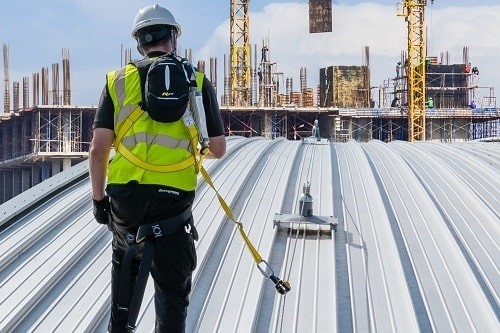 Gravity is an ever-present force. It doesn’t offer second chances
Over 60 per cent of deaths when working at height involve falls from ladders, scaffolds, working platforms and roof edges and through fragile roofs. It’s no wonder that HSE research has also revealed in 2010 that 19% of people think their health and safety is at risk at work.
While the UK, like much of Europe, is a mature market, with comprehensive regulatory standards for safety systems and practices, there is still much room for improvement. Setting realistic safety system budgets, honouring specifications, understanding the suitability and quality of different equipment, accurately assessing risk and training users to be competent are all on the agenda.
Creating the plan: specifiers
As the first link in the chain of creating safer working at height, the value of consulting specifier professionals cannot be overstated. The decisions, assessments and recommendations they provide result in the most appropriate fall protection system specification for the building at the outset: one that will maximise protection for users and allow work at height to be carried out more safely and efficiently.
A system specification can be defined by architects, consultants or engineers, or by safety system industry professionals, such as professional installers. A thorough specification takes account of both the unique risks posed by the structure and the practical access requirements needed for safe works. It will also mean full compliance with all local and national health and safety and regulatory conditions. Manufacturers, too, can provide consultation and system design, helping to make sure that the very best equipment and system is installed.
Controlling the project: contractors
One of the most important elements of the specification – at least for contractors – is the independently-calculated budget allowance required to procure and install the recommended system. Unfortunately, specification-switching down-the-line by UK contractors seeking to reduce costs can be problematic. This worrying trend has the potential to put workers’ lives at risk. Simply changing or substituting elements for alternatives that are perceived as less costly can be short- sighted and dangerous. Any specified system for working at height, and any attendant cost, is usually proposed for sound safety reasons.
High-quality equipment benefits from advanced engineering and rigorous testing, both of which contribute to full compliance and reliable performance. Lesser products may wear, degrade or fail more quickly, requiring premature replacement and increasing total cost of ownership. When equipment is well designed and easy to use, the risks of equipment failure are naturally lower.
Putting it all in place: installers
The performance and safety of fall protection equipment depends on correct installation, testing and commissioning. Quality installers have a responsibility to check that only technically-competent professionals install equipment. Leading companies are fully familiar with the leading manufacturer systems, are usually accredited, and will have undergone specialist training to be certain systems are installed exactly in accordance with the manufacturer’s guidelines, including all compliance checks at sign-off. Once equipment is installed, the installer will be responsible for commissioning, testing and ongoing maintenance and, in some cases, arranging user training.
Experienced installers are also used to quickly overcoming any unexpected challenges a building may pose – for example, undertaking a retrofit system installation within an older or historic building. They will also spot and highlight any new risks or findings that may impact the effectiveness of the fall protection system.
Confident and capable: end users
There’s no value in provisioning fall protection equipment if workers are unable, or are unwilling, to use it properly. While overseeing safety, risk assessments and method statements for those who work at height falls to the site manager and/or health and safety officer, all equipment users should be ‘competent persons’. That means expert PPE and/or fall equipment system training from a qualified provider. Can users check equipment before use? Do they know when and how to use it correctly? Do they possess the expertise and confidence to make the right decisions at the right time? Can they execute an agreed rescue plan if needed?
Safety and accountability: inextricably linked
If UK working at height safety statistics are to improve, the sequential chain from specifier through to user requires close scrutiny. At every stage, each party has a duty of care to respect the integrity of what should remain an optimal safety system. Specification-switching and making arbitrary changes to carefully chosen solutions may have serious implications. Equally, users deserve to feel confident using systems, and must be supported with quality training and rigorous equipment checks. Most falls from height are preventable. All parties engaged in fall protection should be aligned and accountable to keeping workers safe.
James Sainsbury is Fall Protection Sales leader MSA Safety
FEATURES
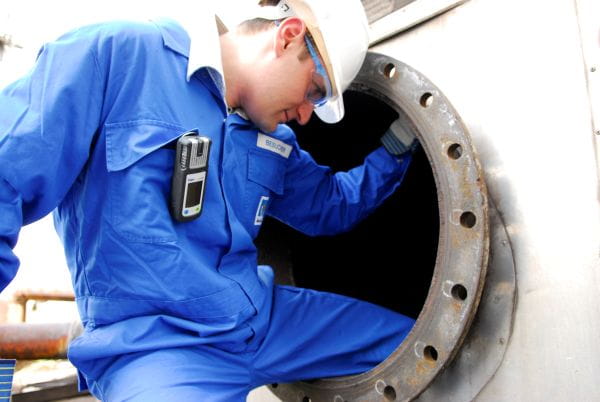
Confined spaces: why training is key to keeping workers safe
By Adam Barker, Draeger Safety UK on 22 September 2026
Suitable training plays an essential role in preventing fatalities and dangerous situations during work in confined, hazardous spaces like tanks, silos and sewers, but it’s essential that any course selected genuinely reflects the specific tasks, hazards and risks workers will be faced with.
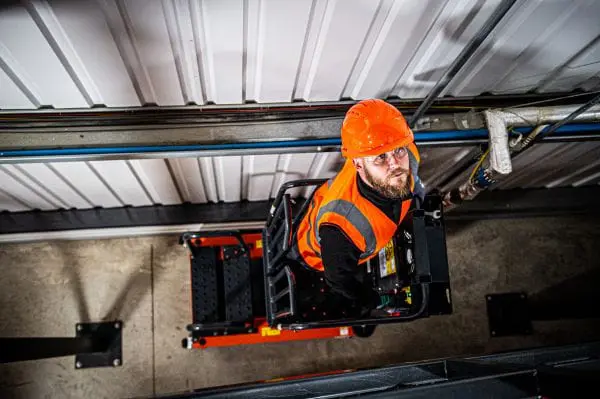
Why the future of low-level access starts with rethinking old habits
By Samuel Butterworth, JLG Power Towers on 22 September 2026
Low-level access equipment like powered lifts can help make work at height safer by providing a secure, enclosed working platform, but they can also bring other benefits, such as avoiding the need for awkward stretching to reach work areas, which helps to prevent musculoskeletal injuries.
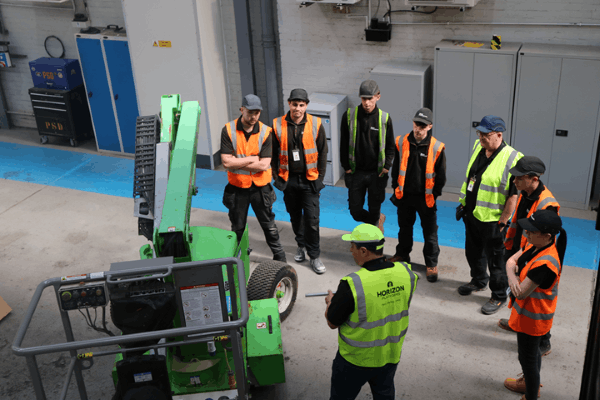
Why paperwork alone isn’t sufficient MEWP rescue preparation
By Ben Hughes, Horizon Platforms on 22 September 2026
A recent safety awareness day has highlighted the importance of contractors regularly practising emergency rescue from mobile elevating work platforms, rather than relying on one-off training sessions and paper procedures that are not always easy to follow during a fast-moving incident.