

Workers often fail to wear hearing protection in noisy environments, but there are some simple steps employers can take to boost wear rates – and prevent devastating hearing damage.
Features
Beyond awareness: how companies can support hearing protection behaviour
By
on 02 February 2026
Everyone knows loud noise damages hearing. Yet here’s the paradox: despite near-universal awareness, 40 per cent of workers in high-risk sectors still don’t consistently use hearing protection. However, knowing a hazard exists isn’t enough to change behaviour. New research conducted by a team led by myself reveals exactly what does change it – and what your company can do right now.
This matters urgently. With untreated hearing loss costing the UK economy £25 billion annually in lost productivity, and 72 per cent of exposed workers already reporting tinnitus, the case for action is overwhelming. Yet the good news is equally compelling: the World Health Organization’s modelling estimated a societal return of $15 for every $1 invested, with benefits coming from both health gains and productivity gains. The question isn’t whether to act; it’s how.
 "Poor fit is a major driver of non-compliance." Photograph: iStock
The knowledge-behaviour gap
The paradox is stark. Our research involving 532 workers across high-risk sectors revealed that while awareness of the risk of hearing damage and the need for protection is universal, two in five still remove or forget to wear hearing protection during exposure.
Why? Because knowledge alone doesn’t drive behaviour. A worker may know that hearing loss is permanent, yet still forgets to wear protection while moving between quiet and noisy areas. Another understands the risk but won’t wear ill-fitting devices that isolate them from colleagues because they make communication difficult. A third sees hearing loss as inevitable in their industry and doesn’t believe protection works.
These aren’t failures of awareness. They’re failures of workplace systems to support behaviour change.
The real barriers of non-compliance
In our research, which to our knowledge is the first to apply established behavioural science frameworks to the analysis of hearing protection behaviour among industrial workers (beyond musicians), we identified specific barriers that predict whether workers will consistently use protection. For employers wishing to ensure workers wear the supplied hearing protection whenever necessary, the findings represent a practical roadmap for effective action.
 HSE discovered that 95 per cent of workers had never received a fit assessment. Photograph: iStock
The forgetfulness factor: psychological capability
The main barrier isn’t lack of concern – it’s forgetting to carry hearing protection. According to our research, workers who forget to carry their protection were 141 per cent more likely to be non-compliant with rules on wearing it in areas where noise reaches harmful levels.
This shifts how safety practitioners should think about the problem. Rather than assuming workers don’t care, managers should recognise that in most circumstances, workplace systems don’t include the necessary equipment, provisions and safety prompts and instructions to support staff to remember to wear protection when moving between changing environments at work, such as entering a high noise area.
For instance, a machinist moving between quiet assembly and noisy production areas faces repeated memory tests throughout a single shift, requiring them to repeatedly think about whether hearing protection is required in a specific area. Therefore, unless hearing protection is always available at the point of need – for example, with ear defenders available and visible at the entrance to noisy areas – people must rely on remembering to put them on each time they change activities.
The answer is simple: make protection automatic, not dependent on memory.
Fit and accessibility matter: physical opportunity
Poor fit is a major driver of non-compliance. One-size-fits-all hearing protection frequently does not match individual ear shapes, resulting in poor seals, discomfort, reduced protection, and over-blocking of speech; problems that lead workers to remove or avoid wearing it.
Achieving proper fit means matching hearing protection equipment to the anatomy of individual workers. For instance, women often require smaller sizes of protection than standard male-designed devices, and workers with atypical ear canals may find standard ear plugs ineffective or painful. Recent Health and Safety Executive (HSE) noise control inspections revealed serious gaps in the way employers issue and manage the use of hearing protection.
HSE discovered that 95 per cent of workers had never received a fit assessment, 77 per cent hadn’t been shown correct storage of the equipment, and 63 per cent had not received training on why protection matters.
However, all this is fixable. Fit-testing to ensure the equipment fits the wearer comfortably and properly; maintenance instructions so staff know how to care for the equipment; and selecting devices that preserve communication (such as by allowing workers to hear nearby speech or communicate via built-in radios), are straightforward interventions that have been shown to deliver measurable results in terms of wear rates.
Culture and stigma: social opportunity
Embarrassment more than doubled the likelihood of non-compliance, particularly in male-dominated industries where risk-taking is culturally valued, our research found. Workers reported feeling ‘weak’ or ‘not tough enough’ in situations where they were the only person wearing protection. In some workplaces, hearing protection was viewed as overcautious – or even disrespectful to older workers who ‘never needed it’.
Communication demands further reduce wear rates.
Nearly 20 per cent of workers we surveyed cited interference with communication as a barrier to wearing protection. Among workers in noisy environments, 57 per cent reported needing to raise their voices to be heard by colleagues, and 15 per cent stated they had to shout, even when standing just at arm’s length from colleagues. In these conditions, wearing hearing protection can make communication even more difficult, leading workers to remove it or avoid wearing it altogether.
Workers need to communicate to do their jobs safely and effectively. Constant noise doesn’t just hinder conversation; it disrupts concentration, increases frustration, and strains working relationships. When hearing protection further isolates workers from their colleagues, the equipment becomes impractical for day-to-day work, regardless of how effective it is at reducing noise exposure.
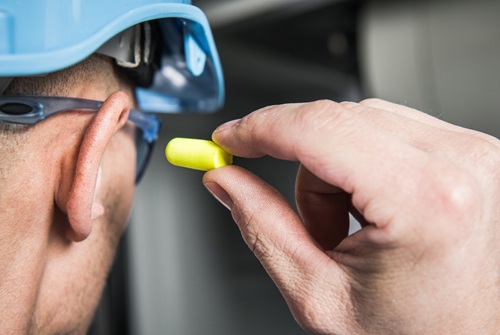 ‘Hearing loss comes with the job’ is something we heard during our research. Photograph: iStock
This means protection which blocks communication is unlikely to be worn consistently. Effective solutions must balance noise reduction with the ability to hear speech, alarms and instructions. Hearing protection that allows clear communication, such as level-dependent, filtered, or communication-enabled devices, is far more likely to be used correctly and consistently.
When workers stop believing: reflective motivation
‘Hearing loss comes with the job’ is something we heard during our research, and this fatalistic belief strongly predicted non-compliance with the wearing of protection. Workers who see older colleagues with hearing damage and work in seemingly uncontrollable noise conclude that protection won’t make a difference. They argue ‘why bother?’
This belief is reinforced by workplace cultures that normalise hearing damage as inevitable. Breaking this cycle requires visible evidence that protection works – early intervention programmes, baseline hearing tests showing stable hearing quality in protected workers and peer messaging from respected colleagues who actively protect their hearing.
What can your company actually do?
There are practical, actionable steps that address the root causes of non-compliance with hearing protection rules, and they are specifically focused on addressing the barriers outlined above.
1. Make protection automatic
Don’t rely on the worker simply remembering to wear protection. Place equipment dispensers at noisy-area entry points so protection can be picked up without conscious decision. If safety helmets are regularly worn, integrate protection into the hard hat – for example, helmet-mounted ear defenders – as this will make it easier to use hearing protection by removing the need to source a separate hard hat and pair of defenders.
Adequate signage is also essential. For example, some workplaces use colour-coded zones: yellow for optional protection, red for mandatory. Clear visual cues remove the burden of workers having to constantly carry out mental risk assessments to decide if protection is required.
2. Ensure proper fit and function
Move beyond a one-size-fits-all approach. Match protection to individual anatomy by conducting suitable and adequate fit-testing. Choose equipment that protects while allowing clear communication – workers won’t consistently wear protection that isolates them from colleagues or blocks safety-critical instructions.
3. Build peer-led culture change
Effective hearing protection starts with clear policies that specify when protection is required, which types to use for different noise exposures and how to maintain them. These rules must be enforced consistently; otherwise, workers treat them as optional.
However, supervisors cannot enforce culture change through reminders alone; workers ignore rules if peer norms don’t support them.
An effective solution is to assign respected senior workers as safety ambassadors. In male-dominated or ‘toughness’ cultures, experienced workers have a strong influence. Senior workers who model non-compliance can unintentionally encourage unsafe habits; those who model proper use and mentorship shift peer norms informally and effectively. Peer influence works best through gentle humour or values-based messaging – protecting family, staying sharp for the job – rather than citing rules.
4. Use the hierarchy of controls properly
Our research revealed that 90 per cent of noise controls in participants’ working environments rely on PPE and administrative measures, while only nine per cent use engineering solutions. In essence, significant numbers of employers have got the hierarchy upside down.
Engineering solutions are often simpler than assumed. Effective approaches include purchasing quieter equipment; reducing noise at the source by employing vibration damping or isolation; and fixing compressed air leaks (which both lower noise and save energy). PPE, by contrast, is the least reliable control because it only works if used perfectly by everyone, all the time. Engineering controls protect everyone automatically, without relying on individual behaviour. So, employers should invest in engineering controls first.
5. Track, record and advocate for change
Establish baseline hearing tests for all exposed workers, keep accurate records of the results of hearing tests and conduct regular follow-ups. Systematic hearing surveillance enables early intervention, verifies whether workplace controls are working, and highlights patterns for continuous improvement.
Currently, noise-induced hearing loss isn’t reportable under RIDDOR – even though evidence suggests it should be.5 Without mandatory reporting, the true scale of the problem remains hidden. This isn’t just a workplace issue; it’s a public health blind spot. Companies should advocate for a change in the law to require mandatory reporting whilst implementing rigorous internal health surveillance.
There’s also a strong business case. Our research revealed that workers and supervisors actively prefer employers who invest in comprehensive hearing protection. Companies that do so don’t just meet workforce expectations – they gain a competitive advantage in attracting and retaining talent.
An invitation to collaborate
Noise-induced hearing loss is permanent, progressive and significantly affects quality of life and productive working years. Yet it’s also preventable with systematic, evidence-based approaches.
My team is seeking partnerships with companies interested in developing and testing behavioural change programmes for the prevention of noise-induced hearing loss tailored to specific workplace contexts. These programmes provide detailed analysis of workforce behavioural barriers and design interventions that address them effectively.
To collaborate on evidence-based behavioural change programmes, contact Dr Dalia Tsimpida
at [email protected] or via LinkedIn:
linkedin.com/in/drdaliatsimpida
Dr Dalia Tsimpida is a Lecturer in Gerontology at the University of Southampton, where she leads the Hearing and Ageing Research Group in the Centre for Research on Ageing. She is also a World Health Organization (WHO) special advisor and consultant, and actively contributes to shaping global hearing health policy. See:
daliatsimpida.com
FEATURES

Who is the wolf in your life? Listening to the people behind the hard hat
By Inna Cebotari, Kinth Square on 02 October 2026
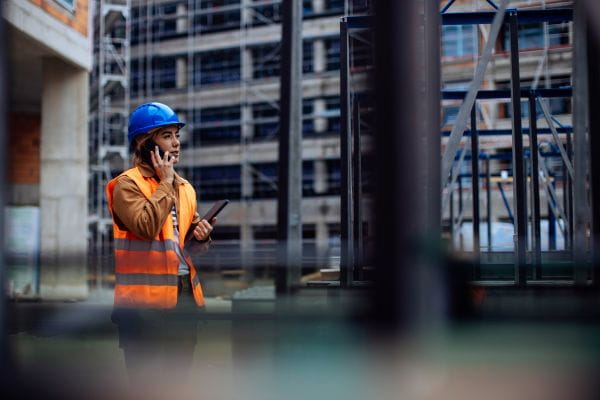
A new play explores the lives of migrant construction workers in the UK, using humour, real-life experiences and physical theatre to capture the banter, friendships and absurd moments that make life on site bearable, alongside the pressures that often go unseen. Ahead of the play’s premiere in London on 12-14 November, playwright Inna Cebotari explains how Three Little Pigs aims to add to the public debate about how best to support the wellbeing of construction workers.
Eliminating barriers in reporting: how conversational AI can unlock safety engagement
By Julian Taylor, ecoPortal on 04 October 2026
Online reporting systems that require lengthy and cumbersome form filling and typing can discourage workers from reporting safety incidents and concerns. However, AI-powered mobile apps that allow reporting simply by speaking can simplify and speed up the process, boosting reporting rates and overall staff engagement with safety systems and culture.

Why UK employers need to rethink recruitment, retention and support for older workers
By Orchie Bandyopadhyay on 04 October 2026
With workers over the age of 50 now comprising almost one third of the entire UK workforce, recruiting and retaining older workers is now core to the success of the economy. However, not all employers are offering what’s needed to retain and recruit older workers, and ageist attitudes, limited flexible working opportunities, and employment support that doesn’t fit with health, caring, or other responsibilities are leaving too many people locked out of the labour market.