

There can’t be many people with responsibility for or interest in workplace health and safety unaware of the risks to health from inhaling asbestos fibres, or of the terrible toll of thousands of lives shortened by the diseases caused including its unique cancer, mesothelioma.
Opinion
Climate change: learning from the asbestos story
By
on 01 June 2019
But as time passes, and new generations mature, we have to actively communicate the history so that the lessons may be retained and passed on.
For years, the companies that mined asbestos, and still do in China, Russia and Brazil, together with those that manufactured products with the mineral, waged very aggressive promotional campaigns. Research was funded, and suppressed when adverse findings were made, while misinformation indicated that the material was not substantially the cause of ill health to miners, manufacturers, users and removers.
When the stories are told of the increasing stringency of precautions required by law, under the various regulations specific to asbestos from workplace controls to the licensing of removal activities, it is sometimes presented as an example of health and safety practice working in lock-step with the evidence. But this would be misleading.
In fact, against the well-funded industry advertising campaigns and legal cases that delayed prohibitions being introduced, and some trade unions campaigning to save asbestos workers’ jobs while others were concerned about their members’ exposures to risk, it was public concern and action that finally broke the logjam and generated real action.
In the UK, the beginning of the tidal wave against asbestos came with a Granada documentary on prime-time television, Alice: a fight for life, which in 1982 personalised the stories of asbestos factory workers and the rising toll of mesothelioma.
I was working at British Airways at the time, and remember clearly the impact this had, not least where asbestos had been widely used for fire protection in aircraft hangars and workshops. The industry and its insurers are still engaged in battles over compensation claims, while in developing countries asbestos use is increasing; so the arguments are not over.
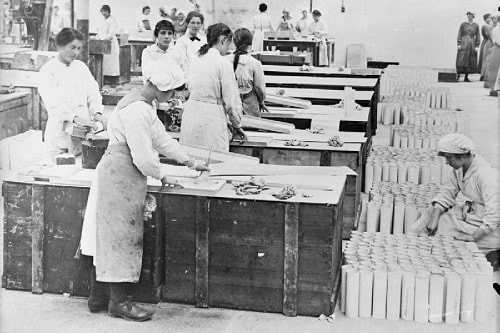 Female workers painting and rolling asbestos cylinders for use as smoke shells in a Lancashire factory during the First World War. Photograph: Lewis G P
But there is an extraordinary echo from the history of asbestos, the benefits it brought in terms of fire protection, heat insulation and cheap building materials versus the harm it has caused, and which continues to occur.
When the Extinction Rebellion demonstrators took to London’s streets, and the roofs of trains, they were protesting against the slow speed of reaction to the growing evidence of harm from climate change. Ranged against them is another very powerful lobby in the energy industry, with even more effective PR and legal teams than the old asbestos companies could muster, with deeper pockets and political friends in the highest of places.
But just as that early television documentary began to effect a change in the public perception of risk from asbestos, it is possible that activists like Greta Thunberg and respected broadcasters such as Sir David Attenborough will be seen as the harbingers of a sea change in dealing with the risk of environmental disaster.
The lesson from the asbestos story is that what began as a campaign has now become a way of doing business. We manage asbestos carefully where it has already been used, and have developed alternatives so that new use is no longer required. What started as individuals taking a stand has become the way in which all our organisations undertake their activities.
The same is happening with environmental activities – almost everyone in their home sorts waste for reuse and recycling in a way that would have seemed extraordinary just a few years ago. But the other big change is the growing commitment of companies to reduce their carbon footprint and waste, which is good for both the environment and the bottom line. It is becoming ever more systematic, applying management systems to establish targets and then achieve them, and gaining accreditation to demonstrate this to customers, staff, partners and shareholders.
We are still dealing with asbestos, but outside of the mining countries few would argue that the material is an unalloyed benefit to humanity. Just as those who deny climate change is taking place are no longer afforded airtime by the BBC, they exist as do flat earthers and ‘anti-vaxxers’ but they are in a minority that isn’t supported by the evidence.
We increasingly understand what we need to do, and as with workplace ill health prevention, the lessons from history suggest that once there is a general acceptance of a problem, we have the creativity and skill to tackle it. Many of our organisations are doing exactly that.
OPINION
Learning that saves lives
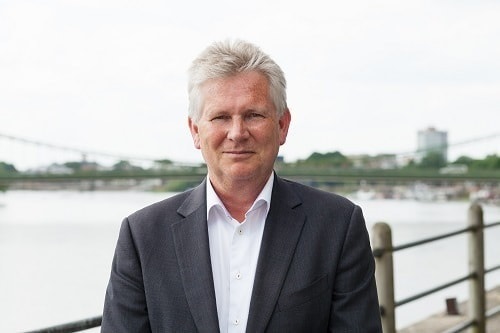
By Mike Robinson, chief executive, British Safety Council on 11 September 2026
Success can sometimes be a problem. The better we become at preventing incidents, the harder it can be to see what is actually preventing them.

Migraine in work: a test of the Government’s plans to Keep Britain Working
By Rob Music, The Migraine Trust on 07 September 2026
Migraine can have a profound, and often avoidable, impact on people’s working lives and careers. The Government’s growing focus on workplace health offers an important opportunity to change this, but only if this common, often disabling and frequently invisible neurological condition is properly understood and addressed by Government, the NHS and employers.
Noise risk and multi-track enforcement: what EHS managers need to know
By Emma Tattersdill, Bexley Beaumont law firm on 17 August 2026
Noise nuisance from an industrial or commercial site can result in costly and time-consuming legal action from regulators and neighbours, but there are practical ways of ensuring noise levels do not exceed acceptable limits and trigger complaints from nearby businesses and residents.