

With workers over the age of 50 now comprising almost one third of the entire UK workforce, recruiting and training older workers is now core to the success of the economy. However, not all employers are offering what’s needed to retain and recruit older workers, and ageist attitudes, limited flexible working opportunities, and employment support that doesn’t fit with health, caring, or other responsibilities are leaving too many people locked out of the labour market.
Features
Why UK employers need to rethink recruitment, retention and support for older workers
By
on 04 October 2026
The UK workforce is ageing. Workers aged 50 and over now make up almost a third of the workforce, while the number of people aged 65 and over in England and Wales has overtaken the number of children aged under 15. Experts say that the rapid ageing of the British population is reshaping the workforce, creating major opportunities for companies that adapt to this demographic change, and major risks for those that do not.
For Tracy Riddell, head of Age-friendly Employers at the Centre for Ageing Better, the ageing workforce should be central to the UK’s growth ambitions.
“We just need employers and the government to recognise that fact with greater urgency and action,” she says.
Riddell adds that many key sectors in the country are already desperately struggling to fill vacancies, while the labour and skills gap is predicted to widen further in the future.

“The construction industry, as one example, cannot hope to find the number of new workers required to meet demand in its sector without improving retention and significantly increasing its number of older workers,” she argues. “The 50-64 age group will increasingly become the age group that will meet growing skills and labour needs – this age group will grow by twice as much as the 15-29 age group by the end of the decade."
Riddell added: “The economic consequences of failing to make this age group central to the country’s economic growth plans are already being felt. The gap in employment rates between the 50-64 age group and the one below is 15%. Just reducing that gap by one percentage point would bring an additional £7 billion to the UK economy.”
Retaining older workers
The case for retaining older workers is also being highlighted by employers and talent specialists.
In a Management Today 'Leadership Lessons' podcast, Lyndsey Simpson, founder of 55/Redefined, a technology platform that helps businesses attract, engage, retain and retrain older workers, has a stark warning for leaders who have yet to implement an age strategy in their workplace: “If you don’t have an age strategy, you don’t have a growth strategy.”
Simpson adds in the podcast that many of those who are nearing or have reached retirement age may feel “at the peak of their game” and are therefore not ready to retire.
“Typically, 12 to 18 months post-retirement is where we see the biggest kickback in wanting to return to work in some capacity,” she explains. “Not necessarily doing the jobs that they did before, but wanting to be productive, engage with people and re-emerge.”
Jackie Haynes, 80, is one example, as reported by the BBC. She works as an activity coordinator at Sussex Grange care home in Chichester, West Sussex, where some of the residents are younger than she is.
Haynes says that working not only gives her purpose but also helps her feel socially connected, as she loves being with the residents.
“More important for me is the friendship. It keeps me young,” she told the BBC. Haynes says that she does not need to work financially, as she has a couple of private pensions and owns her own home.
“The money is very, very nice. I can do extra things that I wouldn’t normally do. I don’t have to worry,” she told the BBC.
Her experience highlights that older workers may continue working for reasons beyond financial need, including purpose and social connection.
Economists applaud this older workforce. “Every additional year you work, and you don’t draw down your savings, is an asset,” says an economist and expert on ageing issues.
Simpson argues that businesses should support older employees to continue working or return to the workplace, citing significant benefits.
“We talk a lot about ROI, but very few businesses calculate ROE – the return on experience,” she says. “You can’t replace an engineer with 40 years of experience with a new engineer who’s just starting out. The salary might be cheaper, but there’s really no replacement for those 40 years of experience and knowledge.”
Barriers to employment
However, despite the experience older workers bring, they can face barriers when trying to secure employment.
A study found that older LinkedIn users get fewer offers even with objectively better profiles.
The findings raise an obvious question: if the quality of a LinkedIn profile does not make a difference, what does?
The study revealed that using a younger profile photo resulted in more job offers.
Andy Gooday, founder of executive search company RoundPegSearch, says in a post on LinkedIn: “I’ve seen a growing number of posts on LinkedIn this year from older candidates opening up and asking for help finding work. Lots of organisations seem to talk about diversity from a gender or ethnicity angle but few from an age perspective.”
This raises a wider question: how much does age discrimination continue to affect the ability of older workers to secure jobs, promotions, training and career progression?
Riddell says: “Our new campaign is shining a light on the number of people not in employment, training, education or retirement in the 50 to state pension age group. This figure is a staggering 2.9 million people, with around one in three interested in, or looking for, work. Among this group of people, who we call NETERs, more than one in two cite long-term illness or disability as the reason and nearly one in five cite caring responsibilities. More than 900,000 NETERs are either actively job-seeking or say they want a job.”
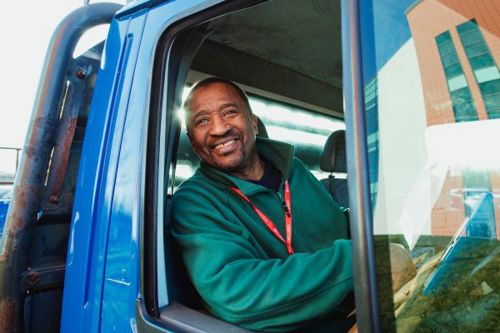
Ageism in recruitment
Ageism, meanwhile, plays an important role in holding older people back in the labour market.
More than one in three people aged 51-70 reported being badly treated in the workplace in a 12-month period.
Recruitment is one of the ways in which ageism manifests most clearly in the workplace.
More than a third of 50-69-year-olds feel at a disadvantage when applying for jobs due to their age.
“Unsuccessful older candidates will rarely be told explicitly they were considered ‘too old’ for the role, a clear case of age discrimination, but many will feel being told they have ‘too much experience’ amounts to the same thing,” says Riddell.
“Similarly, evidence shows that professional development is an important determinant of job satisfaction at all ages, but older workers are less likely to be offered training on the job. These attitudes can also become internalised, limiting people’s decisions about their own careers,” she adds.
Mark Dawkins, founder of Quantum Tree Search, a recruitment and consultancy firm, says: “Britain has a massive over-50 employment problem that never reaches the headlines.”
However, there is evidence that businesses can benefit significantly from employing older workers. B&Q proved something most companies still refuse to test: older workers can outperform.
“In 1989, while the rest of UK retail was chasing youth, B&Q opened a store in Macclesfield staffed entirely by people over 50,” explains Dawkins.
“A 1991 Warwick University study found that, compared with four sister B&Q Supercentres, the store had 18% higher profits, six times lower staff turnover, 39% lower absenteeism and 58% lower shrinkage, alongside better customer service and a higher skill base. That’s not a social initiative; that’s a superior operating model.”
For Dawkins, what stands out is the timing, the rigour and the persistence. “B&Q anticipated the demographic shift long before ‘ageing workforce’ became part of the business vocabulary, backed its approach with comparative operational data and a peer-reviewed publication, and scrapped the default retirement age in the mid-1990s, 15 years before the UK abolished it nationally.
“The research has since caught up, with studies from the Boston College Centre for Retirement Research, the OECD and BCG [Boston Consulting Group) finding little evidence that older workers reduce productivity and showing the benefits of older and mixed-age workforces. The evidence didn’t change. It just arrived late. B&Q didn’t run a diversity programme; they ran a 30-year experiment.”
Role of government
While employers have a role to play, the government also has an important role in challenging and changing mindsets around older workers.
“They should be actively encouraging all employers to take action to become more age-friendly, including signing up to the Centre for Ageing Better’s own Age-friendly Employer Pledge, to which a number of government departments are already signatories,” says Riddell. “The government should make a meaningful funding commitment to support older working-age people who are NETERs at the Autumn Budget.”
According to the 2025 House of Lords Economic Affairs Select Committee’s report, Preparing for an ageing society, successive governments have failed to focus on the issues raised by an ageing society.
“Raising the State Pension Age, which governments of all hues have tried, is not a solution, as many people in their 50s and 60s leave the workforce much earlier,” the report states in its overview. “The government must prioritise measures to incentivise people in their mid-50s to mid-60s to remain in or return to work.”
Lord Wood of Anfield, chair of the House of Lords Economic Affairs Committee, said: “People are having fewer children and living longer, and successive governments have simply not focused on the seismic effects a rapidly ageing population will have on our economy and society. Raising the state pension age, which saves the government money, but increases pensioner poverty as many people have already stopped working by their sixties, is a red herring. Getting more people in their fifties and sixties to stay in or return to work is key.”
He adds: “To successfully confront this challenge, the approach to financial management of today’s and tomorrow’s young people will need to change. They will need, from a much earlier stage in their lives, to plan and prepare to work longer and save more. The lack of a published strategy or forum for discussion on this topic demonstrates that this serious, but long-term, issue is not being taken seriously enough. The Government needs to begin addressing the impact of ageing now so that all age groups can live better and longer lives.”

Adequacy of workplace policies
Government policy is only one part of the picture. Employers also need to consider whether current workplace policies are sufficiently responsive to the needs of older workers, particularly those balancing employment with caring responsibilities.
Riddell says that the sheer number of people aged between 50 and state pension age who say they are out of work because of their caring responsibilities is a good indicator that there is not currently sufficient support available to help people balance employment and care duties.
She points out that while the introduction of unpaid carer’s leave has undoubtedly been a step in the right direction, introducing paid carer’s leave should be on the government’s radar if it wants to make progress on this issue.
“As well as having the right policies in place to support employees, it is also important that organisations have the right culture too,” says Riddell. “If there isn’t an age-friendly culture throughout an organisation, where employees feel included and valued regardless of their age, or trust is lacking between managers and employees, older workers may not ask for the support they could be entitled to.”
Workplace health and wellbeing are also important in enabling people to remain in work for longer, as people in later life are more likely to experience conditions that may require adjustments, often small ones, if they are to remain in and thrive at work.
“Our research shows that older workers can be reluctant to disclose emerging health conditions or disabilities to employers for fear of experiencing ageism,” says Riddell. “Organisations should support staff and line managers to have early and sustained conversations about health in the workplace. Age-friendly employers normalise the conversation, making it clear to staff that managing health conditions is a part of life and that health support is part of the organisational culture.”
Reasonable adjustments
So, how should employers respond when workers experience age-related changes in physical capacity, without effectively pushing them out of employment?
“Creating an inclusive workplace culture should be the starting point,” explains Riddell. “Employers should support staff and line managers to have early, open and ongoing conversations about health and work. This might include how to approach job redesign if necessary. Our research highlights that many health conditions associated with age develop gradually and can fluctuate over time. As a result, a one-off intervention may quickly become outdated if it is not regularly reviewed.”
Providing support and appropriate adjustments to roles, tasks and working arrangements for those with health conditions is one aspect of creating an age-friendly workplace. Another is ensuring that employees of different ages can work effectively alongside one another.
“Some employers are taking steps to ensure that they encourage the recruitment, retention and training of older workers,” says Riddell. “We have more than 600 employers of all sizes and from all sectors signed up to our Age-friendly Employer Pledge. But there are other organisations that are not taking those steps and they are missing out on a range of benefits.”
For Riddell, multigenerational teams are more productive and innovative, as employers find that having a multigenerational workforce helps support a mentoring ethos across their organisations, which is beneficial to all staff.
“Older staff can share their knowledge and experience with other members of staff, supporting the development of their own abilities and confidence,” she says.
Age-friendly employers encourage continuous learning and development, where staff of all ages are supported to grow, build confidence and find career satisfaction, which leads to better staff retention.
The benefits, therefore, can extend beyond simply retaining older workers.
But does creating a multigenerational workforce also require employers to ensure that workers of all ages have access to training and opportunities to develop new skills?
“If we want people to work longer in a rapidly changing economy, we need to ensure they have the same opportunities as everyone else to develop new skills and adapt to new technologies,” says Riddell. “Employers can help address this by creating a culture where learning is seen as relevant to everyone, regardless of age. This is becoming even more important as AI and automation reshape jobs.”
Dawkins believes the businesses that act now will be best placed to benefit from the changing workforce.
“The better question now is: what shift is happening today that businesses will look back on in 2050 the way we now look back on 1989? The companies acting on those shifts today are the next B&Qs,” says Dawkins.

FEATURES

Why UK employers need to rethink recruitment, retention and support for older workers
By Orchie Bandyopadhyay on 04 October 2026
With workers over the age of 50 now comprising almost one third of the entire UK workforce, recruiting and training older workers is now core to the success of the economy. However, not all employers are offering what’s needed to retain and recruit older workers, and ageist attitudes, limited flexible working opportunities, and employment support that doesn’t fit with health, caring, or other responsibilities are leaving too many people locked out of the labour market.

The five DSE ergonomics myths costing employers money
By Dr Nicola Tik & Dr Shane Lowe, Vitrue Health on 07 October 2026
Employers often try to prevent musculoskeletal problems associated with display screen work by buying equipment, ranging from more expensive chairs to standing desks and posture correctors. The evidence suggests that what makes the difference is not the equipment itself but whether people are shown how to use it, encouraged to keep changing position and given timely, personalised advice based on their actual workstation and risk profile. Dr Nicola Tik and Dr Shane Lowe of Vitrue Health examine five common myths and explain how digital DSE assessment and training can help close the gap.
Confined spaces: why training is key to keeping workers safe
By Adam Barker, Draeger Safety UK on 22 September 2026
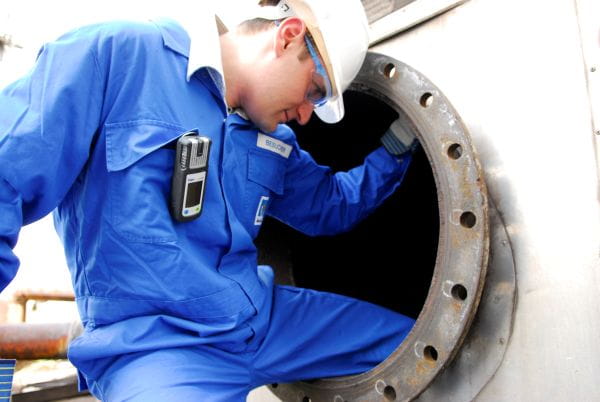
Suitable training plays an essential role in preventing fatalities and dangerous situations during work in confined, hazardous spaces like tanks, silos and sewers, but it’s essential that any course selected genuinely reflects the specific tasks, hazards and risks workers will be faced with.